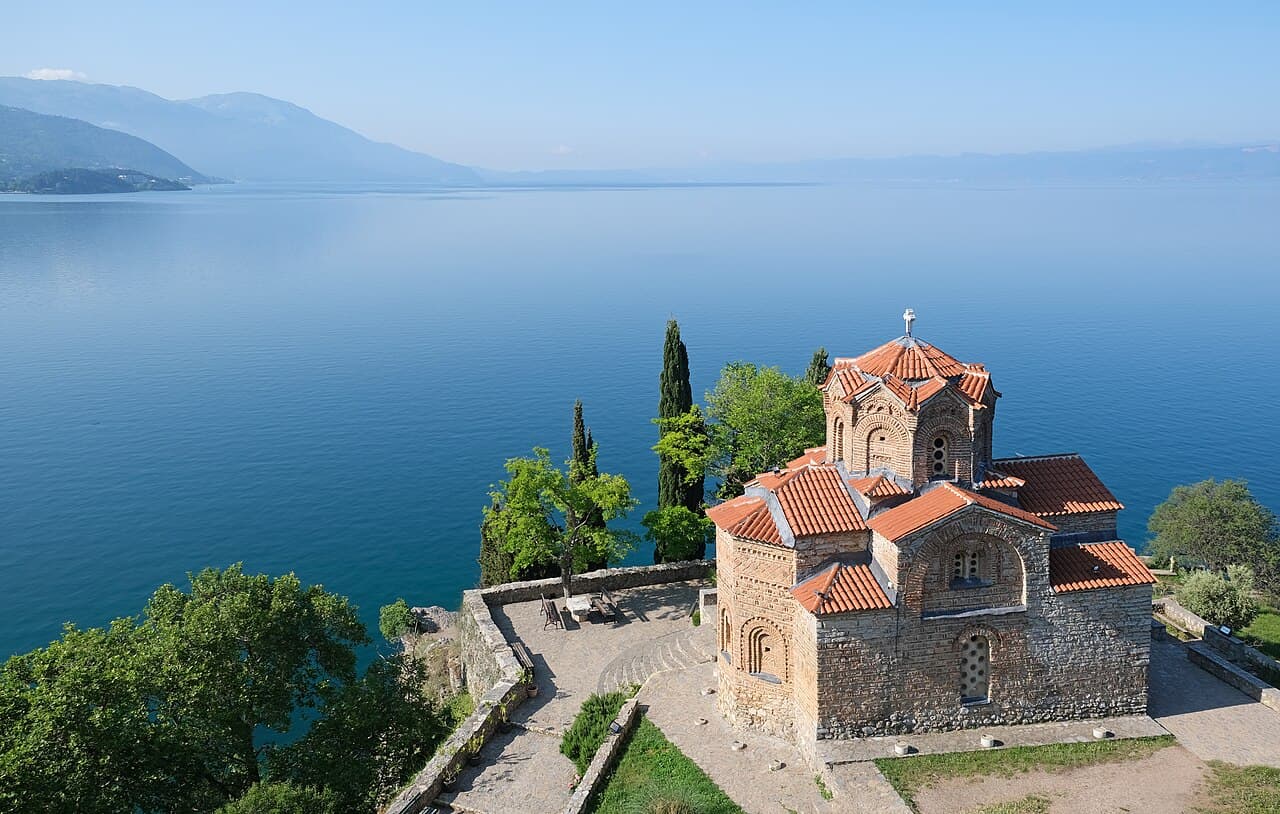
North MacedoniaPhoto: kallerna / Wikimedia Commons (CC BY-SA 4.0)

North Macedonia

Country · MK · MKD · Europe/Skopje

This information may change. Always check the official source.Last verified: August 2026 by

Ninety days on its own clock, separate from Schengen, with passport stamps rather than EES.

  • North Macedonia is outside the Schengen area and outside the EU. Its 90 days in 180 are counted separately.
  • Days spent here do not consume your Schengen allowance - which makes the region genuinely useful if you are close to your 90-day Schengen limit and want to stay in Europe.
  • Your passport is stamped on entry and exit. This country is outside EES, so the stamps are the record and you should keep the passport pages readable.
  • Most Western passports get 90 days visa-free.
  • The name is North Macedonia and has been since the Prespa agreement took effect in 2019. "Macedonia" alone is a live political subject with Greece and is best avoided in official contexts.
More details

The allowance is not your Schengen one

  • North Macedonia is outside the Schengen area and outside the EU. Its 90 days in 180 are counted separately.
  • Days spent here do not consume your Schengen allowance - which makes the region genuinely useful if you are close to your 90-day Schengen limit and want to stay in Europe.
  • Your passport is stamped on entry and exit. This country is outside EES, so the stamps are the record and you should keep the passport pages readable.
  • Crossing back into the EU re-enters Schengen and is an external border: expect the EES biometric check, and a longer queue than the drive suggests.

Practicalities

  • Most Western passports get 90 days visa-free.
  • The name is North Macedonia and has been since the Prespa agreement took effect in 2019. "Macedonia" alone is a live political subject with Greece and is best avoided in official contexts.
  • Registration is handled by accommodation. Keep any slip you are given.
Sources (2)

North Macedonia is outside the EU, and the crossings into Greece and Bulgaria are where the allowance and the cash rule are actually enforced.

  • Every border is a customs border - Greece, Bulgaria, Serbia, Kosovo and Albania all sit on external EU or regional customs lines.
  • Cash of EUR 10,000 or more must be declared in both directions, and there is a separate rule for taking Macedonian denars out.
  • The allowance from outside is a carton of cigarettes and a small quantity of spirits per adult, checked in earnest at the Greek border in summer.
  • Animal products cannot be carried into the EU, which rules out the ajvar with meat in it and the local cheeses on the way to Thessaloniki.
  • Antiquities and icons need an export permit, and the market stalls in the Skopje old bazaar sell items that legally cannot leave.
More details
  • Every border is a customs border - Greece, Bulgaria, Serbia, Kosovo and Albania all sit on external EU or regional customs lines.
  • Cash of EUR 10,000 or more must be declared in both directions, and there is a separate rule for taking Macedonian denars out.
  • The allowance from outside is a carton of cigarettes and a small quantity of spirits per adult, checked in earnest at the Greek border in summer.
  • Animal products cannot be carried into the EU, which rules out the ajvar with meat in it and the local cheeses on the way to Thessaloniki.
  • Antiquities and icons need an export permit, and the market stalls in the Skopje old bazaar sell items that legally cannot leave.
Sources (1)

No EHIC; insurance essential, and private clinics in Skopje are cheap and good.

  • The EHIC and GHIC do not apply. Travel insurance is essential.
  • Tap water is safe in Skopje and Ohrid.
  • Skopje has the main state hospitals and the country's specialist care.
  • Summer heat is the main risk. The Vardar valley is one of the hottest places in the Balkans and Skopje regularly exceeds 40 C in July and August.
  • Bring enough prescription medicine for the trip plus a margin, in original packaging with a copy of the prescription.
More details

Cover

  • The EHIC and GHIC do not apply. Travel insurance is essential.
  • State hospitals are basic; private clinics in Skopje are inexpensive and much quicker.

Everyday health

  • Tap water is safe in Skopje and Ohrid.
  • Pharmacies (apteka) are well stocked.
  • Ticks are present in forests.
  • Summer heat is severe in the Vardar valley - Skopje regularly passes 40 C in July and August.

Where to go

  • Skopje has the main state hospitals and the country's specialist care.
  • Private clinics in Skopje are inexpensive and much faster than the state system, and are what residents use for anything non-urgent. Consultations cost a fraction of western European prices.
  • Ohrid and Bitola have general hospitals; smaller towns have clinics only.
  • Pharmacies (apteka) are well stocked and pharmacists advise on minor complaints. Larger towns run a duty rota for nights and weekends.

What actually affects visitors

  • Summer heat is the main risk. The Vardar valley is one of the hottest places in the Balkans and Skopje regularly exceeds 40 C in July and August.
  • Winter air pollution in Skopje is severe - the city sits in a basin that traps coal smoke from November to February. If you are asthmatic, this is a genuine consideration for a winter visit.
  • Tap water is safe in Skopje and Ohrid.
  • Ticks are present in forested areas and the season runs spring to autumn; the usual precautions apply.
  • Stray dogs are common in Skopje; do not approach them and seek treatment promptly after any bite.

Before you travel

  • Bring enough prescription medicine for the trip plus a margin, in original packaging with a copy of the prescription.
  • Check your insurance covers medical evacuation - serious cases are frequently moved to Thessaloniki, Sofia or Belgrade.
Sources (2)

Skopje

Long-term averages for Skopje: the mean daily high, the mean overnight low and the mean monthly rainfall across 30 years of ERA5 reanalysis data (1995–2024).

DayNight
-55152535°C0100mmJanFebMarAprMayJunJulAugSepOctNovDecJanuary: Day 6 °C, Night -2 °C, Rain 51 mm. February: Day 9 °C, Night 0 °C, Rain 41 mm. March: Day 13 °C, Night 3 °C, Rain 56 mm. April: Day 18 °C, Night 7 °C, Rain 53 mm. May: Day 23 °C, Night 12 °C, Rain 53 mm. June: Day 28 °C, Night 16 °C, Rain 40 mm. July: Day 31 °C, Night 19 °C, Rain 24 mm. August: Day 31 °C, Night 19 °C, Rain 23 mm. September: Day 25 °C, Night 14 °C, Rain 38 mm. October: Day 19 °C, Night 9 °C, Rain 53 mm. November: Day 13 °C, Night 4 °C, Rain 56 mm. December: Day 7 °C, Night 0 °C, Rain 62 mm
Show the monthly table
Skopje
MonthDay (°C)Night (°C)Rain (mm)
January6-251
February9041
March13356
April18753
May231253
June281640
July311924
August311923
September251438
October19953
November13456
December7062

When to visit

July and August are Skopje's hottest months and also its driest - 31 C and barely 24 mm between them. The water falls in spring and autumn, and the winter belongs to the basin the city sits in.

Most of Europe reads summer as the dry season and it is easy to assume Skopje works the same way by accident. It does not - it works that way emphatically. July and August average 31 C by day and 23 and 24 mm of rain, the two lowest figures of the year, while November and December take more than twice that.

More details

The hottest months are also the driest

Most of Europe reads summer as the dry season and it is easy to assume Skopje works the same way by accident. It does not - it works that way emphatically. July and August average 31 C by day and 23 and 24 mm of rain, the two lowest figures of the year, while November and December take more than twice that. March through May and October through December are the months that get you wet here, and they are the months worth travelling in.

That leaves an unusually clean choice. April to May and September to October average 18-25 C by day, which is the band this page picks its answer from, at the price of the year's rain. July and August are dry and hot, and August nights at 19 C are genuinely comfortable.

What a basin does to both ends of the year

Skopje sits in the Vardar basin with mountains on every side. In August that means no sea breeze and no through-draught: 31 C in a bowl is not the same 31 C as 31 C on a coast, and the shade of the old bazaar is doing more work than the number suggests.

The same geography closes the other end of the year. Still, cold air settles in the basin over winter, and this is the season when heating runs. The European Environment Agency puts some of the Western Balkan countries among the highest particulate concentrations in Europe, primarily from burning solid fuels for domestic heating - a description of the heating months, not the year. If you are choosing between a cold-weather visit in January and one in March, that is the argument for March.

Sources (2)

Very cheap, and Ohrid is the one place that has a season.

  • Lake Ohrid is the destination and July and August are its season, when prices rise and the lakefront fills with domestic and Albanian holidaymakers.
  • Business pricing midweek, and a large supply of apartments.
  • You will be asked for your passport at check-in.
  • North Macedonia is among the cheapest countries in Europe for accommodation, and the gap against Greece next door is large.
  • Air conditioning matters. Skopje sits in a basin and regularly passes 40 C in July and August; confirm the listing has it.
More details

Ohrid

  • Lake Ohrid is the destination and July and August are its season, when prices rise and the lakefront fills with domestic and Albanian holidaymakers.
  • June and September are better.
  • Rooms in the old town are cheap by any European standard.

Skopje

  • Business pricing midweek, and a large supply of apartments.
  • The centre is compact and the old bazaar is the interesting part.

Practicalities

  • You will be asked for your passport at check-in.
  • Cash is still useful outside the two main towns.

Prices

  • North Macedonia is among the cheapest countries in Europe for accommodation, and the gap against Greece next door is large.
  • A good room in Skopje or Ohrid costs a fraction of the western European equivalent, and rural guesthouses less again.

Practicalities

  • Air conditioning matters. Skopje sits in a basin and regularly passes 40 C in July and August; confirm the listing has it.
  • Winter heating in older buildings is variable and Skopje's winter air quality is poor - a room away from the valley floor is worth paying for.
  • Ohrid's old town is steep and cobbled and many guesthouses are up stairs with no lift.
  • Book directly where you can. Small family guesthouses often quote less by phone or email than through a platform.
Sources (2)

EU roaming does NOT apply here - North Macedonia is outside the EU, so a European SIM roams at foreign rates unless your operator includes the Western Balkans.

  • North Macedonia is outside the EU, so roam-like-at-home does not apply. A European SIM roams at whatever your operator charges for a non-EU country, which can be brutal.
  • A1 Makedonija - https://www.a1.mk/
  • An eSIM is live before you land and skips the shop entirely, which on a short trip is the whole argument for it.
  • Keep your home number reachable for two-factor codes. If you swap in a local SIM as your only card, bank apps that text a code to your home number stop working at the worst possible moment. A dual-SIM phone, or an eSIM alongside your home SIM, solves it.
More details

Your EU plan does not cover you here

This is the trap, and it is the reverse of everywhere else in this part of Europe.

  • North Macedonia is outside the EU, so roam-like-at-home does not apply. A European SIM roams at whatever your operator charges for a non-EU country, which can be brutal.
  • Some EU operators now include the Western Balkans in their roaming zones - a regional agreement has pushed prices down - but it is opt-in by operator, not automatic. Check yours before you land.
  • Turn off data roaming on arrival until you have checked.

Local prepaid SIM

  • A1 Makedonija - https://www.a1.mk/

  • Telekom (Makedonski Telekom) - https://telekom.mk/

  • Prepaid SIMs are cheap and sold in operator shops and kiosks.

  • Bring your passport.

  • This is the cheapest fix if your operator does not include the region.

eSIM

  • An eSIM is live before you land and skips the shop entirely, which on a short trip is the whole argument for it.
  • Check your phone takes one. Most flagship phones since 2019 do; most budget models do not.

Practical points

  • Keep your home number reachable for two-factor codes. If you swap in a local SIM as your only card, bank apps that text a code to your home number stop working at the worst possible moment. A dual-SIM phone, or an eSIM alongside your home SIM, solves it.
  • Wi-fi is widespread in cafes, hotels and stations.
Sources (2)

North Macedonian sockets are Type Schuko at 230 V, the same as every neighbour.

  • A Europlug fits every socket in the country.
  • Greece, Bulgaria, Serbia, Kosovo and Albania all match, so nothing changes at any border.
  • British, American and Australian plugs need an adapter.
  • Older Skopje blocks have unearthed sockets of the same shape.
  • 230 V, so only American 120 V-only appliances need a converter.
More details

Sockets in North Macedonia are Type and at 230 V, 50 Hz - the round Schuko outlet.

  • A Europlug fits every socket in the country.
  • Greece, Bulgaria, Serbia, Kosovo and Albania all match, so nothing changes at any border.
  • British, American and Australian plugs need an adapter.
  • Older Skopje blocks have unearthed sockets of the same shape.
  • 230 V, so only American 120 V-only appliances need a converter.
  • British, American and Australian plugs need an adapter, sold in any electrical shop for the price of a coffee.
  • Type is the earthed version of the same outlet, and a two-pin adapter fits it without connecting the earth.
Sources (1)

Cyrillic script, type sockets, and a capital covered in statues that are barely a decade old.

  • Central Skopje was rebuilt between 2010 and 2014 with dozens of neoclassical facades, bridges and enormous statues.
  • It is startling in person and locals' opinions of it range from affection to open contempt.
  • 230 V, 50 Hz, sockets type and .
  • Macedonian is written in Cyrillic. Albanian is co-official and widely spoken in the west and in parts of Skopje.
  • Coffee is a long social event.
More details

Skopje 2014

  • Central Skopje was rebuilt between 2010 and 2014 with dozens of neoclassical facades, bridges and enormous statues.
  • It is startling in person and locals' opinions of it range from affection to open contempt.
  • The old bazaar behind it is genuinely old and is the better half of the city.

Power and language

  • 230 V, 50 Hz, sockets type and .
  • Macedonian is written in Cyrillic. Albanian is co-official and widely spoken in the west and in parts of Skopje.
  • English is common among younger people.
  • "Dobar den" is hello, "blagodaram" is thank you.

Manners

  • Coffee is a long social event.
  • Take your shoes off indoors.
  • Mosques and Orthodox churches both expect covered shoulders and knees.
Sources (2)

The denar is effectively pegged to the euro, and prices here are among the lowest in Europe.

  • The currency is the Macedonian denar (MKD).
  • It is effectively pegged to the euro, so conversion is predictable.
  • Always refuse the machine's offer to charge you in your own currency. Dynamic currency conversion at an ATM or a card terminal costs several per cent, every time, and the offer is worded to sound helpful. Choose the local currency and let your own bank convert.
  • Use bank ATMs rather than the independent machines in tourist areas, which add their own fee on top.
  • Rounding up is normal, 10 per cent for good restaurant service.
More details

The denar

  • The currency is the Macedonian denar (MKD).
  • It is effectively pegged to the euro, so conversion is predictable.
  • Euro cash is accepted informally in tourist areas at a poor rate - pay in denars.
  • Cards work in Skopje and Ohrid, less reliably elsewhere.
  • Prices are among the lowest in Europe.

ATMs

  • Always refuse the machine's offer to charge you in your own currency. Dynamic currency conversion at an ATM or a card terminal costs several per cent, every time, and the offer is worded to sound helpful. Choose the local currency and let your own bank convert.
  • Use bank ATMs rather than the independent machines in tourist areas, which add their own fee on top.
  • Beware the standalone Euronet machines in tourist areas across the region. They add a large fee and push dynamic currency conversion hard. Use a bank's own machine.

Tipping

  • Rounding up is normal, 10 per cent for good restaurant service.
Sources (2)

Everyday prices

Typical prices in Macedonian denar (MKD), averaged across the country by Numbeo and read on 19 August 2026. Tick Convert prices above the table to see every amount in your own currency.

Everyday prices
ItemTypical price
Inexpensive restaurant meal400 MKD
Dinner for two, mid-range, three courses1,500 MKD
Cappuccino94 MKD
Local draught beer, 0.5 l120 MKD
Bottled water, 0.33 l64 MKD
Public transport, one-way ticket40 MKD
Taxi, starting fare70 MKD
Petrol, 1 litre80 MKD
Cigarettes, pack of 20 (Marlboro)180 MKD
Average net monthly salary40,400 MKD

These are country-wide averages, not a price list: tourist districts, airports and islands sit well above them, and small towns below. The salary line is there for proportion - it is what people living here actually earn.

Sources (1)

Airport guides for North Macedonia2

One page per airport: the routes into town, what they cost and the trap particular to that arrival.

See all 2 airports

Skopje airport is 20 km out with a shuttle bus into the centre and a taxi fare you should agree first.

  • The airport is about 20 km east of Skopje, near Petrovec.
  • A shuttle bus runs into the city centre timed to arrivals, and is cheap.
  • Ohrid has a small seasonal airport, about 10 km from the town.
  • Skopje to Ohrid is about three hours by road, so if the lake is your destination, the Ohrid flight is worth hunting for.
  • Sofia is about four hours from Skopje by road and often much cheaper to fly into.
More details
Skopje (SKP)
  • The airport is about 20 km east of Skopje, near Petrovec.
  • A shuttle bus runs into the city centre timed to arrivals, and is cheap.
  • Taxis wait outside. Agree the fare before setting off - there is a customary airport rate and it is not metered in practice.
  • Wizz Air dominates the airport and many arrivals are on late-night flights, when the shuttle may not run - check before assuming.
Ohrid (OHD)
  • Ohrid has a small seasonal airport, about 10 km from the town.
  • Skopje to Ohrid is about three hours by road, so if the lake is your destination, the Ohrid flight is worth hunting for.
Neighbouring options
  • Sofia is about four hours from Skopje by road and often much cheaper to fly into.
  • Thessaloniki is closer still to the south of the country.
Sources (2)

Buses cover the country; the trains are an afterthought.

  • The intercity bus network is the transport system. Skopje's main bus station sits under the railway station and serves the whole country.
  • Skopje to Ohrid takes about three hours and runs frequently.
  • The rail network is limited and slow.
  • The line to Bitola and the line towards Serbia exist but buses beat them on every measure.
  • The motorway corridors are good, the mountain roads slow.
More details

Buses

  • The intercity bus network is the transport system. Skopje's main bus station sits under the railway station and serves the whole country.
  • Skopje to Ohrid takes about three hours and runs frequently.
  • Buses to Pristina, Sofia, Belgrade and Thessaloniki all leave from the same station.

Trains

  • The rail network is limited and slow.
  • The line to Bitola and the line towards Serbia exist but buses beat them on every measure.

Driving

  • The motorway corridors are good, the mountain roads slow.
  • A vignette is not used - motorway tolls are paid at booths.
  • Winter conditions in the mountains are serious.
Sources (2)

Macedonian motorways are tolled at booths and the country is small enough to cross in a morning.

  • The A1 and A2 are tolled at conventional plazas taking cash and cards.
  • A green card is required for a foreign-registered car.
  • The alcohol limit is 0.5 g/l, and zero for professional and new drivers.
  • Skopje to Ohrid is under three hours and the country is barely 200 km across, so a hire car covers most of it from one base.
  • Winter equipment is compulsory from 15 November to 15 March, and the Mavrovo and Ohrid roads need it.
More details

Toll booths on the two motorways, and short distances everywhere else.

  • The A1 and A2 are tolled at conventional plazas taking cash and cards.
  • A green card is required for a foreign-registered car.
  • The alcohol limit is 0.5 g/l, and zero for professional and new drivers.
  • Skopje to Ohrid is under three hours and the country is barely 200 km across, so a hire car covers most of it from one base.
  • Winter equipment is compulsory from 15 November to 15 March, and the Mavrovo and Ohrid roads need it.
  • Fuel prices are set by the state and change every fortnight, so they are the same at every station.
  • Dipped headlights are compulsory day and night.
Sources (1)

A safe country; the roads and the winter air in Skopje are the real problems.

  • Skopje has some of the worst winter air pollution in Europe. The city sits in a basin and traps smog from November to February.
  • If you are asthmatic or travelling with small children, this is a genuine consideration for a winter visit and is more likely to affect you than anything else on this page.
  • Violent crime against visitors is rare.
  • Road safety is poor by EU standards.
  • The country's name and its Albanian minority are both sensitive. Neither affects visitors, and neither is a conversation to start.
More details

Air quality

  • Skopje has some of the worst winter air pollution in Europe. The city sits in a basin and traps smog from November to February.
  • If you are asthmatic or travelling with small children, this is a genuine consideration for a winter visit and is more likely to affect you than anything else on this page.

Crime

  • Violent crime against visitors is rare.
  • Pickpocketing in the Skopje bazaar and bus station is the usual level.
  • Taxi overcharging happens at the airport and the bus station - agree the fare.

Roads

  • Road safety is poor by EU standards.
  • Mountain roads are narrow and unlit.
  • Do not drive at night on secondary roads if you can avoid it.

Politics

  • The country's name and its Albanian minority are both sensitive. Neither affects visitors, and neither is a conversation to start.
Sources (1)

112 works, and 192/193/194 are the local numbers.

  • 112 works from any phone, free, with no credit and no SIM, and operators handle English.
  • Report a theft to the police and get a written record. No insurer will pay a claim without one, and obtaining it later from another country is close to impossible.
  • A lost passport means the police first, then your embassy.
  • Save 112 in your phone now, and write your accommodation's address somewhere that does not depend on a charged battery.
  • Not every country keeps an embassy in North Macedonia. Several cover it from a neighbouring capital - check yours before you need to know.
More details

The numbers

Emergency numbers in North Macedonia
ServiceNumber
All emergencies112
Police192
Fire193
Ambulance194
  • 112 works from any phone, free, with no credit and no SIM, and operators handle English.

If you need help

  • Report a theft to the police and get a written record. No insurer will pay a claim without one, and obtaining it later from another country is close to impossible.
  • A lost passport means the police first, then your embassy.
  • Your embassy cannot pay your bills or get you out of jail, but it can issue emergency travel documents, contact your family and provide lists of local lawyers and doctors.

Before you need them

  • Save 112 in your phone now, and write your accommodation's address somewhere that does not depend on a charged battery.
  • Not every country keeps an embassy in North Macedonia. Several cover it from a neighbouring capital - check yours before you need to know.
Sources (3)