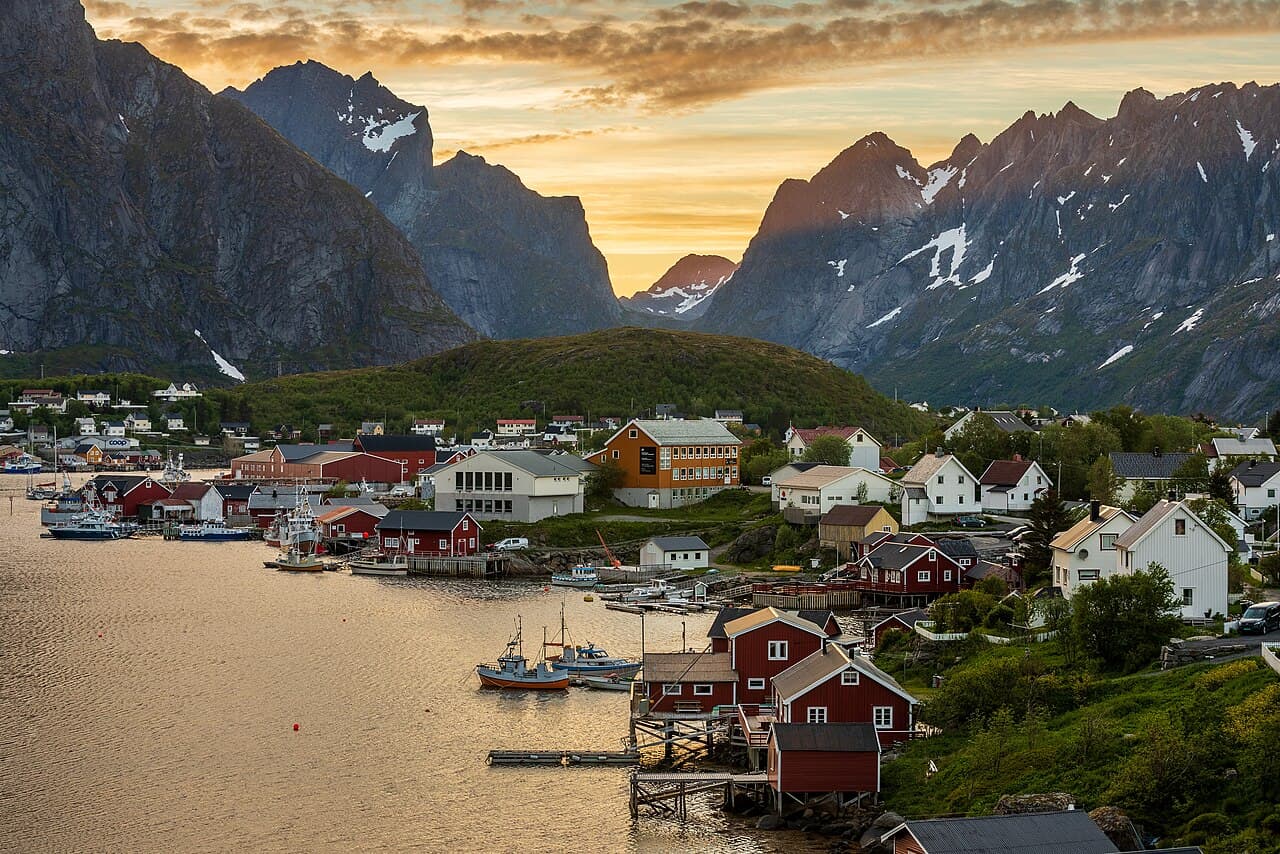
NorwayPhoto: Ximonic (Simo Räsänen) / Wikimedia Commons (CC BY-SA 4.0)

Norway

Country · NO · NOK · Europe/Oslo

This information may change. Always check the official source.Last verified: August 2026 by

Norway is in Schengen without being in the EU, so the 90-day clock is shared with the whole zone and EES now takes your fingerprints at the border. ETIAS still has no launch date, which means any site selling you one is running a scam.

  • Norway is in Schengen without being in the EU, so your 90 days in any 180 are shared with the whole zone - days in Sweden or Germany come out of the same allowance.
  • EES has been fully operational since 10 April 2026: fingerprints and a facial image on your first crossing, and the system counts your days, not a stamp.
  • ETIAS has not launched and no date has been announced, so any website selling you one today is a scam.
  • Svalbard is not in Schengen. If you need a Schengen visa you need one valid for two entries, because flying to Longyearbyen leaves the zone and coming back re-enters it.
  • The alcohol quota is small and enforced: 1 litre of spirits, 1.5 litres of wine and 2 litres of beer. Carrying more than NOK 25,000 in cash must be declared, at a penalty of 20% if you do not.
More details

Schengen, but not the EU

Norway follows Schengen rules at the border and its own rules at customs, and the customs ones are much tighter than anything in the EU. Getting in is usually easy; what you are carrying is where people come unstuck.

  • Visa-free nationals get 90 days in any 180, counted across the whole Schengen area rather than per country. Days already spent in Sweden, Germany or Spain come out of the same allowance.
  • Your passport must have been issued within the last 10 years and be valid at least 3 months beyond the day you leave Schengen. Airlines routinely enforce 6 months, so treat that as the real rule.
  • EEA and Swiss citizens travel on freedom of movement: a national identity card is enough, no passport needed, no time limit and no biometric registration.

EES is running, ETIAS is not

  • The Entry/Exit System has been fully operational since 10 April 2026. On your first crossing you give fingerprints and a facial image, and the system - not a passport stamp - counts your 90 days. Budget extra time at Gardermoen for that first arrival; later ones are quick.
  • ETIAS has not launched and no date has been announced. The old target of late 2026 was removed from the official pages in July 2026. Any website selling you an ETIAS today is a scam, because applications are not open. When it does start it will cost EUR 20, free for under-18s and over-70s.

Svalbard is not in Schengen, and that catches people out

  • Nobody needs a visa for Svalbard. Under the Svalbard Treaty any nationality may live and work there, and there is no residence permit to apply for.
  • You still fly there through mainland Norway, which is Schengen. If you need a Schengen visa, you need one valid for two entries - flying to Longyearbyen leaves the Schengen area, and flying back re-enters it. A single-entry visa leaves you stuck in Svalbard.
  • You clear passport control and customs in both directions, mainland to Longyearbyen and back.

Two nationality cases worth knowing

  • Russian passports: Norway has not issued tourist visas since 2022 and, since 29 May 2024, refuses entry for tourism and other non-essential travel - at the Storskog land crossing and at the airports - even to holders of Schengen visas issued by other countries. Work, study and visits to close family are the exceptions.
  • British passports are now third-country documents: the 90/180 limit applies, EES applies, and the 10-year issue rule catches people holding older passports that were extended beyond ten years.

What customs actually stops people for

  • The alcohol quota is small and it is enforced. A visitor may bring in 1 litre of spirits, 1.5 litres of wine and 2 litres of beer, plus 200 cigarettes. You may trade down - the spirits litre for 1.5 litres of wine or beer, the wine for the same volume of beer - but never up.
  • Carrying more than NOK 25,000 in cash must be declared on arrival, through the red channel. Failing to declare it costs a penalty of 20% of the money you are carrying, which is a genuinely expensive way to learn the rule.
  • Go through the red channel if you are over any quota. Norway takes this seriously in a way that visitors used to intra-EU travel do not expect.
Sources (5)

Norway sits outside the EU with much lower alcohol limits, which is the entire reason the border shops at Svinesund exist.

  • The quota is 1 litre of spirits, 1.5 litres of wine and 2 litres of beer, with swaps allowed - the spirits litre can become 1.5 litres more wine, and the wine can become beer.
  • Tobacco is 200 cigarettes or 250 g, and you must be 18 for the tobacco and the wine and 20 for the spirits.
  • The value limit for other goods depends on how long you were away - the higher figure applies after 24 hours abroad, the lower one to a day trip.
  • Alcohol is otherwise sold only through Vinmonopolet, at prices that make the quota worth using and the border shops worth the drive.
  • NOK 100,000 or more must be declared, counting foreign currency at its Norwegian value.
More details
  • The quota is 1 litre of spirits, 1.5 litres of wine and 2 litres of beer, with swaps allowed - the spirits litre can become 1.5 litres more wine, and the wine can become beer.
  • Tobacco is 200 cigarettes or 250 g, and you must be 18 for the tobacco and the wine and 20 for the spirits.
  • The value limit for other goods depends on how long you were away - the higher figure applies after 24 hours abroad, the lower one to a day trip.
  • Alcohol is otherwise sold only through Vinmonopolet, at prices that make the quota worth using and the border shops worth the drive.
  • NOK 100,000 or more must be declared, counting foreign currency at its Norwegian value.
  • Meat, cheese and pet food from outside the EEA are restricted, and the quota on food from within it is by weight.
Sources (1)

European visitors are covered by EHIC or GHIC and pay the same small patient fee a Norwegian pays, but Norway wants the physical card and will not take a photo of one. Mountain rescue is free; getting you home is not.

  • EU, EEA and Swiss visitors with an EHIC, and UK visitors with a GHIC, are treated on the same terms as Norwegians - the old "the GHIC does not work in Norway" advice is wrong.
  • Norway wants the physical card. A photo or screenshot on your phone is routinely refused, so dig the card out before you fly.
  • Search and rescue is free - Norway does not bill you for a helicopter off a mountain the way parts of the Alps do.
  • Insurance still matters for repatriation, which nothing here covers, and hospital admission as an in-patient is free for everyone.
  • 116 117 reaches the out-of-hours doctor, free to call and answered around the clock, when it is urgent but not an emergency.
More details

Cover

  • EU, EEA and Swiss visitors with an EHIC, and UK visitors with a GHIC, are treated on the same terms as Norwegians. The UK-EFTA agreement settled this in 2024, so the old "the GHIC does not work in Norway" advice is wrong.
  • Norway wants the physical card. A photo or a screenshot on your phone is routinely refused. Dig the card out before you fly.
  • Everyone else needs travel insurance, and should treat that as mandatory rather than prudent, because the private bill in this country is what you would expect from the prices.
  • No vaccinations are required or recommended for entry beyond being up to date with the routine ones.

What you pay

Health in Norway
ServicePatient fee
GP appointment, daytimearound NOK 179
GP appointment, eveningaround NOK 301
Legevakt without a referral, daytimearound NOK 375
Legevakt, night or weekendaround NOK 558
Outpatient specialist consultationaround NOK 403
Hospital admission as an in-patientfree
  • Children are treated free, and emergency admission is free for everyone.
  • Search and rescue is free. Norway does not bill you for a helicopter off a mountain the way parts of the Alps do - but insurance still matters for repatriation, which nothing here covers.

Where to go

  • 113 for an ambulance and anything life-threatening.
  • 116 117 for the legevakt, the out-of-hours medical centre, when it is urgent but not an emergency. Free to call, answered around the clock, routes you to the nearest one.
  • Apotek are the pharmacies - Apotek 1, Vitusapotek, Boots - and pharmacists speak English and give good advice. Even routine painkillers are sold in small packs at prices that will surprise you.
  • Bring your own prescription medicines with the prescription, in original packaging. Norway is strict about importing medication, and codeine-based painkillers sold over the counter elsewhere are prescription-only here.

Two local risks

  • Ticks carry Lyme disease and, on the southern coast, tick-borne encephalitis. If you are hiking in long grass between spring and autumn, check yourself; a TBE vaccination is worth discussing for a summer spent outdoors in the south.
  • The tap water is excellent everywhere and buying it bottled is a waste of money. Mountain stream water is generally safe above the treeline and below any grazing.
Sources (3)

Oslo

Long-term averages for Oslo: the mean daily high, the mean overnight low and the mean monthly rainfall across 30 years of ERA5 reanalysis data (1995–2024).

DayNight
-1001020°C0200mmJanFebMarAprMayJunJulAugSepOctNovDecJanuary: Day -2 °C, Night -7 °C, Rain 73 mm. February: Day 0 °C, Night -6 °C, Rain 56 mm. March: Day 4 °C, Night -3 °C, Rain 52 mm. April: Day 10 °C, Night 1 °C, Rain 57 mm. May: Day 15 °C, Night 6 °C, Rain 82 mm. June: Day 20 °C, Night 11 °C, Rain 98 mm. July: Day 21 °C, Night 14 °C, Rain 110 mm. August: Day 20 °C, Night 13 °C, Rain 104 mm. September: Day 16 °C, Night 9 °C, Rain 88 mm. October: Day 9 °C, Night 5 °C, Rain 94 mm. November: Day 4 °C, Night 0 °C, Rain 84 mm. December: Day -1 °C, Night -5 °C, Rain 65 mm
Show the monthly table
Oslo
MonthDay (°C)Night (°C)Rain (mm)
January-2-773
February0-656
March4-352
April10157
May15682
June201198
July2114110
August2013104
September16988
October9594
November4084
December-1-565

Bergen

Long-term averages for Bergen: the mean daily high, the mean overnight low and the mean monthly rainfall across 30 years of ERA5 reanalysis data (1995–2024).

DayNight
-505101520°C0500mmJanFebMarAprMayJunJulAugSepOctNovDecJanuary: Day 2 °C, Night -2 °C, Rain 240 mm. February: Day 3 °C, Night -2 °C, Rain 224 mm. March: Day 5 °C, Night -1 °C, Rain 180 mm. April: Day 9 °C, Night 2 °C, Rain 125 mm. May: Day 13 °C, Night 6 °C, Rain 120 mm. June: Day 15 °C, Night 9 °C, Rain 122 mm. July: Day 17 °C, Night 11 °C, Rain 160 mm. August: Day 17 °C, Night 11 °C, Rain 199 mm. September: Day 15 °C, Night 9 °C, Rain 247 mm. October: Day 10 °C, Night 5 °C, Rain 292 mm. November: Day 6 °C, Night 2 °C, Rain 250 mm. December: Day 3 °C, Night -1 °C, Rain 258 mm
Show the monthly table
Bergen
MonthDay (°C)Night (°C)Rain (mm)
January2-2240
February3-2224
March5-1180
April92125
May136120
June159122
July1711160
August1711199
September159247
October105292
November62250
December3-1258

Tromso

Long-term averages for Tromso: the mean daily high, the mean overnight low and the mean monthly rainfall across 30 years of ERA5 reanalysis data (1995–2024).

DayNight
-10-505101520°C0200mmJanFebMarAprMayJunJulAugSepOctNovDecJanuary: Day -6 °C, Night -10 °C, Rain 109 mm. February: Day -5 °C, Night -10 °C, Rain 98 mm. March: Day -2 °C, Night -7 °C, Rain 108 mm. April: Day 2 °C, Night -3 °C, Rain 91 mm. May: Day 7 °C, Night 2 °C, Rain 93 mm. June: Day 12 °C, Night 7 °C, Rain 95 mm. July: Day 16 °C, Night 10 °C, Rain 96 mm. August: Day 15 °C, Night 10 °C, Rain 109 mm. September: Day 11 °C, Night 6 °C, Rain 126 mm. October: Day 4 °C, Night 0 °C, Rain 125 mm. November: Day -1 °C, Night -6 °C, Rain 99 mm. December: Day -4 °C, Night -9 °C, Rain 101 mm
Show the monthly table
Tromso
MonthDay (°C)Night (°C)Rain (mm)
January-6-10109
February-5-1098
March-2-7108
April2-391
May7293
June12795
July161096
August1510109
September116126
October40125
November-1-699
December-4-9101
Sources (1)

Hotels run NOK 1,500 to NOK 3,000 a night in season, campsite cabins start near NOK 700, and wild camping is free and legal almost anywhere under allemannsretten. The tourist tax you read about is not being charged yet.

  • Wild camping is a legal right, not a tolerated practice - you may pitch a tent on uncultivated land anywhere in the country without asking anyone.
  • The conditions are real: at least 150 metres from the nearest house, two nights maximum in one spot, and no open fires near forest between 15 April and 15 September.
  • Campsite cabins are the Norwegian default, from about NOK 700, with upgraded ones at NOK 1,000 to 1,500 still sleeping a family.
  • Hotel breakfast is usually included and usually enormous - in a country this expensive it is often the meal that gets you to dinner.
  • The tourist tax you have read about is not being charged yet. The earliest it can appear on a bill is 1 January 2027, so a "Norway tourist tax" in 2026 is not a government charge.
More details

Accommodation is the single biggest line in a Norwegian budget, and the country gives you an unusually good way around it: sleeping outside is legal and free.

What a bed costs

Accommodation in Norway
TypeTypical price per night
Hotel double, Oslo or Bergen in summerNOK 2,000 to 3,000
Hotel double, national average with breakfastaround NOK 1,725
Guesthouse (pensjonat) roomNOK 600 to 1,000
Hostel dorm bedNOK 270 to 340
Campsite cabin (hytte), sleeps 4 to 6from NOK 700
Wild campingfree
  • Fjord destinations are their own market. Flam, Geiranger and Lofoten run NOK 2,500 to 4,000 in high season and drop by nearly half in spring and autumn.
  • Hotel breakfast is usually included and is usually enormous. In a country this expensive that matters - it is often the meal that gets you to dinner.
  • Book Lofoten and the fjords months ahead for June to August. There is not much supply and it goes.

The cheap options that are actually good

  • Campsite cabins are the Norwegian default. Basic ones give you bunks and a kitchen; upgraded ones with a bathroom run NOK 1,000 to 1,500 and still sleep a family.
  • DNT cabins - the Norwegian Trekking Association runs a network of huts across the mountains, from staffed lodges to unstaffed cabins you open with a DNT key and pay for on trust. Membership pays for itself in a few nights.
  • Wild camping is a legal right, not a tolerated practice. See below.

Allemannsretten, and the rules that come with it

The right to roam lets you pitch a tent on uncultivated land anywhere in the country, without asking anyone. The conditions are short and they are real:

  • At least 150 metres from the nearest inhabited house or holiday cabin.
  • Two nights maximum in one spot, after which you ask the landowner.
  • Not on cultivated land, and not in a way that damages anything.
  • No open fires in or near forest between 15 April and 15 September, which is a fire ban, not a guideline. Use a camping stove.
  • Leave nothing. Norwegians are unforgiving about this and they are right to be.

The tourist tax has not started

  • The Visitor Contribution Act came into force on 1 July 2026, and nobody is collecting anything yet. It gives selected municipalities the right to apply for permission to charge up to 3% on paid overnight stays.
  • The earliest any of it can appear on a bill is 1 January 2027, and only after a municipality proves the need, gets ministry approval and adopts its own regulation.
  • Tromso has voted to be first, with Bergen, Lofoten and others expected to follow. Campers are exempt from the levy. If a booking site is adding a "Norway tourist tax" in 2026, that is not a government charge.
Sources (3)

If your SIM is from the EU or the EEA, do nothing - Norway is inside the roam like at home area and your normal allowance works at no extra cost. Everyone else should buy a Telenor or Telia prepaid SIM, or an eSIM before flying.

  • If your SIM is from the EU or EEA, do nothing. Norway is inside roam-like-at-home, so your normal allowance works at no extra cost - buying a Norwegian SIM is money thrown away.
  • UK SIMs are not covered since Brexit, and several UK operators reinstated roaming fees, so check your own tariff rather than assuming.
  • Telenor has the best coverage by a clear margin - the one to pick for the fjords, the mountain roads and anywhere north of Trondheim.
  • Every Norwegian SIM must be registered to a passport, scanned at the shop, with a tourist package running roughly NOK 200 to NOK 400.
  • Coverage is excellent on the coast and in the valleys and patchy on the plateaus. Download offline maps before any hike - the mountains are exactly where the signal goes.
More details

Norway is not in the EU, but it is in the EEA, and roaming follows the EEA - so an EU or EEA SIM works here on your home allowance with no surcharge at all. Buying a Norwegian SIM when you already hold a French, German or Polish one is money thrown away.

  • Who is covered: any SIM from the 27 EU states plus Iceland, Liechtenstein and Norway itself. Calls, texts and data all come out of your domestic bundle.
  • Who is not: UK SIMs since Brexit, and everyone from outside Europe. Several UK operators reinstated roaming fees, so check your own tariff rather than assuming.
  • Fair use still applies. Data-heavy plans have a roaming cap, and past it the regulated surcharge is about EUR 2 per GB. For a two-week trip you will not get near it.

If you do need a local SIM

  • Telenor has the best coverage by a clear margin, and it is the one to pick for the fjords, the mountain roads and anywhere north of Trondheim.
  • Telia is close behind and holds up in every town a tourist is likely to visit.
  • Ice is the cheapest of the three and fine in cities, but noticeably thinner in remote areas.
  • Expect roughly NOK 200 to NOK 400 for a tourist prepaid package with 10 GB to 20 GB, or under NOK 150 for a small starter bundle. This is not a cheap country for mobile data.

Registration and eSIM

  • Every Norwegian SIM must be registered to a passport. Bring the physical document to the shop; the assistant scans it and the line activates in a few minutes.
  • All three networks support eSIM, and so does Saily, at USD 3.99 for 1 GB over 7 days or USD 17.99 for 10 GB over 30 days. For a short trip an international eSIM bought before you fly is usually the least effort, and the price gap with a local SIM is small here.
  • Coverage is excellent along the coast and in the valleys and patchy on the plateaus. Download offline maps before any hike; the mountains are where the signal disappears, and that is exactly where you would want it.
Sources (4)

Norwegian sockets are Type at 230 V, and much of the country runs on an IT grid where older sockets have no earth.

  • A Europlug fits every socket in the country.
  • Most homes are on an IT distribution grid rather than the TN system used elsewhere in Europe. It is invisible from the front of a socket, and it is why unearthed outlets survived so long in Norwegian housing.
  • British, American and Australian plugs need an adapter.
  • 230 V, so only American 120 V-only appliances need a converter.
  • Cabins and hytter frequently have a single earthed socket and a lot of extension leads, which is worth knowing before relying on charging several things overnight.
More details

Sockets in Norway are Type and at 230 V, 50 Hz - the round Schuko outlet used across most of Europe.

  • A Europlug fits every socket in the country.
  • Most homes are on an IT distribution grid rather than the TN system used elsewhere in Europe. It is invisible from the front of a socket, and it is why unearthed outlets survived so long in Norwegian housing.
  • British, American and Australian plugs need an adapter.
  • 230 V, so only American 120 V-only appliances need a converter.
  • Cabins and hytter frequently have a single earthed socket and a lot of extension leads, which is worth knowing before relying on charging several things overnight.
Sources (1)

Type and sockets, English spoken by essentially everyone, and shops that shut on Sundays. The rule that catches visitors is alcohol: the supermarket stops selling beer at 20:00, and anything stronger only comes from Vinmonopolet.

  • Anything above 4.75% is sold only by the state monopoly, typically 10:00 to 18:00 on weekdays and 10:00 to 15:00 on Saturdays, closed Sundays.
  • Supermarkets sell beer only, and only until 20:00 on weekdays and 18:00 on Saturdays. After the cut-off the till refuses the sale whatever time the shop closes.
  • Shops are closed on Sundays apart from small convenience shops, petrol stations and bakeries.
  • Take your shoes off indoors. In any Norwegian home this is automatic, and not doing it is genuinely rude.
  • Take a numbered ticket on the way into a pharmacy or post counter - without one you will be invisible. Sockets are type and at 230V.
More details
  • Power: Type and sockets, 230V, 50Hz. UK, US and Australian devices need an adapter.
  • Time: CET (UTC+1), CEST (UTC+2) in summer. In Tromso that means midnight sun from late May to late July, and no sun at all from late November to mid-January.
  • Language: English is spoken fluently by nearly everyone under seventy. You will not need Norwegian for anything practical, and trying a few words is appreciated rather than expected.
  • Tap water: free, cold and among the best in the world. Refill the bottle.
  • Shops: usually 09:00 or 10:00 to 18:00 or 20:00 on weekdays, shorter on Saturdays, and closed on Sundays apart from small convenience shops, petrol stations and bakeries.
  • Public holidays shut things completely: Christmas Day, Boxing Day, New Year's Day, Maundy Thursday, Good Friday, Easter Monday, Labour Day on 1 May, Constitution Day on 17 May, Ascension and Whit Monday. 17 May is a national street party and worth planning around rather than through.
  • Toilets are widely available and frequently cost NOK 10 to 30, paid by card.
  • Queue tickets: pharmacies, post counters and Vinmonopolet use a numbered ticket machine (kolapp). Take one on the way in or you will be invisible.

Alcohol, which is its own subject here

  • Anything above 4.75% is sold only by Vinmonopolet, the state monopoly. Typical hours are 10:00 to 18:00 on weekdays - some branches to 20:00 - and 10:00 to 15:00 on Saturdays, closed on Sundays and public holidays.
  • Supermarkets sell beer only, and only until 20:00 on weekdays and 18:00 on Saturdays. After the cut-off the till refuses the sale, whatever time the shop itself closes. On Sundays no shop sells alcohol at all.
  • You must be 18 for beer and wine and 20 for spirits, and ID checks are routine regardless of how old you look.
  • A bar pint runs NOK 100 to 140. The vorspiel - drinking at home before going out - is a national institution for exactly this reason.

Things visitors get wrong

  • Take your shoes off indoors. In any Norwegian home this is automatic and not doing it is genuinely rude.
  • Leave a wide berth. Norwegians keep more personal space than most of Europe, on buses, in queues and at bus stops. It is not coldness.
  • Do not camp within 150 metres of a house, and do not light a fire in or near forest between 15 April and 15 September.
  • Drones are restricted near airports, over crowds and in the national parks, and Svalbard bans them almost entirely.
  • Pay the toll and the parking. Both are camera-enforced and the bill reaches your rental company eventually, with a fee on top.
Sources (3)

Cash has effectively stopped working here - under 4% of payments are made in notes and plenty of places refuse them outright. Bring a card, decline conversion to your own currency, and do not tip.

  • This is one of the most cashless countries on earth - notes account for under 4% of payments and many cafes, museums and buses do not accept them at all.
  • Vipps is the app everyone uses and you almost certainly cannot, since it needs a Norwegian bank account. When a stall says "Vipps only", ask - they nearly always have a card terminal.
  • Decline dynamic currency conversion every time. The markup is roughly 5% to 8% over the mid-market rate.
  • Tipping is not expected - service is in the price. Rounding up 5% to 10% for genuinely good service is normal and more is odd.
  • The cheapest thing you can do here is cook. The gap between a supermarket meal and a restaurant one is wider in Norway than almost anywhere.
More details

Money and paying for things

Norway uses the Norwegian krone (NOK), and it is not on the euro despite being surrounded by countries that are.

  • This is one of the most cashless countries on earth. Cash accounts for under 4% of payments in shops, and many cafes, museums and buses simply do not accept it. Apple Pay and Google Pay work essentially everywhere.
  • You can travel here for two weeks without touching a banknote, and most Norwegians do exactly that.
  • Vipps is the app everyone uses, and you almost certainly cannot. It needs a Norwegian bank account and BankID, so when a market stall or a ferry says "Vipps only", ask - they will nearly always have a card terminal too.
  • Decline dynamic currency conversion, every time. If a terminal or an ATM offers to bill you in your own currency, the markup is roughly 5% to 8% over the mid-market rate. Always choose NOK.
  • If you do want notes, use bank ATMs branded Bankaxept; the independent machines in tourist streets add their own fee. Do not change money at the airport kiosks.
  • Tipping is not expected. Service is in the price. Rounding up a restaurant bill by 5% to 10% for genuinely good service is normal and anything more is odd; nobody tips taxis, bars or hotels.
  • Carrying more than NOK 25,000 in cash must be declared at customs. The penalty for not declaring is 20% of the amount.

What things cost

Money and payments in Norway
ItemTypical price
CappuccinoNOK 50 to 70
Pint of beer in a barNOK 100 to 140
The same beer from a supermarketNOK 35 to 50
Main course, casual restaurantNOK 250 to 400
Single Ruter ticket, Oslo zone 1NOK 46
Litre of milkaround NOK 22
Hostel dorm bedNOK 270 to 340
  • Non-resident visitors can reclaim VAT on purchases above a minimum value, through the tax-free refund desks at the airports. Get the form stamped before you check the goods in.
  • The cheapest thing you can do here is cook. Rema 1000, Kiwi and Extra are the budget supermarkets, and the gap between a supermarket meal and a restaurant one is wider in Norway than almost anywhere.
Sources (3)

Everyday prices

Typical prices in Norwegian krone (NOK), averaged across the country by Numbeo and read on 12 August 2026. Tick Convert prices above the table to see every amount in your own currency.

Everyday prices
ItemTypical price
Inexpensive restaurant meal220 NOK
Dinner for two, mid-range, three courses1,000 NOK
Cappuccino53 NOK
Local draught beer, 0.5 l110 NOK
Bottled water, 0.33 l31 NOK
Public transport, one-way ticket45 NOK
Taxi, starting fare114 NOK
Petrol, 1 litre22 NOK
Cigarettes, pack of 20 (Marlboro)166 NOK
Average net monthly salary39,500 NOK

These are country-wide averages, not a price list: tourist districts, airports and islands sit well above them, and small towns below. The salary line is there for proportion - it is what people living here actually earn.

Sources (1)

Airport guides for Norway9

One page per airport: the routes into town, what they cost and the trap particular to that arrival.

See all 9 airports

At Oslo Airport the express train costs NOK 268 and the ordinary train on the same tracks costs about half that for four minutes more. The bigger trap is booking a flight to "Oslo Torp", which is 110 km from Oslo.

  • Two trains leave the same Oslo airport station for the same centre, and one costs twice as much to save four minutes. The express is NOK 268; the ordinary train is about NOK 125.
  • Your ordinary train ticket also covers onward buses, trams and the metro for 2.5 hours, which the express ticket does not.
  • Children under 16 travel free on the express with an adult, and students and over-67s pay half - which flips the comparison for a family.
  • "Oslo Torp" is 110 km from Oslo. Budget airlines sell it as Oslo, and terminal to city centre runs about 1 hour 45 minutes in total.
  • Bergen's light rail into the centre is about NOK 51 and takes 45 minutes - one of the best-value airport links in Europe.
More details
Oslo Gardermoen (OSL)

Two trains leave the same station for the same city centre, and one of them costs twice as much to save you four minutes.

Transport from the airport in Norway
OptionPriceTimeNotes
Flytoget airport expressNOK 26819 minEvery 10 minutes, to Oslo S and on to Lysaker, Skoyen, Asker and Drammen
Vy local or regional trainabout NOK 12523 minOslo Airport is Ruter zone 4N, so a four-zone ticket covers it
Flybussen coachabout NOK 20045 minEvery 20 minutes to the central bus terminal
TaxiNOK 800 to NOK 1,20040 minFixed-price airport fares; book at the rank, not from a tout
  • Flytoget is genuinely good and genuinely overpriced. It runs every 10 minutes, it is fast, and Norwegians largely take the ordinary train.
  • Children under 16 travel free on Flytoget with an adult, and 16 to 20 year-olds, students and over-67s pay half price with ID. For a family that flips the comparison entirely.
  • The Flytoget fare depends on the station: NOK 210 to Lillestrom, NOK 268 to Oslo S and the western stops, NOK 324 to Drammen.
  • Your Vy train ticket also covers onward buses, trams and the metro for 2.5 hours, which the Flytoget ticket does not.
"Oslo Torp" is not in Oslo

Sandefjord Airport Torp (TRF) is 110 km south-west of the city, and budget airlines sell it as Oslo. Allow two hours and a separate ticket.

  • Free shuttle bus from the terminal to Torp station, under five minutes, timed to the trains.
  • Vy R11 train to Oslo S. Terminal to city centre runs about 1 hour 45 minutes in total.
  • Torp-Ekspressen coaches go direct to Oslo bus terminal in roughly two hours.
The other airports
  • Bergen Flesland (BGO): the Bybanen light rail, line 1, runs from outside the terminal to the centre in about 45 minutes for around NOK 51 - one of the best-value airport links in Europe. The Flybussen coach is faster at about 25 minutes and costs around NOK 179 online.
  • Tromso (TOS): the airport is 5 km from the centre. The Flybussen costs about NOK 130, and the ordinary city bus 40 or 42 costs a normal city fare and stops just outside.
  • Stavanger (SVG) and Trondheim (TRD) are both served by Flybussen coaches timed to arrivals.

Every one of these takes cards and phones, and several take nothing else. There is no ticket counter to queue at and no cash to find.

Sources (4)

Getting around the city, and which apps to install

Uber and Bolt both work in the big cities, and the one thing never to do is hail a taxi off the street - fares are deregulated and a street cab can legally charge whatever it likes. Oslo runs on Ruter, at NOK 46 a ride.

  • Never hail a taxi on the street. Norway deregulated taxi pricing, so an unbooked cab can legally charge whatever its posted tariff says.
  • Book through an app or use a known company's marked rank - Uber and Bolt both operate in the four biggest cities, with prices shown up front.
  • Oslo runs on Ruter at NOK 46 a single, lasting 60 minutes including transfers across metro, tram, bus and the island ferries.
  • Buy in the app before boarding. Drivers do not sell tickets on most services and inspectors issue an on-the-spot fine of NOK 1,250.
  • There is no national travelcard - Bergen, Trondheim, Stavanger and Tromso each have their own app and fares, though Entur ties every operator together.
More details

Public transport is excellent, expensive and entirely app-based. Taxis are the one thing that can still go badly wrong.

  • Oslo runs on Ruter. A single adult ticket in zone 1 is NOK 46 and lasts 60 minutes including transfers, across metro, tram, bus and the local ferries to the islands. A 24-hour ticket is NOK 137, 7 days NOK 379, 30 days NOK 805.
  • Buy in the Ruter app before boarding. Drivers do not sell tickets on most services, and inspectors issue an on-the-spot fine of NOK 1,250 without much sympathy.
  • Bergen uses Skyss, Trondheim AtB, Stavanger Kolumbus, Tromso Troms fylkestrafikk. Each has its own app and its own fares; there is no national travelcard.
  • Entur is the app that ties it together - one journey planner and ticket shop for every operator in the country, including the trains.

Taxis and ride-hailing

  • Uber and Bolt both operate in Oslo, Bergen, Trondheim and Stavanger, and their drivers hold ordinary taxi licences. Prices are shown up front.
  • Never hail a taxi on the street. Norway deregulated taxi pricing, so an unbooked cab can legally charge whatever its posted tariff says, and the tourist-facing ones near stations and nightlife are notorious for it. Book through an app, or use the marked ranks of a known company - Oslo Taxi, Norgestaxi, Bergen Taxi.

Between cities

  • Trains are run by Vy and, on some lines, SJ and Go-Ahead, all bookable through Entur or vy.no. Advance "minipris" fares are far cheaper than walk-up ones, and the Bergen Line and Rauma Line are sights in their own right.
  • Coaches: Vy Express and NOR-WAY Bussekspress cover the routes trains do not.
  • Ferries and coastal ships are part of the road network here. Hurtigruten and Havila run the coastal route; car ferries on the fjords are unbookable and simply turn up.
  • Driving is the way to see the fjords. Rentals are pricey, tolls are automatic through AutoPASS and billed to the rental company weeks later, and mountain passes close in winter without warning.

Apps and platforms

Entur for any journey in the country, Ruter or Skyss for the city you are in, Yr for the weather that decides your day, and Varsom before any winter trip off a groomed track.

  • Entur is the single most useful app here - every operator in Norway in one journey planner and ticket shop.
  • Yr is the forecast Norwegians check obsessively, and it is why the hiking plan changes.
  • Varsom carries the avalanche, flood and landslide warnings region by region, and is non-negotiable before any off-piste or ski-touring day.
  • UT.no is the trekking association's trail and cabin database - every marked route and hut, with conditions.
  • Download the offline map before you leave the city. Signal disappears in the mountains, which is where you will want it.
More details
  • Entur - https://www.entur.no/ - Every operator in Norway in one journey planner and ticket shop. The single most useful app here.
  • Yr - https://www.yr.no/en - The forecast from the Meteorological Institute and NRK. Norwegians check it obsessively and so should you; it is why the hiking plan changes.
  • Varsom - https://varsom.no/en/ - NVE avalanche, flood and landslide warnings, region by region. Non-negotiable before any off-piste or ski-touring day.
  • Ruter - https://ruter.no/ - Tickets and real-time departures for Oslo and Akershus.
  • Skyss - https://www.skyss.no/ - The same for Bergen and Vestland, including Bybanen.
  • Vy - https://www.vy.no/ - Train tickets, and the cheap advance fares appear here first.
  • UT.no - https://www.ut.no/ - The DNT trail and cabin database: every marked route, every hut, with conditions.
  • Bolt and Uber - Ride-hailing in the four biggest cities, with the fare agreed before you get in.
  • Google Maps - Download the offline map before you leave the city. Signal disappears in the mountains, which is where you will want it.
Sources (6)

Norway has no toll booths at all - cameras read the plate and the bill reaches the hire company weeks later, with a fee.

  • You cannot pay a Norwegian toll at the roadside. Hire cars are registered with AutoPASS and the company bills the tolls on with an administration fee per crossing, which adds up on a fjord route.
  • City tolls apply as well as road tolls. Oslo, Bergen and Trondheim charge on entry by camera, with the rate varying by time of day and engine type.
  • The alcohol limit is 0.2 g/l and the penalties are among the harshest in Europe, including prison for serious cases.
  • Ferries are part of the road network. Many routes have no alternative, they take cars in the order they arrive, and AutoPASS pays for those too.
  • Mountain passes close in winter without much notice; the road authority's live map is the only reliable source before setting off.
More details

No booths anywhere: AutoPASS reads the plate and the charge follows you home.

  • You cannot pay a Norwegian toll at the roadside. Hire cars are registered with AutoPASS and the company bills the tolls on with an administration fee per crossing, which adds up on a fjord route.
  • City tolls apply as well as road tolls. Oslo, Bergen and Trondheim charge on entry by camera, with the rate varying by time of day and engine type.
  • The alcohol limit is 0.2 g/l and the penalties are among the harshest in Europe, including prison for serious cases.
  • Ferries are part of the road network. Many routes have no alternative, they take cars in the order they arrive, and AutoPASS pays for those too.
  • Mountain passes close in winter without much notice; the road authority's live map is the only reliable source before setting off.
Sources (1)

Norway is one of the safest countries in the world and its mountains kill people every year anyway. The risk here is not crime, it is weather, water and overconfidence on a route that looked easy in a photograph.

  • Crime is genuinely not the problem here - violent crime against visitors is rare and petty theft is uncommon outside a few obvious places.
  • The most common way a tourist loses money is a street taxi, whose deregulated tariff can be legal and outrageous at once. Book through an app.
  • The mountains are Arctic-grade and reachable by anyone who parks a rental car, which is what the rescue statistics are made of.
  • The weather changes in under an hour, at any elevation and in any month. Check Yr before every day out and turn back when it says to - Norwegians do this without embarrassment.
  • Trolltunga, Preikestolen, Kjeragbolten and Besseggen are long, exposed, unfenced routes. There are no barriers at the famous photo spots and people have died taking the picture.
More details

Crime is genuinely not the problem

Violent crime against visitors is rare and petty theft is uncommon outside a few obvious places. Ordinary care is enough.

  • Pickpocketing happens around Oslo Central Station, Karl Johans gate and the Bergen cruise quay in summer, and nowhere much else.
  • The most common way a tourist loses money here is a street taxi. Fares are deregulated; an unbooked cab at a station or outside a bar can charge a legal but outrageous tariff. Book through an app.
  • Oslo has a visible street drug scene around the station and parts of Gronland. It is unpleasant rather than dangerous and is best walked past.
  • Fake charity clipboards and "found ring" approaches appear in the summer tourist streets. Both are the standard European scripts.

What actually hurts people

The mountains here are Arctic-grade and reachable by anyone who parks a rental car. That combination is what the rescue statistics are made of.

  • The weather changes in under an hour, at any elevation and in any month. Cotton clothing plus afternoon rain plus wind is how hypothermia happens in July.
  • Check Yr before every day out, and turn back when it says to. Norwegians do this without embarrassment and so should you.
  • Check varsom.no before any winter trip off a groomed track. Most avalanche deaths here involve people who did not read the forecast; slopes above 30 degrees are where slides start.
  • Trolltunga, Preikestolen, Kjeragbolten and Besseggen are long, exposed, unfenced routes. Trolltunga is roughly 10 hours return. There are no barriers at the famous photo spots and people have died taking the picture.
  • The Mountain Code (fjellvettreglene) is the national standard: plan the route, tell someone, bring windproof layers and extra food, respect the weather, turn back in time.
  • Water is colder than it looks. Fjords and lakes stay near single figures all summer, and the coast has strong tides and currents.

On the road

  • Tunnels are long, dark and frequent, some of them undersea and steep. Headlights stay on around the clock.
  • Mountain passes close in winter, sometimes for days, and convoy driving is a normal instruction rather than an emergency one.
  • Moose, deer and reindeer on the road at dusk are a real collision risk, especially in the north.
  • The drink-drive limit is 0.02%, effectively zero, and enforcement is serious.

And on Svalbard

  • You may not leave Longyearbyen without polar bear protection. This is a legal requirement, not advice, and it means a rifle and someone trained to use it. Book a guided trip.
Sources (3)

Three separate emergency numbers rather than one: 110 fire, 112 police, 113 ambulance. 116 117 reaches the out-of-hours doctor, and 112 is also what you call from a mountain.

  • Norway does not use a single emergency number: 110 is fire, 112 police, 113 ambulance.
  • 112 will redirect you if you get it wrong, but calling the right one is faster, and in an ambulance case that matters.
  • 112 is also the mountain number - police coordinate search and rescue, and rescue is not billed to you.
  • Give a position, not a place name. In the mountains, read out the coordinates from your phone's map - place names repeat across the country.
  • Tell someone your route and expected return time before you go out. It is the first question rescue will ask.
More details

The numbers

Emergency information in Norway
NumberService
110Fire, and hazards such as gas or chemicals
112Police, and mountain and land rescue
113Ambulance and life-threatening medical emergencies
116 117Legevakt, the out-of-hours doctor, free to call
116 123Mental health helpline, free and anonymous, around the clock
120Rescue at sea
1412Text-based emergency line for deaf and hard-of-hearing callers
  • Norway does not use a single number. 112 will redirect you if you get it wrong, but calling the right one is faster, and in an ambulance case that matters.
  • All of them are free, work from any phone, and are answered in English.
  • 112 is also the mountain number. Police coordinate search and rescue, and rescue is not billed to you.

If something goes wrong

  • Lost or stolen passport: report it to the police - a report is needed for the replacement - and then contact your embassy. Most are in Oslo.
  • Cards: block them through your own bank's app first, which is faster than any hotline.
  • Give a position, not a place name. In the mountains, read out the coordinates from your phone's map. Place names repeat across the country and rescuers need the numbers.
  • Norwegian phones get emergency alerts by SMS and a siren tone; do not silence them.

Before you go out

  • Check Yr for the weather and varsom.no for avalanche risk. Both are official, both are in English.
  • Tell someone your route and your expected return time. This is the single most useful thing you can do, and it is the first question rescue will ask.
  • Download the offline map. Mobile coverage is good on the coast and in the valleys and disappears exactly where you would need it.
Sources (4)