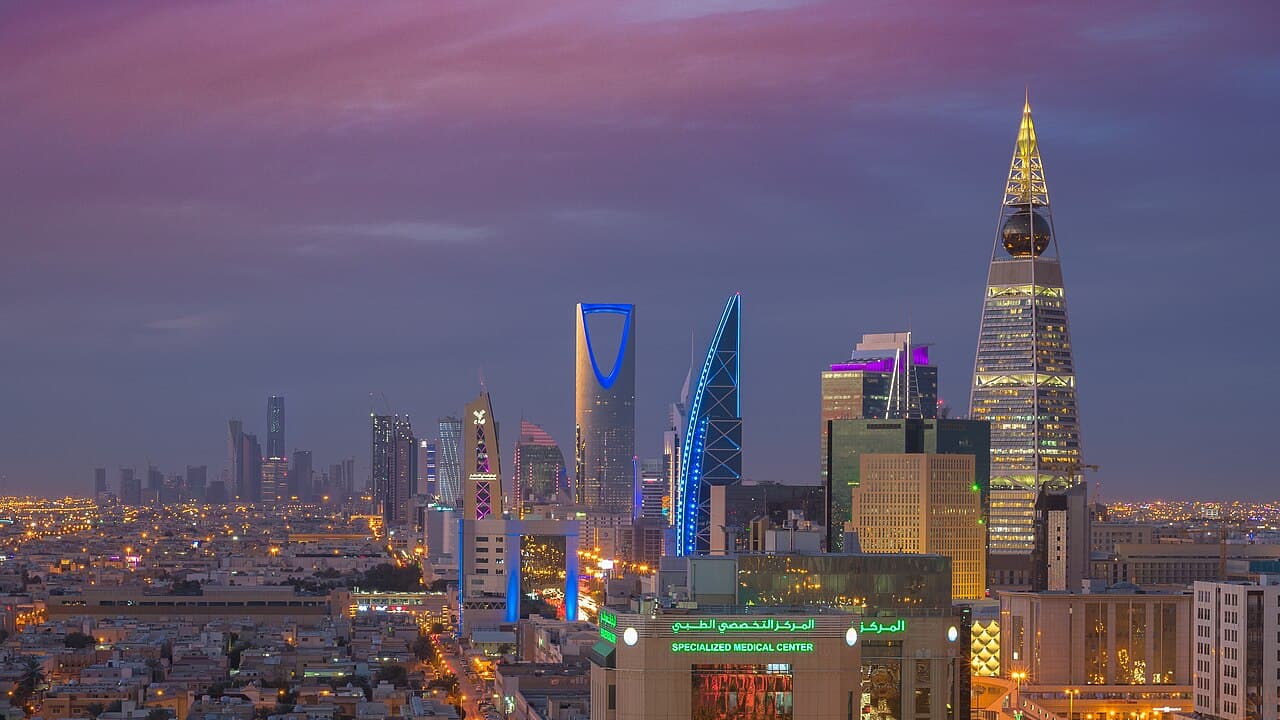
Saudi ArabiaPhoto: B.alotaby / Wikimedia Commons (CC BY-SA 4.0)

Saudi Arabia

Country · SA · SAR · Asia/Riyadh

This information may change. Always check the official source.Last verified: August 2026 by

The eVisa lasts a year and lets you in as often as you like - but the 90 days it grants are 90 days in total, not 90 per visit.

  • The tourist eVisa is valid 365 days from issue and is multiple entry. So far so generous.
  • Apply online at the official portal, or on arrival at any Saudi international airport. Both work; the airport route is the fallback if you left it late.
  • The eVisa includes health cover up to SAR 100,000. That is the number to look at hard.
  • Alcohol is prohibited outright - importing it, and also arriving drunk. There is no duty-free allowance and there is no discretion.
  • Non-Muslims may not enter Mecca, and access to central Medina is restricted. The roads are signed and the checkpoints are real.
More details

The arithmetic everybody gets wrong

  • The tourist eVisa is valid 365 days from issue and is multiple entry. So far so generous.
  • It grants 90 days in total across those 365 days, not 90 days per entry. Come for six weeks in March and six weeks in October and you have used it up.
  • This is the single most misread rule in the Gulf. Every neighbouring country's waiver resets on each entry; this one does not.
  • Count your days, because the exit control does.

Getting it

  • Apply online at the official portal, or on arrival at any Saudi international airport. Both work; the airport route is the fallback if you left it late.
  • 66 nationalities are eligible, including the UK, USA, Canada, Australia, the EU and Schengen states, Japan, South Korea, Singapore, Malaysia, China including Hong Kong and Macao, Russia, Kazakhstan, Kyrgyzstan and Uzbekistan.
  • Not on the list means applying through a Saudi embassy, and it is a different process with a different timescale.
  • The visa covers tourism, events, family visits, leisure and Umrah outside the Hajj season. It does not cover study, and Hajj requires its own visa.
  • Your passport must be valid at least 6 months from arrival.

The insurance that comes with it

  • The eVisa includes health cover up to SAR 100,000. That is the number to look at hard.
  • The FCDO says plainly that it may not be enough and that medical treatment in Saudi Arabia can be expensive. A serious case in a private hospital, or an air evacuation, goes past SAR 100,000 without difficulty.
  • Take your own policy on top. Treat the included cover as a floor, not as your insurance.

What you cannot bring in

  • Alcohol is prohibited outright - importing it, and also arriving drunk. There is no duty-free allowance and there is no discretion.
  • Pork and pork products, pornographic material, weapons and narcotics are all prohibited.
  • Some ordinary prescription medicines are controlled substances here. Carry the prescription signed and stamped by the prescribing clinic - a UK prescription is not accepted as an instrument, only as documentation.

Mecca and Medina

  • Non-Muslims may not enter Mecca, and access to central Medina is restricted. The roads are signed and the checkpoints are real.
  • Umrah outside Hajj season can be done on the tourist eVisa or the electronic travel authorisation.
Sources (2)

Alcohol and pork are prohibited outright, and every bag is screened for both on arrival.

  • Alcohol may not be brought in in any quantity. There is no allowance, no bonded storage and no exception for duty-free bought on the way; it is confiscated and the offence is a serious one.
  • Pork products are equally prohibited, including cured meat in a lunch you did not finish.
  • Non-Islamic religious material for distribution is prohibited. A personal bible or prayer book is tolerated; a box of them is not.
  • SAR 60,000 or more in cash must be declared, counting foreign currency and gold.
  • Bags are X-rayed on arrival, not sampled. The screening at Jeddah and Riyadh is systematic.
More details
  • Alcohol may not be brought in in any quantity. There is no allowance, no bonded storage and no exception for duty-free bought on the way; it is confiscated and the offence is a serious one.
  • Pork products are equally prohibited, including cured meat in a lunch you did not finish.
  • Non-Islamic religious material for distribution is prohibited. A personal bible or prayer book is tolerated; a box of them is not.
  • SAR 60,000 or more in cash must be declared, counting foreign currency and gold.
  • Bags are X-rayed on arrival, not sampled. The screening at Jeddah and Riyadh is systematic.
  • Drug trafficking carries the death penalty and the thresholds are low.
Sources (1)

City hospitals are excellent, the visa insurance is smaller than it sounds, and the heat is the real hazard.

  • Hospitals in the major cities are of a high standard. Serious cases may still require transfer.
  • Heat exhaustion and dehydration are the real danger in summer, and Saudi summer runs May to September with 45 C and above being ordinary in Riyadh.
  • Some medicines that are ordinary elsewhere are controlled substances here. Anything with codeine, strong painkillers, some sleep and anxiety medication.
  • Contagious disease spreads quickly during Hajj and Ramadan, when millions of people are in one place. Vaccination requirements for pilgrims are stricter and are set separately.
  • 911 for an ambulance, and it is the general emergency number.
More details

Care and paying for it

  • Hospitals in the major cities are of a high standard. Serious cases may still require transfer.
  • The eVisa's included insurance covers up to SAR 100,000, and the FCDO says directly that this may not be enough because treatment here is expensive. Take your own policy on top, covering treatment and evacuation.
  • Many providers have English-speaking staff; the FCDO publishes a list.

The heat is the hazard

  • Heat exhaustion and dehydration are the real danger in summer, and Saudi summer runs May to September with 45 C and above being ordinary in Riyadh.
  • Maintain fluid and salt intake, not just water. This is the FCDO's specific advice and it is the difference between being hot and being ill.
  • Do not plan outdoor sightseeing between 11:00 and 16:00 in summer. The country arranges itself around that and so should you.
  • Altitude sickness is a risk in the Asir mountains in the southwest.

Medicines

  • Some medicines that are ordinary elsewhere are controlled substances here. Anything with codeine, strong painkillers, some sleep and anxiety medication.
  • A prescription from your own country is not accepted as authority. Carry it, signed by the prescriber and stamped by the clinic, as documentation - and check the specific drug before you fly.

Crowds

  • Contagious disease spreads quickly during Hajj and Ramadan, when millions of people are in one place. Vaccination requirements for pilgrims are stricter and are set separately.

Numbers

  • 911 for an ambulance, and it is the general emergency number.
Sources (2)

Riyadh

Long-term averages for Riyadh: the mean daily high, the mean overnight low and the mean monthly rainfall across 30 years of ERA5 reanalysis data (1995–2024).

DayNight
515253545°C020mmJanFebMarAprMayJunJulAugSepOctNovDecJanuary: Day 20 °C, Night 8 °C, Rain 13 mm. February: Day 23 °C, Night 10 °C, Rain 6 mm. March: Day 28 °C, Night 14 °C, Rain 11 mm. April: Day 33 °C, Night 19 °C, Rain 14 mm. May: Day 39 °C, Night 24 °C, Rain 2 mm. June: Day 42 °C, Night 27 °C, Rain 0 mm. July: Day 43 °C, Night 28 °C, Rain 0 mm. August: Day 43 °C, Night 28 °C, Rain 0 mm. September: Day 40 °C, Night 25 °C, Rain 0 mm. October: Day 34 °C, Night 20 °C, Rain 1 mm. November: Day 26 °C, Night 14 °C, Rain 12 mm. December: Day 21 °C, Night 9 °C, Rain 10 mm
Show the monthly table
Riyadh
MonthDay (°C)Night (°C)Rain (mm)
January20813
February23106
March281411
April331914
May39242
June42270
July43280
August43280
September40250
October34201
November261412
December21910

Jeddah

Long-term averages for Jeddah: the mean daily high, the mean overnight low and the mean monthly rainfall across 30 years of ERA5 reanalysis data (1995–2024).

DayNight
2025303540°C050mmJanFebMarAprMayJunJulAugSepOctNovDecJanuary: Day 27 °C, Night 20 °C, Rain 22 mm. February: Day 28 °C, Night 20 °C, Rain 4 mm. March: Day 29 °C, Night 21 °C, Rain 4 mm. April: Day 32 °C, Night 23 °C, Rain 4 mm. May: Day 34 °C, Night 26 °C, Rain 1 mm. June: Day 35 °C, Night 27 °C, Rain 0 mm. July: Day 36 °C, Night 28 °C, Rain 0 mm. August: Day 36 °C, Night 29 °C, Rain 0 mm. September: Day 35 °C, Night 28 °C, Rain 0 mm. October: Day 34 °C, Night 26 °C, Rain 4 mm. November: Day 31 °C, Night 24 °C, Rain 32 mm. December: Day 29 °C, Night 22 °C, Rain 15 mm
Show the monthly table
Jeddah
MonthDay (°C)Night (°C)Rain (mm)
January272022
February28204
March29214
April32234
May34261
June35270
July36280
August36290
September35280
October34264
November312432
December292215

Abha

Long-term averages for Abha: the mean daily high, the mean overnight low and the mean monthly rainfall across 30 years of ERA5 reanalysis data (1995–2024).

DayNight
1015202530°C0200mmJanFebMarAprMayJunJulAugSepOctNovDecJanuary: Day 18 °C, Night 10 °C, Rain 20 mm. February: Day 20 °C, Night 11 °C, Rain 15 mm. March: Day 21 °C, Night 13 °C, Rain 33 mm. April: Day 23 °C, Night 15 °C, Rain 56 mm. May: Day 25 °C, Night 16 °C, Rain 81 mm. June: Day 27 °C, Night 18 °C, Rain 62 mm. July: Day 27 °C, Night 18 °C, Rain 67 mm. August: Day 25 °C, Night 17 °C, Rain 197 mm. September: Day 25 °C, Night 16 °C, Rain 162 mm. October: Day 23 °C, Night 13 °C, Rain 28 mm. November: Day 20 °C, Night 12 °C, Rain 18 mm. December: Day 19 °C, Night 10 °C, Rain 11 mm
Show the monthly table
Abha
MonthDay (°C)Night (°C)Rain (mm)
January181020
February201115
March211333
April231556
May251681
June271862
July271867
August2517197
September2516162
October231328
November201218
December191011
Sources (1)

Where to stay

Riyadh for business, Jeddah for the old town and the sea, AlUla for the reason most people come.

  • Riyadh - the capital, business-focused, spread out and car-dependent, with Diriyah on the edge and the new metro finally making it navigable.
  • Jeddah - the Red Sea city, warmer and more relaxed, with the UNESCO-listed old town of Al Balad and the corniche. The one Saudi city that feels like a place to wander.
  • Unmarried couples sharing a room is no longer prohibited and hotels do not ask - a change from the pre-2019 rules that a lot of old advice still repeats.
  • Book AlUla well ahead. The valley has limited rooms and the season is October to April, because the summer is unbearable.
  • October to April is the season. The summer in Riyadh and Jeddah is genuinely dangerous heat, and AlUla in July is not a holiday.
More details

The three places

  • Riyadh - the capital, business-focused, spread out and car-dependent, with Diriyah on the edge and the new metro finally making it navigable.
  • Jeddah - the Red Sea city, warmer and more relaxed, with the UNESCO-listed old town of Al Balad and the corniche. The one Saudi city that feels like a place to wander.
  • AlUla - the desert valley with Hegra, the Nabataean site that is the sister of Petra and has a fraction of the visitors. Hotels here range from camps to very expensive resorts and there is no budget end to speak of.

Practical

  • Unmarried couples sharing a room is no longer prohibited and hotels do not ask - a change from the pre-2019 rules that a lot of old advice still repeats.
  • Book AlUla well ahead. The valley has limited rooms and the season is October to April, because the summer is unbearable.
  • Riyadh hotels fill around events, of which there are now many, and prices move accordingly.
  • Hotel compounds are named in the FCDO's terrorism assessment as a potential target, alongside public places and tourist sites. This is context, not a reason to change plans.

Season

  • October to April is the season. The summer in Riyadh and Jeddah is genuinely dangerous heat, and AlUla in July is not a holiday.
  • Abha and the Asir mountains in the southwest are cool and are where Saudis go in summer - a completely different climate from the rest of the country.
Sources (1)

Getting online in Saudi Arabia

Excellent networks, cheap data, and a registration process that is strict about matching your visa.

  • STC, Mobily and Zain cover the country, and the mobile network is genuinely excellent - fast 5G in every city and along the main highways.
  • Tourist SIMs are sold at every airport and are cheap for the data you get.
  • Works well and saves the counter, and Saudi Arabia's networks are well supported by the main providers.
  • VoIP calling is available - WhatsApp calls work, which was not always true here.
  • Hotels, malls and cafes all have it and it is fast.
More details

The local SIM

  • STC, Mobily and Zain cover the country, and the mobile network is genuinely excellent - fast 5G in every city and along the main highways.
  • Tourist SIMs are sold at every airport and are cheap for the data you get.
  • Registration is strict: passport and visa, biometrically linked. The SIM is tied to your visa's validity, which means it stops working when the visa does.
  • Buy it at the airport rather than in town. The tourist packages are only sold to visitors and the airport counters know the process.

An eSIM instead

  • Works well and saves the counter, and Saudi Arabia's networks are well supported by the main providers.
  • A local SIM is still worth having if you will use ride-hailing and delivery apps a lot, some of which want a local number to verify.

What to know about using it

  • VoIP calling is available - WhatsApp calls work, which was not always true here.
  • Criticism of the King, the government or Islam is illegal, and the FCDO notes social media posts may be monitored and that such criticism can be defined by the authorities as a threat to national security. That is a serious charge, not a fine.
  • This applies to what you post while you are there, and to what is already on your account. Think about it before you land rather than after.

Wi-fi

  • Hotels, malls and cafes all have it and it is fast.
  • Public wi-fi often wants a local number to send a verification code, which is an argument for the local SIM.
Sources (1)

Saudi sockets are British Type , and the country is unusual in running 230 V at 60 Hz.

  • British plugs fit straight in. European, American and Australian ones need an adapter.
  • The 60 Hz frequency is the oddity. It changes nothing for chargers and electronics; it only affects mains-timed clocks and some motors, which run about 20 per cent faster than they would at 50 Hz.
  • 230 V, so American 120 V-only appliances need a converter, not just an adapter.
  • Older buildings carry a mixture of socket shapes left over from before the standard settled, so a universal adapter earns its space.
More details

Sockets in Saudi Arabia are Type at 230 V, 60 Hz - British plugs on an American frequency, a combination almost nowhere else has.

  • British plugs fit straight in. European, American and Australian ones need an adapter.
  • The 60 Hz frequency is the oddity. It changes nothing for chargers and electronics; it only affects mains-timed clocks and some motors, which run about 20 per cent faster than they would at 50 Hz.
  • 230 V, so American 120 V-only appliances need a converter, not just an adapter.
  • Older buildings carry a mixture of socket shapes left over from before the standard settled, so a universal adapter earns its space.
Sources (1)

British plugs, a Friday-Saturday weekend, and a country that runs around prayer times.

  • Plugs are the British three-pin type , 230 V at 60 Hz. UK chargers work unmodified; most others need an adapter. The 60 Hz is the oddity - see the sockets section.
  • Shops and restaurants may close for 20 to 30 minutes at each of the five daily prayers. It is far less rigid than it was, but it still happens, particularly in smaller towns and outside the malls.
  • Ramadan falls 18 February to 19 March in 2026. During daylight, do not eat, drink or smoke in public - that includes non-Muslims.
  • Life happens in the evening. Malls, restaurants and family outings run late; a restaurant filling at 22:00 is normal.
  • Al Balad in Jeddah and Diriyah in Riyadh are the two historic quarters and are both being restored.
More details

The basics

  • Plugs are the British three-pin type , 230 V at 60 Hz. UK chargers work unmodified; most others need an adapter. The 60 Hz is the oddity - see the sockets section.
  • Arabic is the language, and English is widely spoken in hotels, restaurants, ride-hailing and anywhere used to visitors. Signs are bilingual.
  • UTC+3 all year, no daylight saving.
  • The weekend is Friday and Saturday. Sunday is a working day. This catches out business visitors constantly.

Prayer times

  • Shops and restaurants may close for 20 to 30 minutes at each of the five daily prayers. It is far less rigid than it was, but it still happens, particularly in smaller towns and outside the malls.
  • Friday midday prayers close more, for longer.
  • A prayer-times app is the practical fix.

Ramadan

  • Ramadan falls 18 February to 19 March in 2026. During daylight, do not eat, drink or smoke in public - that includes non-Muslims.
  • Restaurants open after sunset and the country runs at night. It is a fascinating time to visit and a difficult one to sightsee in.
  • Avoid loud music, dancing and swearing in public generally, and particularly then.

The heat and the day

  • Life happens in the evening. Malls, restaurants and family outings run late; a restaurant filling at 22:00 is normal.
  • Carry water constantly from May to September.

Small things

  • Al Balad in Jeddah and Diriyah in Riyadh are the two historic quarters and are both being restored.
  • Coffee culture is serious and the Saudi coffee served with dates is offered as hospitality; accepting is polite.
  • Right hand for eating and passing things.
  • Photographing people, particularly women, without permission is not acceptable and can cause real trouble.
Sources (2)

Money, cards and the riyal

The riyal is pegged to the dollar, cards work everywhere, and cash is almost unnecessary.

  • The Saudi riyal is pegged to the US dollar at a fixed rate that has held for decades, so budgeting is stable.
  • Cards work almost everywhere. Contactless is standard, Visa, Mastercard and mada (the local network) are universal, and Apple Pay is very widely accepted.
  • The FCDO warns that authorities can prevent you from leaving over unpaid debts, legal disputes or ongoing investigations, and that an exit ban can take years to resolve.
  • Not obligatory and not deeply ingrained, but rounding up and 10% in a restaurant are both normal and welcome.
  • Saudi Arabia is not cheap. Hotels in Riyadh and Jeddah price like a business capital, and AlUla prices like a destination resort.
More details

The riyal

  • The Saudi riyal is pegged to the US dollar at a fixed rate that has held for decades, so budgeting is stable.
  • Cards work almost everywhere. Contactless is standard, Visa, Mastercard and mada (the local network) are universal, and Apple Pay is very widely accepted.
  • Cash is genuinely optional in the cities. Keep some small notes for a souq, a small restaurant or a tip.
  • Cash machines are everywhere and reliable. Decline the offer to be billed in your home currency.

Debt is a criminal matter here

  • The FCDO warns that authorities can prevent you from leaving over unpaid debts, legal disputes or ongoing investigations, and that an exit ban can take years to resolve.
  • This mostly affects residents, not tourists. But it is why an unpaid hotel bill, a disputed car rental charge or a traffic fine is worth settling before you go to the airport rather than after.
  • A bounced payment is not a civil argument here. Settle it.

Tipping

  • Not obligatory and not deeply ingrained, but rounding up and 10% in a restaurant are both normal and welcome.
  • Hotel staff and drivers are tipped in small riyal notes.

Costs

  • Saudi Arabia is not cheap. Hotels in Riyadh and Jeddah price like a business capital, and AlUla prices like a destination resort.
  • Food is the exception - eating well is inexpensive if you eat where people eat.
Sources (2)

Everyday prices

Typical prices in Saudi riyal (SAR), averaged across the country by Numbeo and read on 19 August 2026. Tick Convert prices above the table to see every amount in your own currency.

Everyday prices
ItemTypical price
Inexpensive restaurant meal25 SAR
Dinner for two, mid-range, three courses150 SAR
Cappuccino14 SAR
Bottled water, 0.33 l0.97 SAR
Public transport, one-way ticket4.00 SAR
Taxi, starting fare10 SAR
Petrol, 1 litre2.33 SAR
Cigarettes, pack of 20 (Marlboro)28 SAR
Average net monthly salary7,120 SAR

These are country-wide averages, not a price list: tourist districts, airports and islands sit well above them, and small towns below. The salary line is there for proportion - it is what people living here actually earn.

Sources (1)

Airport guides for Saudi Arabia2

One page per airport: the routes into town, what they cost and the trap particular to that arrival.

See all 2 airports

Arriving in Riyadh, Jeddah or Dammam

Ride-hailing is the answer at every Saudi airport, and Riyadh finally has a metro.

  • King Khalid International (RUH), Riyadh - the capital, about 35 km north of the centre.
  • King Abdulaziz International (JED), Jeddah - the gateway for Mecca, the Red Sea and the old town of Al Balad.
  • Uber and Careem both work at every Saudi airport and are what residents and visitors use. This is the simplest answer and the prices are reasonable.
  • The Haramain High Speed Railway runs Jeddah to Mecca to Medina at 300 km/h and is excellent. Non-Muslims cannot travel to the Mecca station, which is worth knowing before booking.
  • Both men and women should wear loose clothing covering the elbows and to below the knee. This applies from the moment you are in the terminal.
More details
The main doors
  • King Khalid International (RUH), Riyadh - the capital, about 35 km north of the centre.
  • King Abdulaziz International (JED), Jeddah - the gateway for Mecca, the Red Sea and the old town of Al Balad.
  • King Fahd International (DMM), Dammam - the Eastern Province, and the causeway to Bahrain.
  • All three issue the eVisa on arrival if you did not get one in advance.
Getting into town
  • Uber and Careem both work at every Saudi airport and are what residents and visitors use. This is the simplest answer and the prices are reasonable.
  • Airport taxis exist and are metered or fixed-price; agree it first if there is no meter.
  • The Riyadh Metro opened in 2024 and Line 2 does not reach the airport, but Line 4 does - which makes Riyadh the one Saudi city where the train is a serious option from the terminal.
  • Jeddah and Dammam have no airport rail. Ride-hailing or a taxi.
Between cities
  • The Haramain High Speed Railway runs Jeddah to Mecca to Medina at 300 km/h and is excellent. Non-Muslims cannot travel to the Mecca station, which is worth knowing before booking.
  • Riyadh to Dammam has a train; Riyadh to Jeddah does not, and the flight is short and frequent.
What to wear off the plane
  • Both men and women should wear loose clothing covering the elbows and to below the knee. This applies from the moment you are in the terminal.
  • Women are not required to wear an abaya, which changed in 2019 and which a great deal of older advice has not caught up with. A headscarf is not required either, outside a mosque.
Sources (2)

Getting around Saudi Arabia

A very large country built for driving, with a new metro in Riyadh and a fast train on the west coast.

  • Saudi Arabia is the size of Western Europe. Riyadh to Jeddah is a two-hour flight. AlUla is a flight from Riyadh, not a day trip.
  • Domestic flights are the backbone - Saudia and flynas run them frequently and cheaply.
  • The Haramain High Speed Railway links Jeddah, King Abdulaziz airport, Mecca and Medina. Fast, modern and cheap. Non-Muslims cannot use the Mecca station.
  • Ride-hailing (Uber and Careem) works everywhere and is the default in every city.
  • Do not photograph government buildings, military sites or palaces. This is enforced and is not a warning about etiquette.
More details

The scale

  • Saudi Arabia is the size of Western Europe. Riyadh to Jeddah is a two-hour flight. AlUla is a flight from Riyadh, not a day trip.
  • Domestic flights are the backbone - Saudia and flynas run them frequently and cheaply.

Rail

  • The Haramain High Speed Railway links Jeddah, King Abdulaziz airport, Mecca and Medina. Fast, modern and cheap. Non-Muslims cannot use the Mecca station.
  • The Riyadh Metro opened in 2024 with six lines and is transforming a city that had no public transport at all. Pay by card at the gate.
  • The Saudi Railway Company runs Riyadh to Dammam and Riyadh to Qassim and Hail.

Road

  • Ride-hailing (Uber and Careem) works everywhere and is the default in every city.
  • Driving is easy on the highways and aggressive in the cities. Rental is straightforward; women may drive.
  • Distances are genuine desert distances. Fuel up, carry water, and do not set off across the Empty Quarter casually.

Things not to do

  • Do not photograph government buildings, military sites or palaces. This is enforced and is not a warning about etiquette.
  • The FCDO assesses that terrorists are likely to try to carry out attacks, targeting compounds, public places and tourist sites. The practical response is ordinary awareness, not avoidance.

Apps and platforms

Ride-hailing, the government super-app, and the ticketing platform for everything worth visiting.

  • Uber and Careem - both work in every city and are the normal way to move.
  • Nusuk - the official platform for Umrah and Hajj permits, and also for booking the Rawdah at the Prophet's Mosque in Medina. If you are performing Umrah, this is the app.
  • The major sites are ticketed online and often sell out - AlUla's Hegra in particular has timed tours booked through the Experience AlUla platform and is not something you turn up for.
  • Diriyah and the Riyadh season events are the same.
  • Prayer times close shops. It is less absolute than it was, but many small businesses still shut for 20 to 30 minutes five times a day. A prayer-time app saves standing outside a locked door.
More details

Worth having

  • Uber and Careem - both work in every city and are the normal way to move.
  • Nusuk - the official platform for Umrah and Hajj permits, and also for booking the Rawdah at the Prophet's Mosque in Medina. If you are performing Umrah, this is the app.
  • Absher / Tawakkalna - the government service apps. Visitors mostly do not need them, but some venues ask for a Tawakkalna pass.
  • Haramain Train - books the high-speed rail directly.

Booking sights

  • The major sites are ticketed online and often sell out - AlUla's Hegra in particular has timed tours booked through the Experience AlUla platform and is not something you turn up for.
  • Diriyah and the Riyadh season events are the same.

Practical

  • Prayer times close shops. It is less absolute than it was, but many small businesses still shut for 20 to 30 minutes five times a day. A prayer-time app saves standing outside a locked door.
  • Delivery apps - HungerStation, Jahez and Careem - are how the country eats, and most take foreign cards.
Sources (3)

Saudi roads are free and fast, radar enforcement is total, and any alcohol at the wheel is a criminal matter.

  • Saher cameras cover the highways and the cities and issue fines automatically; hire companies pass them on with a fee.
  • Alcohol is illegal in the country, so the question of a limit does not arise - any trace at the wheel is a criminal offence.
  • Women have been able to drive since 2018 and hire cars are rented to women on the same terms.
  • Roads are free and the intercity highways are wide, fast and long: Riyadh to Jeddah is 950 km.
  • Camels on the road at night are a genuine and frequently fatal hazard on the desert routes.
More details

Free roads, automated speed enforcement everywhere, and an absolute prohibition on alcohol.

  • Saher cameras cover the highways and the cities and issue fines automatically; hire companies pass them on with a fee.
  • Alcohol is illegal in the country, so the question of a limit does not arise - any trace at the wheel is a criminal offence.
  • Women have been able to drive since 2018 and hire cars are rented to women on the same terms.
  • Roads are free and the intercity highways are wide, fast and long: Riyadh to Jeddah is 950 km.
  • Camels on the road at night are a genuine and frequently fatal hazard on the desert routes.
Sources (1)

Safety, the law and what will actually get you in trouble

Crime is very low. The law is where the risk is: alcohol, speech, photography, and an exit ban system that can hold you for years.

  • Street crime is very low and Saudi Arabia is a comfortable country to walk around at night.
  • Alcohol is completely prohibited. You cannot bring it in, buy it, or arrive intoxicated. Being drunk on the aircraft is itself the offence.
  • Loose clothing covering the elbows and to below the knee, for both men and women. No tight clothing, no profane images, no political slogans.
  • Criticising the King, the government, Islam, or taking a public position on Israel and Palestine, is illegal, and the FCDO notes it can be defined by the authorities as posing a threat to national security.
  • Same-sex relations are illegal, though the FCDO notes enforcement against visitors is uncommon.
More details

Crime is not the issue

  • Street crime is very low and Saudi Arabia is a comfortable country to walk around at night.
  • The risks here are legal, and they are the kind that a visitor can walk into without meaning to.

Alcohol and drugs

  • Alcohol is completely prohibited. You cannot bring it in, buy it, or arrive intoxicated. Being drunk on the aircraft is itself the offence.
  • Drug offences carry zero tolerance: up to 5 years for possession and the death penalty for dealing.
  • This is not a place to test the boundaries of what is normally overlooked elsewhere in the Gulf.

Dress and behaviour

  • Loose clothing covering the elbows and to below the knee, for both men and women. No tight clothing, no profane images, no political slogans.
  • Women do not need an abaya or a headscarf outside a mosque. Older guides say otherwise and are out of date.
  • Public displays of affection are not acceptable, for any couple.
  • Ramadan (18 February to 19 March 2026): no eating, drinking or smoking in public during daylight. This applies to non-Muslims too.
  • Public demonstrations are illegal.

Speech

  • Criticising the King, the government, Islam, or taking a public position on Israel and Palestine, is illegal, and the FCDO notes it can be defined by the authorities as posing a threat to national security.
  • Social media may be monitored. This includes things posted before you arrived.
  • Distributing media requires prior permission from the General Authority of Media Regulation - relevant if you are filming for anything more than personal use.

LGBT+

  • Same-sex relations are illegal, though the FCDO notes enforcement against visitors is uncommon.
  • Transgender identity is not recognised, which has practical implications for documents.

Exit bans

  • Authorities can stop you leaving over unpaid debts, legal disputes or an open investigation, and the FCDO says these can take years to resolve.
  • This is the one that catches people out, because it is invisible until you are at passport control. Settle bills, fines and disputes before departure day.

Terrorism and borders

  • The FCDO assesses attacks are likely to be attempted, targeting compounds, public places and tourist sites.
  • The area near the Yemen border carries a separate and higher risk; check current advice before going anywhere near it.
Sources (1)

Emergency numbers and what to do

911 covers the main cities and the older 997 and 999 numbers still work.

  • 911 is the unified number and works in the main cities; the older service-specific numbers still work everywhere.
  • Operators generally handle English in the major centres.
  • Contact your insurer immediately if you are referred for treatment - and remember the visa's included SAR 100,000 is a floor, not a ceiling on what you may owe.
  • Settle everything. Unpaid fines, disputed bills and open cases can produce an exit ban that takes years to lift, and it becomes visible only at passport control.
  • Do not join or film a demonstration. They are illegal.
More details

The numbers

Emergency numbers and what to do
ForCall
All emergencies911
Ambulance (Red Crescent)997
Police999
Traffic accidents993
Fire998
  • 911 is the unified number and works in the main cities; the older service-specific numbers still work everywhere.
  • Operators generally handle English in the major centres.

If something goes wrong

  • Contact your insurer immediately if you are referred for treatment - and remember the visa's included SAR 100,000 is a floor, not a ceiling on what you may owe.
  • A road accident is handled by the traffic police (993) and the vehicles are not moved until they arrive.
  • Report a crime and get the report for any insurance claim.

Before you fly home

  • Settle everything. Unpaid fines, disputed bills and open cases can produce an exit ban that takes years to lift, and it becomes visible only at passport control.
  • Traffic fines attach to the rental car and then to you. Clear them with the rental company before you return the keys.

Things not to do in a difficult moment

  • Do not join or film a demonstration. They are illegal.
  • Do not photograph police, military or government sites, including during an incident.
  • Do not post about an ongoing situation while you are still in the country.
Sources (3)