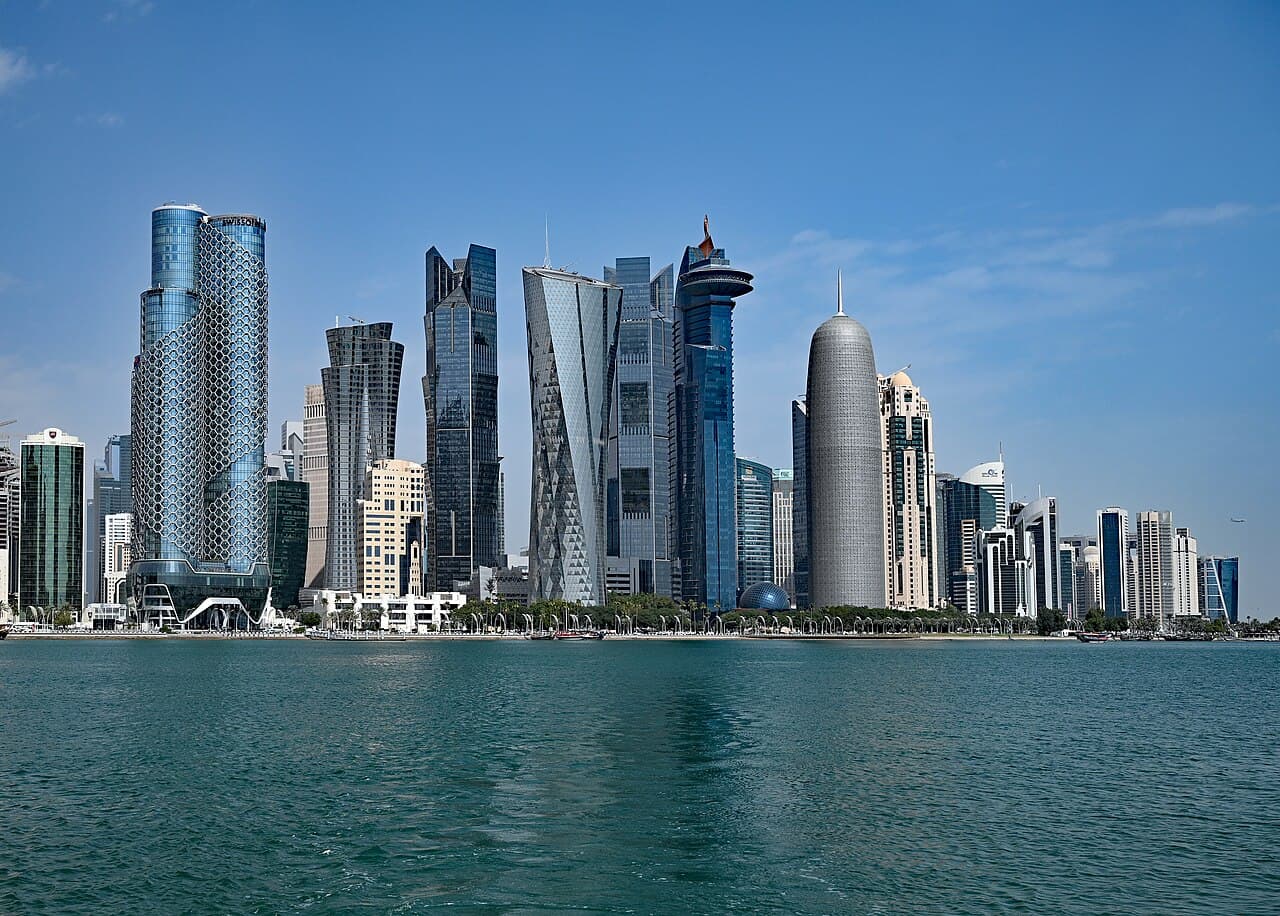
QatarPhoto: P. Hughes / Wikimedia Commons (CC BY 4.0)

Qatar

Country · QA · QAR · Asia/Qatar

This information may change. Always check the official source.Last verified: August 2026 by

The visa waiver is not one rule. Europeans get 90 days in 180, most others get 30 extendable once, and Americans get a two-year multiple-entry waiver almost nobody writes about.

  • "Visa on arrival, 30 days" is wrong for most readers. Qatar admits 102 nationalities without a visa under two different categories, and the Americans get a third thing entirely.
  • Category A - Germany, France, Italy, Spain, the Netherlands, Poland and 27 mostly European others - gets 90 days inside a 180-day window, in one trip or several, and cannot extend it.
  • Category B - the UK, Canada, Australia, China, Japan, South Korea, Singapore, Malaysia, Russia, India, Taiwan - gets 30 days, extendable once by 30 through Metrash2 for about QAR 200.
  • US citizens have had a waiver valid 2 years since 1 October 2024, multiple entry, 90 days a visit. It is a considerably better deal than the European category and almost nothing says so.
  • Vapes and e-cigarettes are illegal to import and are confiscated at the airport, transit passengers included. Health insurance is compulsory beyond 30 days at about QAR 50 a month.
More details

Three different waivers with one name

Qatar admits 102 nationalities without a visa, and the phrase "visa on arrival, 30 days" that most summaries use is wrong for the majority of them.

Visa and entry in Qatar
You holdWhat you actually get
Germany, France, Italy, Spain, Netherlands, Poland and 27 other mostly European countriesCategory A: 90 days total inside a 180-day window, single or multiple trips, not extendable
UK, Canada, Australia, China, Japan, South Korea, Singapore, Malaysia, Russia, India, TaiwanCategory B: 30 days, extendable once by a further 30
USAA waiver valid 2 years or until the passport expires, multiple entry, 90 days per visit
Saudi Arabia and other GCC citizensFree entry, no waiver needed
Cambodia and other nationalities off the listHayya A1 visa in advance, or a Discover Qatar hotel booking
  • The American position changed on 1 October 2024 and is the one least reflected in published advice. It is a considerably better deal than the European category.
  • Category A cannot be extended. When the 90 days inside the 180 are used, they are used.
  • Category B extends once for 30 days, applied for through the Ministry of Interior portal or the Metrash2 app before the first 30 expire, for a fee of about QAR 200.

What you need at the desk

  • A passport valid at least 6 months is what the FCDO advises. Some categories are formally admitted on 3 months, but airlines apply the stricter test and it is not worth the argument at check-in.
  • A confirmed return or onward ticket.
  • A hotel booking. For a handful of nationalities - India, Iran, Pakistan and Thailand among them - the booking must be made through Discover Qatar specifically.
  • The waiver itself is free and issued at the border.

Overstaying, and the insurance rule

  • Overstaying is fined and payable before you can leave. There is no discretion at the airport.
  • Anyone staying longer than 30 days must hold health insurance bought from a provider registered with the Ministry of Public Health, at a standard premium of about QAR 50 per person per month. A foreign policy does not satisfy this.
  • Unpaid debts are criminal here. A bounced cheque or an unpaid hotel bill can produce a travel ban, and people have been stopped at the airport over them.

Transit

  • A transit of up to 24 hours between flights needs nothing at all.
  • Qatar Airways offers a free stopover on many itineraries, and the paid hotel packages are the cheapest way to see Doha on a long connection.
  • The Qatar and Oman joint visa exists for 30 days across both countries if you are combining them.

What you cannot bring

  • E-cigarettes and vapes are illegal to import. They are confiscated at the airport and using one can lead to arrest. This is the single most common way a visitor's trip starts badly.
  • Alcohol, pork products, pornography and religious material for distribution are prohibited imports.
  • Some prescription medicines are controlled, including things sold freely at home. Check before you fly and carry the prescription.
  • Cash, metals or gems above QAR 50,000 must be declared.
Sources (3)

Qatar bans alcohol, pork and e-cigarettes at the border, and all three are taken off people who assumed duty-free counted as an exception.

  • Alcohol may not be brought into the country. Residents buy through a single licensed distributor; visitors drink in licensed hotels only, and what you carry is confiscated at Hamad airport.
  • Electronic cigarettes are prohibited. The import ban covers devices and liquids, and they are seized on arrival.
  • Pork products are prohibited for everyone except through the one licensed outlet.
  • Cash above the declarable threshold must be reported, and the same applies on exit.
  • Medicines containing narcotics or codeine need a prescription in the original packaging.
More details
  • Alcohol may not be brought into the country. Residents buy through a single licensed distributor; visitors drink in licensed hotels only, and what you carry is confiscated at Hamad airport.
  • Electronic cigarettes are prohibited. The import ban covers devices and liquids, and they are seized on arrival.
  • Pork products are prohibited for everyone except through the one licensed outlet.
  • Cash above the declarable threshold must be reported, and the same applies on exit.
  • Medicines containing narcotics or codeine need a prescription in the original packaging.
  • Material considered offensive to Islam is prohibited, and printed matter in luggage is what this is applied to.
Sources (1)

Excellent hospitals that expect to be paid. Insurance is compulsory beyond 30 days and sensible from day one, and the heat is the thing that will actually put you in a clinic.

  • Qatari hospitals are excellent and expect to be paid. There is no reciprocal agreement with anywhere, so your EHIC, GHIC or national card is worth nothing here.
  • Insurance is compulsory beyond 30 days, bought from a Ministry of Public Health registered provider at about QAR 50 per person per month. A policy from home does not satisfy the law.
  • A yellow fever certificate is required if you arrive from a listed risk country, and polio vaccination in some circumstances. There is no malaria in Qatar.
  • Heat is the health risk and it is underestimated by almost every first-time visitor. Drink constantly, plan the outdoors for early morning and after dark, and keep children indoors midday.
  • Some medicines legal at home are controlled here, including painkillers, sleeping tablets and psychiatric drugs. Check before you fly and carry the prescription and a doctor's letter.
More details

The system

  • Qatari hospitals are excellent and among the best equipped in the region.
  • Hamad Medical Corporation runs the public system; Sidra, Al Ahli and Aspetar are the well-known private and specialist ones.
  • There is no reciprocal agreement with anywhere. Your EHIC, GHIC or national card is worth nothing here.
  • You pay up front or your insurer confirms cover before treatment, and the bills are large.

Insurance

  • Compulsory for stays over 30 days, bought from a Ministry of Public Health registered provider at about QAR 50 per person per month. A policy from home does not satisfy the legal requirement.
  • For a shorter stay it is not compulsory and is still essential, because nothing is free and repatriation is not cheap.
  • Check the policy covers desert activities if you plan dune bashing or quad biking, which several exclude.

Vaccinations

  • A yellow fever certificate is required if you are arriving from a country on the transmission risk list.
  • Polio vaccination is required in some circumstances, depending on where you have travelled from.
  • Routine vaccinations should be current. There is no malaria in Qatar and no exotic requirement for arrivals from Europe or North America.

The heat

This is the health risk in Qatar, and it is underestimated by almost every first-time visitor.

  • May to September regularly exceeds 45 degrees, with humidity that makes shade almost useless.
  • Heat exhaustion presents as headache, nausea and confusion. Heatstroke - when sweating stops and the skin goes dry - is a medical emergency and needs 999 immediately.
  • Air conditioning is aggressive everywhere indoors, so people move between extremes all day and catch colds in August.
  • Drink water constantly, and add salts if you have been outside for hours.
  • Children and older travellers are at greater risk and should not be outdoors midday at all in summer.

Medicines and pharmacies

  • Pharmacies are excellent, plentiful and open late.
  • Some medicines legal at home are controlled here, including several painkillers, sleeping tablets and psychiatric drugs. Check with the Qatari embassy before travelling and carry the prescription and a doctor's letter.
  • Do not assume a medication is fine because it is over the counter at home. This is how ordinary travellers end up under arrest in the Gulf.

Water and food

  • Tap water is desalinated and safe though most people drink bottled.
  • Food hygiene standards are high and enforced.
  • Alcohol only in licensed premises, and never carry it in a car except home from the warehouse on purchase day.
Sources (3)

Doha

Long-term averages for Doha: the mean daily high, the mean overnight low and the mean monthly rainfall across 30 years of ERA5 reanalysis data (1995–2024).

DayNight
10203040°C020mmJanFebMarAprMayJunJulAugSepOctNovDecJanuary: Day 22 °C, Night 14 °C, Rain 15 mm. February: Day 23 °C, Night 15 °C, Rain 8 mm. March: Day 27 °C, Night 17 °C, Rain 12 mm. April: Day 32 °C, Night 21 °C, Rain 5 mm. May: Day 38 °C, Night 26 °C, Rain 1 mm. June: Day 40 °C, Night 28 °C, Rain 0 mm. July: Day 41 °C, Night 30 °C, Rain 1 mm. August: Day 41 °C, Night 30 °C, Rain 0 mm. September: Day 39 °C, Night 28 °C, Rain 0 mm. October: Day 35 °C, Night 25 °C, Rain 1 mm. November: Day 29 °C, Night 21 °C, Rain 8 mm. December: Day 24 °C, Night 16 °C, Rain 12 mm
Show the monthly table
Doha
MonthDay (°C)Night (°C)Rain (mm)
January221415
February23158
March271712
April32215
May38261
June40280
July41301
August41300
September39280
October35251
November29218
December241612

What the numbers mean for a trip

Doha's summer is the constraint on everything else: 40-41 °C highs from June to August with nights near 30 °C. November to March is the season the country is built around.

  • June to September is extreme, not merely hot: mean highs of 39-41 °C and mean overnight lows of 28-30 °C, so the night gives nothing back.
  • November to March is the comfortable half of the year - highs of 22-29 °C and nights of 14-21 °C, which is when outdoor life, sport and festivals happen.
  • Rain is negligible and irregular. The wettest month averages 15 mm; several summer months average zero. Whole years pass with almost nothing.
  • The heat is the reason for the timetable: sightseeing early or after dark, the middle of the day indoors. Everything indoors is air conditioned hard.
  • A cover-up is not only cultural. Loose long sleeves are cooler than bare skin in this kind of sun, and the same clothing suits the dress expectations of mosques and government buildings.
More details

One season to avoid, one to aim for

The table above is unusually blunt for a climate summary. From June to September, mean daily maxima run 39-41 °C and the mean overnight minimum sits at 28-30 °C: nights do not cool down, so the heat accumulates across a stay rather than resetting each morning. This is the half of the year when outdoor plans are made at 06:00 or after sunset, and when the walk between an air-conditioned car and an air-conditioned door is the only time you are outside.

From November to March the same city reads completely differently: 22-29 °C by day, 14-21 °C at night. Anyone with a choice travels then.

What the numbers mean for a trip
PeriodDayNightWhat it means
June-September39-41 °C28-30 °CIndoors by default; outdoor plans at dawn or after dark
April-May, October32-38 °C21-26 °CManageable early and late; midday is not
November-March22-29 °C14-21 °CComfortable all day; evenings need a layer in January

Rain is not part of the planning

Annual rainfall totals here are what a wet European city collects in a fortnight: the wettest month in the table averages 15 mm, and several summer months average 0. What little falls arrives in short, sometimes intense bursts, and the practical problem is drainage rather than the rain itself - a heavy shower can flood a road for an afternoon precisely because it is so rare.

Sources (1)

A city built for far more visitors than it gets, so five-star rooms are cheap in summer and expensive in February. Unmarried couples sharing is fine in a hotel.

  • November to April is the season - perfect weather, the Grand Prix, the tennis - and rates to match.
  • June to September rooms are astonishingly cheap. A five-star hotel in August costs less than a mid-range one in February, which is unmatched value if you can spend the day indoors.
  • Doha has far more hotel capacity than demand since 2022, which is why the discounts run as deep as they do.
  • Msheireb is the best base for a first visit: the rebuilt old centre, walkable, and on the only metro interchange.
  • Cohabitation and sex outside marriage are unlawful, though international hotels do not ask an unmarried foreign couple anything. Public affection is the thing that leads to arrest.
More details

The seasons decide the price

  • November to April is the season. Perfect weather, the Grand Prix, the tennis, the boat show, and rates to match.
  • June to September rooms are astonishingly cheap. A five-star hotel in August costs less than a mid-range one in February. If you can live with spending the daylight hours indoors, the value is unmatched anywhere.
  • Big events empty the city's rooms entirely. Check whether a conference or a tournament falls in your dates before assuming availability.
  • Doha has far more hotel capacity than demand since 2022, which is why the discounts are as deep as they are.

Where to stay

  • West Bay is the skyline: business hotels, malls, the corniche walk.
  • Msheireb is the rebuilt old centre, walkable, on the metro interchange, and the best base for a first visit.
  • Souq Waqif has boutique heritage hotels inside the market itself, which is atmospheric and noisy.
  • The Pearl and Lusail are new, glossy and further out, and fine if you like a marina.
  • Airport hotels make sense only for a genuine overnight connection; the metro makes the city closer than it looks.

Rules that catch people out

  • Sex outside marriage and cohabitation are unlawful in Qatar. In practice international hotels do not ask an unmarried foreign couple anything, and this has not been an issue for visitors in years.
  • Public displays of affection are a different matter and can lead to arrest, hotel lobbies included.
  • Same-sex sexual activity is illegal. Hotels do not police room bookings, but the law is the law and discretion is sensible.
  • A card deposit is taken at check-in for incidentals.

Practical things

  • Short-term rentals exist but are thinly regulated, and a hotel is usually the safer booking.
  • Breakfast is often included and is generally a very large buffet.
  • Ask whether the pool is shaded or cooled for a summer stay. Uncooled water reaches bath temperature in July.
  • Alcohol is available only in licensed hotel bars and restaurants, which is worth knowing when choosing where to stay if that matters to you.
Sources (3)

Two networks, kiosks in the arrivals hall, and a passport required. Coverage is total, prices are not low, and WhatsApp calling works here unlike its neighbour.

  • Ooredoo and Vodafone are the only two networks, and both have kiosks in the Hamad International arrivals hall after baggage reclaim.
  • A visitor SIM runs about QAR 65 to QAR 150 depending on the bundle, with up to 25 GB over 30 days at the top end; the basic Ooredoo Hala SIM is free with a QAR 10 top-up.
  • Your original passport is required and a photograph is not accepted, and the phone must be unlocked.
  • WhatsApp, FaceTime and Messenger calls work normally in Qatar. Its neighbour restricts them, and travellers who read about the Emirates arrive expecting the same problem.
  • Photographing people without consent is an offence carrying imprisonment or a fine reaching QAR 100,000, and that includes a stranger in the background of a video.
More details

Where and what

Ooredoo and Vodafone are the only two networks, and both have kiosks in the Hamad International arrivals hall after baggage reclaim.

  • A visitor SIM runs about QAR 65 to QAR 150 depending on the bundle, with up to 25 GB over 30 days at the top end.
  • The basic Ooredoo Hala SIM itself is free in an Ooredoo shop, with a minimum top-up of about QAR 10 to start it.
  • Your original passport is required. A photograph or a copy is not accepted, and the line is registered in your name.
  • An unlocked phone is required, which is not a given for anyone travelling on a carrier-financed handset.
  • eSIM is supported by both networks and by the usual travel brands, and for a stopover of two or three days a travel eSIM is genuinely the easier choice.

Coverage and speed

  • Qatar is small, flat and entirely covered. 5G reaches essentially everywhere a visitor goes, including the desert road south to Khor Al Adaid.
  • The metro has full coverage underground.
  • Free wifi is everywhere - the airport, malls, the metro, most cafes - and generally good.

The thing that is different from the UAE next door

  • WhatsApp, FaceTime and Messenger voice and video calls work normally in Qatar. Its neighbour restricts them; Qatar does not, and travellers who have read about the Emirates arrive expecting the same problem.
  • VPNs are not blocked for ordinary use.
  • Content filtering exists for gambling, pornography and some political material, and is not something a tourist runs into.

One rule worth repeating here

  • Photographing or filming people without their consent is an offence, punishable by imprisonment or a fine reaching QAR 100,000.
  • Do not photograph government buildings, military sites, ports or construction sites.
  • Drones need a permit and flying one without it means confiscation and worse.
Sources (3)

Qatari sockets are British Type at 240 V, with round-pin and Italian outlets surviving in older buildings.

  • British plugs fit straight in almost everywhere modern.
  • Older buildings are a lottery - round-pin Type , Schuko Type and even Italian Type outlets are all in use, which is why hotels keep universal sockets.
  • A Europlug fits the Type and outlets, and nothing in a Type socket without an adapter.
  • 240 V, so American 120 V-only appliances need a converter.
  • The UAE and Bahrain are Type too, so a Gulf itinerary needs one adapter and a spare.
More details

Sockets in Qatar are Type at 240 V, 50 Hz in new buildings, with Type , and in older ones.

  • British plugs fit straight in almost everywhere modern.
  • Older buildings are a lottery - round-pin Type , Schuko Type and even Italian Type outlets are all in use, which is why hotels keep universal sockets.
  • A Europlug fits the Type and outlets, and nothing in a Type socket without an adapter.
  • 240 V, so American 120 V-only appliances need a converter.
  • The UAE and Bahrain are Type too, so a Gulf itinerary needs one adapter and a spare.
  • Hotel bathrooms have low-current shaver sockets, which take a Europlug and will not run a hair dryer.
Sources (1)

A conservative Muslim country with a Friday-Saturday weekend, UK plugs, and a set of dress and behaviour rules that are worth reading before you pack.

  • Cover shoulders and knees in public, men included. Government buildings, hospitals and banks enforce it and some malls will turn people away.
  • Alcohol is sold only in licensed hotel bars and restaurants - no bars outside hotels and no shops - at 21 and up, with an original passport or ID rather than a photocopy.
  • The weekend is Friday and Saturday, Friday morning is very quiet, and shops stay open to 22:00 or later because the evening is when it is bearable outside.
  • During Ramadan nobody eats, drinks or smokes in public in daylight, non-Muslims included, and everything shifts to the evening.
  • Plugs are the British three-pin type at 240 V, English is universal in shops and hospitals, and everything indoors is over-air-conditioned enough to want a layer in August.
More details

Dress

  • Cover shoulders and knees in public. This applies to men as well as women, and shorts on a man in a mall attract attention.
  • Government buildings, hospitals and banks enforce it, and some malls will turn people away.
  • Swimwear is for the beach, the pool and nowhere else, including the walk back to your room.
  • A scarf is useful for a mosque visit, and the Katara mosque and the Museum of Islamic Art both expect modest dress.
  • Nobody expects a visitor to cover their hair in the street.

Alcohol

  • Sold only in licensed hotel bars and restaurants. There are no bars outside hotels and no shops.
  • The legal age is 21 and an original passport or ID is asked for. A photocopy is not accepted.
  • It is expensive, deliberately so.
  • Duty free on arrival is not available to visitors the way it is in Dubai.
  • Being drunk in public is a criminal offence. Take a taxi from the hotel door.

The week and the day

  • The weekend is Friday and Saturday. Friday morning is very quiet, with most things opening after midday prayers.
  • Shops and malls stay open late, often to 22:00 or later, because the evening is when it is bearable outside.
  • Government offices work mornings.
  • Prayer times pause some businesses briefly five times a day.

Ramadan

  • Eating, drinking and smoking in public during daylight is prohibited, for everyone including non-Muslims.
  • Hotels serve food to guests discreetly, usually in a screened area.
  • Working hours shorten and everything shifts to the evening.
  • Iftar and the night markets are the best time of the year to visit if you are willing to live on that schedule.

Practical odds and ends

  • Plugs are the British three-pin type at 240 V, 50 Hz.
  • Arabic is the official language and English is universal in shops, hospitals and government offices.
  • The weekend brunch is a Doha institution and books out.
  • Everything indoors is over-air-conditioned. Carry a layer, in August especially.
  • Tap water is safe, the sun is stronger than it feels, and sunglasses are not an affectation here.
  • Metrash2 is the government app for fines, permits and visa extensions, and is worth installing if you are staying more than a few days.
Sources (3)

The riyal has been pinned to the dollar since 1980, so there is no rate to time. Cards work everywhere, tipping is discretionary, and the hotel bill grows after you agree to it.

  • The riyal has been fixed to the US dollar since 1980, with the central bank buying at 3.6385 and selling at 3.6415. There is no rate to watch and no good day to change money.
  • Cards work essentially everywhere, including taxis and the metro. Carry QAR 100 to QAR 200 in cash for the souq, small cafes and tips.
  • There is no VAT in Qatar, which is unusual in the Gulf and means the shelf price is the price.
  • Hotels add a service charge of about 10 percent plus a 7 percent municipality fee, so a quoted room rate can grow by around a sixth. Ask for the total when booking.
  • Tip in cash: 10 percent where no service charge has been added, QAR 5 to QAR 10 for a porter. Most service staff are migrant workers and cash reaches them where a card tip does not.
More details

The riyal

  • QAR 3.64 to the US dollar, fixed since 1980. The central bank buys at 3.6385 and sells at 3.6415, and that is the whole story.
  • There is no rate to watch and no good day to change money. What you get today is what you would have got last year.
  • Change in the city rather than at the airport, where the spread is wider, or simply use an ATM.
  • Exchange houses in the souq and the malls give close to the official rate.

Paying for things

  • Cards work essentially everywhere, including taxis and the metro.
  • Contactless is universal, and Apple Pay and Google Pay are accepted widely.
  • Carry QAR 100 to QAR 200 in cash for the souq, small cafes and tips.
  • Always choose to be billed in riyals if a terminal offers your home currency.
  • ATMs are free at bank branches and plentiful in malls and metro stations.

What the price does not include

  • There is no VAT in Qatar, which is unusual in the Gulf and means the shelf price is the price.
  • Hotels and restaurants add a service charge, commonly 10 percent, plus a municipality fee of 7 percent on hotel bills. A quoted room rate can grow by around a sixth.
  • Ask for the total including all charges when booking a hotel.
  • Alcohol is taxed heavily - a beer in a hotel bar runs to QAR 50 or more - which is the single largest surprise on a Doha budget.

Tipping

  • Not obligatory and increasingly expected in tourist places.
  • 10 percent in a restaurant where no service charge has been added; nothing where one has.
  • QAR 5 to QAR 10 for a porter or a housekeeper, in cash.
  • Round up a taxi fare.
  • Cash reaches the person; a card tip often does not. Most service staff are migrant workers on low wages, which is worth remembering.

Declaring money

  • Cash, precious metals or gems above QAR 50,000 must be declared on the way in.
Sources (3)

Everyday prices

Typical prices in Qatari riyal (QAR), averaged across the country by Numbeo and read on 18 August 2026. Tick Convert prices above the table to see every amount in your own currency.

Everyday prices
ItemTypical price
Inexpensive restaurant meal30 QAR
Dinner for two, mid-range, three courses250 QAR
Cappuccino20 QAR
Draught non-alcoholic beer, 0.5 l44 QAR
Bottled water, 0.33 l1.36 QAR
Public transport, one-way ticket2.00 QAR
Taxi, starting fare8.00 QAR
Petrol, 1 litre2.05 QAR
Cigarettes, pack of 20 (Marlboro)23 QAR
Average net monthly salary14,500 QAR

These are country-wide averages, not a price list: tourist districts, airports and islands sit well above them, and small towns below. The salary line is there for proportion - it is what people living here actually earn.

Sources (1)

Airport guides for Qatar1

One page per airport: the routes into town, what they cost and the trap particular to that arrival.

See all 1 airports

The metro station is inside terminal 1 and a ride to the middle of Doha costs QAR 2. A taxi is QAR 40 to QAR 60 and is what you want after a night flight.

  • Hamad International has its own Doha Metro station inside terminal 1, on the Red Line, which makes it one of the easiest major airports in the world to leave.
  • The fare is QAR 2 for a standard journey, with a daily cap of about QAR 6. This is not a typographical error.
  • Msheireb is the interchange for the Gold and Green lines and for the old town, Souq Waqif and the corniche; West Bay, Katara and The Pearl are all on the network.
  • A metered Karwa taxi to central Doha is QAR 40 to QAR 60 plus an airport surcharge, and Uber and Careem both work from a marked pickup area.
  • The metro does not run all night, so check the last train if you land after midnight, which many long-haul flights do.
More details
The metro, which is inside the terminal

Hamad International has its own Doha Metro station on the Red Line, in terminal 1, which puts it among the easiest major airports in the world to leave.

  • The fare is QAR 2 for a standard journey, with a daily cap of about QAR 6. This is not a typographical error; Doha's metro is close to free.
  • Msheireb is the interchange for the Gold and Green lines and for the old town, Souq Waqif and the corniche.
  • West Bay, Katara and The Pearl are all on the network.
  • Trains are driverless, spotless and air conditioned to the point of cold. Bring a layer even in August.
  • It does not run all night. Check the last train if you land after midnight, which many long-haul flights do.
  • A Travel Card is bought from a machine at the station, or you can tap a contactless bank card.
Taxis and ride-hailing
  • Karwa is the official metered fleet, turquoise, honest and regulated. QAR 40 to QAR 60 to central Doha is normal, plus an airport surcharge.
  • Uber and Careem both work, with a minimum fare around QAR 8, and pick up from a marked area rather than the kerb.
  • There is no haggling and no meter refusal. Qatar simply does not have the airport taxi problem most of the region has.
  • A hotel car will be two or three times the taxi fare and is worth it only for luggage or a very late arrival.
Buses
  • Karwa buses serve the airport for a couple of riyals and are the cheapest option after the metro. They are slow and aimed at workers rather than visitors.
  • The metro feeder buses connect stations to the districts around them, on the same ticket.
Practicalities on arrival
  • Immigration is fast and biometric for waiver nationalities, often a machine rather than a desk.
  • The heat hits you in the walkway, not outside. From May to September, stepping out of the terminal at midnight is like opening an oven.
  • Get riyals from an ATM in arrivals if you want cash, though cards work almost everywhere.
  • Do not carry a vape through. Bags are scanned thoroughly, including for transit passengers.
Sources (3)

The metro and a taxi app cover almost everything a visitor does. A hire car only earns its place for the desert, and driving here is the country risk.

  • Three metro lines and the Lusail tram, all at the same flat QAR 2 fare, with feeder buses from the stations included and a family and women's carriage on every train.
  • Uber and Careem are cheap by any standard and a cross-city trip is QAR 20 to QAR 40. Doha is compact and nothing a visitor does justifies a hire car.
  • Driving is the real risk in Qatar. Road discipline is poor, speeds are high, accidents are common, and a phone in your hand is a QAR 500 fine.
  • Drink driving is zero tolerance, with a sentence measured in months to years and a fine of QAR 10,000 to QAR 50,000, plus possible deportation.
  • Check Metrash2 for outstanding fines before you fly out - an unpaid one can stop you leaving - and any accident, however small, needs a police report before insurers act.
More details

Metro and tram

  • Three lines - Red, Green, Gold - plus the Lusail tram, all at the same flat QAR 2 standard fare.
  • Msheireb is the only interchange and everything routes through it.
  • Metrolink feeder buses run from stations into the surrounding districts and are included in the fare.
  • Gold Club carriages cost more and are worth it for nothing except sitting down in August.
  • There is a family and women's carriage on every train.

Taxis and apps

  • Uber and Careem are the two apps and both are cheap by any international standard.
  • Karwa taxis are metered and can be hailed or booked through the Karwa app.
  • A cross-city trip is QAR 20 to QAR 40. Doha is compact.
  • Cash is accepted everywhere but the apps default to card and that is simpler.

Driving

This is the part of Qatar with a real risk attached.

  • Road discipline is poor, speeds are high and accidents are common. The FCDO says so plainly and the statistics support it.
  • Speed and red-light cameras are everywhere and the fines follow the hire car to your credit card weeks later.
  • Using a phone while driving is a QAR 500 fine.
  • Drink driving is zero tolerance, with a sentence measured in months to years and a fine of QAR 10,000 to QAR 50,000.
  • Check Metrash2 for outstanding violations before you fly out. An unpaid fine can stop you leaving.
  • Any accident, however small, needs a police report before an insurer or hire company will do anything. Do not move the cars.

Where a car is worth it

  • Khor Al Adaid, the inland sea, needs a 4x4 and, realistically, a driver who knows the dunes. Go with a tour rather than alone.
  • Al Zubarah, the north-west forts and the beaches are an easy day out by road.
  • Nothing in Doha itself justifies a car. Parking is difficult and the metro is faster.

Getting out of the country

  • The land border with Saudi Arabia at Abu Samra is open and used, and needs a car with the right insurance.
  • Everything else is a flight, and Hamad connects to more places than almost any airport on earth.
Sources (3)

Qatari roads are free, the speed cameras are constant, and the alcohol rule is zero without exception.

  • The alcohol limit is zero. Any reading is a criminal matter regardless of where the drink was bought.
  • Roads are free - there are no tolls anywhere in the country.
  • Speed cameras are everywhere, including average-speed sections, and the fines are large and automatic.
  • The country is small. Doha to the northern tip is an hour, to the Saudi border an hour and a half; there is very little distance to cover.
  • Roundabout discipline is poor and lane changes without signalling are the norm, which is the main practical risk.
More details

Free roads, dense camera enforcement, and zero tolerance for alcohol.

  • The alcohol limit is zero. Any reading is a criminal matter regardless of where the drink was bought.
  • Roads are free - there are no tolls anywhere in the country.
  • Speed cameras are everywhere, including average-speed sections, and the fines are large and automatic.
  • The country is small. Doha to the northern tip is an hour, to the Saudi border an hour and a half; there is very little distance to cover.
  • Roundabout discipline is poor and lane changes without signalling are the norm, which is the main practical risk.
Sources (1)

Crime is close to nonexistent. The law is what gets visitors arrested: vaping, photographing strangers, swearing, being drunk in the street, and driving.

  • Qatar is one of the safest countries in the world and street crime against visitors is close to nonexistent. The law is the risk here, not the criminals.
  • Vaping is illegal to import and to use, and photographing a stranger carries a fine up to QAR 100,000. Neither is exotic behaviour and both get visitors arrested.
  • Being drunk in public is an offence - up to 6 months imprisonment or a QAR 3,000 fine - even though drinking in a licensed hotel bar is not.
  • Swearing, rude gestures, loud music and public affection are treated as obscene acts, punishable by jail or deportation, and drugs are zero tolerance with thorough airport scanning.
  • Summer runs past 45 degrees with humidity that makes shade useless. Heat exhaustion is the commonest visitor emergency, and when someone stops sweating that is the emergency.
More details

Crime

  • Qatar is one of the safest countries in the world and street crime against visitors is close to nonexistent.
  • Walking alone at night is normal, including for women, in a way it is not in most capitals.
  • Petty theft happens in the souq and at the beach and is the whole of the realistic risk.
  • Do not leave valuables in a car. The exception, not the rule.

The laws that actually catch tourists

This is the section that matters. Nothing here is exotic behaviour; it is ordinary conduct that is criminal in Qatar.

  • Vaping and e-cigarettes are illegal, to import and to use. Devices are confiscated at the airport, and using one in public can mean arrest and deportation.
  • Photographing or filming people without consent carries imprisonment or a fine up to QAR 100,000. This includes a stranger in the background of a video.
  • Swearing, rude gestures, loud music and dancing in public are treated as obscene acts, punishable by jail or deportation.
  • Being drunk in public is an offence - up to 6 months imprisonment or a QAR 3,000 fine - even though drinking in a licensed hotel bar is not.
  • Public affection between any couple risks arrest.
  • Drugs are zero tolerance, and airport scanning is thorough, transit passengers included.
  • Dress modestly: shoulders and knees covered in public, strictly so in government buildings, hospitals and banks.

During Ramadan

  • Do not eat, drink, smoke or chew gum in public during daylight, including in a car.
  • No loud music or dancing.
  • Driving just before sunset is genuinely dangerous as everyone hurries home to break the fast.
  • Iftar is the best eating of the year and visitors are welcome at it.

Heat, which is a safety issue

  • Summer runs past 45 degrees with high humidity, and the sea is too warm to cool you down.
  • Heat exhaustion is the commonest visitor medical problem. When someone stops sweating, that is the emergency.
  • Plan the outdoors for early morning and after dark, and the middle of the day indoors.
  • Drink far more water than you think you need, and carry it.

Roads and the sea

  • Traffic is the real physical danger here. See the transport section.
  • Sandstorms close roads and ground flights with little warning, mostly in spring.
  • Swimming off unsupervised beaches carries currents and, in summer, jellyfish.
Sources (2)

One number, 999, for police, ambulance and fire. The complications here are legal rather than medical: a police report for any accident, and never sign an Arabic document you cannot read.

  • 999 is police, ambulance and fire - one number, free, answered in Arabic and English, and working from a locked phone with no SIM.
  • Say where you are first. Doha addressing works by district and landmark, so name the nearest tower, mall or metro station rather than a street number.
  • Any road accident needs a police report, however small. Do not move the vehicles, stay at the scene, and photograph everything while you wait.
  • If you are arrested, ask for your embassy and do not sign anything you cannot read. Documents are in Arabic and signing one can amount to a confession.
  • Travel bans are real, and an unresolved case or an unpaid fine can stop you leaving - which is why Metrash2 is worth checking before a flight.
More details

The number

  • 999 is police, ambulance and fire. One number, free, answered in Arabic and English.
  • It works from a locked phone with no SIM.
  • Say where you are first. Doha addressing works by district and landmark rather than street number, so name the nearest tower, mall or metro station.
  • Ambulance response in Doha is fast and the service is run by Hamad Medical Corporation.

After a road accident

  • Any accident needs a police report, however small, before an insurer or hire company will act.
  • Do not move the vehicles unless the police tell you to.
  • Stay at the scene. Leaving is a serious offence.
  • Photograph everything while you wait.

If you are arrested or detained

  • Ask to contact your embassy immediately.
  • Do not sign anything you cannot read. Documents are in Arabic and signing one can amount to a confession.
  • Most minor matters end when a complaint is withdrawn, so an apology early is worth more than an argument.
  • Travel bans are real. An unresolved case or an unpaid fine can prevent you leaving the country, which is why Metrash2 is worth checking before a flight.

Losing things

  • Report a theft to the police and get the written report for your insurer.
  • A lost passport means your embassy in Doha, and the police report first.
  • Lost property at the airport and on the metro is well organised and things genuinely turn up.

Weather and other alerts

  • Sandstorms arrive quickly in spring, closing roads and grounding flights.
  • Flash flooding fills underpasses during the rare heavy rain, within an hour.
  • Heatstroke is the emergency most likely to affect a visitor. Dry skin and confusion in the heat means 999, shade and cold water, now.
Sources (3)