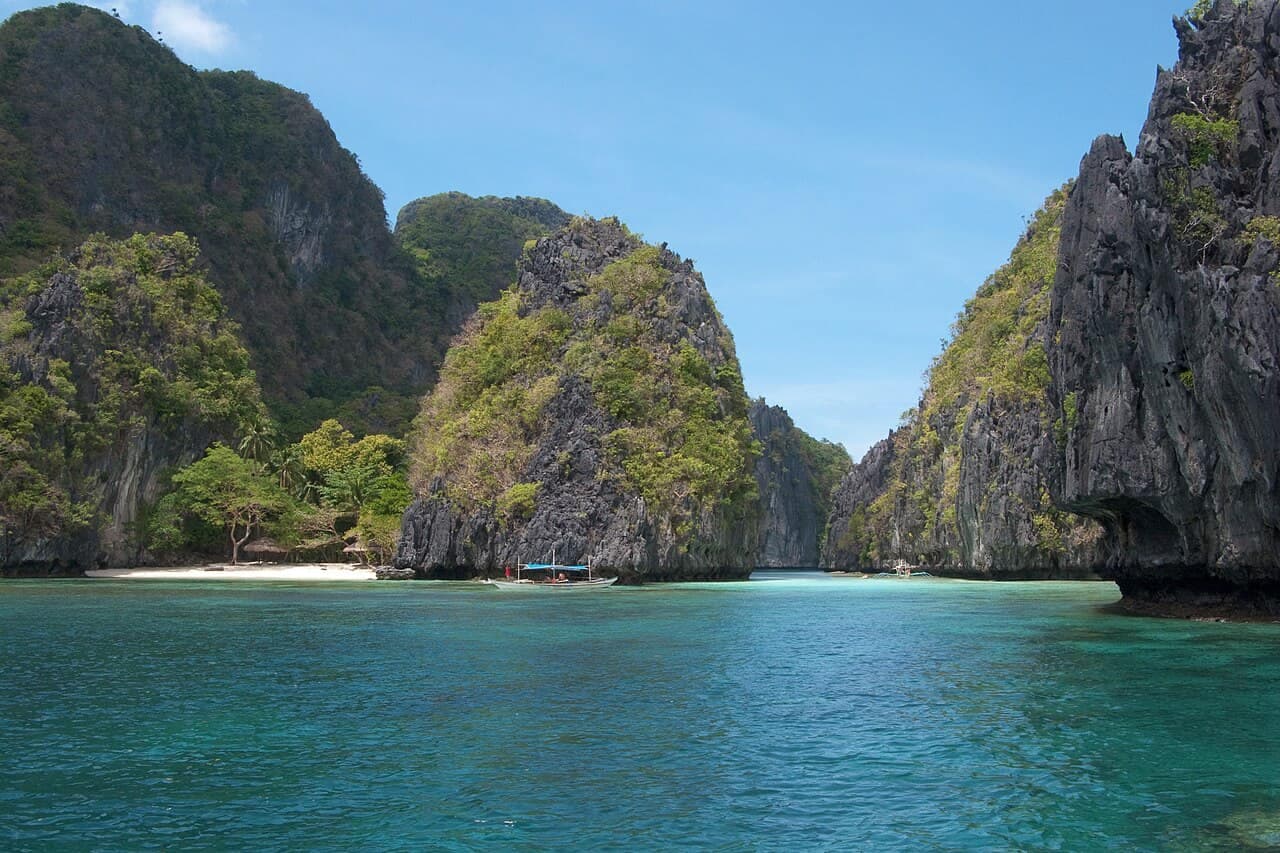
Philippines

Country · PH · PHP · Asia/Manila

Visa and entry in Philippines

This information may change. Always check the official source.

Visa and entry in Philippines

Warning Important

Philippine entry requirements depend on far more than nationality: passport type and validity, purpose and length of stay, transit route, onward ticket, accommodation, funds, eTravel registration and health rules all matter. Some rules are transit-dependent, such as the 14-day visa-free entry for Chinese citizens via NAIA and Mactan-Cebu only, and the yellow fever rule triggered by transits longer than 12 hours.

  • Set your passport above for your exact rule; many nationalities enter visa-free for up to 30 days.
  • Entry always requires a passport valid at least 6 months and eTravel registration.
  • Officers may check a return/onward ticket, accommodation and proof of funds.
  • Stays over 30 days (up to 59) use a follow-on extension after arrival, not a separate eVisa.
  • Yellow fever proof is required if your route includes a 12+ hour transit in a risk country.
  • Rules combine nationality, purpose, length of stay and route — verify your exact case in Timatic.
  • Register on the official eTravel portal (etravel.gov.ph) within 72 hours before landing — it is free, so avoid third-party sites that charge a "processing fee".
More details

What determines your entry requirements

Whether you can enter the Philippines visa-free does not depend on your nationality alone. The requirements that are actually assessed include at least: the country that issued your passport / your nationality, passport type, purpose of travel, length of stay, whether you are only transiting, which countries and airports you travel through, passport validity, a return or onward ticket, accommodation, proof of funds, eTravel registration, and in some cases health/vaccination rules. This is exactly the set of criteria that IATA / Timatic and the Philippine authorities publish and keep up to date.

For the Philippines there are also explicitly documented transit-dependent rules today. For example, Chinese citizens have, since 16 January 2026, 14-day visa-free entry for tourism and business, but only via NAIA and Mactan-Cebu, while Chinese travelers who merely transit through the Philippines to a third country need a 9(b) transit visa. For the yellow fever rule, what matters is not only where your trip originates but also any transit longer than 12 hours in a country with risk of transmission.

This information may change. Always check the official source.

Report a change

Suggest a correction

JPEG, PNG or WebP, up to 5 MB. Location metadata is removed.

Corrections and photos are private and visible only to the review team.

SIM and eSIM in Philippines

SIM and eSIM in Philippines

Comparison of connectivity options for the Philippines: Globe and Smart tourist eSIMs (₱1,750 / ₱1,599, 30 days), ₱99 local eSIM starters, DITO, international eSIMs such as Airalo and Holafly, and home-operator roaming. Includes recommendations by trip length and budget; Globe and Smart offer the best airport availability, and all local SIMs require passport registration.

  • Globe and Smart have the best airport readiness; expect physical SIMs in arrival areas.
  • Every SIM must be registered, so full activation only happens once you connect to the network.
  • The cheapest start is a Globe or Smart local eSIM for ₱99 plus top-ups.
  • A ₱99 starter plus a top-up covers a lighter week; heavy users prefer Globe Traveler or Holafly.
  • The Globe Traveler eSIM (₱1,750, 80 GB, 30 days) or Smart Tourist eSIM is best for a month.
  • For island trips a dual Globe + Smart setup sharply cuts the risk of dead zones.
  • The Globe Traveler eSIM is easiest: buy in advance, activate after arrival, local number and hotspot.
More details

Comparison table

OptionTypePriceData / callsValidityHotspotLocal numberPassport registrationWhere to buyActivationBest forSources
Globe Prepaid Traveler eSIMlocal tourist eSIM₱1,75080 GB, unlimited local calls and SMS30 daysyesyesyes, after arrivalonline in GlobeOnebuy in advance, activates on arrival in PHthe easiest option with no store visitProduct, Landing page
Smart Prepaid Philippine Tourist eSIMlocal tourist eSIM₱1,599per the store listing a tourist product; Smart sells it as a tourist eSIM with a 30-day tourist bundle30 daysnot spelled out on the landing page as clearly as Globe; in practice commonly supported on eSIM devicesyesyesSmart Online Store / airport booth / Smart StoreQR code by email / scana simple online option, also workable on arrival at a Smart retail store / boothStore, eSIM page
Globe Prepaid Local eSIMregular local eSIM₱995 GB + UNLI all-net texts3 daysyesyesyesonline in GlobeOneQR code by email + SIM registrationthe cheapest official eSIM startFAQ, Overview
Smart Prepaid eSIMregular local eSIM₱995 GB + 30 min all-net calls + 100 all-net texts3 daysdevices support standard tethering; Smart describes regular eSIM activation via QRyesyesonline store / Smart Store / airport boothQR scan + registrationa cheap start and a good base for later top-upsSmart eSIM
DITO eSIMregular local eSIMofficial public pages do not show a clear checkout price; public references cite ₱99the official public page shows 9 GB, unlimited texts, DITO-to-DITO calls and 150 minutes to other networkspublic references cite 15 daysyes, as standardyesyesDITO app / DITO eShopQR scan + registrationa cheap, city-focused, digital-first option, less "tourist ready"DITO eSIM, Compatibility, public pricing ref
Airalo Philippines eSIMinternational eSIMfrom $4.00; the same page also lists unlimited plans from $11.50usually data-only, no Philippine numberper packageyes, if both device and network support itusually nonot via Philippine SIM registration, because it is a travel eSIM productonlineQR / appbackup, multi-country trips, quick start without a storeAiralo PH, Hotspot FAQ
Holafly Philippines eSIMinternational eSIMprice varies by duration; the page lists e.g. €3.79 for 1 day as an entry pointunlimited dataper number of daysyes, but Holafly caps the hotspot at up to 1 GB/dayusually no local PH numbernot via Philippine SIM registrationonlineQR / emailconvenience, heavy data use, no top-ups to manageHolafly PH, Hotspot
Roaming with your home operatorroamingdepends on your home plandepends on your plandepends on your planusually yeskeeps your home numberno Philippine SIM registrationvia your home operatorno installationa safe fallback, but often the worst valuecheck with your own operator before departure

Recommendations by use case

CategoryRecommendationWhy
Cheapest optionGlobe or Smart local eSIM for ₱99 + top-ups in the appthe lowest officially documented entry price from the main operators; best for short stays or light usage
Easiest optionGlobe Traveler eSIMbuy in advance, activate after arrival, local number, hotspot, large data bundle
Best coveragein practice a dual-SIM strategy of Globe + Smart if the island trip is criticalofficial and traveler-sourced evidence shows that one backup profile sharply reduces the risk of dead zones; reddit also recommends considering two networks for longer stays
Best for 3 daysGlobe Local eSIM / Smart eSIM for ₱99matches the 3-day starter exactly without overpaying
Best for 7 dayslight user: ₱99 starter + top-up; heavy user: Globe Traveler eSIM or Holaflymostly depends on data consumption and willingness to handle top-ups
Best for 30 daysGlobe Traveler eSIM or Smart Tourist eSIM; if price-sensitive, a local eSIM + top-ups30-day validity without a store visit

A practically important detail for buying at the airport: Globe itself lists physical SIMs in "airport arrival areas", Smart lists a "Smart booth in Airports", while DITO today is best read as an app-first / eShop-first option. So on landing, expect the best airport readiness from Globe and Smart.

This information may change. Always check the official source.

Report a change

Suggest a correction

JPEG, PNG or WebP, up to 5 MB. Location metadata is removed.

Corrections and photos are private and visible only to the review team.

Transport from the airport in Philippines

Transport from the airport in Philippines

NAIA has no direct rail link, so the realistic options are Grab, official taxis, UBE Express buses (₱50 loop, ₱150 T3 to PITX) or hotel transfers; Clark is served by Genesis P2P buses (Trinoma route 04:30-20:00, ₱450 to/from NAIA 3) and Mactan-Cebu by MyBus (fare reported between ₱25 and ₱50). Taxi overcharging remains the most common arrival scam - use Grab by default, with official coupon taxis as a late-night fallback.

  • NAIA (Manila) has no direct rail — options are Grab, official taxi, UBE Express or hotel transfer.
  • Grab has official pickup zones by terminal; UBE Express loop fares start around ₱50.
  • At Clark, Genesis P2P buses run to Trinoma (04:30–20:00) and NAIA.
  • At Mactan-Cebu, MyBus serves the city, but verify the ₱25–₱50 fare on site.
  • For 1–2 people with luggage use Grab; late at night use Grab or a coupon taxi.
  • The most common scam is taxi overcharging — use Grab as default and official counters as fallback.
  • Complete eTravel and get a data connection before arranging your ride.
More details

Getting from the airport

At NAIA there is currently no direct rail connection to the terminals, so a train/metro ride straight from the terminal is not a real option. The realistic set of options from the terminals is: Grab / official taxi / UBE Express / hotel transfer. Grab's official page has detailed NAIA pickup instructions by terminal and arrival zone; UBE Express publishes fares for routes from the airport to selected parts of Manila, both for the inter-terminal loop and for city routes.

At Clark the strongest public-transport option is Genesis P2P. The official Genesis page confirms the P2P network with a schedule "as of June 24, 2026", and P2P Bus Philippines publishes a concrete timetable for the Trinoma - Clark Airport route from 04:30 to 20:00. Between NAIA 3 and Clark there are published P2P departures throughout most of the day; a secondary but fresh overview by The Poor Traveler lists a fare of ₱450 from Clark Airport to NAIA 3 and ₱450 the other way, with timetables updated as of March 2026.

At Mactan-Cebu, public transport is less transparent than in Manila. There is an official airport transport guide and publicly circulating MyBus timetables, but the information is less clean and stable than for NAIA/Clark. Secondary sources also disagree on the airport-route fare, quoting ₱25 vs ₱50 - so treat the fare as only partially officially verified and confirm it on site, in the app, or at the counter.

Overview by airport

AirportTrain / metroBusTaxi / ride-hailingOperating hours / frequencyWhere to boardHow to payRecommendation
NAIAno direct rail connectionUBE Express; ₱50 is published for the loop route, and e.g. ₱150 for the T3 to PITX routeGrab has official pickup zones by terminal; official taxi types are coupon / yellow metered / regular meteredUBE loop roughly 4:00-20:00; some routes have a timetable, the inter-terminal/loop may run without a fixed intervalAt T3 e.g. Bay 12 for UBE; Grab pickup per the in-app instructions and the official pagecash, Beep card, online ticket with UBE; Grab in the appfor 1-2 people with luggage: Grab; late at night: Grab or a coupon taxi; on a very tight budget: UBE
Clarkno direct rail connectionGenesis P2P to Trinoma / NAIA / other hubstaxi / Grab from Clark AirportTrinoma-Clark officially 04:30-20:00; NAIA-Clark secondary schedules are very frequentClark Airport bus station / arrival areaonline / on site depending on the operatorfor Angeles/Clark a car is fastest; to Manila the P2P makes sense for a solo trip
Mactan-Cebuno direct rail connectionMyBus to SM City Cebu / North Bus Terminal; the fare varies across published sources between ₱25-₱50Grab / taxisecondary sources cite roughly 20-minute intervals, but this needs to be verified at the timeairport bus bays / arrivalson site, per the current setupfor a first arrival with luggage, often Grab; on a budget MyBus, but verify the fare on site

The most common scam pattern after arriving in Manila is still taxi overcharging. Both official Smartraveller advice and recent reddit experiences confirm this. Interestingly, a fresh report on r/phtravel describes a good experience with a coupon taxi in a post-midnight situation when Grab was unavailable. The practical takeaway: use Grab as the default, and treat coupon taxis as an acceptable fallback when it is a genuinely official counter with a fixed rate card.

This information may change. Always check the official source.

Report a change

Suggest a correction

JPEG, PNG or WebP, up to 5 MB. Location metadata is removed.

Corrections and photos are private and visible only to the review team.

Useful local apps in Philippines

Useful local apps in Philippines

Grab is the key app to install for the Philippines - it supports signup with an international number, though foreign payment methods may carry a 3% fee; Angkas covers moto-taxis in Metro Manila, Metro Cebu and Cagayan de Oro, Sakay.ph plans Metro Manila public transport, and Uber is not relevant locally. Also summarizes entry requirements by nationality: visa-exempt passports (including most EU) get 30 days visa-free, India and China 14 days under specific conditions, with eVisa processing of 7-21 working days and 9(b) transit visas capped at 72 hours.

  • Grab is the app to install first, right after eTravel and getting a data connection.
  • Grab allows signup with an international number; foreign cards may carry a 3% fee.
  • Angkas is a moto-taxi option in Metro Manila, Metro Cebu and Cagayan de Oro.
  • Sakay.ph helps with public transport journey planning, mainly in Metro Manila.
  • Uber is not a relevant service in the Philippines — use Grab instead.
  • Keep cash or a local method as backup where foreign-card support is unclear.
  • GCash and Maya are the local QR wallets used everywhere, but they are hard to load without a local bank account or a cash-in kiosk.
  • JoyRide (car and motorbike) is a common local alternative to Grab; Foodpanda leads for food delivery.
More details

Entry outcomes by traveler profile

Philippine entry rules combine nationality, purpose, length of stay, route and transit. The examples below show how the same headline outcome ("visa-free") depends on different supporting conditions.

ProfileOutcomeCostMax stayProcessing timePassport validityReturn / onward ticketAccommodationFundsEntry formVaccination / healthTransit noteSources
Visa-exempt nationality (e.g. most EU), ordinary passport, tourism over 30 days but under 59 daysVisa-free on entry + subsequent stay extensionfor the extension roughly USD 50 + PHP 500 + PHP 10 under the online visa-waiver / SEVUA categories30 + 29 daysonline / after arrival depending on statusmin. 6 monthsyesrecommendedrecommendedyesdepends on routethis is not a separate eVisa; it is a follow-on immigration process after arrivalBI eServices, BI Visa Upon Arrival / SEVUA, BI Visa Waiver
India, ordinary passport, tourism/business up to 14 daysVisa-free014 days, non-extendable / non-convertibleno advance processingmin. 6 monthsyesyes, confirmed accommodationyesyesdepends on routevisa-free regime since 8 June 2025DFA New Delhi, eVisa policy
India + valid AJACSSUK visa / residence permitVisa-free030 days, non-extendableno advance processingmin. 6 monthsyesnot explicitly restated in the rule, but recommended to haverecommendedyesdepends on routeapplies only to tourism/businessDFA New Delhi, eVisa policy
China, ordinary passport, tourism/business up to 14 daysVisa-free014 daysno advance processingmin. 6 monthsyesyesthe official rule emphasizes hotel + onward/return ticketyesdepends on routeentry only via NAIA or Mactan-CebueVisa policy
Visa-required national, tourism/business, eligible for eVisaeVisaper the rates of the relevant post / eVisa selectionper visa type7-12 working days single-entry, 15-21 working days multiple-entrymin. 6 monthsyesmay be requiredmay be requiredyesdepends on routeeligibility depends on nationality and purposeeVisa FAQ, eVisa 9(a)
Visa-required national, transiting through the PhilippinesRegular 9(b) transit visavaries by embassy / consulatemax. 72 hoursdepends on the postmin. 6 monthsyes, onward flight to a third countryusually notmay be requiredyesdepends on routethe transit rule is purely route-basedDFA New Delhi requirements, PCG New York

The key takeaway: the short classification is only part of the answer. For visa-exempt passports, "visa-free" holds only after meeting the passport validity, onward ticket and eTravel conditions; for some other nationalities the same headline outcome is reachable only with extra conditions such as a hotel booking, proof of funds, or entry via specific airports.

Apps that actually work

AppWhat it doesWhere it worksForeign cardLocal number neededLanguageLinks
Grabtaxi / car / food / basic super-appPhilippines generally; NAIA has an official airport pickup pageyes, but Grab PH notes a possible 3% foreign payment fee on foreign payment methodsnot necessarily; Grab officially allows signup with an international numberEnglish yesWeb, NAIA pickup, Apple App Store, Google Play
Angkasmoto taxi / deliveryMetro Manila, Metro Cebu, Cagayan de Orothe official FAQ does not clearly confirm foreign card support; keep cash / a local method ready as backupthe official FAQ does not clearly confirm foreign-number support; verify at signupEnglish / FilipinoWeb, Service areas, FAQ, Apple, Google Play
Sakay.phpublic transport journey planningmainly Metro Manilanot a payment app; it handles routingnot for the web version; app registration is not essential for basic useEnglish yesWeb, Apple, Google Play
Uberride-hailingnot a relevant consumer service for local rides in the Philippines; use Grab insteadnot a recommendation for PH

Grab is clearly the app to install first, right after completing eTravel and getting a data connection. Its official help confirms that you can sign up with an international number and that foreign payment methods in the Philippines may carry a surcharge.

This information may change. Always check the official source.

Report a change

Suggest a correction

JPEG, PNG or WebP, up to 5 MB. Location metadata is removed.

Corrections and photos are private and visible only to the review team.

Money and payments in Philippines

Money and payments in Philippines

The currency is the Philippine peso (ECB indicative reference rate on 2026-07-16: 1 EUR = 70.667 PHP). Always pay and withdraw in PHP and refuse dynamic currency conversion; BDO charges ₱250 per ATM withdrawal on overseas-issued cards, Google Wallet is officially supported while Apple Pay does not list the Philippines for locally issued cards, and daily budgets run roughly ₱1,692 (budget) to ₱11,272 (luxury).

  • The currency is the Philippine peso (PHP); about 70.7 PHP per 1 EUR at the time of research.
  • Always choose PHP and refuse any conversion to your home currency offered by an ATM or terminal.
  • BDO lists a ₱250 withdrawal fee for overseas-issued cards; check the on-screen fee at other banks.
  • Google Wallet tap-to-pay is supported; Apple Pay is not reliably local for Philippine cards.
  • Indicative daily budget: budget ~₱1,692, mid-range ~₱4,337, luxury ~₱11,272 per day.
  • A cheap meal averages around ₱250 nationwide.
More details

Money and payments

The local currency is the PHP / Philippine peso. For orientation, the ECB lists a reference rate of 1 EUR = 70.667 PHP as of 2026-07-16, but the ECB itself notes this is an informational reference rate only, not a rate for transactional use - treat any displayed rate as indicative, not guaranteed.

The strongest practical payment advice is the DCC warning. Visa describes dynamic currency conversion as an option where the merchant or ATM converts the transaction into your home currency at the moment of payment or withdrawal, usually at a worse rate and with extra fees. The blunt rule: choose PHP / local currency. Refuse any conversion to CZK/EUR/USD offered by an ATM or terminal.

For ATMs there is a well-documented example at BDO: for cards issued overseas, its website directly lists a withdrawal fee of ₱250. At BPI, the public documentation is less readable for the "foreign card in a Philippine ATM" case, but its general fee logic for other banks says some withdrawal service charges can vary by bank or terminal owner - so at BPI and other banks, verify the fee on-screen before confirming, while at BDO you can expect the published figure.

The situation with contactless wallets has changed. Google Wallet / tap-to-pay is officially supported for the Philippines per Google Support pages. By contrast, Apple Pay still does not list the Philippines among supported countries for locally issued cards on Apple's official page; in practice a foreign card already added in a supported country may work, but it cannot be treated as a reliably local Philippine solution.

Indicative daily budgets from fresh consolidated traveler data come out roughly as: budget ~ ₱1,692 / day, mid-range ~ ₱4,337 / day, luxury ~ ₱11,272 / day. Numbeo adds indicative local anchor prices, for example a cheap meal around ₱250 as a nationwide average - useful anchors to combine with the average daily budget.

This information may change. Always check the official source.

Report a change

Suggest a correction

JPEG, PNG or WebP, up to 5 MB. Location metadata is removed.

Corrections and photos are private and visible only to the review team.

Accommodation in Philippines

Accommodation in Philippines

Agoda and Booking.com are the most practical booking platforms for a first arrival; note that Booking.com's pay-at-property option usually still requires a valid card. In Manila the consistently recommended bases are Makati (Legazpi/Salcedo) and BGC, with Poblacion for nightlife; in Cebu, IT Park/Lahug suits city stays and Lapu-Lapu/Mactan suits airport access and resorts.

  • Agoda and Booking.com are the most practical platforms for a first arrival.
  • 'Pay at property' usually still needs a valid card to confirm the reservation.
  • In Manila, Makati (Legazpi/Salcedo) and BGC are the most recommended bases; Poblacion for nightlife.
  • In Cebu, IT Park / Lahug suits city stays; Lapu-Lapu / Mactan suits quick airport access and resorts.
  • Keep a city base separate from a beach base — they are two different use cases.
More details

Accommodation and neighborhoods

For a first arrival, two large platforms make the most practical sense: Agoda and Booking.com. Agoda remains very strong in Asia and officially works with two basic booking/payment models; Booking.com explicitly states for "pay at property" that the guest usually still provides a valid card to confirm the reservation, even if not paying immediately. Important for arrival planning: "pay later" does not mean "no card".

For Manila, recent reddit threads very consistently recommend Makati (especially Legazpi/Salcedo) and BGC. Makati is praised as more central, better connected and more practical for getting around the city quickly; BGC is seen as more modern, more orderly and often more comfortable for families or travelers who want less chaos. For nightlife, Poblacion is frequently mentioned.

For Cebu, the most practical base is often IT Park / Lahug for digital nomads and city stays, or Lapu-Lapu / Mactan for quick airport access and a more resort-style mode. When choosing, keep a "first-visit city base" separate from a "beach base" - they are two completely different use cases.

This information may change. Always check the official source.

Report a change

Suggest a correction

JPEG, PNG or WebP, up to 5 MB. Location metadata is removed.

Corrections and photos are private and visible only to the review team.

Safety and common scams in Philippines

This information may change. Always check the official source.

Safety and common scams in Philippines

Warning Important

The U.S. State Department rates the Philippines Level 2 (Exercise Increased Caution), with Do Not Travel advisories for the Sulu Archipelago and Marawi City, and the FCDO and other foreign ministries warn about parts of Mindanao. The most common tourist scams are taxi overcharging, broken-meter tricks, inflated airport transfers, bad money changers and ATM conversion traps - stick to official ride-share, taxi queues or hotel transfers, and never pay booking deposits outside the platform's payment flow.

  • The Philippines is not one 'safe/unsafe' score — the US keeps it at Level 2, Increased Caution.
  • The Sulu Archipelago and Marawi City are listed as Do Not Travel.
  • The most common scams are unofficial airport taxis, refused meters and ATM conversion traps.
  • Use only official ride-share, the official taxi queue or a hotel-arranged transfer.
  • Never send a deposit via WhatsApp or bank transfer outside a platform's official payment flow.
More details

Safety and the most common scams

Official travel advisories agree that the Philippines is not a country that can be summed up with a single "safe / unsafe" score. The U.S. State Department keeps the Philippines at Level 2 - Exercise Increased Caution, with higher risk in some areas; it explicitly lists the Sulu Archipelago and Marawi City as Do Not Travel.

The most practical scam list for tourists is unfortunately still very traditional: unofficial taxis at the airport, drivers refusing to start the meter, the "broken meter" trick, inflated airport transfer prices, problematic money changers and ATM conversion traps. Official advice and reddit experiences converge on one consistent pattern: use only official ride-share, the official taxi queue, or a hotel-arranged transfer.

One last practically important point is booking scam hygiene. Booking.com and mainstream media have long warned about scams involving fake messages or payments outside the platform. The hard rule: never send a deposit via WhatsApp or bank transfer outside the platform's official payment flow, unless the listing explicitly and verifiably operates under a different regime.

This information may change. Always check the official source.

Report a change

Suggest a correction

JPEG, PNG or WebP, up to 5 MB. Location metadata is removed.

Corrections and photos are private and visible only to the review team.

Health in Philippines

This information may change. Always check the official source.

Health in Philippines

Warning Important

The nationwide emergency number is 911; save your country's embassy contacts in Manila before you travel. The Philippines requires proof of yellow fever vaccination for travelers aged 9 months and older arriving from, or transiting more than 12 hours through, a risk country; CDC highlights dengue and leptospirosis, and tap water should not be drunk by default.

  • The national emergency number is 911.
  • Look up your own country's embassy or consulate contact before you travel — it's your first call if you lose your passport.
  • Yellow fever proof is required if you arrive from or transited 12+ hours in a risk country.
  • Dengue and leptospirosis are notable risks; be cautious around water and biting insects.
  • Do not drink tap water by default — use bottled or treated water.
More details

Health and emergencies

At the national level the main emergency number is 911, and in 2026 the Philippine government continues to promote it as the single lifeline. If you lose your passport, the steps are clear: police report, then contact the embassy / consular assistance, then a replacement document and your onward travel arrangements.

From a vaccination and health standpoint the most important rule is the yellow fever rule: the Philippines requires proof of yellow fever vaccination for travelers aged 9 months and older who arrive from a country with risk of transmission or had a transit longer than 12 hours there. This is a classic case where looking only at the destination country is not enough. The CDC additionally highlights standard travel-health risks for the Philippines such as dengue and leptospirosis, and generally recommends caution around water and biting insects.

On water, the safest recommendation is simple: do not drink tap water by default and plan on bottled or treated water. CDC travel guidance generally states that in countries with unknown or potentially problematic water quality, it is advisable to avoid tap water and to treat water for drinking or tooth-brushing, or replace it with a safe alternative.

This information may change. Always check the official source.

Report a change

Suggest a correction

JPEG, PNG or WebP, up to 5 MB. Location metadata is removed.

Corrections and photos are private and visible only to the review team.

Everyday practical information in Philippines

Everyday practical information in Philippines

Drug penalties in the Philippines are very harsh even for small quantities, imported medicines should be checked for legality and carried in original packaging with a prescription, and smoking is restricted by nationwide smoke-free rules. The whole country runs on PHT (UTC+8), with a rainy season roughly June-November and a dry season December-May; a foreign English-language driver's license is typically accepted for up to 90 days, and air quality is variable enough to warrant checking live sources like IQAir.

  • Drug penalties are very harsh; keep any medicines in original packaging with the prescription.
  • Smoking is restricted in public and enclosed spaces; drones need CAAP registration.
  • A foreign driving licence in English is accepted only for a limited period (commonly 90 days).
  • The Philippines is a single time zone, PHT / UTC+8.
  • The climate splits into a rainy season (June–November) and a dry season (December–May).
  • Air quality varies — check a live source like IQAir rather than a static figure.
  • Sockets are Type A/B (US-style) but the voltage is 220 V, 60 Hz — check that US 110 V-only appliances are dual-voltage before plugging in.
More details

Local rules and cultural differences

In the Philippines, drug penalties are very harsh; the FCDO and other official advisories explicitly warn that even a small quantity of illegal drugs can mean very serious consequences. Likewise, check the legality of any medicines you bring in, and keep them in their original packaging together with the prescription - exactly as stated in the U.S. Department of State country information for the Philippines.

Smoking is restricted by a nationwide legal framework for smoke-free environments in public and enclosed spaces. For drones there are separate CAAP regulations, and for driving a practical rule applies: a foreign driver's license in English is acceptable only for a limited period, with common rental practice assuming a 90-day limit and an IDP being an advantage if your license is not in English.

For planning, the Philippines has a single nationwide time zone, PHT / UTC+8, and the climate at a macro level divides into a rainy season from June to November and a dry season from December to May. PAGASA officially declared the start of the 2026 rainy season on 4 June 2026 for the western parts of Luzon and the Visayas.

Air quality is a variable, not a fixed fact. As an example, at the time of research IQAir reported Moderate air quality for Manila, with PM2.5 above the WHO long-term guideline - because it changes, check a live source such as IQAir rather than relying on a static figure.

This information may change. Always check the official source.

Report a change

Suggest a correction

JPEG, PNG or WebP, up to 5 MB. Location metadata is removed.

Corrections and photos are private and visible only to the review team.

Emergency information in Philippines

This information may change. Always check the official source.

Emergency information in Philippines

Warning Important

In an emergency call 911, the Philippines' single nationwide lifeline; a lost passport means police report first, then your country's embassy and a replacement document. Proof of yellow fever vaccination is required for travelers aged 9 months and older arriving from, or transiting over 12 hours through, a risk country, and tap water should be avoided by default.

  • The national emergency number is 911.
  • Look up your own country's embassy or consulate contact before you travel — it's your first call if you lose your passport.
  • Yellow fever proof is required if your route includes a 12+ hour transit in a risk country.
  • Dengue and leptospirosis are notable risks; do not drink tap water by default.
More details

Health and emergencies

At the national level the main emergency number is 911, and in 2026 the Philippine government continues to promote it as the single lifeline. If you lose your passport, the steps are clear: police report, then contact the embassy / consular assistance, then a replacement document and your onward travel arrangements.

From a vaccination and health standpoint the most important rule is the yellow fever rule: the Philippines requires proof of yellow fever vaccination for travelers aged 9 months and older who arrive from a country with risk of transmission or had a transit longer than 12 hours there. This is a classic case where looking only at the destination country is not enough. The CDC additionally highlights standard travel-health risks for the Philippines such as dengue and leptospirosis, and generally recommends caution around water and biting insects.

On water, the safest recommendation is simple: do not drink tap water by default and plan on bottled or treated water. CDC travel guidance generally states that in countries with unknown or potentially problematic water quality, it is advisable to avoid tap water and to treat water for drinking or tooth-brushing, or replace it with a safe alternative.

This information may change. Always check the official source.

Report a change

Suggest a correction

JPEG, PNG or WebP, up to 5 MB. Location metadata is removed.

Corrections and photos are private and visible only to the review team.

Experiences

Nothing here yet.

General tips

Nothing here yet.

Share a tip

Sign in to continue.