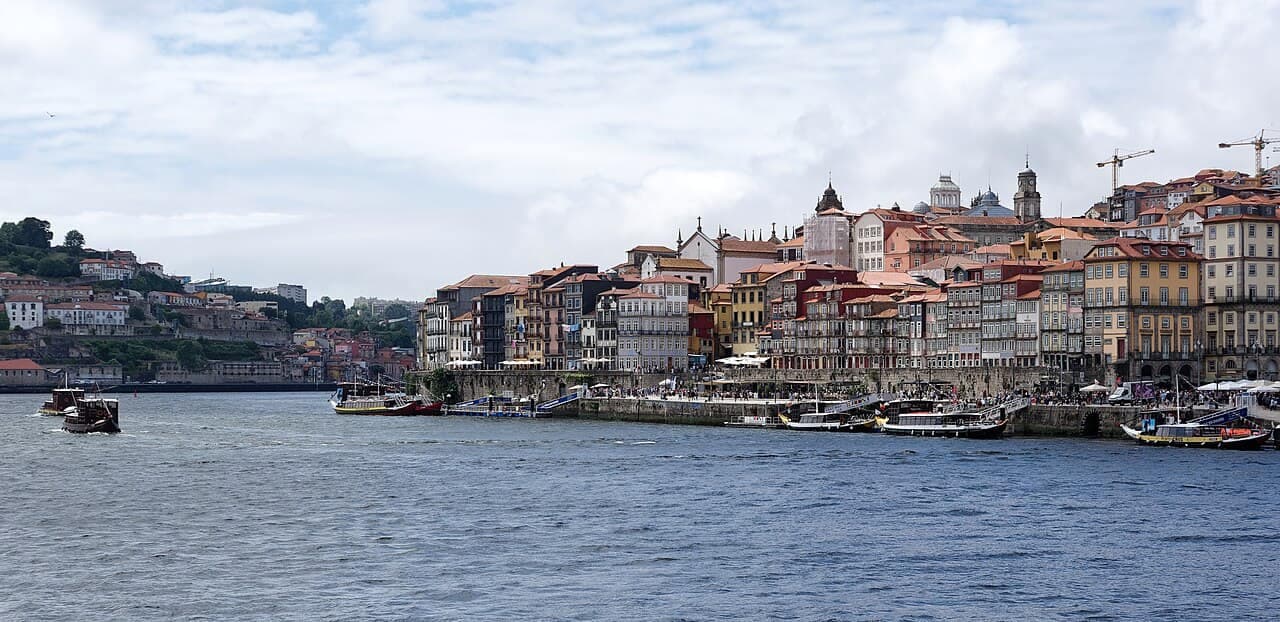
PortugalPhoto: Jakub Hałun / Wikimedia Commons (CC BY 4.0)

Portugal

Country · PT · EUR · Europe/Lisbon

Visa and entry in Portugal

This information may change. Always check the official source.

Visa and entry in Portugal

Warning Important

Schengen 90/180 on a passport valid at least 3 months beyond your departure. Third-country nationals who enter overland from Spain or on an intra-Schengen flight must file a Declaração de Entrada with AIMA within 3 working days, and border officers ask for it on the way out.

  • EU, EEA and Swiss citizens need only a national ID card or passport.
  • Visa-exempt third-country nationals need a passport valid 3 months beyond departure from Schengen, plus a return ticket and booked accommodation.
  • Everyone else applies for a Schengen type C visa at a Portuguese consulate; the fee is EUR 90 and insurance covering EUR 30,000 is required.
  • There is no general arrival form to file before you fly.
  • If you enter Portugal from another Schengen state without passing immigration - overland from Spain, or on an intra-Schengen flight - and you are a third-country national, you must file a Declaração de Entrada (Modelo 6) with AIMA within 3 working days. Commercial accommodation does it for you; a private apartment does not.
  • Border officers may ask for funds of roughly EUR 75 for entry plus EUR 40 per day of the stay.
  • Declare cash of EUR 10,000 or more. Duty-free: 200 cigarettes, 1 litre of spirits, 4 litres of wine, 16 litres of beer.
  • Lisbon airport queues for non-Schengen arrivals run 60 to 90 minutes at the morning peak.
  • ETIAS is expected in the last quarter of 2026: EUR 20, valid 3 years or until the passport expires.
More details

How your entry route is decided

Which entry regime applies to Portugal is worked out in the following order:

  1. EU / EEA / Swiss citizens go through no visa procedure at all. A valid national identity card or passport is enough to enter Portugal.
  2. Visa-exempt third-country nationals (for example the USA, United Kingdom, Canada, Australia, Japan) currently enter without any prior electronic registration. You need a passport valid for at least 3 months beyond your planned departure from the Schengen area, plus evidence of a return ticket and booked accommodation. Once ETIAS goes live - planned for the last quarter of 2026, though the exact date has not been confirmed - you will need an approved authorisation obtained before departure through the official portal at travel-europe.europa.eu/etias, for a fee of EUR 20. The authorisation is valid for 3 years or until your passport expires; a transitional period follows the launch, during which it is not yet enforced at boarding.
  3. Visa-required third-country nationals (for example China, India, Russia, Cambodia, Saudi Arabia) must apply in advance for a Schengen type C visa at a Portuguese consulate. The standard application fee is EUR 90. Travel health insurance with minimum cover of EUR 30,000 and proof of sufficient funds for the stay are required.

Entry formalities that apply to everyone

There is no blanket electronic arrival form for Portugal (nothing equivalent to eTravel) that every traveller has to file before departure. Third-country nationals are, however, subject to the following:

  1. Entry declaration (Declaração de Entrada): If you are a third-country national and you enter Portugal from another Schengen state without passing through immigration control - for instance overland from Spain, or on an intra-Schengen flight - you are legally required to report your entry to the immigration agency AIMA (Agência para a Integração, Migrações e Asilo). The form (Modelo 6) must be filed within 3 working days of entry. The obligation falls away if you are staying in commercial accommodation (a hotel or guesthouse), which reports on your behalf.
  2. Customs limits for arrivals from outside the EU:
  • Cash: up to EUR 10,000 (or equivalent) without a customs declaration.
  • Alcohol: 1 litre of spirits above 22% ABV, or 2 litres of sparkling wine or intermediate products, plus 4 litres of still wine and 16 litres of beer (travellers aged 17 and over).
  • Tobacco: 200 cigarettes, or 100 cigarillos, or 50 cigars, or 250 g of tobacco.
  1. Proof of funds: Arriving from outside the EU, border officers may ask you to demonstrate you can support yourself. The general benchmark is roughly EUR 75 for the entry itself plus EUR 40 for each day of the planned stay.

What actually matters in practice

Lisbon airport runs long passport-control queues for arrivals from outside Schengen (from the USA, the UK or Brazil, for example). At the morning peak, waits at immigration exceed 60 to 90 minutes.

Going by traveller reports on r/LisbonPortugalTravel and r/portugal, the most common practical trip-up is underestimating the entry-declaration duty when crossing from Spain. Tourists who arrive overland by bus or train and then stay in a private apartment that does not formally register its guests routinely miss the Declaração de Entrada deadline of 3 working days. When they later fly out of Lisbon to a non-Schengen country, border officers ask for evidence of lawful entry - and the missing declaration results in a fine for unlawful stay.

Last verified: 2026-07-26

Report a change

Suggest a correction

JPEG, PNG or WebP, up to 5 MB. Location metadata is removed.

Corrections and photos are private and visible only to the review team.

SIM and eSIM in Portugal

SIM and eSIM in Portugal

NOS gives the most data for the money at 55 GB for EUR 10, sold in the arrivals halls at Lisbon and Porto. If you would rather not queue after landing, an Airalo eSIM activated before departure is the faster route.

More details

What to buy as soon as you land

You can get mobile data either by buying a physical prepaid SIM at the airport or by activating an eSIM profile. Portugal has good availability of data packages at competitive prices. If your phone supports eSIM, buying a virtual card before you travel is the fastest route - no queueing at a kiosk after landing.

Comparison table

Prices and package specifications are current as of 15 May 2026.

OperatorTourist packagePriceDataValidityWhere to buyPassport registration
NOSNOS Prepaid TouristEUR 10.0055 GB (5G)4 weeksArrivals hall at LIS/OPO, official storesNot strictly required
MEOM Móvel Pré-Pago / Connected HolidaysEUR 10.0050 GB (or 30 GB depending on version)15–30 daysAirport outlets, MEO storesRequired in store
VodafoneVodafone TravellersEUR 20.0020–25 GB + 500 min/SMS30 daysVodafone airport kiosks, storesRequired in store
Airalo (eSIM)Mónaco / NOS NetworkUSD 10.005 GB30 daysOnline via the Airalo appNo
Holafly (eSIM)Portugal UnlimitedUSD 19.00 - USD 50.50Unlimited data5–15 daysOnline at holafly.comNo

Where exactly to buy

At Humberto Delgado airport in Lisbon (LIS), Vodafone, NOS and MEO kiosks sit in the public part of the Terminal 1 arrivals hall, just past the customs exit. At Francisco Sá Carneiro airport in Porto (OPO), the sales points are on the ground floor of the arrivals hall.

Away from the airport, prepaid cards are sold in the operators' own stores in shopping centres (Vasco da Gama and Colombo in Lisbon, ViaCatarina in Porto) and at Relay newsagents.

Short verdict

For a typical traveller on a one- to two-week trip, the best value is a physical NOS Prepaid card (55 GB for EUR 10) bought at the airport or at a store in town - it gives the largest data allowance and dependable 5G coverage. If you would rather have connectivity the moment you land without queueing, a pre-activated Airalo eSIM (5 GB for USD 10) is the better option.

Last verified: 2026-07-26

Report a change

Suggest a correction

JPEG, PNG or WebP, up to 5 MB. Location metadata is removed.

Corrections and photos are private and visible only to the review team.

Transport from the airport in Portugal

Transport from the airport in Portugal

Lisbon's red metro line starts inside Terminal 1 and costs EUR 1.80 plus EUR 0.60 for the card; Uber and Bolt pick up from level 2 of car park P2, not the kerb. Porto's violet line E runs to Trindade for EUR 2.25 in about 30 minutes.

More details

Humberto Delgado airport (Lisbon)

Lisbon's airport sits roughly 7 km north of the historic centre.

  • Metro: The red line (Linha Vermelha) starts at Terminal 1 itself. It runs from 06:30 to 01:00. The ride to the Saldanha interchange takes about 20 minutes. A single fare costs exactly EUR 1.80 as of 15 May 2026, plus a one-off EUR 0.60 for the rechargeable Navegante card.
  • Ride-hailing (Uber / Bolt): The official pick-up zone for Uber and Bolt is in car park P2 (Level 2). Leaving the arrivals hall, turn left past the Starbucks and take the lift or escalator up to level 2 of the P2 garage. A ride into the centre (Baixa/Chiado) runs between EUR 10 and EUR 16 depending on demand.
  • Official taxis: Ranks are outside both the arrivals and departures halls. A trip into the centre costs EUR 15 to EUR 25. Drivers must run the meter.
  • What to watch out for: Travellers on r/LisbonPortugalTravel report that the P2 zone for Uber/Bolt is heavily congested. The barrier system allows vehicles only 10–15 minutes of free entry, so queues build up outside the garage and drivers frequently cancel. If you are facing a long wait, take the metro one stop to Gare do Oriente, or walk to the nearby Star Inn hotel and order your car from there. With regular taxis, there are recurring cases of invented baggage surcharges.

Francisco Sá Carneiro airport (Porto)

Porto's international airport is about 11 km north-west of the city centre.

  • Metro: Line E (Violeta, violet) connects the airport with the central Trindade station. Trains run every 15–20 minutes and the journey takes about 30 minutes. You need a Z4 zone ticket at EUR 2.25 plus EUR 0.60 for the Andante card. Service runs from 06:00 to 01:00.
  • Ride-hailing (Uber / Bolt): Cars stop in marked areas of the car park in front of the terminal. A ride into central Porto costs EUR 12 to EUR 18.
  • Official taxis: The rank is outside the arrivals hall. The average fare into the centre is EUR 20 to EUR 35, with a 20% night surcharge between 21:00 and 06:00.

Which option suits which traveller

  • Solo traveller: The metro is the best value in both Lisbon and Porto at under EUR 2.50, and it takes traffic out of the equation.
  • Family with children and luggage: Ride-hailing (Uber/Bolt) is worth it for a door-to-door drop-off - no hauling suitcases over cobblestones and staircases.
  • Night arrival (01:00–06:00): The metro does not run, so ride-hailing or an official taxi is the only option.
  • Budget: Metro only, using a rechargeable card that then covers the rest of your travel around the city.

Last verified: 2026-07-26

Report a change

Suggest a correction

JPEG, PNG or WebP, up to 5 MB. Location metadata is removed.

Corrections and photos are private and visible only to the review team.

Useful local apps in Portugal

Useful local apps in Portugal

Uber and Bolt for rides, Carris and Linha Andante for city transport in Lisbon and Porto, CP for the railways, and Airalo or Holafly if you want an eSIM before you fly.

Apps and platforms

Last verified: 2026-07-26

Report a change

Suggest a correction

JPEG, PNG or WebP, up to 5 MB. Location metadata is removed.

Corrections and photos are private and visible only to the review team.

Local transport and booking in Portugal

Local transport and booking in Portugal

Lisbon runs on the rechargeable Navegante card in Zapping mode at about EUR 1.61 a trip, with metro gates and buses also taking contactless bank cards. Porto's Andante works on fare zones and must be validated before every single boarding.

More details

Getting around the city, and which apps to install

  • Lisbon: The network covers the metro, Carris buses and trams, suburban trains (CP) and ferries. You pay with the Navegante card (a paper rechargeable card costing EUR 0.60) in "Zapping" mode, which deducts a reduced fare of about EUR 1.61 per trip, or with a 24-hour ticket at EUR 6.80. Metro gates and Carris buses also accept direct contactless payment with a bank card (tap-to-pay).
  • Porto: The Andante system works on fare zones (Z2 to Z6). The paper Andante Azul card (EUR 0.60) must be validated by tapping before every boarding. For contactless travel using your phone, use the Anda app.
  • Apps worth installing:
  • Uber / Bolt: Ride-hailing, plus e-scooter and bike rental.
  • Citymapper / Google Maps: Public-transport navigation.
  • CP - Comboios de Portugal: The Portuguese railways' official app for long-distance tickets.

Last verified: 2026-07-26

Report a change

Suggest a correction

JPEG, PNG or WebP, up to 5 MB. Location metadata is removed.

Corrections and photos are private and visible only to the review team.

Money and payments in Portugal

Money and payments in Portugal

Use Multibanco ATMs, marked with the blue-white-red MB logo - no local fee, EUR 200 per withdrawal. Euronet and independent machines in tourist areas charge EUR 3.95 to 5.00 and push DCC at a 6 to 14 per cent markup.

More details

Money and paying for things

Portugal uses the euro (EUR).

  • ATM withdrawals:
  1. Multibanco: The national ATM network, marked with the blue-white-red MB logo. It charges no local transaction fee on foreign cards. The maximum per withdrawal is EUR 200.
  2. Euronet and independent ATMs: Commercial machines in tourist areas charge a direct withdrawal fee (typically EUR 3.95 to EUR 5.00) and push an unfavourable exchange rate through DCC.
  • The DCC trap (dynamic currency conversion): At ATMs and at card terminals alike, any offer to settle in your card's home currency (CZK or USD, say) carries a hidden markup of 6% to 14%. On every transaction, choose to pay in the local currency (EUR, no conversion).
  • Cards versus cash: Cards are accepted in supermarkets, pharmacies and restaurants. You will still want cash for small purchases under EUR 5, at traditional markets, in old-style cafés (tascas), and when buying a ticket directly from a tram driver.
  • Tipping: Not expected in ordinary bars and cafés. In restaurants it is customary to leave 5% to 10% of the bill if you were happy with the service, preferably in cash.

Last verified: 2026-07-26

Report a change

Suggest a correction

JPEG, PNG or WebP, up to 5 MB. Location metadata is removed.

Corrections and photos are private and visible only to the review team.

Accommodation in Portugal

Accommodation in Portugal

Baixa and Chiado put you in the middle of Lisbon with direct metro from the airport. Every property is legally obliged to register foreign guests with AIMA, and a tourist tax of EUR 4 a night in Lisbon or EUR 2 to 3 in Porto is paid at reception.

More details

Accommodation

Anyone providing accommodation in Portugal is legally obliged to register the personal details of every foreign guest and pass them to the immigration agency AIMA. You will be asked for a valid passport or ID card at check-in.

The municipal tourist tax (Taxa Turística) is paid on the spot at reception:

  • Lisbon: EUR 4.00 per person per night (applies from age 13, capped at 7 consecutive nights).
  • Porto: EUR 2.00 to EUR 3.00 per person per night (from age 13, capped at 7 nights).

Neighbourhoods that work well for your first nights

  • Lisbon - Baixa / Chiado: Dead centre, excellent metro access from the airport. Higher price bracket (from EUR 120/night).
  • Lisbon - Saldanha / Avenidas Novas: A quieter part of the wider centre, directly on the red metro line from the airport. Good for families and business trips. Mid-range (EUR 80–130/night).
  • Lisbon - Alfama: Historic quarter, hilly, full of staircases and with restricted car access. Atmospheric, but hard work with luggage.
  • Porto - Baixa / Bolhão: City centre near Trindade metro station. Mid to upper range (EUR 80–140/night).
  • Porto - Cedofeita: Arts district within walking distance of the sights, at more affordable prices (EUR 60–100/night).

Last verified: 2026-07-26

Report a change

Suggest a correction

JPEG, PNG or WebP, up to 5 MB. Location metadata is removed.

Corrections and photos are private and visible only to the review team.

Safety and common scams in Portugal

This information may change. Always check the official source.

Safety and common scams in Portugal

Warning Important

Portugal has one of the lowest rates of serious crime in Europe. The street dealers around Rossio and Cais do Sodré are selling oregano and crushed chalk, not drugs; the genuine risk is pickpocketing on crowded trams and transport.

More details

Safety and the most common scams

Portugal has one of the lowest rates of serious crime in Europe.

  • The fake-drugs approach: In central Lisbon - around Rossio, Rua Augusta, Praça do Comércio and Cais do Sodré - street sellers approach visitors offering "marijuana" or "cocaine". What they are actually selling is pressed herbs (oregano, bay leaf) or crushed chalk. Because the material contains no controlled substance, the police (PSP) cannot arrest them for drug dealing; they can only issue a fine for unlicensed street trading. The only thing that works is to ignore the approach completely and keep walking.
  • Pickpocketing: Occurs on crowded transport, especially Lisbon's historic 28E tram, buses heading to Belém, and the tourist trams in Porto.
  • Taxi price manipulation: Some conventional taxi drivers at the airport try to charge invented flat rates or baggage fees without running the meter.

Last verified: 2026-07-26

Report a change

Suggest a correction

JPEG, PNG or WebP, up to 5 MB. Location metadata is removed.

Corrections and photos are private and visible only to the review team.

Health in Portugal

This information may change. Always check the official source.

Health in Portugal

Warning Important

No vaccinations are required and the tap water is drinkable throughout mainland Portugal. Pharmacies run a duty rota out of hours, and third-country nationals travelling on a visa must hold insurance with at least EUR 30,000 of cover.

Health, insurance and where to be treated

  • Vaccinations: None are required for entry.
  • Tap water: Drinkable throughout mainland Portugal and subject to EU standards.
  • Pharmacies: Marked with a green cross (Farmácia). Outside normal hours, a duty rota operates (Farmácia de Serviço).
  • Private hospitals suitable for foreigners:
  • Lisbon: Hospital da Luz Lisboa, CUF Descobertas Hospital.
  • Porto: Hospital Lusíadas Porto, Hospital de Santo António.
  • Travel insurance: EU citizens are entitled to necessary care with an EHIC card. Third-country nationals travelling on a visa must hold insurance with minimum cover of EUR 30,000.

Last verified: 2026-07-26

Report a change

Suggest a correction

JPEG, PNG or WebP, up to 5 MB. Location metadata is removed.

Corrections and photos are private and visible only to the review team.

Everyday practical information in Portugal

Everyday practical information in Portugal

Type C and F sockets at 230 V, and a clock an hour behind central Europe. The restaurant couvert is the one that catches people out: the bread, olives and cheese put on your table are not free - send them back if you do not want them.

More details

Local rules and cultural differences

  • Alcohol in public: Municipal rules in Lisbon and Porto restrict drinking on the street outside designated terraces after 23:00.
  • Flying drones: Regulated by the national aviation authority (ANAC). Lisbon and Porto are covered by city-wide no-fly zones because of airport control circuits.
  • Photography: Do not photograph military installations, police officers on duty, or immigration control areas.
  • The restaurant couvert: Bread, butter, olives or cheese brought to your table before the meal are not free. If you eat them, they go on the bill (typically EUR 2.50 to EUR 6.00 per person). If you do not want them, leave them untouched.

Everyday practicalities

  • Power sockets: Types C and F (standard European socket, 230 V, 50 Hz).
  • Time zone: WEST (UTC+1 in summer) / WET (UTC+0 in winter) - one hour behind central Europe.
  • Opening hours: Shops 09:00–21:00/22:00; banks on weekdays 08:30–15:00; lunch 12:00–15:00; dinner 19:30–22:30.
  • Toilets: Public toilets charge EUR 0.50 to EUR 1.00. It is normal to use a café's facilities after buying a coffee (a bica costs about EUR 1.00).
  • Wi-Fi: Free Wi-Fi is available at the airports (the VINCI Airports network), on CP trains and in cafés.

Last verified: 2026-07-26

Report a change

Suggest a correction

JPEG, PNG or WebP, up to 5 MB. Location metadata is removed.

Corrections and photos are private and visible only to the review team.

Emergency information in Portugal

This information may change. Always check the official source.

Emergency information in Portugal

Warning Important

112 covers police, ambulance and fire nationwide and is free from any phone. Lisbon has a dedicated tourist police line on +351 213 421 634.

Emergency numbers

112 covers police, ambulance and fire across the country and is free from any phone.

  • Single European emergency number (police, ambulance, fire): 112
  • Lisbon tourist police: +351 213 421 634

EU citizens are entitled to necessary care with an EHIC. Third-country nationals travelling on a visa must hold insurance with at least EUR 30,000 of cover.

Last verified: 2026-07-26

Report a change

Suggest a correction

JPEG, PNG or WebP, up to 5 MB. Location metadata is removed.

Corrections and photos are private and visible only to the review team.