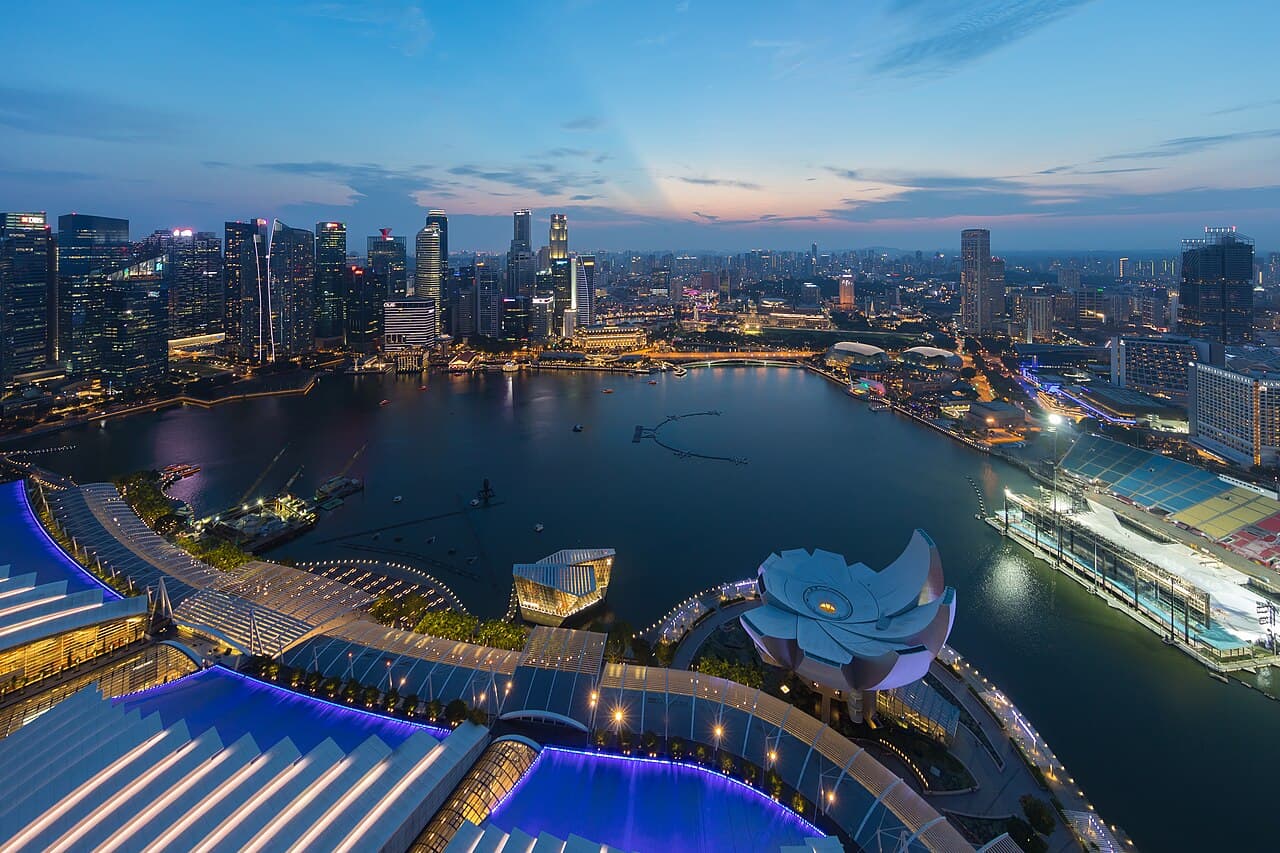
SingaporePhoto: Basile Morin / Wikimedia Commons (CC BY-SA 4.0)

Singapore

Country · SG · SGD · Asia/Singapore

This information may change. Always check the official source.Last verified: August 2026 by

The SG Arrival Card is compulsory, free, and must be filed within 3 days of arrival. You get no passport stamp, so the e-Pass email is the only record of how long you may stay.

  • The SG Arrival Card is compulsory and free, and must be filed within 3 days of arrival - earlier than that and the system will not accept it.
  • The only official route is the ICA website or the MyICA app. Lookalike sites charge USD 20 to USD 50 for the same free form.
  • Singapore stopped stamping passports in 2022. Your Visit Pass arrives by email as an e-Pass, and that is the only record of how long you may stay.
  • Check the e-Pass email before you leave the airport - it states the exact last day you may stay, and there is nothing in your passport to look at later.
  • The length of stay is decided by the officer, commonly 30 days and sometimes up to 90. Have proof of onward travel and where you are staying, because both get asked for.
More details

The SG Arrival Card is free

Every arriving traveller must submit the SG Arrival Card, the electronic replacement for the old white paper card.

  • It costs nothing. ICA states plainly that it does not endorse commercial services charging a fee to submit it.
  • Submit it within 3 days of arrival, counting the day you land. Earlier than that and the system will not accept it.
  • The only official route is the ICA website or the MyICA app. Search results are full of similar-looking sites charging USD 20 to USD 50 for the same free form.
  • It includes a health declaration.
  • Transit passengers who do not clear immigration do not need one.

You will not get a passport stamp

Singapore stopped endorsing passports on 11 March 2022, and this quietly catches people out.

  • Your Visit Pass arrives by email, as an electronic pass known as the e-Pass.
  • It states the number of days granted and the exact last day you may stay. That date is the one that counts.
  • Check the email before you leave the airport. If it has not arrived, retrieve the e-Pass from the ICA website using your passport details.
  • There is nothing in your passport to look at later, so save the e-Pass somewhere you will find it.
  • The length of stay is decided by the officer, not fixed by your nationality. Commonly 30 days, and some nationalities including US citizens are routinely granted up to 90.

Where your nationality lands

Visa and entry in Singapore
You holdWhat you need
USA, Canada, Australia, UK, Germany, France, Italy, Spain, Netherlands, Poland, Japan, South Korea, Taiwan, China, Malaysia, Cambodia, Saudi ArabiaNo visa. SG Arrival Card only
India, RussiaEntry visa required in advance
  • Chinese ordinary passport holders are visa-free, under the mutual arrangement with Singapore.
  • India and Russia are on ICA's entry visa list, alongside around 40 other countries. Applications go through an authorised visa agent or a Singapore overseas mission.
  • A visa gets you to the checkpoint; the Visit Pass gets you in. They are separate things and the visa's validity is not your permitted stay.

At the checkpoint

  • Automated lanes handle most arrivals using face and iris biometrics, and it is genuinely fast.
  • Have proof of onward travel and where you are staying. Both get asked for.
  • Singapore is not a country to improvise with at the border. Officers are polite, thorough and entirely unsentimental.
  • Extensions are applied for online through ICA before the last day on your e-Pass, and are not routinely granted for tourism.
Sources (3)

Singapore gives no duty-free tobacco allowance at all, and every cigarette in your bag is dutiable from the first one.

  • There is no tobacco allowance. Not one cigarette enters duty-free, the composite fine for an undeclared packet starts in the hundreds of dollars, and the red channel exists precisely for this.
  • Vapes are illegal to import, possess or use. The fines run to thousands of dollars, the ban is enforced at Changi and at the Causeway, and it covers heated tobacco too.
  • Chewing gum may not be imported except for therapeutic gum bought from a pharmacist.
  • The liquor allowance is up to 3 litres in a fixed combination of spirits, wine and beer, and only if you have been out of the country for 48 hours and are not arriving from Malaysia.
  • SGD 20,000 or more in cash must be declared.
More details
  • There is no tobacco allowance. Not one cigarette enters duty-free, the composite fine for an undeclared packet starts in the hundreds of dollars, and the red channel exists precisely for this.
  • Vapes are illegal to import, possess or use. The fines run to thousands of dollars, the ban is enforced at Changi and at the Causeway, and it covers heated tobacco too.
  • Chewing gum may not be imported except for therapeutic gum bought from a pharmacist.
  • The liquor allowance is up to 3 litres in a fixed combination of spirits, wine and beer, and only if you have been out of the country for 48 hours and are not arriving from Malaysia.
  • SGD 20,000 or more in cash must be declared.
  • Drug penalties include the death sentence for trafficking quantities, which the arrival card states in plain words on the front.
Sources (1)

World-class medicine at prices to match, tap water you can drink straight from the tap, and dengue as the one genuine disease risk.

  • Hospitals are among the best in the world and priced accordingly - an emergency department visit runs into hundreds of dollars and an admission into thousands.
  • Dengue circulates year round despite formidable mosquito control, and the mosquito bites during the day, so use repellent in the morning too.
  • High fever with severe headache and pain behind the eyes means a doctor, not waiting it out - and do not take ibuprofen or aspirin if dengue is suspected.
  • Tap water is safe straight from the tap, and hawker food is graded and inspected - this is street food with a regulator.
  • Sleeping tablets, strong painkillers, codeine and some ADHD medication need prior approval from the health authority, and CBD oil is illegal outright. This is the commonest way ordinary travellers get into serious trouble here.
More details

Excellent and expensive

  • Singapore's hospitals are among the best in the world, and the private ones are priced accordingly.
  • A straightforward emergency department visit runs into hundreds of Singapore dollars, and an admission into thousands.
  • Comprehensive travel insurance is essential, and it should cover evacuation if you are travelling on into the region.
  • Public hospital emergency departments are cheaper than private and still charge foreigners substantially more than residents.
  • Pharmacies, mostly Guardian and Watsons, are everywhere. Pharmacists are well trained and many common medicines are available without prescription.

Dengue is the one to take seriously

  • Dengue circulates year round and Singapore has recurring outbreaks despite formidable mosquito control.
  • The Aedes mosquito bites during the day, especially early morning and late afternoon. Repellent in the morning, not just at night.
  • The NEA publishes a live cluster map. Check whether your neighbourhood is in an active cluster.
  • Symptoms are high fever, severe headache, pain behind the eyes and joint pain. See a doctor rather than waiting it out, and do not take ibuprofen or aspirin if dengue is suspected.
  • Zika and chikungunya also occur at much lower rates.

The easy parts

  • Tap water is safe to drink straight from the tap and meets WHO guidelines. Carry a bottle and refill it; buying bottled water here is pure waste.
  • Hawker centre food is safe. Stalls are graded and inspected, and the hygiene grade is displayed. This is street food with a regulator.
  • No vaccinations are required unless you are arriving from a yellow fever risk country, in which case a certificate is mandatory.
  • Heat exhaustion is the commonest visitor problem. Slow down, drink more than you think, and use the air-conditioned malls as the locals do.

Medicines you cannot bring

  • Singapore controls some medicines that are ordinary elsewhere. Sleeping tablets, strong painkillers, codeine preparations and some ADHD medication need prior approval from the Health Sciences Authority.
  • Apply for approval before you travel if you take anything in these categories, and carry the prescription and a doctor's letter.
  • Cannabis-derived products including CBD oil are illegal, whatever the law says where you bought them.
  • This is the single most common way ordinary travellers get into serious trouble here.
Sources (3)

Singapore

Long-term averages for Singapore: the mean daily high, the mean overnight low and the mean monthly rainfall across 30 years of ERA5 reanalysis data (1995–2024).

DayNight
202530°C0500mmJanFebMarAprMayJunJulAugSepOctNovDecJanuary: Day 28 °C, Night 24 °C, Rain 220 mm. February: Day 29 °C, Night 24 °C, Rain 135 mm. March: Day 29 °C, Night 24 °C, Rain 214 mm. April: Day 29 °C, Night 25 °C, Rain 259 mm. May: Day 29 °C, Night 25 °C, Rain 237 mm. June: Day 29 °C, Night 25 °C, Rain 209 mm. July: Day 29 °C, Night 25 °C, Rain 179 mm. August: Day 29 °C, Night 25 °C, Rain 199 mm. September: Day 29 °C, Night 25 °C, Rain 187 mm. October: Day 29 °C, Night 25 °C, Rain 265 mm. November: Day 29 °C, Night 24 °C, Rain 338 mm. December: Day 28 °C, Night 24 °C, Rain 316 mm
Show the monthly table
Singapore
MonthDay (°C)Night (°C)Rain (mm)
January2824220
February2924135
March2924214
April2925259
May2925237
June2925209
July2925179
August2925199
September2925187
October2925265
November2924338
December2824316

What the numbers mean for a trip

Singapore has no season worth planning around: 28-29 °C every month. What changes is the rain - November to January is the wet end, February the driest month.

  • There is no cool season and no bad month. Daytime highs sit at 28-29 °C all year and nights at 24-25 °C; the temperature table is almost a flat line.
  • The rain is the only variable, and even that is a matter of degree: November to January is the wet end of the year, February the driest month.
  • Rain here is short and violent, not all-day. Afternoon and evening thunderstorms build from the heat and the sea breeze, and pass.
  • Humidity is the thing visitors underestimate - around 82% as an annual mean, above 90% before dawn, falling to about 60% by mid-afternoon.
  • Pack for indoors as well as out. Air conditioning is set cold in malls, on the MRT and in offices, and a light layer is worth carrying in 30 °C heat.
More details

The seasons are monsoons, not temperatures

The Meteorological Service Singapore divides the year into the Northeast Monsoon, December to early March, and the Southwest Monsoon, June to September, with inter-monsoon periods between them. Neither changes what you wear. Night temperatures usually stay in the 23-25 °C band and daytime highs do not normally pass 31-33 °C, which is as stable a climate as any capital gets.

What the monsoons change is when it rains and how. November to January is the wettest stretch - the ERA5 table above puts November at 338 mm and December at 316 mm - and February is the driest month, at 135 mm. Even the driest month here would count as a wet one almost anywhere in Europe.

How the rain actually falls

Two systems do most of it:

  • Afternoon and evening thunderstorms, driven by strong surface heating and the sea breeze. These are the classic Singapore downpour: sudden, heavy, over in an hour.
  • Sumatra squalls during the Southwest Monsoon - an organised line of thunderstorms that crosses the island from the west, usually in the early hours.

The practical consequence is that a forecast of rain is not a reason to change a plan; it is a reason to have a covered fallback for an hour. Almost the entire city is walkable under cover, which is not an accident of architecture.

Sources (2)

Rooms are small and expensive, short-term letting is effectively banned, and the neighbourhood matters less than usual because the MRT reaches everything.

  • Airbnb is largely illegal here. Private residential property cannot lawfully be let for less than 3 consecutive months, and 6 for public housing.
  • The rules are enforced and listings still appear. Booking one risks being turned away on arrival with no recourse - book licensed hotels, serviced apartments or hostels.
  • Rooms are small and expensive. A mid-range room here is smaller than a budget room in Bangkok.
  • The neighbourhood matters less here than in most cities, because the MRT gets you anywhere in half an hour.
  • Check the room actually has a window. Many cheaper city rooms do not, and it is disclosed only in the small print.
More details

Airbnb is largely illegal here

This is the practical fact that changes how you book.

  • Private residential property cannot lawfully be let for less than 3 consecutive months. For public housing, the HDB flats where most Singaporeans live, the minimum is 6 months.
  • The rules are enforced, with substantial fines for hosts.
  • Listings still appear. Booking one risks being turned away on arrival with no recourse.
  • Book licensed hotels, serviced apartments or hostels. That is the whole market in practice.

What you get for your money

  • Singapore is expensive and the rooms are small. A mid-range room here is smaller than a budget room in Bangkok.
  • Budget hotels in Geylang and Little India are the cheap end, and Geylang is also the red-light district, which is worth knowing before you book on price alone.
  • Chinatown, Bugis and Little India are well connected, characterful and better value than the centre.
  • Marina Bay and Orchard Road are the expensive districts, and Orchard is where the shopping is.
  • Sentosa is a resort island, good for families and a long way from the rest of the city.
  • The neighbourhood matters less here than in most cities, because the MRT gets you anywhere in half an hour.

Practical

  • Book ahead around the Formula 1 night race in September, the Chinese New Year period and the big convention weeks, when rates roughly double.
  • Hostels are well run, clean and legal, and a good option in a city this costly.
  • Check the room actually has a window. Many cheaper city rooms do not, and it is disclosed only in the small print.
  • Air conditioning is essential and universal.
  • Passport registration at check-in is required.
Sources (2)

Cheap, fast and completely painless. Buy at Changi or activate an eSIM before you land, and the coverage question does not arise on an island this size.

  • This is the easiest country in Asia for a SIM. Singtel, StarHub and M1 are all excellent, and there is nothing to choose between them on an island 50 km across.
  • Tourist prepaid SIMs are roughly S$ 12 to S$ 30 for one to two weeks with generous or unlimited data, and airport prices are close to normal.
  • 7-Eleven and Cheers stores sell them too, and you show your passport to register, which takes two minutes.
  • 5G is everywhere, including underground on the MRT - there is no coverage gap worth planning around.
  • Install Grab before you land. It is the app that matters most, for taxis, food and payments.
More details

The easiest country in Asia for this

  • Singtel, StarHub and M1 are the three networks. All are excellent and there is little to choose between them on an island 50 km across.
  • Tourist prepaid SIMs cost roughly S$ 12 to S$ 30 for one to two weeks with generous or unlimited data.
  • Buy at Changi on arrival. Counters in the arrivals halls, open long hours, and unusually for an airport the prices are close to normal.
  • 7-Eleven and Cheers convenience stores sell them too, and there is one on almost every block.
  • You must show your passport to register, which takes two minutes.
  • eSIM works with all three networks and with Saily, so you can arrive already connected.

Coverage and wifi

  • 5G is everywhere, including underground on the MRT and in the road tunnels.
  • There is no coverage gap worth planning around. This is one of the few countries where that is simply true.
  • Wireless@SG is free public wifi across the island, at malls, libraries, hawker centres and MRT stations. Register once.
  • Changi has free wifi and free device charging throughout, and the terminals are genuinely worth arriving early for.

Worth knowing

  • WhatsApp is standard for hotels and tours. Telegram is also widely used locally.
  • Grab is the app that matters most, for taxis, food and payments. Install it before you land.
  • Singapore blocks very little, so your usual apps work.
  • Roaming from Malaysia is not automatic. If you are hopping across from Johor Bahru, check your plan rather than assuming.
Sources (2)

Singapore uses British Type sockets at 230 V, with heavy Type outlets on air conditioners.

  • British plugs fit straight in. European, American and Australian ones do not.
  • A Europlug has nothing to fit. Appliances with two round pins are sold here, but they need an adapter because the sockets to take them are rare.
  • Type is not something you plug into. It exists for fixed high-current equipment; the outlet is the same shape as a Type socket but much bigger.
  • Malaysia and Brunei match, so one adapter covers the causeway. Indonesia and Thailand do not.
  • 230 V, so only American 120 V-only appliances need a converter. Hotels will usually lend an adapter at reception rather than sell you one.
More details

Sockets in Singapore are Type at 230 V, 50 Hz - the British three-pin plug, with the larger round-pin Type turning up on air conditioners and other heavy equipment.

  • British plugs fit straight in. European, American and Australian ones do not.
  • A Europlug has nothing to fit. Appliances with two round pins are sold here, but they need an adapter because the sockets to take them are rare.
  • Type is not something you plug into. It exists for fixed high-current equipment; the outlet is the same shape as a Type socket but much bigger.
  • Malaysia and Brunei match, so one adapter covers the causeway. Indonesia and Thailand do not.
  • 230 V, so only American 120 V-only appliances need a converter. Hotels will usually lend an adapter at reception rather than sell you one.
Sources (1)

The laws are the thing. Vaping got much worse on 1 May 2026, drugs carry the death penalty, and a second vaping offence bans a visitor from returning.

  • If you vape, leave it at home. Penalties rose sharply on 1 May 2026 - possession or use now carries a fine of up to S$ 10,000.
  • A visitor who reoffends is banned from re-entering Singapore on departure, and carrying a vape through in transit still counts as importing.
  • Drug trafficking carries the death penalty above quantities lower than most visitors assume, and you can be tested on arrival and prosecuted for drugs consumed abroad.
  • Cannabis and CBD products of every kind are illegal, including oils and edibles bought lawfully elsewhere.
  • Electricity is 230 V on UK-style three-pin plugs - bring a UK adapter, not a European one - and smoking is banned almost everywhere outdoors.
More details

Vaping, which changed on 1 May 2026

If you vape, leave it at home. This is the most common way visitors get into trouble in Singapore now.

  • The Tobacco and Vaporisers Control Act came into force on 1 May 2026 and raised the penalties sharply.
  • Purchase, possession or use: a fine of up to S$ 10,000, up from S$ 2,000 before.
  • Selling or supplying: up to S$ 200,000 and 6 years. Importing or smuggling: up to S$ 300,000 and 9 years.
  • Foreigners caught have the device seized and are issued a Notice of Composition. A visitor who reoffends is banned from re-entering Singapore on departure.
  • Etomidate, the anaesthetic found in so-called Kpods, is a Specified Psychoactive Substance under the same Act. It was a Class C controlled drug until 1 May 2026 and was moved across on the day the Act started, which is why older reporting still calls it one. The penalties went up, not down: up to S$ 20,000 or 10 years for an individual, and a foreigner who is caught with an etomidate vape or tests positive for it has their pass revoked and is deported and banned - on the first offence, not the second.
  • Over 2,500 people were caught vaping in the first three months of 2026 alone. Enforcement is real and active.
  • Carrying a vape through in transit is still importing. Do not pack one.

Drugs

  • Trafficking carries the death penalty above statutory quantities that are lower than most visitors assume.
  • You can be tested on arrival and prosecuted for drugs consumed outside Singapore. Legal where you smoked it is not a defence here.
  • Cannabis and CBD products of every kind are illegal, including oils and edibles bought lawfully abroad.
  • This is not a country in which to test any of this.

The famous small rules, and which ones are real

Everyday practical information in Singapore
RuleReality
Chewing gumImport and sale banned. Chewing it is not an offence. Do not bring a packet in
LitteringFined, and repeat offenders do public cleaning in a bright vest. Real
Eating or drinking on the MRTFined up to S$ 500. Real and enforced
JaywalkingAn offence. Enforced sporadically, usually near junctions
Not flushing a public toiletTechnically an offence. Effectively never enforced
Smoking outside designated areasFined. Very much enforced
Durian on public transportBanned. Enforced by smell
  • Smoking is banned almost everywhere outdoors, including most streets in Orchard Road, bus stops, covered walkways and within 5 m of building entrances. Look for the marked yellow boxes.
  • Alcohol cannot be sold in shops between 22:30 and 07:00, and drinking in public in that window is an offence. Liquor Control Zones in Geylang and Little India are stricter still.

Everyday

  • Electricity is 230 V at 50 Hz with UK-style three-pin plugs. Bring a UK adapter, not a European one.
  • English is an official language and everybody speaks it. Singlish is the local variety and you will pick up "can", "cannot" and "lah" quickly.
  • Four official languages, English, Malay, Mandarin and Tamil, and this is a genuinely multicultural country rather than a slogan.
  • Dress is casual but cover shoulders and knees for temples and mosques.
  • Hawker centre etiquette: "choping". A packet of tissues on a table reserves it. Respect it, and use it.
  • Queue properly. Singaporeans queue for everything and jumping one attracts real disapproval.
  • Public holidays reflect all the major faiths, so the calendar is busy. Chinese New Year closes a lot of small businesses for two days.
Sources (3)

GST is 9 percent and refundable on shopping over S$100. Tipping is genuinely not expected, which visitors from the US find hard to believe.

  • Look for "++" on a menu. It means 10 percent service charge plus 9 percent GST on top of the price shown - 19.9 percent once compounded.
  • A price marked "nett" includes everything, and hawker centres charge no service and no extra tax at all.
  • Tourists can reclaim GST on purchases of S$ 100 or more through the refund scheme - ask at the till and claim at the airport kiosks before you check in.
  • Do not pack refund goods in the hold first, because you may be asked to show them, and allow an extra 30 minutes at the airport.
  • Tipping is genuinely not expected anywhere, and money changers in Mustafa Centre, Chinatown and the malls beat the banks and the airport.
More details

GST and getting it back

  • GST is 9 percent and is included in the displayed price of goods.
  • Tourists can reclaim it on purchases of S$ 100 or more including GST from a participating retailer, through the eTRS scheme.
  • You must be 16 or over, not a citizen, permanent resident or long-term pass holder, and take the goods out through Changi or Seletar.
  • Ask for eTRS at the till and keep the receipt. The refund is claimed at self-service kiosks before you check in, and you may be asked to show the goods, so do not pack them in the hold first.
  • Allow an extra 30 minutes at the airport if you are claiming.

Restaurant bills

  • Look for "++" on the menu. It means 10 percent service charge plus 9 percent GST are added to the price shown, which is 19.9 percent on top once compounded.
  • A price marked "nett" includes everything.
  • Hawker centres and food courts charge no service and no extra tax. The price on the sign is the price.

Tipping

  • Tipping is not expected anywhere in Singapore, and this is genuinely true rather than politely true.
  • The 10 percent service charge already appears on restaurant bills, and adding to it is unusual.
  • Taxi drivers do not expect a tip. Rounding up is fine and not required.
  • Hotels are the one exception, where a small note to a porter is normal.
  • Tipping is actively discouraged at Changi.

Cards and cash

  • Cards and phone wallets work everywhere, including many hawker stalls.
  • Carry S$ 20 to S$ 50 in small notes for older hawker stalls and wet markets.
  • PayNow and QR payments are ubiquitous among locals and generally need a local bank account.
  • ATMs are everywhere, most bank machines charge nothing at their end, and you should always be billed in Singapore dollars.
  • Money changers in Mustafa Centre, Chinatown and the malls give better rates than banks or the airport, and are entirely reputable.
  • Singapore is expensive. Food is the exception: a hawker centre meal costs a few dollars and is some of the best eating in Asia.
Sources (2)

Everyday prices

Typical prices in Singapore dollar (SGD), averaged across the country by Numbeo and read on 12 August 2026. Tick Convert prices above the table to see every amount in your own currency.

Everyday prices
ItemTypical price
Inexpensive restaurant meal15 SGD
Dinner for two, mid-range, three courses80 SGD
Cappuccino6.66 SGD
Local draught beer, 0.5 l10 SGD
Bottled water, 0.33 l1.47 SGD
Public transport, one-way ticket2.00 SGD
Taxi, starting fare4.60 SGD
Petrol, 1 litre3.16 SGD
Cigarettes, pack of 20 (Marlboro)18 SGD
Average net monthly salary5,390 SGD

These are country-wide averages, not a price list: tourist districts, airports and islands sit well above them, and small towns below. The salary line is there for proportion - it is what people living here actually earn.

Sources (1)

Airport guides for Singapore1

One page per airport: the routes into town, what they cost and the trap particular to that arrival.

See all 1 airports

The MRT costs about S$2 and takes 30 minutes. A taxi costs ten to twenty times that and the surcharges are where the surprise lives.

  • The MRT costs about S$ 2 and takes 30 minutes, from a station under Terminals 2 and 3 with a free Skytrain from Terminals 1 and 4.
  • Tap in with a contactless bank card - no ticket and no local card required - with one simple change at Tanah Merah.
  • The MRT stops around 23:30, and that is exactly when the 50 percent midnight taxi surcharge applies.
  • Taxi extras are what surprise people: an S$ 8 airport surcharge from 17:00 to midnight (S$ 6 otherwise), 25 percent in the peak periods and 50 percent after midnight. Grab quotes one all-in number.
  • Taxi drivers here do not haggle, refuse fares or take the long way. Whatever you have learnt elsewhere in the region, unlearn it.
More details
The MRT, unless you have a reason not to
Transport from the airport in Singapore
OptionCostTime
MRT to City Hallabout S$ 2about 30 min
Grab to the centreS$ 20 to S$ 35, all in20 to 30 min
Taxi to the centreS$ 25 to S$ 45, plus surcharges20 to 30 min
  • The MRT station is under Terminals 2 and 3, with a free Skytrain from Terminals 1 and 4.
  • You need one change at Tanah Merah to continue into the city, which is signed and simple.
  • Tap in with a contactless bank card. No ticket, no local card required.
  • The MRT stops running around 23:30. A late arrival means a taxi, and that is when the 50 percent midnight surcharge applies.
The taxi surcharges

The meter is honest and the extras are what surprise people.

  • Airport surcharge: S$ 8 between 17:00 and midnight, any day, and S$ 6 at every other hour. It is charged only on trips starting at the airport.
  • Peak-hour surcharge, 25 percent on the meter: Monday to Friday 06:00-09:29, weekends and public holidays 10:00-13:59, and every day 17:00-23:59.
  • Midnight to 06:00: 50 percent on the meter.
  • An evening arrival pays twice - the S$ 8 airport surcharge and the 25 percent evening peak land on the same ride.
  • Grab quotes one number that includes everything, which is why most visitors use it. Install it before you land, because you will want it at 01:00 rather than at leisure.
  • Taxi drivers here do not haggle, do not refuse fares and do not take the long way. Whatever you have learnt elsewhere in the region, unlearn it.
Practical
  • Changi is consistently rated the best airport in the world and is worth arriving early for. Jewel, with the indoor waterfall, is landside and open to anyone, including on a long layover.
  • Free city tours are offered to transit passengers with enough hours between flights, booked at the airport.
  • Immigration is fast and automated, so budget your time for the bag rather than the queue.
  • Terminals are far apart. Allow 20 minutes for the Skytrain between them.
Sources (2)

Tap a contactless bank card and stop thinking about it. The one catch is a small daily admin fee that foreign cards pay.

  • Tap a contactless bank card and stop thinking about it - it works on every MRT line and bus, with no card to buy and no top-up.
  • Foreign-issued cards pay a small daily admin fee of around S$ 0.60 on days you travel. It is not worth avoiding for a short trip.
  • Use the same card for every tap. Mixing cards splits your journeys and breaks the transfer discounts.
  • No eating or drinking on the MRT, water included, and no durian - there is a pictogram for it and it is not a joke.
  • Trains run roughly 05:30 to 23:30, so plan the last leg of a late night.
More details

Just tap your bank card

  • SimplyGo accepts contactless Visa, Mastercard and phone wallets on every MRT line and bus. No card to buy, no top-up, no queue.
  • Foreign-issued cards pay a small daily admin fee of around S$ 0.60 on days you travel. It is not a scam and it is not worth avoiding for a short trip.
  • An EZ-Link or Singapore Tourist Pass makes sense only if you are travelling very heavily or your card charges foreign transaction fees.
  • Use the same card for every tap. Mixing cards splits your journeys and breaks the transfer discounts.

The network

  • The MRT is fast, clean, air conditioned and goes almost everywhere you would want to go. This is a city where you genuinely do not need a car.
  • Buses fill the gaps and are cheap, with the same tap-in tap-out system.
  • Trains run roughly 05:30 to 23:30. Plan the last leg of a late night.
  • Google Maps works well, and the LTA's own MyTransport app is better for live bus arrivals.

Taxis and Grab

  • Grab is dominant and quotes an all-in fare. Gojek and TADA also operate.
  • Street taxis are metered, honest and plentiful, which is not the norm in the region.
  • Ride-hailing is genuinely expensive at peak times. The MRT is often faster anyway.

Rules on transport that carry real fines

  • No eating or drinking on the MRT, including water. This is enforced.
  • No durian. There is a pictogram for it and it is not a joke.
  • No smoking or vaping anywhere on the network, and vaping is illegal across the whole country.
  • Stand on the left of escalators, walk on the right.

Leaving Singapore overland

  • Coaches to Johor Bahru, Melaka and Kuala Lumpur leave throughout the day and are the cheap way into Malaysia. 12Go covers most of these routes if you would rather book online in advance.
  • The Woodlands and Tuas causeways are extremely busy at weekends and around public holidays, and a two-hour crossing is normal at those times.
  • You clear both countries' immigration at the causeway, and you need your passport even for a day trip.
Sources (2)

Singapore charges for road use by the hour through ERP gantries, and a car is the least sensible way to get around the island.

  • ERP gantries charge as you pass during peak periods, with the rate depending on the road and the hour. Hire cars carry an in-vehicle unit with a stored-value card.
  • A foreign-registered car needs a Vehicle Entry Permit, which matters mainly to people driving over from Malaysia.
  • The alcohol limit is 0.08 %, but the penalties - including imprisonment for a first offence with aggravating factors - do not read like a country with a generous limit.
  • Parking is priced to discourage you and enforcement is total; the MRT reaches everything on the island.
  • Traffic drives on the left and the causeway to Johor Bahru is a queue measured in hours at weekends.
More details

Electronic Road Pricing by time of day, some of the most expensive car ownership on earth, and a metro that makes it all optional.

  • ERP gantries charge as you pass during peak periods, with the rate depending on the road and the hour. Hire cars carry an in-vehicle unit with a stored-value card.
  • A foreign-registered car needs a Vehicle Entry Permit, which matters mainly to people driving over from Malaysia.
  • The alcohol limit is 0.08 %, but the penalties - including imprisonment for a first offence with aggravating factors - do not read like a country with a generous limit.
  • Parking is priced to discourage you and enforcement is total; the MRT reaches everything on the island.
  • Traffic drives on the left and the causeway to Johor Bahru is a queue measured in hours at weekends.
Sources (1)

One of the safest countries in the world for street crime. The thing most likely to ruin your trip is the law, not a criminal.

  • Singapore has among the lowest violent crime rates in the world, and walking anywhere at any hour is genuinely safe.
  • The real risk is legal, not criminal. The laws are strict, enforced without discretion, and there is no informal warning culture.
  • Impersonation calls are the dominant reported scam - someone claiming to be a government agency or bank. No Singaporean agency asks for money or bank details by phone.
  • Electronics overcharging in Sim Lim Square is a specific, long-standing problem. Buy from a chain store instead.
  • Heat and humidity are the practical hazard at roughly 31 °C every day, with sudden heavy afternoon thunderstorms - carry a small umbrella, as everyone does.
More details

Street crime is close to a non-issue

Singapore has among the lowest violent crime rates in the world, and walking anywhere at any hour is genuinely safe.

  • Pickpocketing is rare even in crowds. Ordinary care is enough.
  • Women travelling alone report Singapore as one of the easiest countries anywhere.
  • You can leave a laptop on a cafe table to reserve it. Locals do it constantly. It is still not a good idea for a visitor with no way to replace it.

The real risk is legal

Read the everyday section carefully. Singapore's laws are strict, enforced without discretion, and apply to tourists exactly as to residents.

  • Drug offences carry the death penalty, and this is not theoretical. Trafficking thresholds are low, and you can be tested on arrival for drugs consumed abroad and prosecuted for that.
  • Vaping penalties rose sharply on 1 May 2026, and a second offence gets a visitor banned from re-entering.
  • Overstaying your Visit Pass carries a fine, caning for longer overstays, and a ban.
  • There is no informal warning culture. An officer who catches you will process you.

The scams that do happen

  • Impersonation calls are the dominant reported scam: someone claiming to be from a government agency, a bank, a delivery company or the police, telling you there is a problem with your account or your immigration status. No Singaporean agency asks for money or bank details by phone.
  • Fake SG Arrival Card sites, charging for a free government form.
  • Electronics overcharging in Sim Lim Square, a specific and long-standing problem. Buy from a chain store like Challenger or Best Denki instead.
  • Bogus "closing down" sales on Orchard Road.
  • Tissue paper sellers and street donation collectors who are not always what they claim.

The climate

  • Heat and humidity are the practical hazard. It is roughly 31 °C and humid every day of the year.
  • Thunderstorms are sudden and heavy, usually in the afternoon. Carry a small umbrella; everyone does.
  • Haze from regional fires occasionally reduces air quality, mostly between June and October. The NEA publishes hourly PSI readings and advice.
  • There are no earthquakes, no typhoons and no volcanoes. Singapore's geography is unusually kind.
Sources (2)

999 for police and 995 for fire and ambulance. There is also a free non-emergency ambulance number that saves you a bill and a wasted crew.

  • 999 is police and 995 is fire and emergency ambulance, with operators speaking English and among the fastest response times anywhere.
  • 1777 is the non-emergency ambulance, for cases that need transport but are not life-threatening - it keeps emergency crews free and costs you less.
  • 911 does not work here, and North American visitors dial it by reflex.
  • Save your e-Pass email, which is your only proof of permitted stay since there is no passport stamp.
  • If you are arrested, ask to contact your embassy immediately. You have that right and it is respected - but penalties apply to tourists exactly as to residents.
More details

The numbers

Emergency information in Singapore
WhatNumber
Police999
Fire and emergency ambulance995
Non-emergency ambulance1777
Police non-emergency hotline1800 255 0000
  • 995 is for genuine emergencies. Chest pain, serious bleeding, breathing difficulty, unconsciousness, fire.
  • 1777 is for cases that need transport but are not life-threatening. Using it correctly keeps the emergency crews free and costs you less.
  • Emergency ambulance conveyance is free for genuine emergencies, and SCDF may charge for calls that were not.
  • Operators speak English and response times are among the fastest anywhere.
  • 911 does not work here. North American visitors dial it by reflex.

Practicalities

  • Report theft at any Neighbourhood Police Centre or online, and get the report for your insurer.
  • Photograph your passport and save your e-Pass email, which is your only proof of permitted stay since there is no passport stamp.
  • If you lose your passport, report it to the police, then contact your embassy or high commission. All are in Singapore itself, so this is easier here than almost anywhere.
  • Save your insurer's 24-hour line offline.
  • Hospitals with 24-hour emergency departments include Singapore General, Tan Tock Seng, Raffles and Mount Elizabeth. Any taxi driver knows all of them.

If you are arrested

  • Ask to contact your embassy immediately. You have that right and it is respected.
  • Do not argue, resist or run. Singapore's police are professional and entirely unmoved by protest.
  • Penalties are applied to tourists exactly as to residents. There is no leniency for not having known.
  • Caning is a real judicial punishment for a list of offences that includes overstaying by more than 90 days, vandalism and some immigration and drug offences.

Weather and air quality

  • The NEA publishes hourly PSI readings during haze episodes, with clear advice at each band.
  • Thunderstorms with lightning are frequent and Singapore has one of the highest lightning strike rates in the world. Get indoors rather than sheltering under a tree.
  • Flash flooding happens after heavy rain in low-lying areas and clears quickly.
Sources (3)