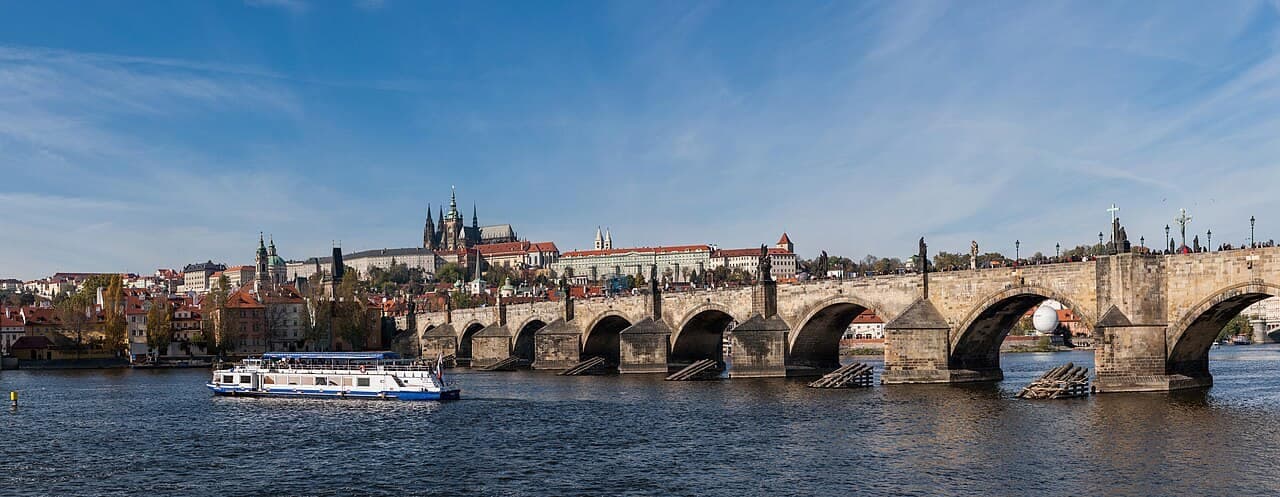
CzechiaPhoto: Diliff / Wikimedia Commons (CC BY-SA 3.0)

Czechia

Country · CZ · CZK · Europe/Prague

Visa and entry in Czechia

This information may change. Always check the official source.

Visa and entry in Czechia

Warning Important

EU, EEA and Swiss nationals enter on a national ID card. Visa-exempt travellers get 90 days in any 180 and are now registered biometrically through EES instead of having their passport stamped. Non-biometric Russian passports are refused at the border without exception.

  • EU, EEA and Swiss citizens need only a national ID card or passport, with no time limit for tourism.
  • Visa-exempt third-country nationals get 90 days in any 180-day period on a biometric passport issued within the last 10 years and valid 3 months beyond departure from Schengen.
  • The Entry/Exit System has replaced passport stamping since 10 April 2026: expect fingerprints and a facial scan at your first border crossing, and budget extra time.
  • Everyone else needs a Schengen type C visa, applied for 15 to 45 days ahead with travel health insurance covering at least EUR 30,000.
  • There is no arrival form and no health declaration to file before you fly.
  • Third-country nationals must report their address to the Foreign Police within 3 working days - your hotel does this for you, a friend's flat does not.
  • Declare cash of EUR 10,000 or more in writing at customs.
  • Non-biometric Russian passports have not been accepted for entry since 3 July 2024.
More details

How your entry route is decided

Entry to Czechia is assessed on two things: your nationality and the type of travel document you hold.

  1. Category 1: EU / EEA and Swiss citizens
  • Legal basis: Freedom of movement.
  • Requirements: A valid national identity card or passport.
  • Limits: No time limit for tourism; a registration duty applies to stays over 30 days.
  1. Category 2: Visa-exempt third-country nationals
  • Legal basis: Visa-free entry to the Schengen area under EU regulation.
  • Conditions: Maximum 90 days of stay in any 180-day period.
  • Travel document: A biometric passport issued within the last 10 years, valid at least 3 months beyond your planned departure from the Schengen area.
  • EES checks: The Entry/Exit System (EES) has been fully operational since 10 April 2026 at every air, land and sea border crossing across all 29 Schengen states, replacing passport stamping. At your first border check, your facial image and fingerprints are captured; the system automatically detects overstays.
  1. Category 3: Visa-required third-country nationals
  • Legal basis: Short-stay Schengen visa (type C).

  • Required documentation: Proof of the purpose of travel, a return ticket, proof of accommodation, funds, and travel health insurance with minimum cover of EUR 30,000.

  1. Category 4: Specific restriction for the Russian Federation
  • Legal basis: Since 3 July 2024 Czechia does not recognise non-biometric Russian passports. Entry or a visa issued on a non-biometric passport is refused.

Entry formalities that apply to everyone

  1. Arrival forms and health declarations
  • Czechia requires no paper or digital arrival form (no PFL/eTravel equivalent). Entry registration for non-European citizens is handled automatically by the Foreign Police at the border crossing through the EES.
  1. Customs limits for arrivals from outside the EU
  • Cash: You must declare in writing to Czech Customs any import or export of cash, securities or precious metals worth EUR 10,000 or more (or the equivalent in CZK or another currency).
  • Tobacco (air travel): 200 cigarettes, OR 100 cigarillos, OR 50 cigars, OR 250 grams of smoking tobacco.
  • Alcohol: 1 litre of spirits above 22% ABV, OR 2 litres of intermediate products/sparkling wine, plus up to 4 litres of still wine and up to 16 litres of beer.
  • Other goods: Duty and VAT exemption for personal goods up to a total value of EUR 430 per person (EUR 200 for travellers under 15).
  1. Mandatory registration of stay
  • Under Section 93(1) of Act No. 326/1999 Coll., every third-country national must report their place of stay to the relevant Foreign Police department within 3 working days of entering Czechia.
  • Exception: If you are staying in commercial accommodation (hotel, hostel, guesthouse, official short-term rental), the provider does this for you. If you are staying privately - with friends or family - you must go to a Foreign Police office in person with your passport and a registration form.

What actually matters in practice

  • Passport acceptance: Holders of non-biometric Russian passports are refused at the border without exception, because the document has been legally invalid for entry to Czechia since 3 July 2024.
  • Insurance checks: The Foreign Police ask for proof of travel health insurance during spot checks in the city and at the airport. Being uninsured or unable to produce the document can result in an on-the-spot fine.
  • The Schengen calculator: Travellers from visa-free countries routinely miscount their days. The 90/180 rule is a rolling one: any day spent in any Schengen state within the previous 180 days counts towards the limit. Travellers on r/Prague report that border control at Václav Havel Airport is strict about proof of accommodation and a return ticket for arrivals from higher-risk countries.

Last verified: 2026-07-26

Report a change

Suggest a correction

JPEG, PNG or WebP, up to 5 MB. Location metadata is removed.

Corrections and photos are private and visible only to the review team.

SIM and eSIM in Czechia

SIM and eSIM in Czechia

Czech law does not require prepaid SIMs to be registered against a document, so you can buy one anonymously and use it immediately. Vodafone's CZK 349 Tourist SIM covers a week of unlimited data; T-Mobile's CZK 299 15 GB eSIM is better value for a longer stay.

More details

What to buy as soon as you land

Arriving travellers in Czechia have access to a mature telecoms network with full 4G/LTE and 5G coverage. Local law does not require prepaid SIM cards to be registered against an identity document. You can buy a SIM anonymously with cash or card and activate it immediately by inserting it or scanning an eSIM QR code.

If your phone supports eSIM, the most efficient route is to buy a profile online - the T-Mobile 15 GB eSIM package at CZK 299, for example - before you fly or over the airport Wi-Fi. Physical SIM cards are available as soon as you clear customs at the airport.

Comparison table

Prices and package specifications are current as of 15 February 2026. Conversions use 1 EUR = 25 CZK and 1 USD = 23 CZK.

OperatorTourist packagePrice (CZK / EUR / USD)DataValidityWhere to buyPassport registration
Vodafone CZTourist SIM Card (eSIM / physical)CZK 349Unlimited data (capped at 10 Mb/s) + CZK 100 credit7 daysRelay kiosks at Prague airport, Vodafone stores, e-shopNO
Vodafone CZData SIM for VisitorsCZK 49920 GB (10 GB + 10 GB bonus) + CZK 100 credit30 daysVodafone stores, airport, selected partner retailersNO
T-Mobile CZTwist 15 GB Data SIM / eSIMCZK 29915 GB (10 GB automatically + 5 GB in the app) + CZK 100 credit30 daysOnline e-shop (eSIM), T-Mobile stores, newsagentsNO
O2 CZGo prepaid card / DatamaniaCZK 249–34910 GB to unlimited, depending on the promo edition30 daysO2 stores, e-shop, selected petrol stationsNO

Where exactly to buy

  1. Václav Havel Airport Prague (PRG)
  • Terminal 1 (non-Schengen): Relay newsagents in the arrivals hall, stocking physical Vodafone and T-Mobile prepaid SIMs.
  • Terminal 2 (Schengen): A Relay store and a Billa supermarket in the arrivals hall and the connecting corridor.
  • Note: Independent airport kiosks may charge above the recommended retail price. Check the price printed on the card packaging (CZK 349 for the Vodafone Tourist SIM, for example).
  1. Prague city centre
  • Official operator stores:
  • Vodafone: Václavské náměstí 47, Prague 1; Národní 28, Prague 1; Palladium shopping centre (náměstí Republiky).
  • T-Mobile: Národní 36, Prague 1; Palladium; Vítězné náměstí 10, Prague 6 (Dejvice).
  • O2: Národní 17, Prague 1; Palladium.
  1. Buying online (eSIM)
  • Operator websites (the T-Mobile e-shop, for instance) sell eSIM profiles. You pay with an ordinary international payment card (VISA/Mastercard) and the QR code arrives by email within minutes.

Short verdict

For a short trip of up to 7 days, the best value is the Vodafone Tourist SIM Card / eSIM (CZK 349 for unlimited data). For stays of 1 to 4 weeks, the T-Mobile Twist 15 GB eSIM at CZK 299 offers the best price-to-data ratio and can be activated entirely digitally without visiting a store.

Last verified: 2026-07-26

Report a change

Suggest a correction

JPEG, PNG or WebP, up to 5 MB. Location metadata is removed.

Corrections and photos are private and visible only to the review team.

Transport from the airport in Czechia

Transport from the airport in Czechia

Václav Havel Airport is 17 km west of central Prague. Trolleybus 59 to metro line A costs CZK 50 and often beats a taxi in rush hour; night buses 907 and 910 cover arrivals after 23:45. Brno-Tuřany is 20 minutes from Brno main station on bus E76.

More details

Václav Havel Airport Prague

Prague's international airport is about 17 km west of the city centre. As of 15 February 2026 the following verified transport options are available:

  1. Public transport (trolleybus 59 + metro line A)
  • Route: Terminal 1 / Terminal 2 to Nádraží Veleslavín on metro line A.
  • Hours: 04:20–23:45, every 3–10 minutes. The trolleybus takes 17 minutes; the onward metro ride to Můstek/Muzeum takes 10 minutes. Travellers on r/Prague report that the high-capacity trolleybus 59 plus metro A is often faster than a taxi during rush hour.
  • Fare: CZK 50 for a 90-minute transfer ticket (adult). Children under 15 and seniors over 65 travel free or at a reduced fare under the PID tariff on proof of age (a passport works).
  • Stop: Directly outside the Terminal 1 and Terminal 2 arrivals halls.
  • Buying a ticket: Contactless card at the ticket machine on the stop or on board the trolleybus (validator by the door), or through the PID Lítačka app.
  1. Public transport (bus 100 + metro line B)
  • Route: Terminal 1 / Terminal 2 to Zličín on metro line B.
  • Use case: Good for destinations in western and southern Prague. Same CZK 50 fare for 90 minutes.
  1. Airport Express (AE) bus
  • Route: Prague Airport to Prague Main Station (Hlavní nádraží), direct, no changes.
  • Hours: 05:30–22:00, every 30 minutes. Journey time 30–45 minutes depending on traffic.
  • Fare: CZK 200 one way. PID tickets are not valid on this line.
  • Buying a ticket: From the driver (contactless or cash), at Prague Public Transit information desks, or online.
  1. Official taxis and ride-hailing (Uber / Bolt)
  • Uber is the contracted partner of Prague Airport.
  • Where to board: At the marked ranks directly outside the arrivals halls of both terminals.
  • Booking: Through the Uber app, or at the self-service kiosks in the arrivals halls.
  • Fare: A guaranteed fixed price calculated before the ride. Into central Prague (Prague 1) expect CZK 400–700 depending on demand.
  • Alternative: The Bolt app works the same way, from designated parking areas in front of the terminals.
  • Warning: Never get into an unmarked car whose driver approaches you inside the terminal. Overcharging by several hundred percent is the norm.
  1. Night transport (00:00–04:30)
  • Night buses 907 and 910: Direct routes linking the airport with the centre (Hlavní nádraží, I. P. Pavlova). Every 30 minutes, CZK 50.

Brno-Tuřany Airport

A regional international airport in the South Moravian region, handling charter and selected scheduled flights.

  1. Public transport (buses E76 and N89)
  • Daytime line E76: Brno Airport to Brno Main Station, about 20 minutes, every 30 minutes.
  • Night line N89: Runs 23:00–05:00, hourly.
  • Fare: Standard DPMB tariff (zones 100+101). A two-zone ticket costs CZK 25–34. Pay by contactless card at the on-board reader.
  1. Taxis and ride-hailing
  • Bolt and Uber both work reliably in Brno. Airport to Main Station runs CZK 250–400.

Which option suits which traveller

  • Solo traveller / budget: Trolleybus 59 to Nádraží Veleslavín metro. CZK 50, about 30 minutes to the centre.
  • Family with children and luggage: Uber or Bolt - straight from the terminal to your hotel, no wrestling suitcases through the metro.
  • Night arrival (after 23:45): Night buses 907 / 910 from Prague Airport at CZK 50, or Uber/Bolt at night rates.

Last verified: 2026-07-26

Report a change

Suggest a correction

JPEG, PNG or WebP, up to 5 MB. Location metadata is removed.

Corrections and photos are private and visible only to the review team.

Useful local apps in Czechia

Useful local apps in Czechia

The four apps worth having before you land: PID Lítačka for Prague tickets and journey planning, IDOS for national timetables, and Uber or Bolt for rides.

Apps and platforms

Last verified: 2026-07-26

Report a change

Suggest a correction

JPEG, PNG or WebP, up to 5 MB. Location metadata is removed.

Corrections and photos are private and visible only to the review team.

Local transport and booking in Czechia

Local transport and booking in Czechia

Prague tickets are time-based and transferable across metro, tram and bus: CZK 39 for 30 minutes, CZK 50 for 90, CZK 120 for a day, CZK 330 for three. A paper ticket must be validated in the yellow machine the moment you board or enter the paid area.

More details

Getting around the city, and which apps to install

Prague's public transport is among the most efficient in Europe. It comprises 3 metro lines (A green, B yellow, C red), a dense tram network and buses.

  1. Tickets and payment
  • Tickets are time-based and allow transfers across the metro, trams, buses and PID trolleybuses.
  • Fares: 30 minutes = CZK 39; 90 minutes = CZK 50; 24 hours = CZK 120; 72 hours = CZK 330.
  • Validating: A paper ticket must be validated in the yellow machine the moment you enter the metro's paid area or board a tram or bus. A digital ticket bought at an on-board terminal is valid immediately and needs no validation.
  1. Key apps
  • PID Lítačka (iOS / Android): The official transport app for Prague and the Central Bohemian region, for journey planning and buying tickets. Important: A ticket bought in the app has to be activated by tapping before you board; activation takes 2 minutes, which is an anti-fare-evasion measure.
  • IDOS (iOS / Android): The comprehensive national timetable search covering every train, bus and city transport service in Czechia.
  • Uber and Bolt: The main ride-hailing platforms, operating in Prague, Brno, Ostrava and other regional cities.

Last verified: 2026-07-26

Report a change

Suggest a correction

JPEG, PNG or WebP, up to 5 MB. Location metadata is removed.

Corrections and photos are private and visible only to the review team.

Money and payments in Czechia

Money and payments in Czechia

The koruna is the only sensible currency to pay in - euros are accepted in central Prague at a deliberately poor rate. At every ATM and card terminal, decline the offer to be charged in your home currency; dynamic currency conversion costs 5 to 15 per cent.

More details

Money and paying for things

  1. Currency and current rate
  • The legal tender is the Czech koruna (CZK / Kč). The euro is not official currency; some shops and restaurants in central Prague do accept it, but at a very poor rate.
  • Indicative rate (15 February 2026): 1 EUR ≈ CZK 25.00 | 1 USD ≈ CZK 23.00.
  1. ATM withdrawals and the DCC risk
  • DCC (dynamic currency conversion): At an ATM or a card terminal the machine will offer to settle in your card's home currency (USD or EUR, say) at that operator's own fixed rate. Always decline - choose "Charge in CZK" / "Without conversion". Declining means your own bank sets the rate, which saves 5% to 15%.
  • Choosing an ATM: Use only machines belonging to established banks and built into branch premises - Komerční banka (KB), Česká spořitelna, ČSOB, Raiffeisenbank, Air Bank. Travellers on r/Prague report that some of these banks charge roughly CZK 100–150 for a withdrawal on a non-European card.
  • ATMs to avoid: The yellow-and-blue non-bank Euronet machines on the street and inside private shops. They use a misleading interface, default to high withdrawal amounts (CZK 10,000, for instance) and charge aggressive fees on top of a poor DCC rate.
  1. Cash and exchange offices
  • Never change money with individuals on the street - you risk being handed invalid or worthless foreign notes, such as old Belarusian roubles.
  • At exchange offices in the centre, always confirm the final amount before you commit. Reputable offices with fair rates (Alfa Exchange, Exchange.cz on Kaprova street) charge no commission. Under the Czech currency exchange act you have the right to reverse an exchange within 3 hours of the transaction, up to EUR 1,000.
  1. Card acceptance and tipping
  • Card acceptance is very high - market stalls, restaurants, public toilets and ticket machines all take cards. Carry a small amount of cash (CZK 500–1,000 in 100/200 notes) only for rural areas and small stalls.
  • Tipping: Not legally required, but expected in table-service restaurants. 10% of the bill is standard when you are happy with the service. It is usually done by rounding up and telling the server the total before they tap your card.

Last verified: 2026-07-26

Report a change

Suggest a correction

JPEG, PNG or WebP, up to 5 MB. Location metadata is removed.

Corrections and photos are private and visible only to the review team.

Accommodation in Czechia

Accommodation in Czechia

Where to base yourself for the first nights: Prague 1 for walking to the sights at a price and over cobbles, Vinohrady for calm with good metro links, Žižkov for budget and nightlife.

More details

Accommodation

  1. Recommended neighbourhoods for your first nights (Prague)
  • Prague 1 (Old Town, Lesser Town, New Town):
  • Good for: Visitors who want to walk to the main sights.
  • Price bracket: High (luxury hotels CZK 3,500–10,000+ per night).
  • Practicalities: Cobbled streets (hard work with a wheeled suitcase), noisier at night.
  • Prague 2 (Vinohrady, Vyšehrad):
  • Good for: Digital nomads, couples, café-goers, anyone wanting somewhere calmer.
  • Price bracket: Mid to upper (CZK 2,000–4,500 per night).
  • Practicalities: Excellent metro A and C connections, plenty of good restaurants.
  • Prague 3 (Žižkov):
  • Good for: Younger travellers, backpackers, budget trips.
  • Price bracket: Affordable to mid (CZK 1,200–3,000 per night).
  • Practicalities: Lively nightlife, good tram links to the centre (trams 9, 15, 26).
  • Prague 5 (Smíchov / Anděl) and Prague 6 (Dejvice):
  • Good for: Families, business travellers, quick airport access.
  • Price bracket: Mid (CZK 1,800–3,500 per night).
  • Practicalities: Smíchov is a major interchange (metro B, trams); Dejvice has the direct trolleybus 59 to the airport and metro A into the centre.
  1. Accommodation practices and the legal side
  • Documents: At check-in you must present a valid passport or ID card. The provider records your details in the guest register.
  • Local accommodation fee: Cities levy a tourist charge - in Prague CZK 50 per person per night for guests over 18. It is often billed separately at reception on arrival.
  • Deposit: Higher-category hotels pre-authorise a credit or debit card at check-in to cover minibar consumption.

Last verified: 2026-07-26

Report a change

Suggest a correction

JPEG, PNG or WebP, up to 5 MB. Location metadata is removed.

Corrections and photos are private and visible only to the review team.

Safety and common scams in Czechia

This information may change. Always check the official source.

Safety and common scams in Czechia

Warning Important

Czechia is among the safest countries in the world and violent crime is rare. The two things that actually catch tourists are the "our card machine is broken, pay in euros" trick in central restaurants and taxis hailed on the street without an app.

More details

Safety and the most common scams

Czechia consistently ranks among the safest countries in the world, with a very low rate of violent crime. The main risk to visitors is petty property crime and tourist scams.

  1. The most common scams
  • The "card machine isn't working" scam: Travellers on r/Prague report that in some tourist restaurants in the centre, staff claim the terminal is down and demand payment in euros at a poor rate (1 EUR = CZK 20–23 rather than the real 25). What to do: Ask for an itemised receipt in CZK, insist on paying in CZK, or pay by QR code.
  • Overpriced street taxis: Flagging a taxi on the street without an app invites overcharging. What to do: Use only Uber or Bolt.
  • Fake ticket inspectors: People without a badge demanding a cash fine from foreigners and issuing no receipt. What to do: A genuine inspector must show a metal service badge and an ID card. Always insist on an official receipt for any fine.
  • Pickpocketing: Common in crowded tourist spots - Old Town Square at the astronomical clock, Charles Bridge, tram 22, and the Můstek/Muzeum metro stations.
  1. Areas to be careful in
  • The park by Prague Main Station (Vrchlického sady, known locally as "Sherwood"): at night there is a higher concentration of homeless people and drug users. Physical danger is low, but extra care is sensible.

Last verified: 2026-07-26

Report a change

Suggest a correction

JPEG, PNG or WebP, up to 5 MB. Location metadata is removed.

Corrections and photos are private and visible only to the review team.

Health in Czechia

This information may change. Always check the official source.

Health in Czechia

Warning Important

No vaccinations are required and the tap water is excellent everywhere. EU visitors use an EHIC; everyone else is legally required to hold travel health insurance, and the Foreign Police do ask for proof during spot checks.

More details

Health, insurance and where to be treated

  1. Health risks and vaccinations
  • No vaccinations are required to enter Czechia.
  • The water supply throughout the country is fully drinkable and of high quality.
  1. Healthcare and insurance
  • EU citizens use the European Health Insurance Card (EHIC) for necessary medical care at public facilities.
  • Third-country nationals are legally required to hold travel health insurance.
  • Hospitals equipped for foreigners (Prague):
  • Na Homolce Hospital (Roentgenova 37/2, Prague 5) - has a Foreigners' Department, good level of English.
  • Motol University Hospital (V Úvalu 84, Prague 5) - the largest hospital complex, with specialised paediatric and adult emergency departments.
  • General University Hospital (VFN) (U Nemocnice 499/2, Prague 2) - city centre.
  1. Pharmacies (lékárna)
  • Usual opening hours are 08:00–18:00/19:00.
  • 24/7 emergency pharmacies (Prague):
  • Lékárna Palackého (Palackého 720/5, Prague 1).
  • Lékárna FN Motol (V Úvalu 84, Prague 5).

Last verified: 2026-07-26

Report a change

Suggest a correction

JPEG, PNG or WebP, up to 5 MB. Location metadata is removed.

Corrections and photos are private and visible only to the review team.

Everyday practical information in Czechia

Everyday practical information in Czechia

Type E sockets at 230 V, statutory quiet hours from 22:00 to 06:00 that the police will enforce in an Airbnb, and shops over 200 m² closed by law on selected public holidays.

More details

Local rules and cultural differences

  1. Travelling without a ticket
  • Entering the metro's paid area or boarding a vehicle without a valid, properly validated ticket carries a fine of CZK 1,500. Paid on the spot or within 15 days, it drops to CZK 1,000.
  1. Drinking alcohol in public
  • A municipal ordinance bans drinking in public in central Prague and at selected public spaces - within 100 metres of metro stations, transport stops, schools and playgrounds. The municipal police issue on-the-spot fines of up to CZK 2,000.
  1. Night-time quiet hours
  • Statutory quiet hours run strictly from 22:00 to 06:00. Noise on the street or in flats and Airbnbs during this window can bring the police and a fine.
  1. Drone rules
  • Drones are regulated by EASA and the Czech Civil Aviation Authority (ÚCL). The whole of wider central Prague is protected airspace, with flying strictly prohibited without a special permit.
  1. Escalator etiquette in the metro
  • A firmly established unwritten rule: stand on the right, leaving the left side clear for people walking past.

Everyday practicalities

  • Power sockets: 230 V, 50 Hz. Type E plugs (two pins with an earth socket, compatible with types C and F / Schuko).
  • Time zone: Central European Time - CET (UTC+1) in winter; CEST (UTC+2) from the last Sunday in March to the last Sunday in October.
  • Shop opening hours:
  • Supermarkets (Billa, Albert, Lidl): typically 07:00–21:00/22:00.
  • Ordinary shops: 09:00–19:00.
  • Public holiday closures: Shops with a sales floor over 200 m² are required by law to close on selected public holidays (1 January, Easter Monday, 8 May, 28 September, 28 October, 25 and 26 December).
  • Public toilets: Usually charge CZK 10–20. Most metro toilet turnstiles accept contactless cards.
  • Wi-Fi: Free Wi-Fi is standard in restaurants and cafés, at Prague Airport, and on selected public transport vehicles (marked with a Wi-Fi icon).

Last verified: 2026-07-26

Report a change

Suggest a correction

JPEG, PNG or WebP, up to 5 MB. Location metadata is removed.

Corrections and photos are private and visible only to the review team.

Emergency information in Czechia

This information may change. Always check the official source.

Emergency information in Czechia

Warning Important

112 works from any phone and its operators speak English. The direct lines are faster: 155 for an ambulance, 158 for the state police, 150 for fire and rescue.

Emergency numbers

All of these are free from any phone on any network, including a phone with no SIM or no credit. Operators on 112 speak English and German.

ServiceNumber
Single European emergency number112
Ambulance155
Police of the Czech Republic158
Municipal police156
Fire and rescue service150

For 24/7 pharmacies and the Prague hospitals with a foreigners' department, see the Health section.

Last verified: 2026-07-26

Report a change

Suggest a correction

JPEG, PNG or WebP, up to 5 MB. Location metadata is removed.

Corrections and photos are private and visible only to the review team.