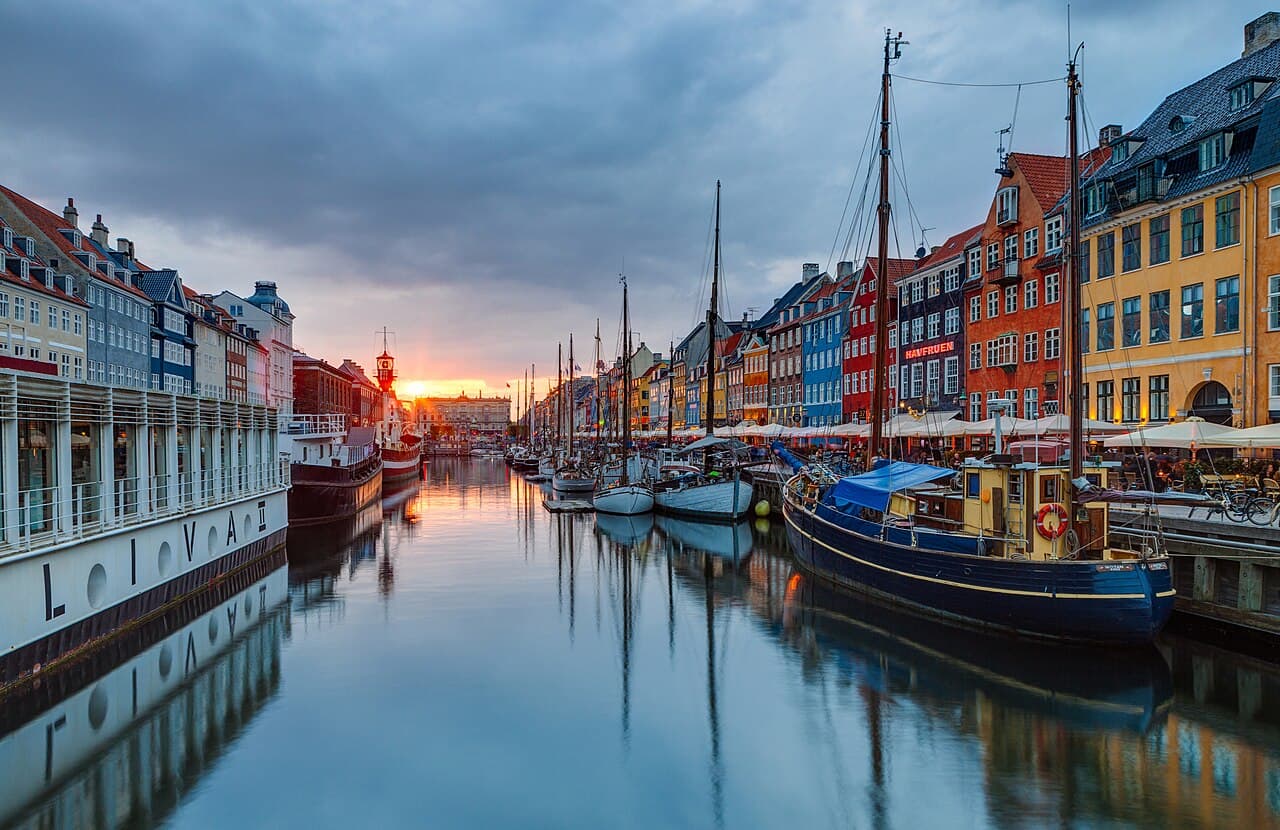
DenmarkPhoto: Moahim / Wikimedia Commons (CC BY-SA 4.0)

Denmark

Country · DK · DKK · Europe/Copenhagen

This information may change. Always check the official source.Last verified: August 2026 by

Schengen: 90 days in any 180, counted automatically by the EES biometric system rather than by passport stamps. ETIAS has not launched and has no date, so anyone selling you one is selling nothing.

  • 90 days in any rolling 180, counted across the whole Schengen area rather than per country or per visit.
  • The Entry/Exit System has been live since 10 April 2026: face and fingerprints on first entry, no stamp in your passport, and the system computes your balance itself.
  • Keep your own record of entry and exit dates. If the system's view and yours differ, you want the evidence.
  • ETIAS has not launched and has no announced date. The Q4 2026 target was removed from the official pages in July 2026, so any website selling you one today is a scam.
  • Greenland and the Faroe Islands are not in Schengen. They are Danish with their own entry rules, and a Schengen visa does not cover them.
More details

The Schengen arithmetic

  • 90 days in any rolling 180. Not 90 days per visit and not 90 days per country. Every day anywhere in the Schengen area counts against the same allowance.
  • Denmark is a full Schengen member, so a flight from Germany or Sweden is a domestic arrival with no passport check.
  • The rolling window is the part people get wrong. On any given day, count back 180 days and add up your Schengen days in that period.
  • The passport must have been issued within the last 10 years and be valid for 3 months beyond your intended departure.
  • Greenland and the Faroe Islands are not in Schengen. They are Danish, and they have their own entry rules; a Schengen visa does not cover them.

EES: no more stamps

  • The EU Entry/Exit System has been fully operational since 10 April 2026.
  • Your face and fingerprints are registered on first entry at a Schengen external border, and reused on later trips.
  • No stamp goes in your passport. The system computes your 90/180 balance itself.
  • Keep your own record of entry and exit dates. If the system's view and yours differ, you want the evidence.
  • First registration adds time at the border, so allow longer arriving at Copenhagen from outside Schengen for the first time since April 2026.

ETIAS: not yet, and no date

  • ETIAS has not launched and there is no announced launch date. The Q4 2026 target that circulated through 2025 was removed from the official pages in July 2026.
  • Applications are not open. Any website selling you an ETIAS today is a scam.
  • When it comes, the fee is EUR 20, free for under-18s and over-70s. The old EUR 7 figure is obsolete.
  • It will be a travel authorisation, not a visa, valid three years or until the passport expires.

Where your nationality lands

Visa and entry in Denmark
You holdWhat you need
Germany, France, Italy, Spain, Netherlands, PolandNothing. EU freedom of movement
USA, Canada, Australia, UK, Japan, South Korea, Malaysia, Singapore, TaiwanNo visa. 90/180, EES registration
China, India, Cambodia, Saudi ArabiaSchengen visa in advance
RussiaSchengen visa in advance, single entry as a rule
  • The Schengen short stay visa fee is EUR 90, EUR 45 for children aged 6 to 11.
  • Apply through the Danish embassy or its visa centre in your country of residence, usually VFS Global, and allow at least three weeks.
  • Crossing to Sweden is a border check in practice. Sweden has run controls at the Oresund crossing since 2016; carry your passport or EU ID card for a day trip to Malmo.
Sources (3)

Denmark applies the EU allowance, and the Norwegian and Swedish alcohol rules are what shape the traffic across its borders.

  • Between EU countries there is no duty-free limit. Goods bought tax-paid in another member state travel with you; customs may only ask what a very large quantity is for, against indicative figures of 800 cigarettes and 10 litres of spirits.
  • Arriving from outside the EU the allowance is one set of numbers: 200 cigarettes, 1 litre of spirits over 22 % (or 2 litres of fortified or sparkling wine), 4 litres of still wine and 16 litres of beer.
  • Other goods are capped by value - EUR 430 arriving by air or sea, EUR 300 by land - and the allowance cannot be pooled between travellers for a single item.
More details
  • Between EU countries there is no duty-free limit. Goods bought tax-paid in another member state travel with you; customs may only ask what a very large quantity is for, against indicative figures of 800 cigarettes and 10 litres of spirits.
  • Arriving from outside the EU the allowance is one set of numbers: 200 cigarettes, 1 litre of spirits over 22 % (or 2 litres of fortified or sparkling wine), 4 litres of still wine and 16 litres of beer.
  • Other goods are capped by value - EUR 430 arriving by air or sea, EUR 300 by land - and the allowance cannot be pooled between travellers for a single item.
  • Cash of EUR 10,000 or more must be declared, counting notes, coins, cheques and prepaid cards together. The money is seized for not declaring it, not for carrying it.
  • Norway is outside the EU with far lower limits, which is why the border shops at Svinesund exist and why Norwegian cars come south for beer.
Sources (1)

Excellent public healthcare, free at the point of use in an emergency. In and around Copenhagen you must phone 1813 before turning up at an emergency room.

  • In the Capital Region and Zealand, call 1813 first for anything urgent but not life-threatening. Turning up at an emergency room unannounced gets you sent away.
  • Emergency treatment is free to everyone, visitors included, and ambulances are excellent and free on 112.
  • EU and UK visitors are covered for necessary treatment with an EHIC or GHIC - bring it. Insurance still matters for repatriation and cancellation.
  • Dental care is not free for anyone, residents included, and is expensive.
  • Fewer things are sold over the counter than in southern Europe - even strong painkillers are restricted and pack sizes are small. Tap water is among the best in the world.
More details

Getting seen

  • 112 for an emergency. Ambulances are excellent and free.
  • In the Capital Region and Zealand, call 1813 first for anything urgent but not life-threatening. They assess you, book you in and tell you where to go - turning up at an emergency room unannounced gets you sent away.
  • Elsewhere in the country, each region has its own out-of-hours number (laegevagten), and your accommodation will have it.
  • Emergency treatment is free to everyone, including visitors, in a genuine emergency.
  • EU and UK visitors are covered for necessary treatment with an EHIC or GHIC card. Bring it.

Insurance anyway

  • Insurance still matters for repatriation, for cancellation and for anything that is not classed as necessary treatment.
  • Dental care is not free for anyone, residents included, and is expensive.
  • Prescriptions cost money but are not extortionate.

Pharmacies

  • Apotek is the pharmacy and pharmacists speak English and give good advice.
  • Fewer things are sold over the counter than in southern Europe. Even strong painkillers are restricted, and pack sizes are small.
  • Every city has a 24-hour pharmacy; in Copenhagen it is Steno Apotek by the Central Station.

Everyday health

  • Tap water is among the best in the world. Drink it and refill everywhere.
  • Food hygiene is excellent and inspection smileys are displayed in every food business - a frowning face in the window means what it looks like.
  • The dark winter affects people. If you are here in January, get outside in the middle of the day.
  • Ticks carry borreliosis in forested areas in summer; check yourself after walking in long grass.
  • Nothing exotic is required and no vaccinations beyond your normal ones.
Sources (2)

Copenhagen

Long-term averages for Copenhagen: the mean daily high, the mean overnight low and the mean monthly rainfall across 30 years of ERA5 reanalysis data (1995–2024).

DayNight
0510152025°C0100mmJanFebMarAprMayJunJulAugSepOctNovDecJanuary: Day 3 °C, Night 0 °C, Rain 52 mm. February: Day 4 °C, Night 0 °C, Rain 46 mm. March: Day 6 °C, Night 0 °C, Rain 42 mm. April: Day 11 °C, Night 4 °C, Rain 40 mm. May: Day 15 °C, Night 8 °C, Rain 54 mm. June: Day 19 °C, Night 12 °C, Rain 69 mm. July: Day 21 °C, Night 14 °C, Rain 73 mm. August: Day 21 °C, Night 15 °C, Rain 76 mm. September: Day 17 °C, Night 12 °C, Rain 53 mm. October: Day 12 °C, Night 8 °C, Rain 65 mm. November: Day 7 °C, Night 4 °C, Rain 50 mm. December: Day 4 °C, Night 1 °C, Rain 54 mm
Show the monthly table
Copenhagen
MonthDay (°C)Night (°C)Rain (mm)
January3052
February4046
March6042
April11440
May15854
June191269
July211473
August211576
September171253
October12865
November7450
December4154

Aarhus

Long-term averages for Aarhus: the mean daily high, the mean overnight low and the mean monthly rainfall across 30 years of ERA5 reanalysis data (1995–2024).

DayNight
05101520°C0100mmJanFebMarAprMayJunJulAugSepOctNovDecJanuary: Day 3 °C, Night 0 °C, Rain 52 mm. February: Day 4 °C, Night 0 °C, Rain 47 mm. March: Day 6 °C, Night 0 °C, Rain 43 mm. April: Day 11 °C, Night 3 °C, Rain 45 mm. May: Day 15 °C, Night 8 °C, Rain 60 mm. June: Day 18 °C, Night 11 °C, Rain 72 mm. July: Day 20 °C, Night 13 °C, Rain 73 mm. August: Day 20 °C, Night 14 °C, Rain 73 mm. September: Day 17 °C, Night 11 °C, Rain 56 mm. October: Day 12 °C, Night 8 °C, Rain 68 mm. November: Day 8 °C, Night 4 °C, Rain 52 mm. December: Day 4 °C, Night 1 °C, Rain 55 mm
Show the monthly table
Aarhus
MonthDay (°C)Night (°C)Rain (mm)
January3052
February4047
March6043
April11345
May15860
June181172
July201373
August201473
September171156
October12868
November8452
December4155

Skagen

Long-term averages for Skagen: the mean daily high, the mean overnight low and the mean monthly rainfall across 30 years of ERA5 reanalysis data (1995–2024).

DayNight
05101520°C0100mmJanFebMarAprMayJunJulAugSepOctNovDecJanuary: Day 4 °C, Night 1 °C, Rain 66 mm. February: Day 4 °C, Night 1 °C, Rain 52 mm. March: Day 5 °C, Night 2 °C, Rain 45 mm. April: Day 8 °C, Night 5 °C, Rain 43 mm. May: Day 13 °C, Night 9 °C, Rain 53 mm. June: Day 16 °C, Night 13 °C, Rain 62 mm. July: Day 19 °C, Night 15 °C, Rain 63 mm. August: Day 19 °C, Night 15 °C, Rain 74 mm. September: Day 16 °C, Night 13 °C, Rain 70 mm. October: Day 12 °C, Night 9 °C, Rain 96 mm. November: Day 8 °C, Night 6 °C, Rain 76 mm. December: Day 5 °C, Night 3 °C, Rain 71 mm
Show the monthly table
Skagen
MonthDay (°C)Night (°C)Rain (mm)
January4166
February4152
March5245
April8543
May13953
June161362
July191563
August191574
September161370
October12996
November8676
December5371
Sources (1)

Expensive, small and very well run. Copenhagen hotels are cheaper at weekends because the market is business travel, and summer on the coast books out early.

  • Copenhagen hotels are cheaper at weekends because the market is corporate - Friday and Saturday nights can be well below a Tuesday.
  • Rooms are small even at high prices. That is normal here, not a bad deal, and breakfast is usually included and substantial.
  • July is the Danish holiday month and the coast, Bornholm and the summer house areas fill completely - book those by spring.
  • The kro is the Danish country inn, a restaurant with rooms and the best way to stay outside a city; hostels here are used by families and all ages.
  • Check-in is often automated with a code sent by email, and there may be nobody at a desk after 20:00.
More details

Booking

  • Copenhagen hotels are cheaper at weekends. The market is corporate, so Friday and Saturday nights can be well below a Tuesday.
  • Rooms are small even at high prices. This is normal here, not a bad deal.
  • Breakfast is usually included and is a proper spread - rye bread, cheese, eggs, pastries.
  • July is the Danish holiday month and the coast, Bornholm and the summer house areas fill completely.
  • Book Bornholm and the west coast by spring for a summer stay.

The types

  • Hotels are excellent and consistent, and the design end of the market is genuinely good value compared with a plain chain.
  • Hostels (vandrerhjem) are used by families and all ages, not just backpackers, and Danhostel is the national network.
  • The kro is the Danish country inn - a restaurant with rooms, often historic, and the best way to stay outside a city.
  • Summer houses (sommerhus) are the national holiday, rented by the week, usually near a beach and excellent value for a group.
  • Camping is well organised and requires a camping pass, which is bought at the site.

Practical

  • Check-in is often automated, with a code sent by email; there may be nobody at a desk after 20:00.
  • Everything is centrally heated and well insulated, and windows open.
  • Wi-fi is fast and free everywhere.
  • Airbnb is legal and regulated, with caps on the number of nights a home can be let.
  • Copenhagen Central Station and Norrebro are lively at night; ask for a room away from the street.
Sources (2)

Prepaid SIMs are cheap and sold in every kiosk with no registration. EU visitors need nothing at all - roam-like-at-home covers Denmark - and everyone else has an easy choice.

  • No registration and no passport needed - Denmark does not tie prepaid SIMs to a document, and kiosks, supermarkets and 7-Eleven all sell them.
  • DKK 100 to DKK 150 buys a generous monthly bundle, and resellers like CBB, Oister and Lebara regularly undercut that on the same networks.
  • EU and EEA visitors need nothing at all - roam-like-at-home covers Denmark. UK visitors should check, because some operators reintroduced daily roaming charges and some did not.
  • Greenland and the Faroe Islands are outside EU roaming, and the charges there are steep.
  • Get online before you leave the airport: public transport tickets now live in an app, which is the strongest single reason to have data on day one.
More details

Buying a SIM

  • No registration and no passport. Denmark does not tie prepaid SIMs to an identity document; it is a two-minute purchase.
  • Kiosks, supermarkets and 7-Eleven sell them, as do the operator shops.
  • TDC/YouSee, Telenor, Telia and 3 own the networks; CBB, Oister, Lebara and Lycamobile resell them and are much cheaper.
  • DKK 100 to DKK 150 buys a generous monthly bundle with plenty of data, and the cheap resellers regularly undercut that.
  • Coverage is excellent everywhere, including on the trains, the islands and the ferries.

eSIM

  • Saily's Denmark plans are USD 3.99 for 1 GB over 7 days, USD 10.99 for 5 GB over 30 days and USD 17.99 for 10 GB.
  • All the Danish networks support eSIM too, if you would rather be on a local network.
  • For a long weekend the eSIM is the least effort. For two weeks the local prepaid bundle is cheaper.

Who needs neither

  • EU and EEA visitors roam at no extra cost under roam-like-at-home, and that covers most visitors to Denmark entirely.
  • UK visitors should check their plan. Some UK operators reintroduced daily roaming charges after Brexit and some did not.
  • Greenland and the Faroe Islands are outside EU roaming. A Danish or EU plan does not cover them and the charges there are steep.

Why you want data on day one

  • Public transport tickets now live in an app (see getting around), and that is the single strongest reason to be online before you leave the airport.
  • Wi-fi is everywhere and good - cafes, trains, libraries, the airport - so a small bundle goes a long way.
Sources (2)

Danish Type sockets smile back at you - and a Schuko plug pushed into one carries no earth at all, which is a genuine shock risk.

  • The earth is a pin on the plug, not a hole in the wall, which is the opposite of the French arrangement and the reason Danish plugs look unlike anything else in Europe.
  • A Schuko or French plug fits the hole and earths nothing. Danish safety authorities warn about this specifically: the appliance runs, the metal case is live if anything fails inside, and nothing about the fit tells you.
  • A Europlug is safe and fits fine - it has no earth to lose.
  • Type and sockets have been legal since 2008 and turn up in new buildings, so a hotel may have either.
  • 230 V is standard European. Only American 120 V-only equipment needs a converter.
More details

Sockets in Denmark are Type at 230 V, 50 Hz - two round holes over a D-shaped earth, which is why a Danish socket looks like a face.

  • The earth is a pin on the plug, not a hole in the wall, which is the opposite of the French arrangement and the reason Danish plugs look unlike anything else in Europe.
  • A Schuko or French plug fits the hole and earths nothing. Danish safety authorities warn about this specifically: the appliance runs, the metal case is live if anything fails inside, and nothing about the fit tells you.
  • A Europlug is safe and fits fine - it has no earth to lose.
  • Type and sockets have been legal since 2008 and turn up in new buildings, so a hotel may have either.
  • 230 V is standard European. Only American 120 V-only equipment needs a converter.
Sources (1)

Direct without being rude, punctual to the minute, cashless, and quietly informal. Say tak, do not queue-jump, and do not stand in the cycle lane.

  • Danes are direct and it is not rudeness - a flat "no" is an answer, not an insult - and almost everyone under 70 speaks fluent English.
  • Punctuality is real. Being ten minutes late to a dinner is rude; being early is odd.
  • Sockets are type at 230 V, the Danish three-pin. A European two-pin fits, but British and American plugs need an adaptor.
  • Bring your own bag or buy one - carriers cost money and nobody hands them out - and take a numbered ticket on the way into a pharmacy or bakery.
  • Christmas Eve, not Christmas Day, is the main event, and everything closes early on 24 December. July is the holiday month and small businesses shut for weeks.
More details

Manners

  • Danes are direct and it is not rudeness. A flat "no" is an answer, not an insult.
  • Small talk with strangers is limited and silence on a bus is normal.
  • Punctuality is real. Being ten minutes late to a dinner is rude; being early is odd.
  • "Tak" covers thank you, please and yes please, and gets you a long way.
  • Almost everyone under 70 speaks fluent English, and Danes will switch without being asked.
  • Hygge is a real thing and not a marketing invention: candles, low light, a long evening indoors with people you like.

Practical

  • 230 V, and sockets are type - the Danish three-pin with the smiling face. A European type two-pin fits; British and American plugs need an adaptor.
  • Shops open Sundays in the cities, and small towns are quiet.
  • Supermarkets sell beer and wine from 16, spirits from 18, and there are no state monopoly shops as in Sweden and Norway.
  • Bring your own bag or buy one - carriers cost money and nobody hands them out.
  • The pant deposit on cans and bottles is refunded at supermarket machines; leaving a bottle beside a bin is normal and is not littering here.
  • Denmark is UTC+1, UTC+2 in summer.

The calendar

  • Public holidays: New Year, Maundy Thursday, Good Friday, Easter Monday, Great Prayer Day was abolished in 2024, Ascension, Whit Monday, Constitution Day on 5 June (a half day), and Christmas from 24 to 26 December.
  • Christmas Eve, not Christmas Day, is the main event, and everything closes early on 24 December.
  • July is the holiday month and small businesses close for weeks.
  • Sankt Hans on 23 June is midsummer, with bonfires on every beach and a country in a good mood.

Small things

  • Cycling is transport, not recreation. Behave like traffic, signal, and do not weave.
  • Queue by the numbered ticket in pharmacies, post offices and bakeries. Take a number on the way in.
  • Nudity at the beach is unremarkable and sauna culture is mixed in places.
  • Smoking is banned indoors in public places and on station platforms.
  • The tap water is the drink and bottled water in a restaurant is an odd request.
Sources (2)

Denmark keeps the krone and pegs it to the euro. Cards work everywhere, cash is legally accepted in daytime shops and rarely used, and euros are not.

  • Denmark uses the krone, not the euro, and euros are not accepted in normal shops - a few tourist businesses take them at a bad rate.
  • Cards work everywhere, contactless is universal, and Apple and Google Pay are standard. Bring two cards from different networks; Amex is patchy.
  • Shops must legally accept cash between 06:00 and 22:00, with exceptions for unstaffed self-service - though in practice almost nobody uses it.
  • Prices include 25% VAT, the highest rate in Europe, and Denmark is among the most expensive countries in Europe. The lunch deal is the trick.
  • Tipping is not expected - service is included by law. The pant is a DKK 1 to DKK 3 deposit on cans and bottles, refunded at supermarket machines.
More details

The krone

  • Denmark uses the Danish krone (DKK), not the euro, and voted to keep it. It is pegged to the euro and barely moves.
  • Euros are not accepted in normal shops. A few tourist businesses take them at a bad rate.
  • Notes are DKK 50 to DKK 1,000, and the 1,000 is awkward to break.
  • Prices include 25% VAT, which is the highest rate in Europe and is baked into everything you see.

Cards and cash

  • Cards work everywhere, contactless is universal, and Apple and Google Pay are standard.
  • The cash rule (kontantreglen) obliges physical shops to accept cash between 06:00 and 22:00, with exceptions for unstaffed self-service, remote sales and temporary markets.
  • In practice almost nobody uses cash, and some places have signs asking you not to.
  • Bring two cards from different networks. Visa and Mastercard both work; Amex is patchy.
  • Dankort is the Danish domestic card and it is what the terminal expects; a foreign card still works.
  • MobilePay is the app everyone uses and it is closed to visitors, because it needs a Danish bank account and a Danish personal number.

ATMs and value

  • ATMs are fewer than they used to be and are mostly at bank branches in city centres.
  • Always decline the machine's offer to convert to your own currency.
  • Denmark is expensive - among the most expensive countries in Europe - and food and drink are where you feel it.
  • The lunch deal is the trick: a smorrebrod lunch or a dagens ret costs a fraction of the same kitchen's dinner.
  • Tap water is excellent and free, and asking for it in a restaurant is normal.

Tipping

  • Tipping is not expected. Service is included in the price by law and staff are paid properly.
  • Round up if you like, or leave 10% for something exceptional.
  • Card terminals sometimes prompt for a tip, which is an import. Zero is a normal answer.
  • The pant is a deposit on cans and bottles, DKK 1 to DKK 3, refunded at supermarket machines. It is why people take your empties.
Sources (2)

Everyday prices

Typical prices in Danish krone (DKK), averaged across the country by Numbeo and read on 13 August 2026. Tick Convert prices above the table to see every amount in your own currency.

Everyday prices
ItemTypical price
Inexpensive restaurant meal150 DKK
Dinner for two, mid-range, three courses700 DKK
Cappuccino43 DKK
Local draught beer, 0.5 l55 DKK
Bottled water, 0.33 l21 DKK
Public transport, one-way ticket24 DKK
Taxi, starting fare49 DKK
Petrol, 1 litre15 DKK
Cigarettes, pack of 20 (Marlboro)62 DKK
Average net monthly salary27,100 DKK

These are country-wide averages, not a price list: tourist districts, airports and islands sit well above them, and small towns below. The salary line is there for proportion - it is what people living here actually earn.

Sources (1)

Airport guides for Denmark3

One page per airport: the routes into town, what they cost and the trap particular to that arrival.

See all 3 airports

The M2 metro leaves from the end of Terminal 3 and is in the old town in 13 minutes, all night. Buy the ticket in an app or at a machine before you board - there are no barriers and no bank-card tap.

  • The M2 metro runs from the end of Terminal 3 and reaches Kongens Nytorv in 13 minutes for DKK 30 to DKK 40 - every 4 to 6 minutes by day and all night, so a 02:00 landing does not mean a taxi.
  • Buy before you board. There are no ticket barriers, inspectors are frequent, and the fine is around DKK 1,000.
  • The blue Rejsekort card is gone, switched off through May and June 2026 with the check-in posts removed. Use the Rejsekort or Rejsebillet app, or a machine in the terminal.
  • A taxi is DKK 250 to DKK 350 from the rank outside Terminal 3, metered and taking cards.
  • The train to Sweden leaves from the same airport station, 20 minutes to Malmo, with Swedish border checks.
More details
Copenhagen (CPH) to the city
Transport from the airport in Denmark
OptionCostTimeNotes
M2 metroDKK 30 to DKK 4013 min to Kongens NytorvEvery 4 to 6 min by day, every 15 to 20 min all night
DSB trainDKK 30 to DKK 4015 min to Kobenhavn HAlso the through train to Malmo
TaxiDKK 250 to DKK 35020 to 30 minRank outside Terminal 3, metered, cards accepted
Bus 5Csame zone fare35 to 45 minUseful only if you are staying on its route
  • The metro station is at the end of Terminal 3, a five-minute walk from arrivals, signposted and level.
  • It runs 24 hours a day. A 02:00 landing does not mean a taxi.
  • The airport is in zone 4 and a ticket covering it and central Copenhagen is a three-zone fare.
  • Buy before you board. There are no ticket barriers, inspectors are frequent, and "I could not work out the machine" is not a defence - the fine is around DKK 1,000.
  • The train to Sweden goes from the same airport station, 20 minutes to Malmo, and Swedish border checks apply.
Tickets, in the new system
  • The blue Rejsekort card is gone. It was switched off in stages through May and June 2026 and the check-in posts have been removed.
  • Use the Rejsekort app or the Rejsebillet app to buy a single ticket, or the ticket machines in the terminal.
  • A physical Basiskort exists for people who would rather not use a phone, and it can be picked up and topped up like the old card.
  • The DSB app is the one for long-distance trains to Aarhus, Odense and Aalborg.
  • A City Pass covers unlimited travel for 24 to 120 hours across the zones you need, including the airport, and is bought in the same apps.
The other airports
  • Billund (BLL), for Legoland and much of Jutland, has coaches to Aarhus and Vejle and no train.
  • Aarhus (AAR) is 40 km from Aarhus with an airport bus that meets flights.
  • Malmo (MMX) and Gothenburg are marketed to Copenhagen visitors and are in another country. Factor in the bridge and the border check.
  • Copenhagen has left luggage in Terminal 3 if you land early and cannot check in.
Sources (2)

Everything is an app since June 2026, trains are fast and expensive unless booked ahead, and the bicycle is genuinely the fastest way across Copenhagen.

  • You cannot tap a bank card at the gate, because there are no gates. Have a valid ticket before you step on - inspections are frequent and the fine is about DKK 1,000.
  • DSB trains are fast: Copenhagen to Aarhus about 3 hours, to Odense about 90 minutes. Book Orange fares in advance for a fraction of the walk-up price.
  • The cycle lane is a road. Do not stand in it, do not walk in it, and look before you step off a kerb - this is the most common visitor mistake in Copenhagen.
  • Lights are compulsory after dark, at a fine of around DKK 700, and holding a phone while cycling is illegal at about the same. Never overtake a lorry on the right.
  • MobilePay is what Danes pay with and you cannot use it - it needs a Danish bank account. Bring a card.
More details

Tickets changed in 2026, and older guides are wrong

  • The physical Rejsekort is gone. The last day you could travel on one was 29 June 2026 and the system shut down the next day; the blue check-in posts are being replaced by yellow ones for the Basiskort.
  • What to use now: the Rejsekort app for check-in and check-out, the Rejsebillet app for single tickets and City Passes, the DSB app for intercity trains, or a Basiskort if you want a physical card.
  • Ticket machines still exist at stations and in the airport.
  • You cannot tap a bank card at the gate, because there are no gates. Have a valid ticket before you step on.
  • Inspections are frequent and the fine is about DKK 1,000, payable by anyone, tourist or not.

Trains

  • DSB runs the network and it is fast: Copenhagen to Aarhus is about 3 hours, to Odense about 90 minutes.
  • Book Orange fares in advance for a fraction of the walk-up price. The cheap tickets are tied to one departure.
  • Seat reservations are cheap and worth it on Fridays and Sundays.
  • The Great Belt and Oresund bridges are part of the network, so a train to Malmo or across to Jutland needs no planning.
  • Bicycles travel on trains with a bike ticket, which is how Danes do a cycling holiday.

Cycling, which is the point of Copenhagen

  • The cycle lane is a road. Do not stand in it, do not walk in it, and look before you step off a kerb - this is the most common visitor mistake in the city.
  • Rent from Donkey Republic through the app, or from a shop; hotels often have their own.
  • Lights are compulsory front and rear after dark, and the fine is around DKK 700. Rental bikes have them; check they work.
  • Holding a phone while cycling is illegal, at about the same fine.
  • Hand signals are used and expected: arm out to turn, hand up to stop.
  • Keep right, overtake on the left, and never on the right of a lorry - the right hook is how cyclists get killed here.
  • Helmets are not compulsory and most Danes do not wear one.

Buses, ferries and cars

  • Buses use the same tickets and apps and the 1A, 2A and 5C are the useful Copenhagen routes.
  • Ferries link the islands - Bornholm, Aero, Samso - and they take cars and bikes and book up in summer.
  • Driving in Copenhagen is pointless. Parking is expensive and the city is built against it.
  • Outside the cities a car is pleasant, roads are excellent and everything is close.
  • The Great Belt Bridge costs about DKK 250 for a car and the Oresund Bridge more; both are cheaper booked online.
  • Drink driving limit is 0.05% and enforcement is strict, including on e-scooters.

Apps worth having

  • Rejsekort and Rejsebillet for local transport.
  • DSB for intercity trains.
  • Donkey Republic for bikes.
  • MobilePay is what Danes pay with and it needs a Danish bank account, so you cannot use it. Bring a card.
Sources (4)

Danish motorways are free; the Great Belt and Oresund bridges are neither free nor cheap.

  • The Great Belt bridge between Zealand and Funen and the Oresund bridge to Sweden both charge, and both are among the most expensive crossings in Europe. Book online for a small discount.
  • The alcohol limit is 0.5 g/l.
  • Dipped headlights are compulsory day and night.
  • Cyclists have their own lanes and the right of way, and turning right across a cycle lane without checking is the single most common mistake a visiting driver makes in Copenhagen.
  • Copenhagen is a bad city to drive in and a superb one to cycle in. Hire the car when you leave it.
More details

Free motorways with two expensive bridges, and cyclists with priority everywhere.

  • The Great Belt bridge between Zealand and Funen and the Oresund bridge to Sweden both charge, and both are among the most expensive crossings in Europe. Book online for a small discount.
  • The alcohol limit is 0.5 g/l.
  • Dipped headlights are compulsory day and night.
  • Cyclists have their own lanes and the right of way, and turning right across a cycle lane without checking is the single most common mistake a visiting driver makes in Copenhagen.
  • Copenhagen is a bad city to drive in and a superb one to cycle in. Hire the car when you leave it.
Sources (1)

One of the safest countries in the world, with two real risks for visitors: pickpockets in central Copenhagen, and drug laws that are far harsher than Christiania makes them look.

  • Pickpocketing in crowds is the main crime a tourist meets - Copenhagen Central Station, Norreport, Stroget, Nyhavn and the airport. Bags go on your lap, not the back of the chair.
  • Danish drug laws are strict and enforced. Possession of any quantity, cannabis included, can mean a heavy fine and in serious cases prison.
  • Christiania is not a legal exception. Residents dismantled the Pusher Street cannabis stalls in 2024 after years of gang violence - do not photograph anyone dealing.
  • The cycle lane is the hazard. Look left before crossing one, and remember traffic turning right must give way to cyclists, which is the opposite of many drivers' instinct.
  • The sea is cold and the west coast of Jutland has dangerous currents. Swim at flagged beaches; rip currents drown people every summer.
More details

What actually happens to visitors

  • Pickpocketing in crowds is the main crime a tourist meets: Copenhagen Central Station, Norreport, Stroget, Nyhavn, Kongens Nytorv and the airport.
  • Bags go on your lap in cafes and not on the back of the chair. Distraction thefts are the method.
  • Bicycle theft is endemic. Lock a rental to something fixed, not just to itself.
  • Violent crime against visitors is rare and the country is genuinely very safe, including for women alone at night.

Christiania and drugs

  • Denmark's drug laws are strict and enforced. Possession of any quantity, cannabis included, can mean a heavy fine and in serious cases years in prison.
  • Christiania is not a legal exception. The residents themselves dismantled the cannabis stalls of Pusher Street in 2024 after years of gang violence.
  • Do not photograph anyone dealing, and be aware the area has had shootings.
  • The FCDO advises caution in Christiania and Norrebro after dark because of gang-related incidents, which are between gangs rather than aimed at visitors.
  • Airport detection is thorough and a small amount in a pocket is a genuinely bad end to a holiday.

Traffic

  • The cycle lane is the hazard. Look left before crossing one, and never stand in it to check a map.
  • Cyclists have priority and traffic turning right must give way to them, which is the opposite of the instinct many drivers arrive with.
  • Pedestrian crossings are respected and jaywalking is fined, though rarely.
  • E-scooter riding while drunk is prosecuted like drink driving.

Weather and water

  • The sea is cold and the currents on the west coast of Jutland are dangerous. Swim at flagged beaches; rip currents drown people every summer.
  • Winter is dark rather than severe: four hours of usable daylight in December, ice on cycle paths, and wind off the sea that makes 2 °C feel much worse.
  • Storms close bridges, including the Great Belt and Oresund, occasionally at short notice.

Practical

  • Emergency number is 112, and 114 for police matters that are not emergencies.
  • Terrorism cannot be ruled out, as anywhere in Europe, and the threat level is public.
  • Report theft online or at a police station to get the report your insurer needs.
Sources (2)

112 for emergencies, 1813 for urgent medical advice around Copenhagen, 114 for the police otherwise. All three answer in English.

  • 112 is free from any phone, SIM or no SIM, and the operators answer in English.
  • 1813 is the one you are most likely to need. Around Copenhagen it decides whether you need a doctor, where to go, and books the slot.
  • 114 is the police number for anything not currently happening, such as reporting a theft.
  • Report theft online at politi.dk or on 114 and you get a case number by email, which is what your insurer needs.
  • The 112 app transmits your position when you call, which matters on a beach or in a forest.
More details

The numbers

Emergency information in Denmark
ServiceNumber
All emergencies112
Medical helpline, Capital Region, 24 hours1813
Police, non-emergency114
Poison line82 12 12 12
Sea and air rescuevia 112
  • 112 is free from any phone, including one with no SIM, and operators answer in English.
  • 112 works across the whole EU with the same guarantee of an English-speaking operator.
  • 1813 is the one you are most likely to need. Around Copenhagen it decides whether you need a doctor, and where, and it books the slot.
  • 114 is for reporting a theft or anything not currently happening.

If something goes wrong

  • Report theft to the police online at politi.dk or on 114, and you get a case number by email - which is what your insurer needs.
  • A stolen passport means the police first, then your embassy, which will be in Copenhagen.
  • The 112 app transmits your position when you call, which matters on a beach or in a forest.
  • Emergency care is free and nobody will ask for a card before treating you.

Worth saving now

  • Your accommodation's address and nearest metro or S-train station.
  • Your insurer's 24-hour assistance number, and your EHIC or GHIC if you have one.
  • 1813, if you are staying anywhere near Copenhagen.
  • Denmark's country code is +45, and all numbers are 8 digits with no area codes.
  • Your embassy in Copenhagen, most of which are in Osterbro and Frederiksstaden.
Sources (3)