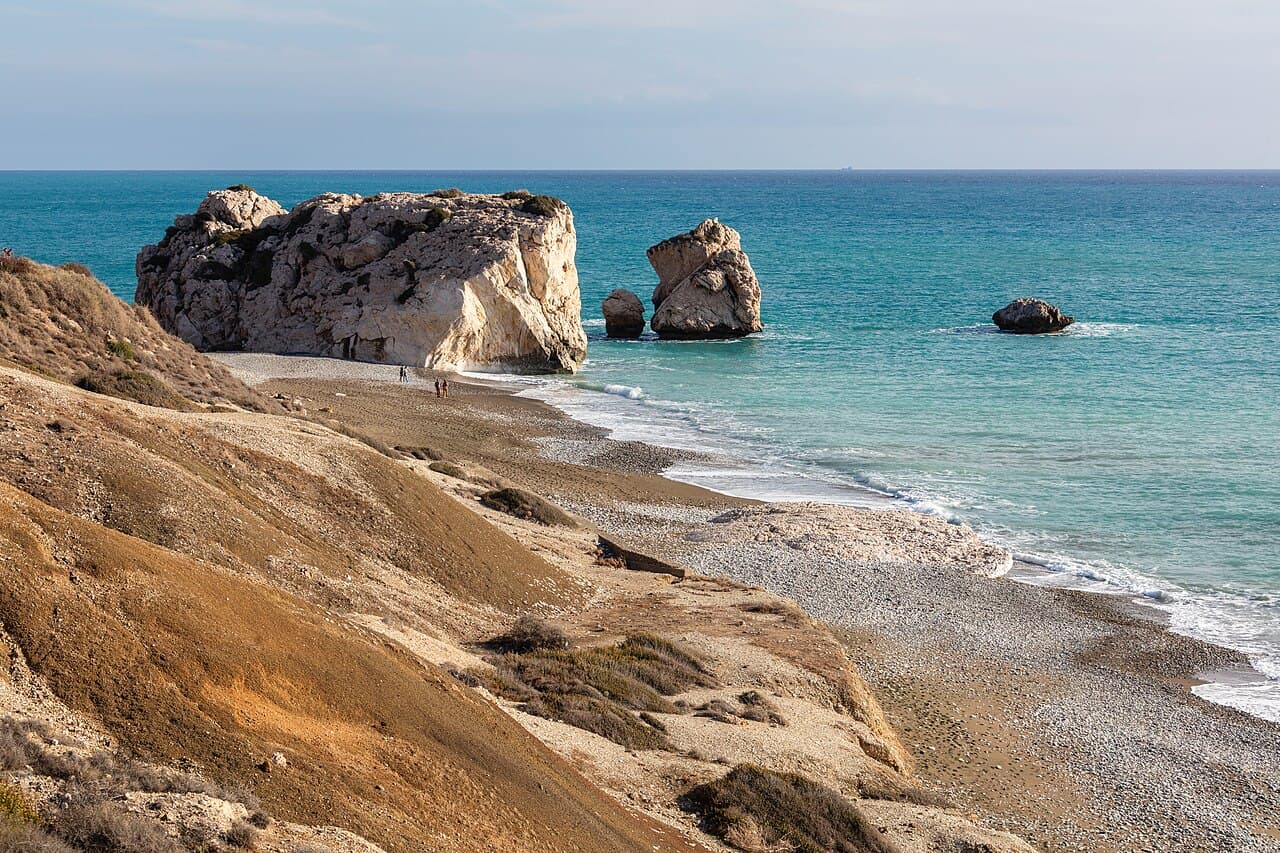
CyprusPhoto: Diego Delso / Wikimedia Commons (CC BY-SA 4.0)

Cyprus

Country · CY · EUR · Asia/Nicosia

This information may change. Always check the official source.Last verified: August 2026 by

Cyprus is in the EU but NOT in Schengen - its 90 days are counted separately - and entering through the north is not a legal entry at all.

  • Cyprus is an EU member state but is not part of the Schengen area.
  • Its 90 days in any 180 are counted on its own clock, separately from Schengen. Days here do not consume your Schengen allowance, and vice versa.
  • The Republic of Cyprus controls the south. The north is administered by a Turkish Cypriot authority recognised only by Turkey.
  • Crossing points through the UN buffer zone are open and used daily by residents and visitors.
  • Most Western passports get 90 days in any 180.
More details

In the EU, not in Schengen

This is the fact that catches people, because every other EU country in this region is in both.

  • Cyprus is an EU member state but is not part of the Schengen area.
  • Its 90 days in any 180 are counted on its own clock, separately from Schengen. Days here do not consume your Schengen allowance, and vice versa.
  • Your passport is stamped on entry and exit. Cyprus is outside EES.
  • A Schengen visa is not automatically valid for Cyprus, though holders of certain multiple-entry Schengen visas are admitted - check your own case rather than assuming.
  • Flying from Athens to Larnaca is an international flight with passport control at both ends, which surprises people every summer.

The divided island

  • The Republic of Cyprus controls the south. The north is administered by a Turkish Cypriot authority recognised only by Turkey.
  • The Republic considers its only legal points of entry to be in the south - Larnaca and Paphos airports, and the ports of Limassol and Larnaca.
  • Flying into Ercan in the north, via Turkey, is not a legal entry into the Republic. You may be refused permission to cross to the south, and you will have no Republic entry stamp.
  • If you intend to see both sides, arrive in the south.

Crossing the Green Line

  • Crossing points through the UN buffer zone are open and used daily by residents and visitors.
  • Take your passport. You show it at both sides; it is a checkpoint rather than a stamped border for most visitors.
  • Hire cars are the complication - most southern rental agreements exclude the north or require separate insurance bought at the crossing. Check before you drive up.
  • Duty-free limits apply when you come back south, and they are enforced.

The allowance

  • Most Western passports get 90 days in any 180.
  • The passport should be valid for the duration of the stay; carriers often ask for three months beyond.
Sources (3)

Cyprus applies the EU allowance, and the crossing points to the north have their own rules.

  • Between EU countries there is no duty-free limit. Goods bought tax-paid in another member state travel with you; customs may only ask what a very large quantity is for, against indicative figures of 800 cigarettes and 10 litres of spirits.
  • Arriving from outside the EU the allowance is one set of numbers: 200 cigarettes, 1 litre of spirits over 22 % (or 2 litres of fortified or sparkling wine), 4 litres of still wine and 16 litres of beer.
  • Other goods are capped by value - EUR 430 arriving by air or sea, EUR 300 by land - and the allowance cannot be pooled between travellers for a single item.
More details
  • Between EU countries there is no duty-free limit. Goods bought tax-paid in another member state travel with you; customs may only ask what a very large quantity is for, against indicative figures of 800 cigarettes and 10 litres of spirits.
  • Arriving from outside the EU the allowance is one set of numbers: 200 cigarettes, 1 litre of spirits over 22 % (or 2 litres of fortified or sparkling wine), 4 litres of still wine and 16 litres of beer.
  • Other goods are capped by value - EUR 430 arriving by air or sea, EUR 300 by land - and the allowance cannot be pooled between travellers for a single item.
  • Cash of EUR 10,000 or more must be declared, counting notes, coins, cheques and prepaid cards together. The money is seized for not declaring it, not for carrying it.
  • Crossing to and from the north is not an EU external border in the usual sense, and the goods you may bring across are limited separately - alcohol and tobacco quantities are restricted at the checkpoints.
Sources (1)

EHIC works in the south and not in the north, and everything is in English.

  • EU and EEA visitors: carry your EHIC. It gives access to state healthcare on the same terms as a resident.
  • UK visitors: the GHIC does the same job. Neither card is travel insurance, and neither covers repatriation or a private clinic.
  • Heat is the main medical risk for visitors, as in Malta but more so inland.
  • Tap water is safe in the south; taste varies and many residents drink bottled.
  • Pharmacies advise in English and there is a duty rota posted for nights and weekends.
More details

Cover

  • EU and EEA visitors: carry your EHIC. It gives access to state healthcare on the same terms as a resident.
  • UK visitors: the GHIC does the same job. Neither card is travel insurance, and neither covers repatriation or a private clinic.
  • Travel insurance still matters for anything the state system does not cover.
  • The EHIC and GHIC apply in the Republic only. They are not valid in the north, where you are paying privately for anything that happens.
  • If you are crossing the Green Line, check your travel insurance covers the north - many policies exclude it explicitly.

The heat

  • Heat is the main medical risk for visitors, as in Malta but more so inland.

Everyday health

  • Tap water is safe in the south; taste varies and many residents drink bottled.
  • Pharmacies advise in English and there is a duty rota posted for nights and weekends.
  • Care is good and in English throughout the south.
Sources (2)

Nicosia

Long-term averages for Nicosia: the mean daily high, the mean overnight low and the mean monthly rainfall across 30 years of ERA5 reanalysis data (1995–2024).

DayNight
5152535°C0100mmJanFebMarAprMayJunJulAugSepOctNovDecJanuary: Day 15 °C, Night 7 °C, Rain 51 mm. February: Day 16 °C, Night 7 °C, Rain 39 mm. March: Day 19 °C, Night 9 °C, Rain 30 mm. April: Day 24 °C, Night 12 °C, Rain 26 mm. May: Day 29 °C, Night 17 °C, Rain 22 mm. June: Day 33 °C, Night 21 °C, Rain 8 mm. July: Day 37 °C, Night 24 °C, Rain 2 mm. August: Day 36 °C, Night 24 °C, Rain 2 mm. September: Day 33 °C, Night 21 °C, Rain 9 mm. October: Day 27 °C, Night 17 °C, Rain 26 mm. November: Day 22 °C, Night 13 °C, Rain 29 mm. December: Day 17 °C, Night 9 °C, Rain 44 mm
Show the monthly table
Nicosia
MonthDay (°C)Night (°C)Rain (mm)
January15751
February16739
March19930
April241226
May291722
June33218
July37242
August36242
September33219
October271726
November221329
December17944

Limassol

Long-term averages for Limassol: the mean daily high, the mean overnight low and the mean monthly rainfall across 30 years of ERA5 reanalysis data (1995–2024).

DayNight
5101520253035°C0100mmJanFebMarAprMayJunJulAugSepOctNovDecJanuary: Day 15 °C, Night 9 °C, Rain 68 mm. February: Day 16 °C, Night 9 °C, Rain 40 mm. March: Day 18 °C, Night 11 °C, Rain 26 mm. April: Day 22 °C, Night 13 °C, Rain 18 mm. May: Day 26 °C, Night 17 °C, Rain 12 mm. June: Day 30 °C, Night 21 °C, Rain 2 mm. July: Day 33 °C, Night 24 °C, Rain 1 mm. August: Day 33 °C, Night 24 °C, Rain 1 mm. September: Day 30 °C, Night 22 °C, Rain 3 mm. October: Day 27 °C, Night 19 °C, Rain 17 mm. November: Day 22 °C, Night 15 °C, Rain 26 mm. December: Day 17 °C, Night 11 °C, Rain 61 mm
Show the monthly table
Limassol
MonthDay (°C)Night (°C)Rain (mm)
January15968
February16940
March181126
April221318
May261712
June30212
July33241
August33241
September30223
October271917
November221526
December171161
Sources (1)

A long season, a very hot midsummer, and resort strips that are nothing like the rest of the island.

  • Cyprus has one of the longest seasons in the Mediterranean - swimming from April to November.
  • July and August are brutally hot, regularly over 40 C inland, and Nicosia in midsummer is punishing.
  • Ayia Napa is the party resort and is loud all night in season.
  • Protaras next door is family-oriented and quiet.
  • You will be asked for your passport at check-in.
More details

The season

  • Cyprus has one of the longest seasons in the Mediterranean - swimming from April to November.
  • July and August are brutally hot, regularly over 40 C inland, and Nicosia in midsummer is punishing.
  • Spring and autumn are the best months and the Troodos are pleasant when the coast is not.

Know what you are booking

  • Ayia Napa is the party resort and is loud all night in season.
  • Protaras next door is family-oriented and quiet.
  • Limassol is a working city with a long seafront.
  • Paphos is spread out - the harbour, the archaeological area and the upper town are separate places.
  • Agrotourism in the mountain villages is a real and underused category.

Practicalities

  • You will be asked for your passport at check-in.
  • Air conditioning is essential in summer.
  • A nightly tourist tax may apply depending on the accommodation category.
Sources (2)

EU roaming works in the south; cross to the north and your phone jumps to a Turkish network at foreign rates.

  • Roam-like-at-home applies. A SIM from any EU or EEA country works here at your domestic rates, with your domestic allowance. Buying anything local is money wasted.
  • The Republic of Cyprus is in the EU, so roam-like-at-home applies in the south.
  • Cyta and Epic cover the south and coverage is complete.
  • An eSIM is live before you land and skips the shop entirely, which on a short trip is the whole argument for it.
  • Keep your home number reachable for two-factor codes. If you swap in a local SIM as your only card, bank apps that text a code to your home number stop working at the worst possible moment. A dual-SIM phone, or an eSIM alongside your home SIM, solves it.
More details

If you have an EU plan, stop reading

  • Roam-like-at-home applies. A SIM from any EU or EEA country works here at your domestic rates, with your domestic allowance. Buying anything local is money wasted.
  • UK plans are not covered any more. Several UK networks reintroduced EU roaming charges after Brexit - check yours before you land rather than after.

The northern roaming trap

  • The Republic of Cyprus is in the EU, so roam-like-at-home applies in the south.
  • The north is not, and phones there connect to Turkish Cypriot or Turkish networks at non-EU roaming rates.
  • This happens automatically near the buffer zone, including in parts of Nicosia, where your phone can pick up a northern mast without you crossing anywhere.
  • Turn off data roaming before you go near the Green Line, or cap it - this is one of the more expensive surprises available in Europe.

Local prepaid SIM

  • Cyta and Epic cover the south and coverage is complete.
  • Prepaid packs are sold at the airports and in every town.
  • Bring your passport.

eSIM

  • An eSIM is live before you land and skips the shop entirely, which on a short trip is the whole argument for it.
  • Check your phone takes one. Most flagship phones since 2019 do; most budget models do not.

Practical points

  • Keep your home number reachable for two-factor codes. If you swap in a local SIM as your only card, bank apps that text a code to your home number stop working at the worst possible moment. A dual-SIM phone, or an eSIM alongside your home SIM, solves it.
  • Wi-fi is widespread in cafes, hotels and stations.
Sources (2)

Cypriot sockets are British Type at 240 V, unlike neighbouring Greece and Turkey.

  • Nothing from Greece or Turkey fits. Both neighbours use round two-pin Schuko sockets, so an island-hopping trip needs two adapters.
  • British plugs fit straight in.
  • 240 V sits at the top of the European band and makes no difference to a 230 V appliance.
  • American 120 V-only equipment needs a converter, not just an adapter.
  • Hotels usually keep adapters at reception, and supermarkets sell them for a couple of euros.
More details

Sockets in Cyprus are Type at 240 V, 50 Hz - the British three-pin plug, a legacy of the colonial period.

  • Nothing from Greece or Turkey fits. Both neighbours use round two-pin Schuko sockets, so an island-hopping trip needs two adapters.
  • British plugs fit straight in.
  • 240 V sits at the top of the European band and makes no difference to a 230 V appliance.
  • American 120 V-only equipment needs a converter, not just an adapter.
  • Hotels usually keep adapters at reception, and supermarkets sell them for a couple of euros.
  • Cyprus, Malta and Ireland are the only EU countries wired for British plugs, which is why an adapter bought for Athens is useless here.
Sources (1)

British plugs, British driving, Greek language and a siesta that is real.

  • 240 V, 50 Hz, socket type - the British three-pin plug, as in Malta.
  • Continental European visitors need an adapter.
  • Greek is the official language of the Republic, Turkish in the north.
  • The afternoon shutdown is real in summer - many shops close from about 13:00 to 16:00 and reopen into the evening.
  • Orthodox monasteries expect covered shoulders and knees, and Kykkos in the Troodos is a working monastery rather than a museum.
More details

Power: British plugs

  • 240 V, 50 Hz, socket type - the British three-pin plug, as in Malta.
  • Continental European visitors need an adapter.

Language

  • Greek is the official language of the Republic, Turkish in the north.
  • English is very widely spoken - a British colonial legacy reinforced by tourism - and you can travel the whole island in it.
  • Road signs are in Greek and Latin script, with transliterations that vary between signs for the same place.

The rhythm

  • The afternoon shutdown is real in summer - many shops close from about 13:00 to 16:00 and reopen into the evening.
  • Dinner is late.
  • Sunday is quiet outside the resorts.

Custom

  • Orthodox monasteries expect covered shoulders and knees, and Kykkos in the Troodos is a working monastery rather than a museum.
  • Coffee is a long social event, and asking for "Greek coffee" in the south and "Turkish coffee" in the north is the safe choice in each.
Sources (2)

The euro in the south, the Turkish lira in the north, and two currencies on one island.

  • The Republic of Cyprus uses the euro and has since 2008.
  • The north uses the Turkish lira. If you cross the Green Line, you are in a different currency zone.
  • Cards work everywhere in the south and contactless is standard.
  • Always refuse the machine's offer to charge you in your own currency. Dynamic currency conversion at an ATM or a card terminal costs several per cent, every time, and the offer is worded to sound helpful. Choose the local currency and let your own bank convert.
  • Around 10 per cent where service is not included.
More details

Two currencies

  • The Republic of Cyprus uses the euro and has since 2008.
  • The north uses the Turkish lira. If you cross the Green Line, you are in a different currency zone.
  • Euro is often accepted in the north at a rate that favours the seller; lira is better if you are spending anything substantial.
  • Turkish lira inflation is rapid, so any price you read about the north is likely to be out of date.

Cards and cash

  • Cards work everywhere in the south and contactless is standard.
  • Carry cash for the north, where card acceptance is thinner and foreign cards sometimes fail entirely - the north's banking system is largely cut off from international networks.

ATMs

  • Always refuse the machine's offer to charge you in your own currency. Dynamic currency conversion at an ATM or a card terminal costs several per cent, every time, and the offer is worded to sound helpful. Choose the local currency and let your own bank convert.
  • Use bank ATMs rather than the independent machines in tourist areas, which add their own fee on top.
  • Do not rely on your card working at all in the north. Take euro or lira cash across with you.

Tipping

  • Around 10 per cent where service is not included.
Sources (2)

Everyday prices

Typical prices in euro (EUR), averaged across the country by Numbeo and read on 19 August 2026. Tick Convert prices above the table to see every amount in your own currency.

Everyday prices
ItemTypical price
Inexpensive restaurant meal15 EUR
Dinner for two, mid-range, three courses60 EUR
Cappuccino3.42 EUR
Local draught beer, 0.5 l4.00 EUR
Bottled water, 0.33 l0.94 EUR
Public transport, one-way ticket2.00 EUR
Taxi, starting fare6.00 EUR
Petrol, 1 litre1.49 EUR
Cigarettes, pack of 20 (Marlboro)5.00 EUR
Average net monthly salary1,630 EUR

These are country-wide averages, not a price list: tourist districts, airports and islands sit well above them, and small towns below. The salary line is there for proportion - it is what people living here actually earn.

Sources (1)

Airport guides for Cyprus2

One page per airport: the routes into town, what they cost and the trap particular to that arrival.

See all 2 airports

Larnaca and Paphos both use scheduled coaches; there is no railway anywhere on the island.

  • Larnaca is the main airport and is about 5 km from Larnaca town.
  • Paphos is the second and serves the west and the resorts around Coral Bay.
  • Kapnos Airport Shuttle runs scheduled coaches from both airports.
  • City buses serve both airports into their own towns cheaply.
  • Most visitors hire a car, and Cyprus rewards it.
More details
Larnaca (LCA) and Paphos (PFO)
  • Larnaca is the main airport and is about 5 km from Larnaca town.
  • Paphos is the second and serves the west and the resorts around Coral Bay.
  • There is no railway on Cyprus at all - the entire island runs on buses, coaches and cars.
The airport coaches
  • Kapnos Airport Shuttle runs scheduled coaches from both airports.
  • Larnaca to Nicosia takes about 35 minutes, at EUR 9.00 for an adult.
  • Paphos to Nicosia takes about 90 minutes and costs EUR 15 to EUR 18 one way depending on where you buy it. Check Kapnos before you travel; the resellers and the operator do not always quote the same figure.
  • Buy online or from the desk. They are timed to flights and are the standard way to move between the airports and the capital.
Local buses
  • City buses serve both airports into their own towns cheaply.
  • Intercity buses connect Larnaca, Limassol, Paphos, Nicosia and Ayia Napa and are inexpensive but infrequent, and thin out sharply in the evening.
Hiring a car
  • Most visitors hire a car, and Cyprus rewards it.
  • Driving is on the left - a British legacy, as in Malta.
  • Check whether your rental covers the north before planning to cross.
Sources (5)

No trains, left-hand driving and a bus network that stops early.

  • Cyprus drives on the left. Steering wheels are on the right, roundabouts run clockwise.
  • The motorway network between Nicosia, Limassol, Larnaca and Paphos is good and free.
  • The intercity network is cheap but sparse, and services stop early in the evening.
  • Do not plan an evening return by bus from a village; there often is not one.
  • Taxis are metered in the cities and there is a shared "service taxi" tradition between towns.
More details

Driving on the left

  • Cyprus drives on the left. Steering wheels are on the right, roundabouts run clockwise.
  • The motorway network between Nicosia, Limassol, Larnaca and Paphos is good and free.
  • Mountain roads in the Troodos are narrow and can be snowbound in winter - Cyprus has a small ski area.
  • Distances are short. Nowhere on the island is more than about two hours from anywhere else.

Buses

  • The intercity network is cheap but sparse, and services stop early in the evening.
  • Do not plan an evening return by bus from a village; there often is not one.
  • Ayia Napa and the resort strips have their own local services in season.

Taxis and apps

  • Taxis are metered in the cities and there is a shared "service taxi" tradition between towns.
  • Bolt operates in the main cities.
Sources (2)

Cyprus drives on the left, its motorways are free, and a hire car is the only practical way to see the island.

  • Traffic drives on the left, a legacy of British administration, which surprises visitors arriving from Greece or Turkey.
  • The motorways are free - the A1 from Nicosia to Limassol, the A5 to Larnaca and the A6 to Paphos carry no toll.
  • Public transport barely connects the villages, so the Troodos mountains, Akamas and the archaeological sites effectively require a car.
  • The alcohol limit is 0.05 %, and enforcement is routine at weekends.
  • Crossing to the north with a hire car needs the rental company's permission and separate insurance bought at the crossing point.
More details

Left-hand traffic in the Mediterranean, free motorways, and no realistic alternative to a car.

  • Traffic drives on the left, a legacy of British administration, which surprises visitors arriving from Greece or Turkey.
  • The motorways are free - the A1 from Nicosia to Limassol, the A5 to Larnaca and the A6 to Paphos carry no toll.
  • Public transport barely connects the villages, so the Troodos mountains, Akamas and the archaeological sites effectively require a car.
  • The alcohol limit is 0.05 %, and enforcement is routine at weekends.
  • Crossing to the north with a hire car needs the rental company's permission and separate insurance bought at the crossing point.
Sources (1)

A very safe island; the buffer zone, the heat and the roads are the things to respect.

  • The UN buffer zone runs across the island and is not a place to wander into.
  • Photography of military installations and the buffer zone is prohibited on both sides and is taken seriously.
  • This is the real hazard. Inland Cyprus in July and August is among the hottest places in Europe.
  • Beaches are flagged and the flags are reliable.
  • Cyprus is very safe and violent crime against visitors is rare.
More details

The buffer zone

  • The UN buffer zone runs across the island and is not a place to wander into.
  • Photography of military installations and the buffer zone is prohibited on both sides and is taken seriously.
  • Use the official crossing points.
  • The zone is mined in places and is fenced for that reason as well as political ones.

Heat

  • This is the real hazard. Inland Cyprus in July and August is among the hottest places in Europe.
  • Heat exhaustion is what actually affects visitors - hydrate, avoid the middle of the day, and do not hike the Troodos at noon in August.

The sea

  • Beaches are flagged and the flags are reliable.
  • Cape Greco and the sea caves have strong currents.

Crime

  • Cyprus is very safe and violent crime against visitors is rare.
  • Drink spiking and inflated bar bills occur in Ayia Napa in season - the usual nightlife precautions.
  • Do not leave valuables in a hire car, which is the commonest theft here.
Sources (1)

112 and 199 both work in the south; the north has its own numbers.

  • 112 works from any phone, free, with no credit and no SIM, and operators handle English.
  • Report a theft to the police and get a written record. No insurer will pay a claim without one, and obtaining it later from another country is close to impossible.
  • A lost passport means the police first, then your embassy.
  • Save 112 in your phone now, and write your accommodation's address somewhere that does not depend on a charged battery.
  • Not every country keeps an embassy in Cyprus. Several cover it from a neighbouring capital - check yours before you need to know.
More details

The numbers

Emergency numbers in Cyprus
ServiceNumber
All emergencies112
All emergencies (national)199
Ambulance, fire, police112 or 199
  • 112 works from any phone, free, with no credit and no SIM, and operators handle English.

If you need help

  • Report a theft to the police and get a written record. No insurer will pay a claim without one, and obtaining it later from another country is close to impossible.
  • A lost passport means the police first, then your embassy.
  • Your embassy cannot pay your bills or get you out of jail, but it can issue emergency travel documents, contact your family and provide lists of local lawyers and doctors.

Before you need them

  • Save 112 in your phone now, and write your accommodation's address somewhere that does not depend on a charged battery.

  • Not every country keeps an embassy in Cyprus. Several cover it from a neighbouring capital - check yours before you need to know.

  • Both 112 and 199 work in the Republic and both are answered in English.

  • The north operates its own emergency services on different numbers. If you are crossing the Green Line, note that your consular protection and your insurance may both work differently there.

Sources (3)