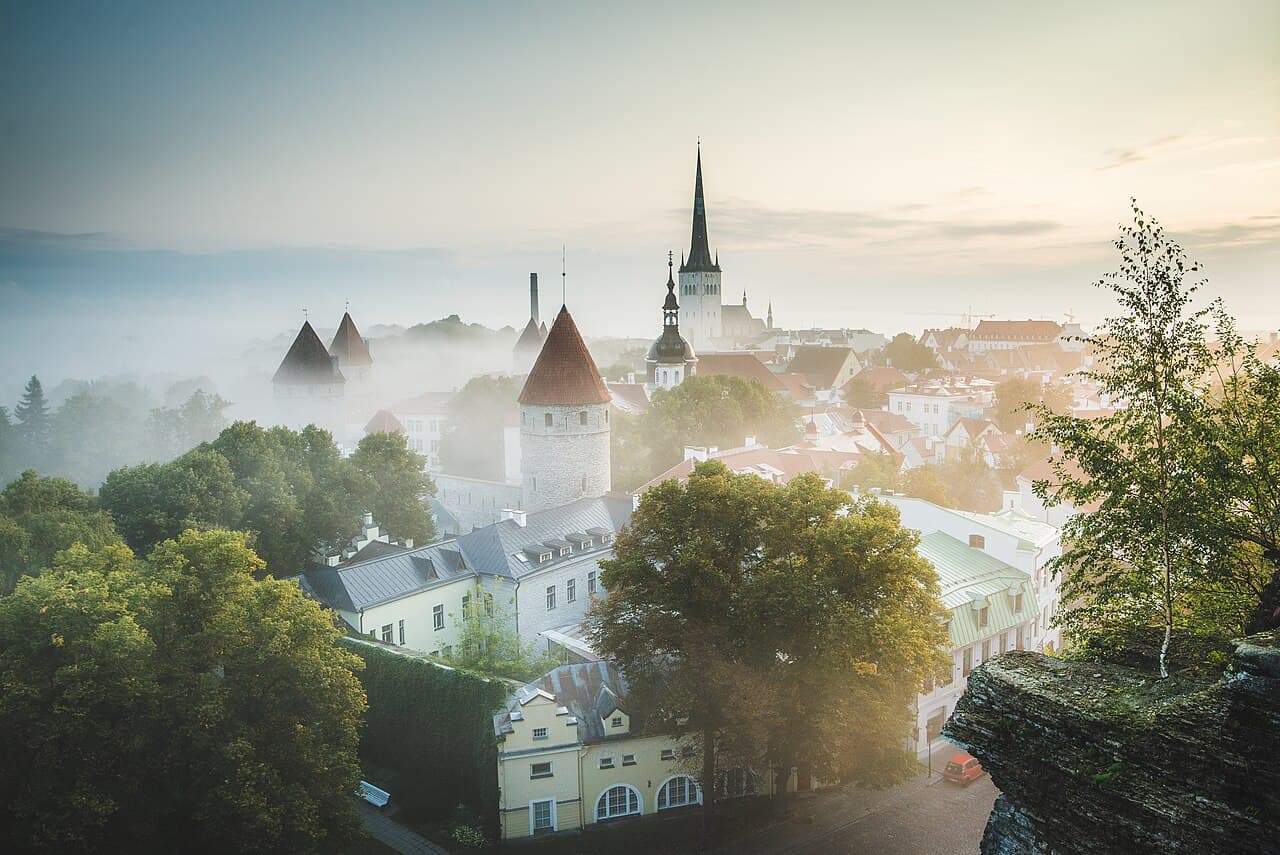
EstoniaPhoto: Hendrik Mändla / Wikimedia Commons (CC BY-SA 4.0)

Estonia

Country · EE · EUR · Europe/Tallinn

This information may change. Always check the official source.Last verified: August 2026 by

Schengen: 90 days in any 180, counted automatically by EES. The land border with Russia is not a practical route in or out any more.

  • 90 days in any rolling 180. Not 90 days per visit and not 90 days per country. Every day anywhere in the Schengen area counts against the same allowance.
  • Do not plan a route through Russia. The eastern border is subject to severe restrictions and the old Tallinn to St Petersburg overland trips no longer work as they did.
  • The EU Entry/Exit System has been fully operational since 10 April 2026.
  • ETIAS has not launched and there is no announced launch date.
  • The Schengen short stay visa fee is EUR 90, EUR 45 for children aged 6 to 11.
More details

The Schengen arithmetic

  • 90 days in any rolling 180. Not 90 days per visit and not 90 days per country. Every day anywhere in the Schengen area counts against the same allowance.
  • Estonia is a full Schengen member. Arriving from Latvia or Finland involves no passport check, and the Tallinn to Helsinki ferry is an internal crossing.
  • The passport must have been issued within the last 10 years and be valid for 3 months beyond your intended departure.
  • Estonia is small and the Baltic states are a single trip for most visitors. Days in Latvia and Lithuania come out of the same 90.

The Russian border

  • Do not plan a route through Russia. The eastern border is subject to severe restrictions and the old Tallinn to St Petersburg overland trips no longer work as they did.
  • Check the FCDO or your own government's current advice before going near the border area, which includes Narva.
  • This matters for itineraries more than for safety. Estonia itself is a safe country; it is the crossing that has stopped being routine.

EES: no more stamps

  • The EU Entry/Exit System has been fully operational since 10 April 2026.
  • Your face and fingerprints are registered on first entry at a Schengen external border, and reused on later trips.
  • No stamp goes in your passport. The system computes your 90/180 balance itself.

ETIAS: not yet, and no date

  • ETIAS has not launched and there is no announced launch date.
  • Applications are not open. Any website selling you an ETIAS today is a scam.
  • When it comes, the fee is EUR 20, free for under-18s and over-70s.

Where your nationality lands

Visa and entry in Estonia
You holdWhat you need
Germany, France, Italy, Spain, Netherlands, PolandNothing. EU freedom of movement
USA, Canada, Australia, UK, Japan, South Korea, Malaysia, Singapore, TaiwanNo visa. 90/180, EES registration
China, India, Cambodia, Saudi ArabiaSchengen visa in advance
RussiaSchengen visa in advance, with significant additional restrictions
  • The Schengen short stay visa fee is EUR 90, EUR 45 for children aged 6 to 11.
  • E-residency is not a visa. Estonia's e-residency programme gives you a digital identity for running a company; it confers no right to enter or stay, and people do confuse the two.
Sources (4)

Estonia applies the EU's lower 40-cigarette limit to all arrivals from outside the EU, not only overland ones.

  • Between EU countries there is no duty-free limit. Goods bought tax-paid in another member state travel with you; customs may only ask what a very large quantity is for, against indicative figures of 800 cigarettes and 10 litres of spirits.
  • The tobacco allowance is the lower one for every arrival: 40 cigarettes rather than 200. The rest of the allowance is the EU standard - 1 litre of spirits over 22 % (or 2 litres of fortified or sparkling wine), 4 litres of still wine and 16 litres of beer.
  • Other goods are capped by value - EUR 430 arriving by air or sea, EUR 300 by land - and the allowance cannot be pooled between travellers for a single item.
More details
  • Between EU countries there is no duty-free limit. Goods bought tax-paid in another member state travel with you; customs may only ask what a very large quantity is for, against indicative figures of 800 cigarettes and 10 litres of spirits.
  • The tobacco allowance is the lower one for every arrival: 40 cigarettes rather than 200. The rest of the allowance is the EU standard - 1 litre of spirits over 22 % (or 2 litres of fortified or sparkling wine), 4 litres of still wine and 16 litres of beer.
  • Other goods are capped by value - EUR 430 arriving by air or sea, EUR 300 by land - and the allowance cannot be pooled between travellers for a single item.
  • Cash of EUR 10,000 or more must be declared, counting notes, coins, cheques and prepaid cards together. The money is seized for not declaring it, not for carrying it.
  • The limit applies at the airport as well as the border, which is unusual: most EU countries reserve the lower figure for land and sea arrivals.
Sources (1)

Good healthcare, EHIC accepted, and tick-borne encephalitis is a real enough risk here to be worth a vaccination conversation.

  • EU and EEA visitors: carry your EHIC. UK visitors: the GHIC does the same job. Neither is travel insurance.
  • Travel insurance still matters for repatriation and private care.
  • Estonia is a tick-borne encephalitis risk area and the risk is higher than in most of western Europe. The season runs roughly April to October.
  • The vaccine is worth discussing with a travel clinic, especially if you are hiking, camping or spending time in forests, which in Estonia is most of the country.
  • Tap water is safe to drink.
More details

Cover

  • EU and EEA visitors: carry your EHIC. UK visitors: the GHIC does the same job. Neither is travel insurance.
  • Travel insurance still matters for repatriation and private care.
  • Estonia's health system is digital. Prescriptions are electronic and tied to an identity code, which can complicate matters for a visitor - carry your own medicines rather than assuming you can get a repeat.

Ticks

  • Estonia is a tick-borne encephalitis risk area and the risk is higher than in most of western Europe. The season runs roughly April to October.
  • The vaccine is worth discussing with a travel clinic, especially if you are hiking, camping or spending time in forests, which in Estonia is most of the country.
  • Lyme disease is the commoner tick infection. Cover up in long grass and woodland, use repellent, and check yourself thoroughly after any day outdoors.
  • Remove a tick promptly with fine tweezers, straight out, without twisting.

Everyday health

  • Tap water is safe to drink.
  • Pharmacies (apteek) are well stocked and pharmacists are qualified to advise.
  • Care is good in Tallinn and Tartu, thinner in rural areas and on the islands - Tartu has the university hospital and is the main referral centre.
  • Bring enough prescription medicine for the trip plus a margin, in original packaging with a copy of the prescription.
Sources (2)

Tallinn

Long-term averages for Tallinn: the mean daily high, the mean overnight low and the mean monthly rainfall across 30 years of ERA5 reanalysis data (1995–2024).

DayNight
-1001020°C0100mmJanFebMarAprMayJunJulAugSepOctNovDecJanuary: Day -2 °C, Night -6 °C, Rain 46 mm. February: Day -2 °C, Night -6 °C, Rain 39 mm. March: Day 2 °C, Night -4 °C, Rain 32 mm. April: Day 9 °C, Night 1 °C, Rain 37 mm. May: Day 15 °C, Night 6 °C, Rain 44 mm. June: Day 19 °C, Night 11 °C, Rain 69 mm. July: Day 22 °C, Night 14 °C, Rain 78 mm. August: Day 21 °C, Night 14 °C, Rain 78 mm. September: Day 16 °C, Night 10 °C, Rain 58 mm. October: Day 9 °C, Night 5 °C, Rain 66 mm. November: Day 4 °C, Night 1 °C, Rain 57 mm. December: Day 0 °C, Night -3 °C, Rain 52 mm
Show the monthly table
Tallinn
MonthDay (°C)Night (°C)Rain (mm)
January-2-646
February-2-639
March2-432
April9137
May15644
June191169
July221478
August211478
September161058
October9566
November4157
December0-352

Tartu

Long-term averages for Tartu: the mean daily high, the mean overnight low and the mean monthly rainfall across 30 years of ERA5 reanalysis data (1995–2024).

DayNight
-1001020°C0100mmJanFebMarAprMayJunJulAugSepOctNovDecJanuary: Day -2 °C, Night -7 °C, Rain 42 mm. February: Day -2 °C, Night -7 °C, Rain 38 mm. March: Day 3 °C, Night -4 °C, Rain 34 mm. April: Day 10 °C, Night 1 °C, Rain 40 mm. May: Day 16 °C, Night 7 °C, Rain 55 mm. June: Day 20 °C, Night 12 °C, Rain 81 mm. July: Day 22 °C, Night 14 °C, Rain 74 mm. August: Day 21 °C, Night 13 °C, Rain 81 mm. September: Day 16 °C, Night 9 °C, Rain 49 mm. October: Day 9 °C, Night 4 °C, Rain 61 mm. November: Day 3 °C, Night 0 °C, Rain 53 mm. December: Day -1 °C, Night -4 °C, Rain 46 mm
Show the monthly table
Tartu
MonthDay (°C)Night (°C)Rain (mm)
January-2-742
February-2-738
March3-434
April10140
May16755
June201281
July221474
August211381
September16949
October9461
November3053
December-1-446

Parnu

Long-term averages for Parnu: the mean daily high, the mean overnight low and the mean monthly rainfall across 30 years of ERA5 reanalysis data (1995–2024).

DayNight
-1001020°C0100mmJanFebMarAprMayJunJulAugSepOctNovDecJanuary: Day -2 °C, Night -6 °C, Rain 51 mm. February: Day -1 °C, Night -6 °C, Rain 46 mm. March: Day 3 °C, Night -4 °C, Rain 39 mm. April: Day 10 °C, Night 1 °C, Rain 40 mm. May: Day 16 °C, Night 6 °C, Rain 48 mm. June: Day 20 °C, Night 11 °C, Rain 80 mm. July: Day 22 °C, Night 14 °C, Rain 94 mm. August: Day 21 °C, Night 13 °C, Rain 95 mm. September: Day 16 °C, Night 9 °C, Rain 60 mm. October: Day 10 °C, Night 5 °C, Rain 71 mm. November: Day 4 °C, Night 1 °C, Rain 59 mm. December: Day 0 °C, Night -3 °C, Rain 54 mm
Show the monthly table
Parnu
MonthDay (°C)Night (°C)Rain (mm)
January-2-651
February-1-646
March3-439
April10140
May16648
June201180
July221494
August211395
September16960
October10571
November4159
December0-354
Sources (1)

Tallinn old town is small and books out; the saunas attached to half the country houses are a genuine part of the offer.

  • The old town is compact and books out for summer weekends and around Christmas. It is also the noisiest place to sleep, particularly at the weekend.
  • Staying just outside the walls costs noticeably less and adds a ten-minute walk. Kalamaja, the old wooden-house district, is the obvious choice and is more interesting than the tourist core.
  • Country houses and farm stays are the Estonian speciality, most with a sauna included rather than as an extra.
  • The sauna is not optional in the social sense. Being offered one is hospitality, and declining outright reads oddly. Estonians take it seriously and quietly.
  • You will be asked for your passport at check-in.
More details

Tallinn

  • The old town is compact and books out for summer weekends and around Christmas. It is also the noisiest place to sleep, particularly at the weekend.
  • Staying just outside the walls costs noticeably less and adds a ten-minute walk. Kalamaja, the old wooden-house district, is the obvious choice and is more interesting than the tourist core.
  • Cruise ship days transform the old town. Prices and crowds both spike; the ship schedule is published and worth a glance.

Outside the capital

  • Country houses and farm stays are the Estonian speciality, most with a sauna included rather than as an extra.
  • The sauna is not optional in the social sense. Being offered one is hospitality, and declining outright reads oddly. Estonians take it seriously and quietly.
  • Book the islands ahead in summer. Saaremaa in particular has limited stock and a short season.

Practicalities

  • You will be asked for your passport at check-in.
  • Nearly everything is booked online in a country this digital, and walk-in rates are rarely better.
  • Winter is genuinely cheap and Tallinn in the snow is a different and quieter city.
Sources (2)

One of the most connected countries in Europe. EU visitors need nothing; everyone else finds prepaid SIMs cheap and sold in supermarkets.

  • Roam-like-at-home applies. A SIM from any EU or EEA country works in Estonia at your domestic rates.
  • UK plans are not covered any more. Check whether your network reintroduced EU roaming charges.
  • Three networks: Telia, Elisa and Tele2. Coverage is excellent, including the islands and the forests, and Estonia has some of the fastest mobile data in Europe.
  • Estonia is an easy eSIM country - the local networks support them and so does every provider.
  • Free wi-fi is close to universal, including on buses, in cafes and in public squares. Estonia has treated internet access as basic infrastructure for two decades.
More details

If you have an EU plan, stop reading

  • Roam-like-at-home applies. A SIM from any EU or EEA country works in Estonia at your domestic rates.
  • UK plans are not covered any more. Check whether your network reintroduced EU roaming charges.

Local prepaid SIM

  • Three networks: Telia, Elisa and Tele2. Coverage is excellent, including the islands and the forests, and Estonia has some of the fastest mobile data in Europe.
  • Prepaid SIMs are sold in supermarkets, kiosks and R-Kiosk as well as operator shops, and starter packs are genuinely cheap.
  • Registration is light. Estonia does not impose the identity-registration burden that some EU countries do for prepaid, though the operator may still ask.

eSIM

  • Estonia is an easy eSIM country - the local networks support them and so does every provider.
  • Buy before you land if you want data the moment you step off the plane.

Practical points

  • Free wi-fi is close to universal, including on buses, in cafes and in public squares. Estonia has treated internet access as basic infrastructure for two decades.
  • Almost everything is done digitally. Parking, tickets, restaurant bills - Estonians expect an app, and the country is close to cashless.
  • Keep your home number reachable for two-factor codes if you swap SIMs.
Sources (3)

Estonian sockets are Type Schuko at 230 V, the same as Finland and the rest of the Baltics.

  • A Europlug fits every socket in the country.
  • Latvia, Lithuania and Finland match, so nothing changes on a Baltic trip or the Helsinki ferry.
  • British, American and Australian plugs need an adapter.
  • Soviet-era blocks still have unearthed sockets of the same shape, slightly recessed, with no earth clips connected behind them.
  • 230 V, so only American 120 V-only equipment needs a converter.
More details

Sockets in Estonia are Type and at 230 V, 50 Hz - the round Schuko outlet.

  • A Europlug fits every socket in the country.
  • Latvia, Lithuania and Finland match, so nothing changes on a Baltic trip or the Helsinki ferry.
  • British, American and Australian plugs need an adapter.
  • Soviet-era blocks still have unearthed sockets of the same shape, slightly recessed, with no earth clips connected behind them.
  • 230 V, so only American 120 V-only equipment needs a converter.
  • The Helsinki ferry changes nothing - Finland uses the same socket, the same voltage and the same frequency.
Sources (1)

Type sockets, near-universal English, a digital state that assumes you have an ID code, and a quietness that is politeness rather than coldness.

  • 230 V, 50 Hz, sockets type (Schuko). The same round two-pin plugs as Germany and most of continental Europe.
  • UK, US, Irish and Australian plugs need an adapter.
  • Estonian is the language and it is Finno-Ugric - related to Finnish, unrelated to Latvian, Lithuanian, Russian or anything Germanic. Do not expect to guess a single word.
  • Estonia runs on digital identity and much of it assumes you have an Estonian ID code. Some apps, parking systems and ticket machines simply will not work for a visitor.
  • Estonians are quiet and reserved with strangers and this is not unfriendliness. Small talk is not a social obligation and silence in a lift is normal.
More details

Power

  • 230 V, 50 Hz, sockets type (Schuko). The same round two-pin plugs as Germany and most of continental Europe.
  • UK, US, Irish and Australian plugs need an adapter.

Language

  • Estonian is the language and it is Finno-Ugric - related to Finnish, unrelated to Latvian, Lithuanian, Russian or anything Germanic. Do not expect to guess a single word.
  • English is very widely spoken, especially by anyone under fifty, and Tallinn functions in it entirely.
  • Russian is widely spoken too, particularly in the northeast, though it carries political weight - English is the neutral choice for a visitor.
  • "Tere" is hello, "aitah" is thank you. Both are appreciated and neither is expected.

The digital state

  • Estonia runs on digital identity and much of it assumes you have an Estonian ID code. Some apps, parking systems and ticket machines simply will not work for a visitor.
  • Contactless bank cards are the workaround for almost everything, including transport.
  • Do not assume an app will accept a foreign phone number. It often will not.

Manners

  • Estonians are quiet and reserved with strangers and this is not unfriendliness. Small talk is not a social obligation and silence in a lift is normal.
  • Take your shoes off indoors in someone's home.
  • Punctuality matters. Turning up late without warning is read as rude.
  • The sauna is a serious institution, taken naked, quietly, and not as a party.
Sources (2)

The euro, and one of the most cashless countries in Europe - carrying notes here is close to pointless.

  • Estonia uses the euro and has since 2011. The kroon is long gone.
  • Estonia is among the most cashless countries in Europe. Cards work everywhere, contactless is universal, and some places genuinely prefer not to handle notes.
  • Public transport in Tallinn does not take cash at all - see the airport section.
  • Always refuse the machine's offer to charge you in your own currency. Dynamic currency conversion costs several per cent and the wording makes it sound like a service.
  • Tipping is not expected and service is not added. Rounding up or leaving up to ten per cent for good restaurant service is appreciated, never demanded.
More details

The currency

  • Estonia uses the euro and has since 2011. The kroon is long gone.

Cards, and the near-absence of cash

  • Estonia is among the most cashless countries in Europe. Cards work everywhere, contactless is universal, and some places genuinely prefer not to handle notes.
  • Public transport in Tallinn does not take cash at all - see the airport section.
  • You can travel here without withdrawing anything. A small reserve is sensible for a rural market or a very small shop, but it will mostly sit in your pocket.

ATMs

  • Always refuse the machine's offer to charge you in your own currency. Dynamic currency conversion costs several per cent and the wording makes it sound like a service.
  • Use bank ATMs - LHV, Swedbank, SEB - rather than independent machines.

Tipping

  • Tipping is not expected and service is not added. Rounding up or leaving up to ten per cent for good restaurant service is appreciated, never demanded.
  • Prices are what is on the menu. Estonia does not run the cover-charge and service-supplement games common further south.
Sources (2)

Everyday prices

Typical prices in euro (EUR), averaged across the country by Numbeo and read on 19 August 2026. Tick Convert prices above the table to see every amount in your own currency.

Everyday prices
ItemTypical price
Inexpensive restaurant meal15 EUR
Dinner for two, mid-range, three courses70 EUR
Cappuccino3.64 EUR
Local draught beer, 0.5 l5.10 EUR
Bottled water, 0.33 l2.26 EUR
Public transport, one-way ticket1.50 EUR
Taxi, starting fare3.20 EUR
Petrol, 1 litre1.69 EUR
Cigarettes, pack of 20 (Marlboro)6.02 EUR
Average net monthly salary1,690 EUR

These are country-wide averages, not a price list: tourist districts, airports and islands sit well above them, and small towns below. The salary line is there for proportion - it is what people living here actually earn.

Sources (1)

Airport guides for Estonia1

One page per airport: the routes into town, what they cost and the trap particular to that arrival.

See all 1 airports

Tallinn Airport is four kilometres from the old town with a tram at the door - but you cannot pay for it in cash.

  • The airport is about 4 km from the old town - one of the shortest airport transfers of any European capital, and it makes a late arrival cheap rather than expensive.
  • Tram line 4 runs from the terminal into the centre, taking roughly fifteen minutes. The stop is at the terminal, not a shuttle ride away.
  • Tallinn's public transport is free for people whose registered residence is Tallinn. They tap a personal Uhiskaart and pay nothing.
  • Visitors and short-term travellers are not eligible. You pay the ordinary fare.
  • Bolt was founded in Tallinn and is what everybody uses. Uber operates as well.
More details
Tallinn Airport (TLL)
  • The airport is about 4 km from the old town - one of the shortest airport transfers of any European capital, and it makes a late arrival cheap rather than expensive.
  • Tram line 4 runs from the terminal into the centre, taking roughly fifteen minutes. The stop is at the terminal, not a shuttle ride away.
  • Bus 2 covers the same ground and continues to the port, which is what you want for the Helsinki ferry.
  • A single ride is EUR 1.50 for a visitor. See below - the "free transport" you have read about is not for you.
  • You cannot pay cash. Tallinn's trams and buses take contactless bank cards tapped on the validator, or tickets in the app. There is no driver taking coins.
  • Tap the validator even so. Contactless is the fare payment; failing to tap is travelling without a ticket.
The free transport that is not free for you

This is the thing to get right before you board:

  • Tallinn's public transport is free for people whose registered residence is Tallinn. They tap a personal Uhiskaart and pay nothing.
  • Visitors and short-term travellers are not eligible. You pay the ordinary fare.
  • The confusion is entirely understandable - Tallinn was the first capital in the world to do this, and it has been reported ever since as "Tallinn has free public transport". For you, it does not.
Taxis and ride-hailing
  • Bolt was founded in Tallinn and is what everybody uses. Uber operates as well.
  • The app price is the price. Given the short distance, a car into town is not expensive even at night.
  • Use the app rather than hailing - it removes the negotiation and gives you a record of the ride.
Sources (3)

Buses reach everywhere, county public transport is often free, and the islands run on ferries that need booking in summer.

  • Long-distance buses are the backbone and they are comfortable, cheap and punctual. Lux Express and Tpilet cover the intercity network.
  • County bus services are free to everyone in many Estonian counties. Unlike the Tallinn scheme, this one does apply to visitors - a genuine and underused perk if you are travelling in the countryside.
  • Elron runs the trains and the network is small but modern - Tallinn to Tartu, Narva, Viljandi and Parnu.
  • Saaremaa and Hiiumaa are reached by ferry from the mainland, operated by TS Laevad.
  • Winter tyres are compulsory from 1 December to 1 March, and often necessary well outside those dates.
More details

Buses

  • Long-distance buses are the backbone and they are comfortable, cheap and punctual. Lux Express and Tpilet cover the intercity network.
  • County bus services are free to everyone in many Estonian counties. Unlike the Tallinn scheme, this one does apply to visitors - a genuine and underused perk if you are travelling in the countryside.
  • Tallinn to Tartu takes about two and a half hours by bus and rather less by train.

Trains

  • Elron runs the trains and the network is small but modern - Tallinn to Tartu, Narva, Viljandi and Parnu.
  • Buy on board or in the app. Tickets are cheap and reservations are not usually needed.

Ferries and the islands

  • Saaremaa and Hiiumaa are reached by ferry from the mainland, operated by TS Laevad.
  • Book ahead in summer if you are taking a car. Foot passengers rarely have a problem; vehicles do, and the sailings fill for weekends and holidays.
  • The Helsinki ferry from Tallinn's port takes about two hours and runs many times a day. It is a Schengen internal crossing, so no formalities.

Driving

  • Winter tyres are compulsory from 1 December to 1 March, and often necessary well outside those dates.
  • Headlights on at all times, all year.
  • The drink-drive limit is effectively zero.
  • Watch for elk and deer on rural roads at dawn and dusk. This is not a decorative warning; a collision with an elk is a serious accident.
Sources (3)

Estonian roads are free, winter tyres are compulsory for three months, and the alcohol limit is effectively nothing.

  • Winter tyres are compulsory from 1 December to 1 March, and the season is often extended by the government when the weather demands it.
  • The alcohol limit is 0.2 g/l, which in practice means nothing at all before driving.
  • Dipped headlights are compulsory day and night, all year.
  • Roads are free - there is no vignette for cars, unlike in most of the region.
  • The distances are small. Tallinn to Tartu is two and a half hours, and the islands of Saaremaa and Hiiumaa are reached by ferries that should be booked in summer.
More details

Free roads, a hard winter tyre rule, and a 0.2 g/l alcohol limit.

  • Winter tyres are compulsory from 1 December to 1 March, and the season is often extended by the government when the weather demands it.
  • The alcohol limit is 0.2 g/l, which in practice means nothing at all before driving.
  • Dipped headlights are compulsory day and night, all year.
  • Roads are free - there is no vignette for cars, unlike in most of the region.
  • The distances are small. Tallinn to Tartu is two and a half hours, and the islands of Saaremaa and Hiiumaa are reached by ferries that should be booked in summer.
Sources (1)

A very safe country. The two things that actually catch visitors are ticks in the forest and satellite navigation that stops working.

  • Satellite navigation is unreliable across the region. Persistent GNSS jamming affects Estonia, Latvia, Lithuania, Finland and the Baltic Sea, and Estonia has formally attributed it to Russian interference.
  • It affects your phone, not just aircraft. Map apps can place you kilometres away or refuse to lock on at all, particularly near the coast and the eastern border.
  • Estonia is a low-crime country and violent crime against visitors is rare.
  • Ticks are the real health risk - see the health section. Estonia is heavily forested and the tick season runs spring to autumn.
  • Narva and the border area warrant checking current advice before you go. The town itself is calm; the geopolitics are not.
More details

GPS interference

  • Satellite navigation is unreliable across the region. Persistent GNSS jamming affects Estonia, Latvia, Lithuania, Finland and the Baltic Sea, and Estonia has formally attributed it to Russian interference.
  • It affects your phone, not just aircraft. Map apps can place you kilometres away or refuse to lock on at all, particularly near the coast and the eastern border.
  • Download offline maps before you travel, and carry a paper map if you are walking or cycling somewhere remote.
  • Do not rely on GPS for a hiking route in the bogs and forests. This is the practical consequence, and it is easy to underestimate.

Crime

  • Estonia is a low-crime country and violent crime against visitors is rare.
  • Pickpocketing happens in Tallinn old town in summer crowds and around the ferry terminal. Ordinary precautions suffice.
  • Bar scams exist in the old town - overpriced drinks and inflated bills at a handful of places aimed at stag groups. Look at prices before you order.

Nature

  • Ticks are the real health risk - see the health section. Estonia is heavily forested and the tick season runs spring to autumn.
  • The bogs are beautiful and genuinely dangerous off the boardwalk. Stay on the marked trails.
  • The sea freezes and the ice is not always safe. Ice roads to the islands are official when open and lethal when not; never improvise one.
  • Winter cold is a serious matter. Temperatures well below freezing for weeks are normal, and visitors underestimate what that means for waiting at a bus stop.

The eastern border

  • Narva and the border area warrant checking current advice before you go. The town itself is calm; the geopolitics are not.
Sources (2)

112 for everything, and a country small enough that help arrives quickly - if you can tell them where you are, which GPS jamming can make hard.

  • 112 is the only number you need. Estonia merged police, ambulance and fire onto it, and operators handle English.
  • It works from any phone, free, with no credit and no SIM.
  • GPS interference is a live problem in Estonia - see the safety section - so do not assume your phone can tell the operator your position.
  • Note your accommodation's address and the nearest crossroads, and learn to recognise the road signs.
  • Report a theft to the police and get a written record. Your insurer will require it.
More details

The numbers

Emergency numbers in Estonia
ServiceNumber
All emergencies112
Police, ambulance, fire, rescue112
Non-emergency police612 3000
  • 112 is the only number you need. Estonia merged police, ambulance and fire onto it, and operators handle English.
  • It works from any phone, free, with no credit and no SIM.

Say where you are

  • GPS interference is a live problem in Estonia - see the safety section - so do not assume your phone can tell the operator your position.
  • Note your accommodation's address and the nearest crossroads, and learn to recognise the road signs.
  • Estonia's emergency app can transmit your position, but it depends on the same satellite signal that may be degraded.

If you need help

  • Report a theft to the police and get a written record. Your insurer will require it.
  • A lost passport means the police first, then your embassy.
  • Your embassy cannot pay your bills or get you out of jail, but it can issue emergency travel documents and provide lists of lawyers and doctors.
  • Not every country has an embassy in Tallinn. Several cover Estonia from Helsinki or Riga - check before you need to know.
Sources (3)