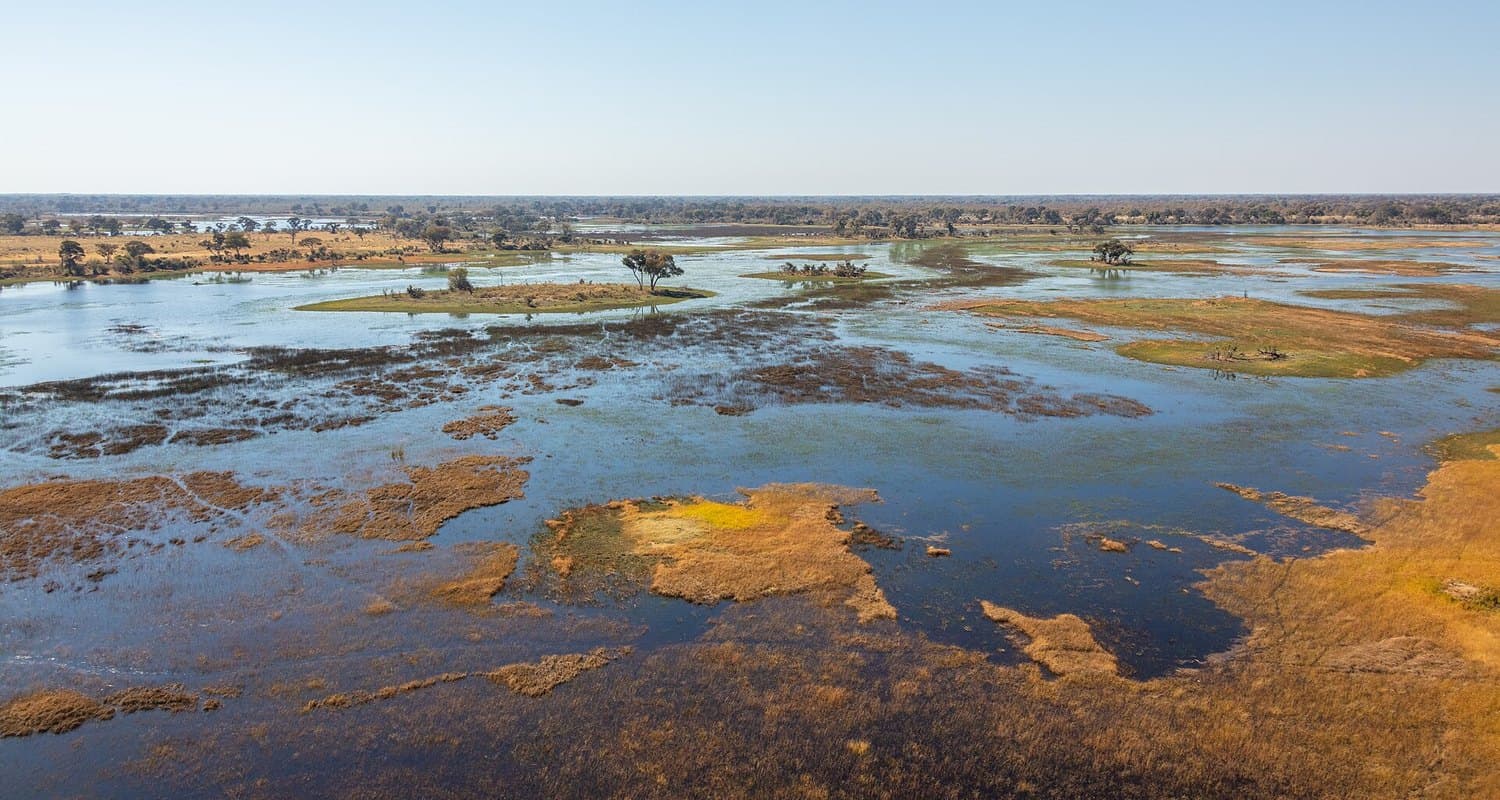
BotswanaPhoto: Diego Delso / Wikimedia Commons (CC BY-SA 4.0)

Botswana

Country · BW · BWP · Africa/Gaborone

This information may change. Always check the official source.Last verified: September 2026 by

Most visitors get 90 days without a visa. The conditions that catch people out are three blank pages, the entry stamp, and a birth certificate for every child.

  • Most visitors, British and Canadian citizens among them, enter for up to 90 days without a visa. Work, study and volunteering all need the right permit instead, arranged before you travel.
  • At least 6 months' validity after the day you arrive.
  • Enter Botswana on the same passport you used to leave the previous country. That is Botswana's rule, not an airline preference, and mixing the two is the usual cause of trouble at the desk.
  • Carry the original or a certified copy of the child's full birth certificate, on entry and on exit. Not the short form.
More details

The visa is the easy part

  • Most visitors, British and Canadian citizens among them, enter for up to 90 days without a visa. Work, study and volunteering all need the right permit instead, arranged before you travel.
  • If your nationality does need a visa, apply online at evisa.gov.bw. The government's own service page allows 7 to 14 working days, so this is not a same-week arrangement.
  • Online applicants must upload every supporting document as one single PDF. That is the government's wording, and it is the step that sends applications back.
  • An approved e-visa can be printed at the port of entry. If the approval letter has not been printed at a mission, travel with it and the visa is issued at the airport or border.
  • Overstaying delays your departure. Extensions go through the Department of Immigration, not the airline.

The passport, and the part people fail

  • At least 6 months' validity after the day you arrive.
  • At least 3 blank pages. This is the requirement that turns a well-travelled passport into a refused boarding, and it is separate from the validity rule.
  • Make sure you get your passport stamped. The FCDO says an unstamped passport raises suspicion of illegal entry, and the stamp is what records the date and port your exit check is measured against.
  • A passport reported lost or stolen means refused entry, even if you have since found it.

Dual nationals

  • Enter Botswana on the same passport you used to leave the previous country. That is Botswana's rule, not an airline preference, and mixing the two is the usual cause of trouble at the desk.

Travelling with anyone under 18

  • Carry the original or a certified copy of the child's full birth certificate, on entry and on exit. Not the short form.
  • Any parent not travelling must sign an affidavit consenting to the trip. Arrange it before you fly; there is nowhere to arrange it at the border.

Vaccination and health screening

  • A yellow fever certificate is required if you are arriving from a country listed as a transmission risk. There is no yellow fever in Botswana itself, so this is purely about where you have been.
  • Health screening applies to arrivals from Ebola-affected regions. Check before you travel and again before you transit.

Money at the border

  • Declare cash of P10,000 or more, in pula or any foreign currency, coming in and going out. Failing to declare it is prosecutable, because currency counts as goods under the Customs and Excise Duty Act.
Sources (3)

Malaria is seasonal and the Okavango is inside the high-risk half. Public pharmacies are short of supplies and private hospitals want payment first.

  • The northern half, including the Okavango Delta, is high risk from October to May, and NaTHNaC recommends chemoprophylaxis there: atovaquone with proguanil, doxycycline or mefloquine.
  • The same northern half is low risk from June to September, where the advice is awareness and bite avoidance rather than tablets.
  • Schistosomiasis is present in fresh water. Another reason not to swim in the rivers, alongside the crocodiles.
  • Call 997 for an ambulance.
  • Check vaccine recommendations at least 8 weeks ahead.
More details

Malaria, by half of the country and by month

  • The northern half, including the Okavango Delta, is high risk from October to May, and NaTHNaC recommends chemoprophylaxis there: atovaquone with proguanil, doxycycline or mefloquine.
  • The same northern half is low risk from June to September, where the advice is awareness and bite avoidance rather than tablets.
  • The southern half is very low risk all year. A Gaborone business trip and a Delta safari are not the same medical decision.
  • The picture is moving. The FCDO recorded in April 2025 that malaria had spread into areas where it is not usually present, so take current advice rather than a map you saw once.
  • Treat any fever of 38C or more as possible malaria, from a week after exposure until a year after you get home.

The other things to know about

  • Schistosomiasis is present in fresh water. Another reason not to swim in the rivers, alongside the crocodiles.
  • Anthrax breaks out among wild animals from time to time. Do not touch dead animals or carcases, and get urgent advice if you think you have.
  • Ticks carry several dangerous diseases, so take precautions if you are camping or walking in the bush.

Getting treated, and paying for it

  • Call 997 for an ambulance.
  • Medicine and medical supply shortages remain widespread across public health facilities. Private healthcare is largely unaffected, which is what your insurance is for.
  • A private hospital will not treat you unless you can pay, and the cost can be high. A public hospital will only take you as an emergency patient if you have full insurance, and outpatient treatment is paid up front.
  • Serious cases may mean medical evacuation to the UK or South Africa. The policy has to cover evacuation and repatriation with funds you can actually reach, and you should call the insurer as soon as you are referred.
  • Care is good in the major towns and limited in rural areas, along with communications. In the Delta you are an air ambulance away from a hospital.

Before you go

  • Check vaccine recommendations at least 8 weeks ahead.
  • A yellow fever certificate is an entry requirement if you are arriving from a transmission-risk country, so this overlaps with the border rules rather than being only medical advice.
Sources (3)

Gaborone

Long-term averages for Gaborone: the mean daily high, the mean overnight low and the mean monthly rainfall across 30 years of ERA5 reanalysis data (1995–2024).

DayNight
5101520253035°C0100mmJanFebMarAprMayJunJulAugSepOctNovDecJanuary: Day 30.9 °C, Night 20 °C, Rain 85 mm. February: Day 30.6 °C, Night 19.9 °C, Rain 79 mm. March: Day 29.1 °C, Night 18.1 °C, Rain 54 mm. April: Day 26.6 °C, Night 14.5 °C, Rain 33 mm. May: Day 23.9 °C, Night 10.1 °C, Rain 15 mm. June: Day 21.3 °C, Night 6.8 °C, Rain 6 mm. July: Day 21.1 °C, Night 6.1 °C, Rain 2 mm. August: Day 25 °C, Night 9 °C, Rain 3 mm. September: Day 29.2 °C, Night 13.3 °C, Rain 10 mm. October: Day 31.4 °C, Night 16.7 °C, Rain 31 mm. November: Day 31.5 °C, Night 18.3 °C, Rain 61 mm. December: Day 31.2 °C, Night 19.5 °C, Rain 84 mm
Show the monthly table
Gaborone
MonthDay (°C)Night (°C)Rain (mm)
January30.920.085
February30.619.979
March29.118.154
April26.614.533
May23.910.115
June21.36.86
July21.16.12
August25.09.03
September29.213.310
October31.416.731
November31.518.361
December31.219.584

Maun

Long-term averages for Maun: the mean daily high, the mean overnight low and the mean monthly rainfall across 30 years of ERA5 reanalysis data (1995–2024).

DayNight
5152535°C0200mmJanFebMarAprMayJunJulAugSepOctNovDecJanuary: Day 30.8 °C, Night 20.3 °C, Rain 134 mm. February: Day 30.6 °C, Night 20.1 °C, Rain 98 mm. March: Day 30.2 °C, Night 19.4 °C, Rain 67 mm. April: Day 29.5 °C, Night 16.7 °C, Rain 17 mm. May: Day 27.6 °C, Night 12.8 °C, Rain 2 mm. June: Day 24.9 °C, Night 9.7 °C, Rain 2 mm. July: Day 24.7 °C, Night 9 °C, Rain 0 mm. August: Day 28.6 °C, Night 11.8 °C, Rain 0 mm. September: Day 32.8 °C, Night 15.9 °C, Rain 3 mm. October: Day 35.3 °C, Night 19.7 °C, Rain 8 mm. November: Day 34 °C, Night 20.5 °C, Rain 48 mm. December: Day 31.9 °C, Night 20.5 °C, Rain 97 mm
Show the monthly table
Maun
MonthDay (°C)Night (°C)Rain (mm)
January30.820.3134
February30.620.198
March30.219.467
April29.516.717
May27.612.82
June24.99.72
July24.79.00
August28.611.80
September32.815.93
October35.319.78
November34.020.548
December31.920.597

Kasane

Long-term averages for Kasane: the mean daily high, the mean overnight low and the mean monthly rainfall across 30 years of ERA5 reanalysis data (1995–2024).

DayNight
101520253035°C0200mmJanFebMarAprMayJunJulAugSepOctNovDecJanuary: Day 28.5 °C, Night 19.9 °C, Rain 199 mm. February: Day 28.4 °C, Night 19.6 °C, Rain 135 mm. March: Day 28.8 °C, Night 19.2 °C, Rain 79 mm. April: Day 28.6 °C, Night 17.2 °C, Rain 19 mm. May: Day 27.2 °C, Night 14.2 °C, Rain 1 mm. June: Day 25 °C, Night 11.8 °C, Rain 1 mm. July: Day 24.8 °C, Night 11 °C, Rain 0 mm. August: Day 28.7 °C, Night 13.6 °C, Rain 0 mm. September: Day 32.8 °C, Night 17.5 °C, Rain 2 mm. October: Day 34.8 °C, Night 20.7 °C, Rain 9 mm. November: Day 32.9 °C, Night 21 °C, Rain 67 mm. December: Day 29.9 °C, Night 20.2 °C, Rain 150 mm
Show the monthly table
Kasane
MonthDay (°C)Night (°C)Rain (mm)
January28.519.9199
February28.419.6135
March28.819.279
April28.617.219
May27.214.21
June25.011.81
July24.811.00
August28.713.60
September32.817.52
October34.820.79
November32.921.067
December29.920.2150
Sources (1)

Registration is compulsory and the only document a foreigner can use is a passport. An unregistered SIM makes no calls at all, and dies in 30 days.

  • BOCRA has required the operators to register every SIM card in Botswana. The registration is done by the network, not by the regulator, so it happens at the shop where you buy the card.
  • Three networks: Mascom, Orange and beMobile (BTC). All the major towns are covered, along with stretches of the national highway. Away from the tar in the Delta and the Kalahari, expect nothing.
  • Orange Botswana sells an eSIM, requested online or in a shop and delivered as a QR or activation code. It is the fastest route if your handset supports it, though the identity check is the same.
  • Using a phone in your hand while driving carries a P300 fine. Hands-free only, which matters because navigating between towns is exactly when you will want the handset.
More details

Bring the passport to the counter

  • BOCRA has required the operators to register every SIM card in Botswana. The registration is done by the network, not by the regulator, so it happens at the shop where you buy the card.
  • For a foreign national the passport is the only accepted document. Orange Botswana says so on its own support page: a national ID for locals, a passport for foreigners, and nothing else.
  • Until you have proved your identity the SIM does nothing. No calls in or out, no data. This is not the usual "activate within 24 hours" nudge.
  • An unregistered line is suspended after 14 days and cancelled after 30. A card handed to you already working belongs to whoever registered it.

Which network, and where

  • Three networks: Mascom, Orange and beMobile (BTC). All the major towns are covered, along with stretches of the national highway. Away from the tar in the Delta and the Kalahari, expect nothing.
  • Cards are sold in supermarkets and at service stations, but buy from an operator's own shop if you want the registration done there and then rather than being told to come back with a passport.

eSIM

  • Orange Botswana sells an eSIM, requested online or in a shop and delivered as a QR or activation code. It is the fastest route if your handset supports it, though the identity check is the same.

One rule that costs money

  • Using a phone in your hand while driving carries a P300 fine. Hands-free only, which matters because navigating between towns is exactly when you will want the handset.
Sources (4)

Two plug standards in use and the references disagree about which. English is official, tipping is not obligatory, and most land borders shut in the evening.

  • Botswana Tourism says the supply is 220/240 V and that both square UK plugs and round South African plugs are in use.
  • English is an official language, taught in schools and spoken in every urban centre, in rural villages by anyone who has been to school, and by camp, lodge and hotel staff. You will not need an interpreter.
  • All the major towns, Maun and Kasane included, have supermarkets carrying basic goods, and most fuel service stations run 24 hour convenience shops.
  • Most crossings shut in the evening. Tlokweng and Pioneer Gate into South Africa run 06:00 to midnight, Mamuno into Namibia to midnight, Kazungula Road into Zimbabwe 06:00 to 20:00, and several of the smaller posts close at 16:00.
More details

Power, and an honest disagreement

  • Botswana Tourism says the supply is 220/240 V and that both square UK plugs and round South African plugs are in use.
  • World Standards lists Botswana as type only, at 230 V and 50 Hz. Type is the large round three-pin South African plug.
  • They disagree, so carry a universal adapter that covers both. A UK three-pin will fit some sockets and not others, and lodges built to South African standard fittings are the norm outside the cities.

Language and manners

  • English is an official language, taught in schools and spoken in every urban centre, in rural villages by anyone who has been to school, and by camp, lodge and hotel staff. You will not need an interpreter.
  • Tipping is not obligatory anywhere, in restaurants, bars or hotels. It is discretionary rather than expected, which is not what a visitor arriving from South Africa assumes.

Shopping and the practical day

  • All the major towns, Maun and Kasane included, have supermarkets carrying basic goods, and most fuel service stations run 24 hour convenience shops.
  • Buy what you need before you leave the tar. In the Delta and the Kalahari there is nothing.

The land borders keep office hours

  • Most crossings shut in the evening. Tlokweng and Pioneer Gate into South Africa run 06:00 to midnight, Mamuno into Namibia to midnight, Kazungula Road into Zimbabwe 06:00 to 20:00, and several of the smaller posts close at 16:00.
  • Check the hours for your specific post before setting out, because arriving at a closed border in Botswana means a long drive back to somewhere with a bed.
  • Kazungula is a bridge now, not a ferry. The Botswana to Zambia bridge opened in 2021 and the two governments established a joint authority to run it in February 2026. The tourism board's port list still says ferry; ignore that.

Getting between towns

  • Scheduled buses cross into South Africa, Zimbabwe, Namibia and Zambia, and internal services link the major and minor towns.
  • There is no passenger rail. Botswana Railways is freight only.
Sources (5)

There is no arrival levy to pay, whatever the travel sites say. What there is: a P10,000 cash declaration, a rand-denominated duty free allowance, and Form J.

  • There is nothing to pay on arrival, and nothing to pay online beforehand. The US$30 Tourism Development Levy that travel sites still describe was announced for 1 June 2017 and the Bill was withdrawn in December 2017 before it was ever tabled.
  • Declare pula or foreign banknotes worth P10,000 or more, on the way in and on the way out. There is no limit on how much you may move, only on doing it quietly.
  • Everyone arriving declares their goods on Form J, the baggage declaration, verbally or in writing.
  • The pula is linked to a basket of currencies, and the Bank of Botswana quotes it against the South African rand, the US dollar, the British pound and the euro. Those four are what banks and bureaux change most readily.
More details

The levy you have read about does not exist

  • There is nothing to pay on arrival, and nothing to pay online beforehand. The US$30 Tourism Development Levy that travel sites still describe was announced for 1 June 2017 and the Bill was withdrawn in December 2017 before it was ever tabled.
  • No Botswana government page publishes an arrival levy today. Neither the FCDO's entry requirements nor Global Affairs Canada's entry section lists one, and the government portal's own search returns nothing.
  • The levy that does exist is charged through your bed. A tourism levy is collected from accommodation and paid into the Tourism Development Fund. Operators publish it at P10, about US$1, per person per night, included in the quoted rate.
  • If a website asks you to prepay a Botswana travel levy, it is not a government service.

Cash across the border

  • Declare pula or foreign banknotes worth P10,000 or more, on the way in and on the way out. There is no limit on how much you may move, only on doing it quietly.
  • Travellers cheques and other monetary instruments do not have to be declared.
  • Currency counts as goods under the Customs and Excise Duty Act, so an undeclared bundle is a customs offence, not an oversight.

The customs form and the allowance

  • Everyone arriving declares their goods on Form J, the baggage declaration, verbally or in writing.
  • The duty free allowance is 2 litres of wine, 1 litre of spirits, 200 cigarettes, 20 cigars, 250 g of tobacco, 50 ml of perfume and 250 ml of toilet water.
  • Other goods up to R3,000 from outside the Southern African Customs Union, or R500 from within it. Botswana's allowance is written in South African rand because it sits inside SACU. Above that, a flat 20 per cent rate is available if you elect it.
  • Failure to declare can mean seizure and a penalty of up to three times the value. Keep the receipts.

The pula itself

  • The pula is linked to a basket of currencies, and the Bank of Botswana quotes it against the South African rand, the US dollar, the British pound and the euro. Those four are what banks and bureaux change most readily.
  • The US dollar, euro, pound and South African rand are the currencies that change most easily, and lodges quoting in dollars still take pula and rand.
  • Cash machines take foreign Visa cards but sit mostly in the larger towns, and a foreign withdrawal attracts extra fees. Draw what you need before you leave the tar.
Sources (8)

Everyday prices

Typical prices in pula (BWP), averaged across the country by Numbeo and read on 10 September 2026. Tick Convert prices above the table to see every amount in your own currency.

Everyday prices
ItemTypical price
Inexpensive restaurant meal138 BWP
Dinner for two, mid-range, three courses400 BWP
Cappuccino32 BWP
Local draught beer, 0.5 l26 BWP
Bottled water, 0.33 l6.00 BWP
Public transport, one-way ticket8.00 BWP
Taxi, starting fare8.00 BWP
Petrol, 1 litre19 BWP
Cigarettes, pack of 20 (Marlboro)50 BWP
Average net monthly salary11,500 BWP

These are country-wide averages, not a price list: tourist districts, airports and islands sit well above them, and small towns below. The salary line is there for proportion - it is what people living here actually earn.

Sources (1)

Airport guides for Botswana1

One page per airport: the routes into town, what they cost and the trap particular to that arrival.

See all 1 airports

Arriving in Botswana

Gaborone, Maun and Kasane are three different arrivals. There is no airport bus, no published taxi tariff, and no Bolt, so the fare is agreed before you get in.

  • Sir Seretse Khama International at Gaborone is the capital's airport and the country's administrative front door. It is where the drone registration office is, and it is the least likely place for a safari to start.
  • Non-citizens must use a passport even on a domestic flight. Gaborone to Maun is an internal flight and Air Botswana still wants the passport, not a driving licence.
  • No transport authority publishes a taxi tariff in Botswana. The Department of Road Transport and Safety issues taxi service permits and its own service page sets a permit fee and no fare, and no operator publishes an airport price list. If a guide quotes you a fixed airport fare, treat it as invented.
More details
Three arrival points, three different trips
  • Sir Seretse Khama International at Gaborone is the capital's airport and the country's administrative front door. It is where the drone registration office is, and it is the least likely place for a safari to start.
  • Maun is the gateway to the Okavango Delta. Almost everyone who lands there is connecting onto a light aircraft the same day, which is why the luggage rule below is the one that matters.
  • Kasane serves Chobe and sits where Botswana, Namibia, Zambia and Zimbabwe meet, a short drive from the Kazungula Bridge into Zambia and from the Victoria Falls.
  • Air Botswana's own network is Gaborone, Francistown, Maun and Kasane inside the country, plus Cape Town, Harare, Johannesburg and Lusaka. Most long-haul travellers connect through Johannesburg.
Two things about the domestic hop
  • Non-citizens must use a passport even on a domestic flight. Gaborone to Maun is an internal flight and Air Botswana still wants the passport, not a driving licence.
  • Check-in closes 30 minutes before a domestic departure and 45 minutes before an international one from Botswana, an hour if you are starting at OR Tambo or Cape Town. Air Botswana's allowance is 23 kg checked and one 7 kg cabin bag.
There is no airport bus and no published fare
  • No transport authority publishes a taxi tariff in Botswana. The Department of Road Transport and Safety issues taxi service permits and its own service page sets a permit fee and no fare, and no operator publishes an airport price list. If a guide quotes you a fixed airport fare, treat it as invented.
  • So agree the fare before you get in, and check the driver has change. That is the tourism board's own instruction, and it is the only protection there is.
  • A licensed taxi carries a blue number plate. Recognised companies also carry branding and can be booked by phone.
  • Do not hail on the street. Global Affairs Canada's advice is to book through your hotel's front desk instead, and to avoid the kombi minibuses altogether.
  • Bolt does not operate in Botswana. Its own city list covers Ghana, Kenya, Nigeria and South Africa, and contains no Botswana city. Do not plan an arrival around opening a ride-hailing app.
If you are driving yourself
  • Four-wheel drive is needed in the parks and reserves and on anything off the tar. Hire companies cluster at the airports and in the tourist towns.
  • There are no passenger trains. Botswana Railways runs freight only, so the road and the light aircraft are the whole network.

The light aircraft into the Delta

One soft bag, 20 kg including your camera gear. Two operators publish it, they disagree on the dimensions, and the tourism board contradicts itself.

  • One soft-sided bag per passenger, maximum 20 kg, and the 20 kg includes your hand luggage and your camera gear. Mack Air and Ker and Downey's Safari Air, both flying out of Maun, publish the same weight.
  • Botswana Tourism publishes 12 kg for light aircraft on one page and 15 kg plus 5 kg on another. Both are lower than what the operators fly today, and they contradict each other. The operator carrying you is the one whose limit counts, so take the figure from your own booking.
  • Legs run from 20 minute hops between camps to about 90 minutes to Kasane, often shared with other passengers, and the pilot briefs the routing before departure.
More details
The rule the operators actually publish
  • One soft-sided bag per passenger, maximum 20 kg, and the 20 kg includes your hand luggage and your camera gear. Mack Air and Ker and Downey's Safari Air, both flying out of Maun, publish the same weight.
  • Soft shell only. No wheels and no frames on the ideal bag, although a soft bag with a rigid base, wheels and a collapsible handle is accepted in Botswana. A hard suitcase will not fit the cargo pod of a Cessna 208.
  • The two operators give different dimensions. Mack Air publishes 70 cm long by 30 cm wide by 42 cm high; Ker and Downey publishes 65 by 40 by 30. Pack to the smaller of the two and neither will argue.
  • Excess luggage can be left in Maun free of charge if your safari starts and ends there. Take the hard case off at Maun rather than at home.
Ignore the tourism board's numbers here
  • Botswana Tourism publishes 12 kg for light aircraft on one page and 15 kg plus 5 kg on another. Both are lower than what the operators fly today, and they contradict each other. The operator carrying you is the one whose limit counts, so take the figure from your own booking.
What the flying is like
  • Legs run from 20 minute hops between camps to about 90 minutes to Kasane, often shared with other passengers, and the pilot briefs the routing before departure.
  • Delays happen and are usually weather or a late international connection. Camps and charter offices reconfirm transfers, which is why the safari operator, not the airline, is who you call.

Veterinary control gates on the road

Cordon fences cut the country into disease control zones. At the gates your vehicle is disinfected and your bags are searched for raw meat and fresh milk.

  • The Department of Veterinary Services has fenced Botswana into foot-and-mouth disease control zones, using double cordon fences five metres apart, with a buffalo fence separating the national parks from the vaccination zones.
  • The line is "fresh" against "processed", and it is not intuitive. Fresh cloven-hoofed produce is what is controlled: raw or lightly cured meat, unpasteurised milk, soft biltong.
  • Botswana had FMD outbreaks in more than one control zone in 2026, and the movement controls have been revised repeatedly through the year. The Department of Veterinary Services release of 1 June 2026 expressly supersedes the previous protocols, and a later one will supersede it.
More details
What the fences are and why you meet them
  • The Department of Veterinary Services has fenced Botswana into foot-and-mouth disease control zones, using double cordon fences five metres apart, with a buffalo fence separating the national parks from the vaccination zones.
  • The gates between zones are staffed, and you will be stopped. Expect your vehicle to be driven through a disinfectant bath or sprayed by hand, and expect to walk over a disinfected mat.
  • Police and defence force officers search vehicles and bags at the gates for prohibited products. This is the Auditor General's own description of how the system works, not a traveller's anecdote.
  • Allow time. These are not formalities you can talk your way past, and a self-drive between Maun and the south crosses more than one of them.
What you may not carry across a zone boundary
  • The line is "fresh" against "processed", and it is not intuitive. Fresh cloven-hoofed produce is what is controlled: raw or lightly cured meat, unpasteurised milk, soft biltong.
  • Processed means thoroughly cooked meat, pasteurised and UHT milk, madila (sour milk), brittle dry biltong (segwapa) and precooked meat products. Those are outside the fresh-product controls.
  • Vacuum packing is not processing. The vacuum-packed steak from the supermarket in Maun is still a fresh product, and it is exactly the thing that gets confiscated.
  • The simplest rule, and the tourism board's own: do not carry meat or dairy at all as a visitor. The regulations change with each outbreak, and asking the officer at the gate is the right move.
This is live, not historical
  • Botswana had FMD outbreaks in more than one control zone in 2026, and the movement controls have been revised repeatedly through the year. The Department of Veterinary Services release of 1 June 2026 expressly supersedes the previous protocols, and a later one will supersede it.
  • Which zones are restricted changes. Before a long self-drive, check the current position with the FMD National Emergency Operations Centre on the toll free line 0800 600 130, WhatsApp 77702971, or fmdneoc@gov.bw.
Sources (12)

Britain warns against no part of Botswana; Canada says exercise a high degree of caution because of crime. The drone in your bag is a legal problem either way.

  • The FCDO advises against travel to no part of Botswana. There is no British warning against any region of the country.
  • Violent crime is increasing in Gaborone, Francistown and Maun, and there have been armed hold-ups of restaurants at peak hours.
  • A drone must be registered with the Civil Aviation Authority of Botswana, and the operator has to be a citizen or a resident. As a visitor you do not qualify.
  • Photographing or filming near military and government installations is illegal.
  • Wildlife areas are often unfenced and warning signs are few. Dangerous animals roam the open highways, inside reserves and outside them, and they behave unpredictably.
More details

The two advisories, and they differ

  • The FCDO advises against travel to no part of Botswana. There is no British warning against any region of the country.
  • Global Affairs Canada advises Canadians to exercise a high degree of caution in Botswana, because of crime. That is a step above its baseline and it is worth knowing the two governments read the same country differently.
  • Neither reflects a terrorism problem. The FCDO notes no recent history of terrorism in Botswana.

Crime, in the places you will actually be

  • Violent crime is increasing in Gaborone, Francistown and Maun, and there have been armed hold-ups of restaurants at peak hours.
  • Criminals target cars stopped at traffic lights. Keep the doors locked and the windows up, keep bags, phones and laptops out of sight, and do not leave luggage visible in the vehicle.
  • Lodges in the Chobe area have had room break-ins and thefts, particularly the river-fronting ones. Lock the room, use the safe, and say something to the operator if the accommodation does not look secure.
  • Botswana has a high number of sexual assaults. Foreign visitors are not usually targeted, but avoid walking alone after dark.
  • Carry identification. A copy of the passport photo page is normally enough as long as you can produce the original when asked.

The drone: assume the answer is no

  • A drone must be registered with the Civil Aviation Authority of Botswana, and the operator has to be a citizen or a resident. As a visitor you do not qualify.
  • Registration also requires a fingerprint report from the Botswana Police, security vetting by the DIS, and the aircraft presented for inspection at Sir Seretse Khama International Airport. The private fee is P1,050.
  • Flying without the certificate carries a penalty of up to P5,000 and confiscation of the drone, rising to P50,000 and two years if it is used in the commission of an offence. Night flying is prohibited outright.
  • Leave it at home. This is one of the few rules here with a published fine attached.

Cameras and what you point them at

  • Photographing or filming near military and government installations is illegal.
  • Ask before photographing people. That is the tourism board's instruction as much as the FCDO's.

Wildlife is not fenced away from you

  • Wildlife areas are often unfenced and warning signs are few. Dangerous animals roam the open highways, inside reserves and outside them, and they behave unpredictably.
  • A national park will not necessarily provide a guide. Arrange one from a reputable operator before you arrive at the gate, and only leave the vehicle when a guide or warden says it is safe.
  • Do not bathe in rivers or lakes. Attack and water-borne disease, in that order.
  • In remote areas, arrange transport and accommodation in advance, carry water and fuel, and travel in convoy or with a satellite phone.

Buying anything made from an animal

  • It is illegal to buy, sell, kill or capture a protected wild animal or to trade its parts. Trophies, horns, tusks and bones need a government permit or a receipt from a licensed shop, and sentences on conviction are severe.

On the road

  • Traffic drives on the left. A UK photocard licence is valid for 90 days; a paper licence needs the 1949 international driving permit alongside it, and Canada's advice is to carry an IDP as well. Hire companies often demand more than the law does.
  • The blood alcohol limit is 0.05 per cent.
  • Avoid driving after dark. Stray livestock and wildlife on unlit roads are the single biggest hazard, and speeding and drink-driving cause frequent fatal accidents.
  • Report any accident to the police, by phone or at the nearest station.

Weather that closes roads

  • The rainy season runs November to March, with heavy rain, flash flooding and roads that become unsafe countrywide.
  • Flooding closes border crossings at short notice. Check the revenue service for border status before committing to a crossing on a fixed date.

The law on same-sex relationships

  • Same-sex sexual activity is no longer criminal in Botswana. Public attitudes are less tolerant than in the UK, and public displays of affection may attract negative attention.
Sources (4)

Three services, three numbers, all toll free, and none of them is 112. Save the air rescue number too if you are going to the Delta.

  • Botswana splits the services across separate numbers and there is no single 112. Save all of them before you land, because you will be saving them on a network you have not registered yet.
  • 997, 998, 999 and 911 are toll free. Medical Air Rescue on 390 1601 is a normal number and is the one that matters in the Delta, where the road ambulance is not coming.
  • The FMD National Emergency Operations Centre, toll free 0800 600 130, answers questions about which veterinary zones are restricted and what you may carry between them. WhatsApp 77702971 or fmdneoc@gov.bw.
  • Call your insurer as soon as you are referred to a hospital. A private hospital in Botswana will want to know who is paying before it treats you.
More details

The numbers

Emergency numbers in Botswana
ServiceNumber
Ambulance997
Fire998
Police999
Medical Rescue911
Medical Air Rescue390 1601

Which one to use

  • Botswana splits the services across separate numbers and there is no single 112. Save all of them before you land, because you will be saving them on a network you have not registered yet.
  • 997, 998, 999 and 911 are toll free. Medical Air Rescue on 390 1601 is a normal number and is the one that matters in the Delta, where the road ambulance is not coming.
  • 999 is also who you call after a road accident. Report it by phone or at the nearest police station.

Not an emergency, but worth having

  • The FMD National Emergency Operations Centre, toll free 0800 600 130, answers questions about which veterinary zones are restricted and what you may carry between them. WhatsApp 77702971 or fmdneoc@gov.bw.

Before you need any of them

  • Call your insurer as soon as you are referred to a hospital. A private hospital in Botswana will want to know who is paying before it treats you.
  • Save the numbers offline. A contact stored in the cloud is not saved when there is no signal, and there is a lot of Botswana with no signal.
Sources (4)