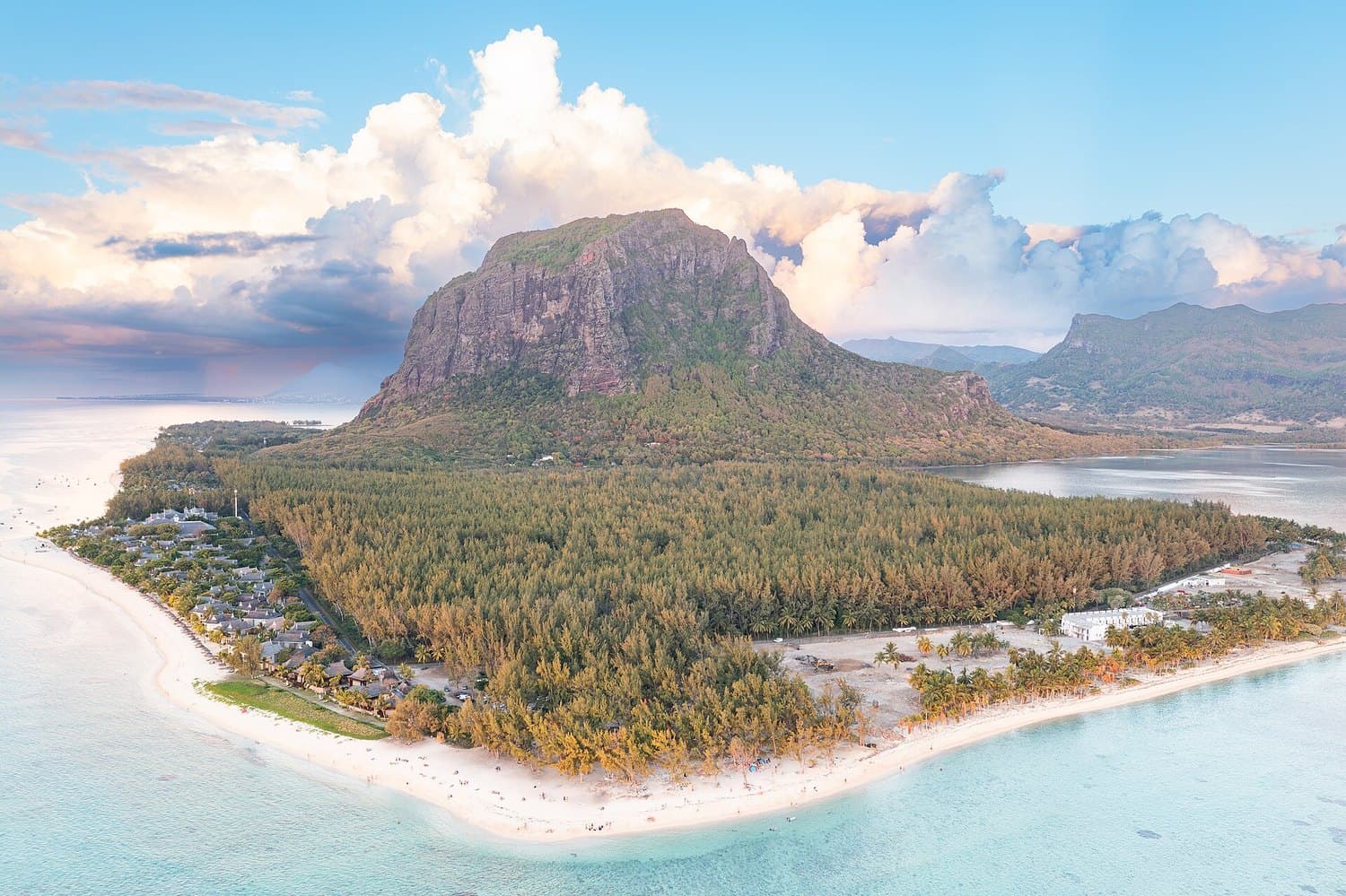
MauritiusPhoto: dronepicr / Wikimedia Commons (CC BY 2.0)

Mauritius

Country · MU · MUR · Indian/Mauritius

This information may change. Always check the official source.Last verified: August 2026 by

Sixty days without a visa, and one online form covering immigration, customs and health that you fill in before you fly and print as a QR code.

  • No visa for a visit of up to 60 days. Not 90 - Mauritius is one of the places where that assumption goes wrong.
  • Your passport must be valid for the duration of your stay and have one blank page.
  • Complete the Mauritius All in One travel form online before you travel, at safemauritius.govmu.org.
  • It is one submission covering immigration, customs and health, which is why it replaces three pieces of paper.
  • Do it a day or two before departure, not at the gate, so a mistyped passport number can still be fixed.
More details

The stay

  • No visa for a visit of up to 60 days. Not 90 - Mauritius is one of the places where that assumption goes wrong.
  • Your passport must be valid for the duration of your stay and have one blank page.
  • Proof of onward or return travel is checked, along with an accommodation booking.

The All in One form

This is the one piece of admin that decides how your arrival goes.

  • Complete the Mauritius All in One travel form online before you travel, at safemauritius.govmu.org.
  • It is one submission covering immigration, customs and health, which is why it replaces three pieces of paper.
  • Print the QR code and have it to hand at the airport. A screenshot on a phone with a flat battery after eleven hours is the failure mode here.
  • Without it you fill in a disembarkation card at the airport instead, which is the same information written by hand in a queue.

Practical

  • Do it a day or two before departure, not at the gate, so a mistyped passport number can still be fixed.
  • Everyone in the party needs their own, children included.
  • There are strict rules on what may be brought in and out. The customs half of the form is where you declare, and declaring is free.
Sources (2)

Clinics, mosquitoes and paying upfront

Public hospitals are adequate and private clinics are better and expensive, with payment normally wanted before treatment. Dengue and chikungunya are present.

  • Medical facilities are available but standards vary. Public hospitals and clinics provide adequate services.
  • Private clinics are more modern and better equipped, cost significantly more, and generally want payment upfront.
  • Chikungunya is a risk, and the joint pain it causes can last months or years.
  • Dengue occurs sporadically, and the mosquitoes bite in the daytime, mostly around sunrise and sunset.
  • Typhoid is present but low risk for most travellers.
More details

Getting treated

  • Medical facilities are available but standards vary. Public hospitals and clinics provide adequate services.
  • Private clinics are more modern and better equipped, cost significantly more, and generally want payment upfront.
  • Insurance covering medical evacuation and hospital stays is the thing to have, because a serious case leaves the island.

Mosquito-borne illness

  • Chikungunya is a risk, and the joint pain it causes can last months or years.
  • Dengue occurs sporadically, and the mosquitoes bite in the daytime, mostly around sunrise and sunset.
  • Repellent and covered arms at dawn and dusk are the practical defence; there is no vaccine you can rely on for dengue.

Everyday

  • Typhoid is present but low risk for most travellers.
  • Check that your policy covers the water sports you plan. Diving and kitesurfing are the usual exclusions, and this is a country people come to for both.
Sources (2)

Port Louis

Long-term averages for Port Louis: the mean daily high, the mean overnight low and the mean monthly rainfall across 30 years of ERA5 reanalysis data (1995–2024).

DayNight
15202530°C0250mmJanFebMarAprMayJunJulAugSepOctNovDecJanuary: Day 29.5 °C, Night 25.1 °C, Rain 210 mm. February: Day 29.5 °C, Night 25.2 °C, Rain 174 mm. March: Day 29.3 °C, Night 25 °C, Rain 144 mm. April: Day 28.6 °C, Night 24.2 °C, Rain 81 mm. May: Day 27 °C, Night 22.5 °C, Rain 57 mm. June: Day 25.4 °C, Night 20.9 °C, Rain 28 mm. July: Day 24.7 °C, Night 20 °C, Rain 33 mm. August: Day 24.8 °C, Night 19.9 °C, Rain 33 mm. September: Day 25.7 °C, Night 20.2 °C, Rain 33 mm. October: Day 27 °C, Night 21.2 °C, Rain 37 mm. November: Day 28.4 °C, Night 22.6 °C, Rain 48 mm. December: Day 29.4 °C, Night 24.2 °C, Rain 108 mm
Show the monthly table
Port Louis
MonthDay (°C)Night (°C)Rain (mm)
January29.525.1210
February29.525.2174
March29.325.0144
April28.624.281
May27.022.557
June25.420.928
July24.720.033
August24.819.933
September25.720.233
October27.021.237
November28.422.648
December29.424.2108
Sources (1)

Choosing a coast, and the cyclone window

The island is small but the transfer is not, and where you sleep on night one is mostly a question of how far you want to drive after a long flight.

  • The airport is in the south-east. The north (Grand Baie), the west (Flic en Flac, Le Morne) and the east (Belle Mare) are each a real drive from it.
  • East to west is about 1 hour 15 minutes. North is comparable. A late landing plus a transfer is a two-hour tail on the flight.
  • Book the transfer with the hotel unless you are landing in daylight and happy with a bus.
  • Villas are a common way to stay here, and burglary from tourist villas is the most reported crime. Use the safe and lock up.
  • November to May. Severe storms damage property and interrupt essential services.
More details

The geography of the decision

  • The airport is in the south-east. The north (Grand Baie), the west (Flic en Flac, Le Morne) and the east (Belle Mare) are each a real drive from it.
  • East to west is about 1 hour 15 minutes. North is comparable. A late landing plus a transfer is a two-hour tail on the flight.
  • Mahebourg and Blue Bay are 10 to 15 minutes from the terminal, which makes them the sensible first night after a night flight.

Practical

  • Book the transfer with the hotel unless you are landing in daylight and happy with a bus.
  • Villas are a common way to stay here, and burglary from tourist villas is the most reported crime. Use the safe and lock up.
  • Beach and street vendors are best avoided, which the FCDO says directly.

The cyclone season

  • November to May. Severe storms damage property and interrupt essential services.
  • In a cyclone you may not be permitted to leave your accommodation, and car insurance often lapses for the duration.
  • Travelling in that window means being ready to change plans at short notice, and carrying your airline's and tour operator's emergency numbers.
Sources (3)

Unlimited data for a month, for about 30 euros

Both networks sell the same shape of tourist pack: 30 days of unlimited 5G data with 200 rupees of airtime, collected at the airport or emailed as an eSIM before you fly.

  • The myt 5G Tourist SIM costs EUR 30 including VAT and runs 30 days.
  • Unlimited 5G data, plus MUR 200 of airtime for local and international calls.
  • The Emtel tourist pack costs MUR 1,500 including VAT, also 30 days, also unlimited 5G data, with unlimited SMS and MUR 200 airtime.
  • Pre-book online and the eSIM arrives by email before you land, or collect the physical SIM at the airport counter.
  • Pre-booking an eSIM is the version that works on arrival, because it is live before you clear immigration.
More details

Mauritius Telecom (myt)

  • The myt 5G Tourist SIM costs EUR 30 including VAT and runs 30 days.
  • Unlimited 5G data, plus MUR 200 of airtime for local and international calls.
  • Anyone aged 18 or over travelling as a tourist or on business can buy one.
  • You need a valid passport and the address you are staying at. Nothing else.
  • Collect at the Telecom Shop at SSR International Airport on arrival, or take the eSIM from the myt digital kiosk in the terminal.

Emtel

  • The Emtel tourist pack costs MUR 1,500 including VAT, also 30 days, also unlimited 5G data, with unlimited SMS and MUR 200 airtime.
  • Pre-book online and the eSIM arrives by email before you land, or collect the physical SIM at the airport counter.
  • The pre-booking form asks for your flight number, arrival date, address of stay and a passport scan, so it is worth ten minutes at home.

Which to do

  • Pre-booking an eSIM is the version that works on arrival, because it is live before you clear immigration.
  • A physical SIM at the counter is fine if you are landing in daylight and do not mind the queue.
  • Both are a month of unlimited data for roughly the price of two days of roaming, which makes this an easy decision.
Sources (2)

Three plug types, four languages

Sockets take C, E and G, so bring both adapters. English is official, French is the media language and Creole is what people speak.

  • 230 V, 50 Hz, sockets type , and . That is the continental round two-pin, the French earthed version, and the British three-pin, all on one island.
  • Which one is on the wall depends on the building's age. Bring the UK adapter and a European one, or a universal.
  • English is the official language of government and law.
  • French dominates the media and much of daily business.
  • Time is UTC+4, with no daylight saving.
More details

Power

  • 230 V, 50 Hz, sockets type , and . That is the continental round two-pin, the French earthed version, and the British three-pin, all on one island.
  • Which one is on the wall depends on the building's age. Bring the UK adapter and a European one, or a universal.

Language

  • English is the official language of government and law.
  • French dominates the media and much of daily business.
  • Mauritian Creole is what people actually speak to each other, and it is French-based rather than a dialect of French.
  • You will be understood in English everywhere a visitor goes.

Practicalities

  • Time is UTC+4, with no daylight saving.
  • The island is small and the roads are not fast. Distances in kilometres badly understate journey times.
  • Sunday is quiet and rural bus services thin out further.
Sources (2)

Rupees, cards and where cash still wins

The Mauritian rupee, cards accepted in hotels and larger shops, and cash for buses, markets and taxis.

  • The Mauritian rupee (MUR). It is not the Indian rupee and the two are not interchangeable.
  • Rates on the island are generally better than at home, and there is a bank and ATMs in the arrivals terminal.
  • Hotels, resorts, restaurants and larger shops take cards.
  • ATMs are common in the towns and along the developed coast, and thinner in the south and the interior.
  • Most crime is non-violent: burglary from tourist villas and theft of unattended bags.
More details

The currency

  • The Mauritian rupee (MUR). It is not the Indian rupee and the two are not interchangeable.
  • Rates on the island are generally better than at home, and there is a bank and ATMs in the arrivals terminal.

Cards and cash

  • Hotels, resorts, restaurants and larger shops take cards.
  • Cash runs the rest: buses, markets, small shops, street food and most taxis.
  • Carry small notes for buses, because conductors on a rural route will not break a large one.

ATMs

  • ATMs are common in the towns and along the developed coast, and thinner in the south and the interior.
  • Withdraw in the town rather than at the resort desk. Hotel exchange counters exist for convenience and price accordingly.

Petty theft is the risk, not fraud

  • Most crime is non-violent: burglary from tourist villas and theft of unattended bags.
  • Port Louis, Grand Baie and Flic en Flac are where petty theft is most reported.
  • Do not leave a bag on a beach lounger. That is the single most common way money goes missing here.
Sources (3)

Everyday prices

Typical prices in Mauritian rupee (MUR), averaged across the country by Numbeo and read on 28 August 2026. Tick Convert prices above the table to see every amount in your own currency.

Everyday prices
ItemTypical price
Inexpensive restaurant meal300 MUR
Dinner for two, mid-range, three courses2,000 MUR
Cappuccino123 MUR
Local draught beer, 0.5 l100 MUR
Bottled water, 0.33 l32 MUR
Public transport, one-way ticket44 MUR
Taxi, starting fare200 MUR
Petrol, 1 litre67 MUR
Cigarettes, pack of 20 (Marlboro)300 MUR
Average net monthly salary36,500 MUR

These are country-wide averages, not a price list: tourist districts, airports and islands sit well above them, and small towns below. The salary line is there for proportion - it is what people living here actually earn.

Sources (1)

Airport guides for Mauritius1

One page per airport: the routes into town, what they cost and the trap particular to that arrival.

See all 1 airports

The airport is rural, and the last bus is early

Rural buses stop about 18:30 and the light rail does not come here. An evening arrival means a taxi at a fare you agree before the car moves.

  • SSR International Airport is in the rural south-east, near Mahebourg, and the resorts are spread around the whole coast. Nothing here is five minutes away.
  • Buses run about every 15 minutes, in two grades: ordinary and express, the express air-conditioned and faster.
  • Metro Express runs Port Louis to Curepipe and no further. It does not reach the airport, Mahebourg or the coast.
  • Negotiate the fare before the journey starts. Mauritius Now says this plainly, and it is the rule at the airport rank as much as anywhere.
  • The international rental companies are at the airport.
More details
Where you have landed
  • SSR International Airport is in the rural south-east, near Mahebourg, and the resorts are spread around the whole coast. Nothing here is five minutes away.
  • Crossing the island east to west is about 45 km and takes roughly 1 hour 15 minutes by road, which is the honest ceiling on a transfer time.
The bus, and its hours
  • Buses run about every 15 minutes, in two grades: ordinary and express, the express air-conditioned and faster.
  • Town services run 05:30 to 20:00. Rural services run 06:30 to 18:30.
  • The airport is on the rural side of that split, so a flight landing in the evening lands after the buses.
  • Fares are paid to the conductor in rupees, which is one more reason to get cash or a card sorted in the terminal.
The light rail does not serve the airport
  • Metro Express runs Port Louis to Curepipe and no further. It does not reach the airport, Mahebourg or the coast.
  • It runs on a prepaid MECard bought from the ticket machines in the stations, in adult, child, student, senior and priority versions. Useful once you are in the central corridor; irrelevant on arrival.
Taxis
  • Negotiate the fare before the journey starts. Mauritius Now says this plainly, and it is the rule at the airport rank as much as anywhere.
  • There is no Uber. The Yugo app books a taxi at a fixed price, which removes the negotiation.
  • Your hotel will arrange a transfer, and for a first arrival at a coastal resort at night that is usually the right answer even at a premium.
Car hire
  • The international rental companies are at the airport.
  • You drive on the left, and priority is given to traffic coming from the right. That combination is unusual and it is exactly where a visitor's instincts fail at a junction.
Sources (2)

Buses, the metro corridor and driving

Cheap buses on early hours, one light rail line through the middle, and a driving culture where the car on your right has priority.

  • Two grades, ordinary and express, roughly every 15 minutes.
  • 05:30 to 20:00 in towns, 06:30 to 18:30 in rural areas. Evenings are taxi territory island-wide.
  • One light rail line, Port Louis to Curepipe, through the central urban corridor: Rose Hill, Quatre Bornes, Vacoas.
  • On the left. Traffic coming from your right has priority, which is the rule that catches visitors at roundabouts and junctions.
  • Water sports operators must hold a Ministry of Tourism permit and carry adequate life jackets. Ask to see both; the requirement exists because it has been ignored.
More details

Buses

  • Two grades, ordinary and express, roughly every 15 minutes.
  • 05:30 to 20:00 in towns, 06:30 to 18:30 in rural areas. Evenings are taxi territory island-wide.
  • They are cheap and they are how the island moves, but they are not fast; nothing on Mauritius is fast by bus.

Metro Express

  • One light rail line, Port Louis to Curepipe, through the central urban corridor: Rose Hill, Quatre Bornes, Vacoas.
  • Buy an MECard from the station machines and top it up. There is no cash fare.

Driving

  • On the left. Traffic coming from your right has priority, which is the rule that catches visitors at roundabouts and junctions.
  • A UK photocard licence is accepted.
  • Accidents are frequent and motorbikes often ride without lights at night.
  • The drink-drive limit is about a quarter of England's, and exceeding it brings fines and possible imprisonment.
  • Car insurance is often void during an active cyclone, and you may not be allowed to leave your accommodation anyway.

On the water

  • Water sports operators must hold a Ministry of Tourism permit and carry adequate life jackets. Ask to see both; the requirement exists because it has been ignored.
Sources (3)

Theft, the sea and cigarette papers

Low violent crime, real petty theft, a strict drug regime, and a possession offence most visitors have never heard of.

  • Most crime is non-violent: burglary from tourist villas, theft of unattended bags.
  • Petty theft is most common in Port Louis, Grand Baie and Flic en Flac.
  • Possessing or importing cigarette papers is illegal in Mauritius. They are treated as drug paraphernalia. Roll-ups are a perfectly ordinary thing to have in a bag at home and a criminal matter here.
  • Use permitted water sports operators, with life jackets aboard.
  • Piracy risk in the wider Indian Ocean extends up to 1,000 nautical miles from the Somali coast, which matters for sailors rather than for holidaymakers.
More details

Crime

  • Most crime is non-violent: burglary from tourist villas, theft of unattended bags.
  • Petty theft is most common in Port Louis, Grand Baie and Flic en Flac.
  • Sexual assaults on tourists have been reported.
  • Avoid street and beach vendors, which is the FCDO's own phrasing.

The law that catches people

  • Possessing or importing cigarette papers is illegal in Mauritius. They are treated as drug paraphernalia. Roll-ups are a perfectly ordinary thing to have in a bag at home and a criminal matter here.
  • Cannabis and other drugs carry lengthy imprisonment and heavy fines.
  • Police may ask for identification. Carry a copy of the passport page.

The sea

  • Use permitted water sports operators, with life jackets aboard.
  • The lagoon is calm and the open sea past the reef is not, which is the trap on a windward coast.

At sea, further out

  • Piracy risk in the wider Indian Ocean extends up to 1,000 nautical miles from the Somali coast, which matters for sailors rather than for holidaymakers.
Sources (2)

999 reaches everything. Behind it, 114 is the ambulance and 115 the fire brigade.

  • 999 is the number to remember. It reaches police, ambulance and fire.
  • 112 works from a mobile and reaches the police, including the tourist police.
  • The direct numbers are worth having in a coastal village, where getting to the right service first saves a transfer.
  • In a cyclone, follow the local authorities rather than the emergency line. Warnings are broadcast in classes, and class III and IV mean stay where you are.
More details

The numbers

Emergency numbers in Mauritius
ServiceNumber
Everything999
Police, and tourist police999 or 112
Ambulance999 or 114
Fire999 or 115

Notes

  • 999 is the number to remember. It reaches police, ambulance and fire.
  • 112 works from a mobile and reaches the police, including the tourist police.
  • The direct numbers are worth having in a coastal village, where getting to the right service first saves a transfer.
  • In a cyclone, follow the local authorities rather than the emergency line. Warnings are broadcast in classes, and class III and IV mean stay where you are.
Sources (1)