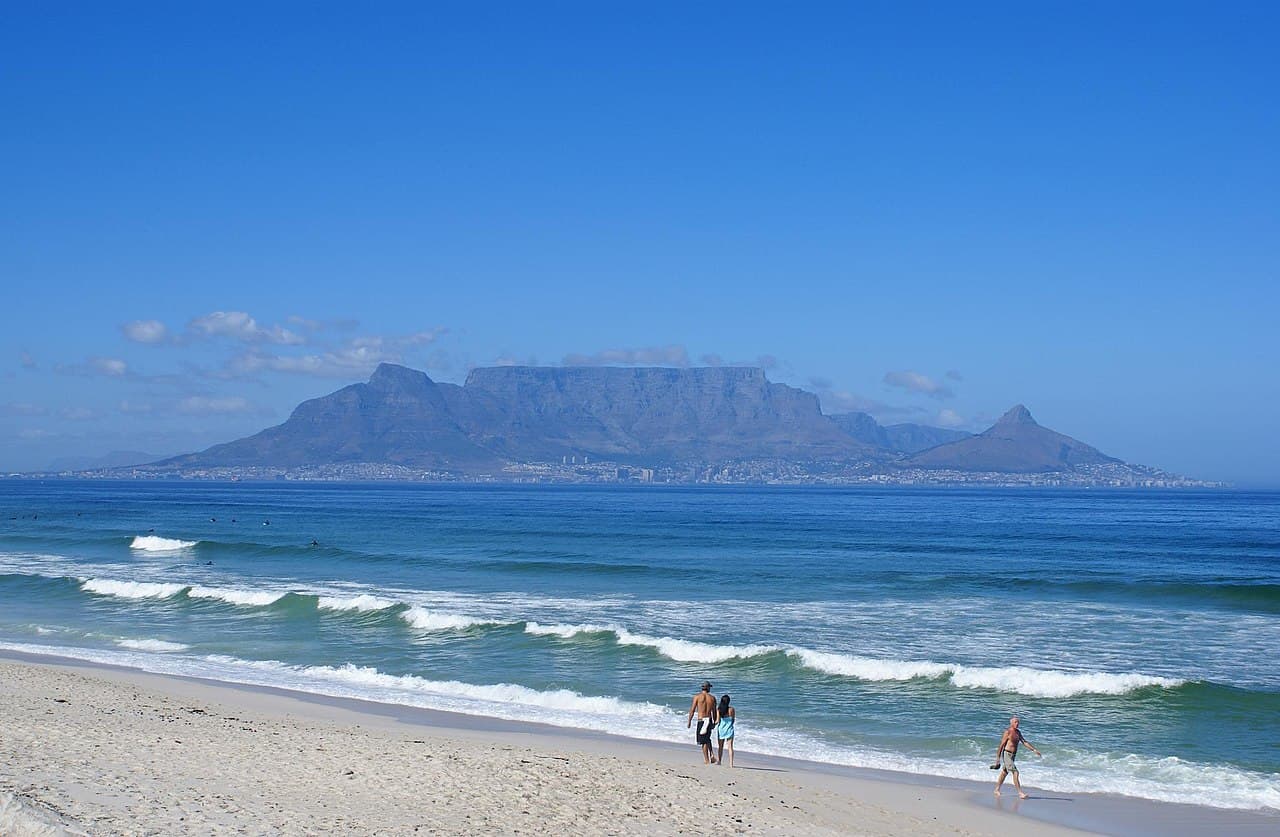
South AfricaPhoto: Danie van der Merwe from Cape Town, South Africa / Wikimedia Commons (CC BY 2.0)

South Africa

Country · ZA · ZAR · Africa/Johannesburg

This information may change. Always check the official source.Last verified: August 2026 by

Two entirely blank facing pages in the passport, or the airline will not let you board. That rule, not the visa, is what stops most people. Most Western passports then get 90 days on arrival.

  • Two entirely blank facing pages in the passport, or the airline will not board you. They must be visa pages, not the endorsement pages at the back.
  • A page with a single stamp on it does not count. Count your genuinely empty pages before you book, not the night before.
  • Passport validity need only be 30 days beyond departure, which is unusually short and catches nobody.
  • The 90-day and 30-day visa-free lists are different - Poland and Malaysia are on the shorter one - so check yours rather than assuming.
  • Overstaying gets you declared undesirable and banned for one to five years. There is no fine-and-forget option here.
More details

Check your passport before anything else

Two entirely blank facing pages. This is the rule that ends trips.

  • You need at least two completely blank pages that face each other, and they must be visa pages, not the endorsement or observation pages at the back.
  • The airline enforces it at check-in. They are fined if they carry you and you are refused, so they refuse you first. There is no appeal at the desk.
  • A page with a single stamp on it does not count. Count your genuinely empty pages before you book, not the night before.
  • Passport validity must be at least 30 days beyond your intended departure, which is unusually short and catches nobody.

Where your nationality lands

Visa and entry in South Africa
You holdWhat you need
USA, Canada, Australia, UK, Germany, France, Italy, Spain, Netherlands, Japan, South Korea, Singapore, RussiaNo visa. 90 days
Poland, Malaysia, Saudi ArabiaNo visa. 30 days
China, India, Taiwan, CambodiaVisa in advance
  • The 90 day and 30 day lists are different, and Poland and Malaysia are on the shorter one. Check yours rather than assuming.
  • The stamp is what counts. Look at what the officer writes; the days granted are occasionally fewer than the maximum.
  • Extensions are applied for at VFS Global, at least 60 days before your permit expires, and are slow.
  • Overstaying gets you declared undesirable and banned for one to five years. South Africa enforces this rigidly and there is no fine-and-forget option.

Travelling with children

The old unabridged birth certificate panic is over, mostly.

  • Children from visa-exempt countries no longer need an unabridged birth certificate when travelling with both parents. A valid passport is enough.
  • A child travelling with one parent, or with someone who is not a parent, still needs paperwork: parental consent affidavit or a court order, plus a copy of the absent parent's ID or passport and their contact details.
  • The child's passport needs the same two blank pages and 30 days of validity.
  • Carry the documents in paper. A photo on a phone is refused at check-in.

At the border

  • Have your accommodation address and a return ticket. Both are asked for.
  • Yellow fever certificate is required only if you are arriving from or have transited a yellow fever country, which includes much of central Africa. It is checked.
  • Cash above ZAR 25,000 or the foreign equivalent of USD 10,000 must be declared.
  • Land borders with Zimbabwe, Mozambique and Lesotho are slow. Beitbridge in particular can take hours.
Sources (3)

South Africa's allowances are ordinary, and the rules worth reading are about what may not leave: wildlife products of any kind.

  • The allowance is 200 cigarettes, 1 litre of spirits and 2 litres of wine per adult, plus ZAR 5,000 of other goods duty-free.
  • ZAR 25,000 or more in cash must be declared, and there are exchange-control rules on top of the customs ones.
  • Ivory, rhino horn and wildlife products may not be exported. South Africa prosecutes this seriously, and items sold in markets as bone or antique are the ones that cause trouble.
  • The green and red channels at OR Tambo are staffed and the green one is sampled, so goods bought abroad are worth declaring if they are near the limit.
  • Plant and seed material needs a permit, which matters for the succulents that tourists buy in the Cape - several species are also protected.
More details
  • The allowance is 200 cigarettes, 1 litre of spirits and 2 litres of wine per adult, plus ZAR 5,000 of other goods duty-free.
  • ZAR 25,000 or more in cash must be declared, and there are exchange-control rules on top of the customs ones.
  • Ivory, rhino horn and wildlife products may not be exported. South Africa prosecutes this seriously, and items sold in markets as bone or antique are the ones that cause trouble.
  • The green and red channels at OR Tambo are staffed and the green one is sampled, so goods bought abroad are worth declaring if they are near the limit.
  • Plant and seed material needs a permit, which matters for the succulents that tourists buy in the Cape - several species are also protected.
Sources (1)

City tap water is safe, private hospitals are excellent and expensive, and the only real disease question is malaria in the lowveld, which includes Kruger, from September to May.

  • Most of South Africa has no malaria at all - Cape Town, the Garden Route, the Winelands, Johannesburg and Durban are risk-free.
  • The risk area is the low-lying northeast including the Kruger lowveld, highest in the rainy season from September to May.
  • The parasite here is chloroquine-resistant, so talk to a travel clinic six weeks out about the right prophylaxis.
  • Private hospitals are world class and want payment or an insurer guarantee up front, which makes comprehensive travel insurance non-optional.
  • City tap water is treated and safe including Cape Town and Johannesburg; in rural areas and game reserves use bottled or filtered.
More details

Malaria, which is the real question

  • Most of South Africa has no malaria at all. Cape Town, the Garden Route, the Winelands, Johannesburg and Durban are risk-free.
  • The risk areas are the low-lying northeast: the Kruger lowveld, northeastern KwaZulu-Natal and the borders with Mozambique and Zimbabwe.
  • Risk is highest in the rainy season, September to May. South African guidance recommends prophylaxis for that window; the US CDC recommends it year round.
  • The parasite here is chloroquine-resistant. Atovaquone-proguanil, doxycycline or mefloquine are the options; talk to a travel clinic six weeks out.
  • Bite avoidance is half the job. DEET at dusk, long sleeves, and a fan or air conditioning in the room.

Vaccinations

  • Hepatitis A and typhoid are the standard recommendations, plus routine boosters.
  • Yellow fever certificate is required only if you arrive from a yellow fever country, which includes much of central Africa. Check if you are combining South Africa with Kenya, Tanzania or Zambia.
  • Rabies exists. Do not touch dogs, monkeys or bats, and treat any bite as urgent.

Healthcare

  • Private hospitals are world class: Netcare, Mediclinic and Life Healthcare are the three big groups and are used to treating foreigners.
  • They will want payment or an insurer guarantee up front. Comprehensive travel insurance is not optional here.
  • Public hospitals are free at the point of care and heavily overstretched. Go private if you have the choice.
  • Pharmacies are excellent. Clicks and Dis-Chem are everywhere and pharmacists advise well.

Everyday

  • Tap water in the cities is treated and safe, including Cape Town and Johannesburg. In rural areas, game reserves and small towns, drink bottled or filtered.
  • The sun is severe. South Africa sits under a thin ozone layer and burns happen in 20 minutes in summer.
  • Bilharzia is present in still fresh water in the north and east. Do not swim in dams or slow rivers in Limpopo or Mpumalanga.
  • Altitude in Johannesburg is 1,750 m, which is enough to leave you short of breath and dehydrated on the first day.
  • HIV prevalence is high. The ordinary precautions apply.
Sources (2)

Cape Town

Long-term averages for Cape Town: the mean daily high, the mean overnight low and the mean monthly rainfall across 30 years of ERA5 reanalysis data (1995–2024).

DayNight
51015202530°C0100mmJanFebMarAprMayJunJulAugSepOctNovDecJanuary: Day 26 °C, Night 17 °C, Rain 13 mm. February: Day 26 °C, Night 18 °C, Rain 11 mm. March: Day 24 °C, Night 16 °C, Rain 18 mm. April: Day 22 °C, Night 14 °C, Rain 34 mm. May: Day 19 °C, Night 12 °C, Rain 61 mm. June: Day 17 °C, Night 10 °C, Rain 94 mm. July: Day 16 °C, Night 9 °C, Rain 89 mm. August: Day 17 °C, Night 10 °C, Rain 82 mm. September: Day 18 °C, Night 11 °C, Rain 45 mm. October: Day 21 °C, Night 13 °C, Rain 30 mm. November: Day 22 °C, Night 14 °C, Rain 27 mm. December: Day 24 °C, Night 16 °C, Rain 18 mm
Show the monthly table
Cape Town
MonthDay (°C)Night (°C)Rain (mm)
January261713
February261811
March241618
April221434
May191261
June171094
July16989
August171082
September181145
October211330
November221427
December241618

Johannesburg

Long-term averages for Johannesburg: the mean daily high, the mean overnight low and the mean monthly rainfall across 30 years of ERA5 reanalysis data (1995–2024).

DayNight
0510152025°C0200mmJanFebMarAprMayJunJulAugSepOctNovDecJanuary: Day 25 °C, Night 14 °C, Rain 132 mm. February: Day 24 °C, Night 14 °C, Rain 108 mm. March: Day 23 °C, Night 13 °C, Rain 81 mm. April: Day 21 °C, Night 10 °C, Rain 49 mm. May: Day 19 °C, Night 6 °C, Rain 19 mm. June: Day 16 °C, Night 3 °C, Rain 9 mm. July: Day 16 °C, Night 3 °C, Rain 3 mm. August: Day 20 °C, Night 5 °C, Rain 9 mm. September: Day 24 °C, Night 9 °C, Rain 21 mm. October: Day 25 °C, Night 11 °C, Rain 68 mm. November: Day 24 °C, Night 13 °C, Rain 93 mm. December: Day 25 °C, Night 14 °C, Rain 133 mm
Show the monthly table
Johannesburg
MonthDay (°C)Night (°C)Rain (mm)
January2514132
February2414108
March231381
April211049
May19619
June1639
July1633
August2059
September24921
October251168
November241393
December2514133

Durban

Long-term averages for Durban: the mean daily high, the mean overnight low and the mean monthly rainfall across 30 years of ERA5 reanalysis data (1995–2024).

DayNight
1015202530°C0100mmJanFebMarAprMayJunJulAugSepOctNovDecJanuary: Day 27 °C, Night 21 °C, Rain 100 mm. February: Day 27 °C, Night 22 °C, Rain 84 mm. March: Day 27 °C, Night 21 °C, Rain 91 mm. April: Day 25 °C, Night 19 °C, Rain 84 mm. May: Day 24 °C, Night 16 °C, Rain 50 mm. June: Day 22 °C, Night 14 °C, Rain 29 mm. July: Day 21 °C, Night 13 °C, Rain 40 mm. August: Day 22 °C, Night 14 °C, Rain 33 mm. September: Day 23 °C, Night 16 °C, Rain 65 mm. October: Day 23 °C, Night 17 °C, Rain 94 mm. November: Day 24 °C, Night 19 °C, Rain 96 mm. December: Day 26 °C, Night 20 °C, Rain 98 mm
Show the monthly table
Durban
MonthDay (°C)Night (°C)Rain (mm)
January2721100
February272284
March272191
April251984
May241650
June221429
July211340
August221433
September231665
October231794
November241996
December262098
Sources (1)

Guesthouses and lodges are the country strength and are good value. In Cape Town the neighbourhood decides your whole trip; in Johannesburg stay in Sandton, Rosebank or Maboneng and nowhere else on a first visit.

  • In Cape Town the neighbourhood decides your whole trip - the City Bowl and Gardens for walking to restaurants, Sea Point for the promenade, Camps Bay for the beach and the price.
  • Do not walk between the Cape Town CBD and the suburbs after dark. Take a car.
  • In Johannesburg stay in Sandton, Rosebank, Melville or Maboneng and nowhere else on a first visit - the old CBD is not a place to stay.
  • The guesthouse is the South African speciality: a large house, a handful of rooms, a pool and a full breakfast, often ZAR 1,200 to ZAR 2,500 a night for two.
  • Ask about the security arrangements. In South Africa this is a normal question and a good host answers it in detail.
More details

Where to stay

  • Cape Town: the City Bowl, Gardens, Green Point, Sea Point or Camps Bay. The City Bowl and Gardens put you under the mountain and in walking distance of the restaurants; Sea Point has the promenade; Camps Bay has the beach and the price.
  • Cape Town's CBD is fine by day and quiet at night. Do not walk between the CBD and the suburbs after dark; take a car.
  • Johannesburg: Sandton, Rosebank, Melville or Maboneng. Sandton is safe, corporate and where the Gautrain goes. Rosebank is more pleasant. Melville and Maboneng have the character.
  • Johannesburg's old CBD is not a place to stay on a first visit.
  • Durban: Umhlanga or the Berea, rather than the beachfront strip.

Lodges and guesthouses

  • The guesthouse is the South African speciality: a large house, a handful of rooms, a pool, a full breakfast, often ZAR 1,200 to ZAR 2,500 a night for two.
  • Safari lodges price per person per night, all inclusive, and range from about ZAR 3,000 to genuinely eye-watering. The rate normally covers all meals and two game drives.
  • SANParks rest camps inside Kruger are far cheaper than the private lodges and are excellent. Book six months to a year ahead for school holidays.
  • Backpackers hostels are a strong network along the Garden Route and are how a lot of people travel here.

Practical

  • Check-in is usually 14:00, check-out 10:00 or 11:00.
  • Ask about the security arrangements. In South Africa this is a normal question and a good host will answer it in detail.
  • Most places have a generator or inverter left over from the load-shedding years, which is now largely insurance rather than necessity.
  • Air conditioning is not universal even in expensive places on the coast. Check if you are travelling December to February.
  • Book the December and January coastal season months out. The whole country holidays then and the Garden Route fills.
Sources (2)

Every SIM must be RICA-registered against a passport and an address, which the airport shops do while you wait. Vodacom and MTN have the best coverage; data is expensive by African standards.

  • Every SIM is registered to a person and an address under the RICA law. There is no anonymous prepaid option.
  • Bring your passport and proof of where you are staying - a hotel booking on your phone is normally accepted - and allow about ten minutes.
  • A SIM bought at a supermarket without registration will not activate. People do this and then wonder why the line is dead.
  • Vodacom and MTN have the best coverage and are the only sensible choices if you are leaving the cities; Kruger and the Drakensberg are patchy anyway.
  • For a two-week safari trip an eSIM is the sane answer - it works when you land, and you will not want to spend an hour of day one in a phone shop.
More details

RICA, and why you cannot skip it

Every SIM card in South Africa is registered to a person and an address under the RICA law. There is no anonymous prepaid option.

  • Bring your passport and proof of where you are staying. A hotel booking on your phone is normally accepted.
  • The airport shops at OR Tambo and Cape Town International do the registration on the spot, which is the fastest route and worth the small markup.
  • A SIM bought at a supermarket without registration will not activate. People do this and then wonder why the line is dead.
  • Registration takes about ten minutes and the line works immediately afterwards.

The networks

  • Vodacom and MTN have the best coverage and speeds, and are the only sensible choices if you are leaving the cities.
  • Cell C and Telkom are cheaper and roam on the others in places, with more dead spots.
  • Vodacom tourist bundles run about ZAR 299 to ZAR 699 for 3 GB to 10 GB over 30 days, with some local calls and texts.
  • MTN is cheaper, roughly ZAR 99 to ZAR 399 for 2 GB to 15 GB with 60 to 400 minutes.
  • Coverage in Kruger and the Drakensberg is patchy. In the game reserves assume nothing and download maps.

eSIM

  • All the major networks support eSIM but activating a local eSIM still means a RICA registration in person.
  • Saily covers South Africa at USD 3.99 for 1 GB over 7 days, USD 12.99 for 5 GB over 30 days and USD 22.99 for 10 GB over 30 days, with no RICA and no shop.
  • For a two week safari trip the eSIM is the sane answer: it works when you land, and you are not going to want to spend an hour of your first day in a phone shop.
  • For a month or longer, do the RICA. Local data is cheaper and you get a South African number, which car hire, lodges and delivery apps all want.

Data costs

  • Mobile data is expensive here relative to income and to the rest of the continent, which is a long-running political issue.
  • Wi-Fi is common in hotels, cafes and malls and is how most visitors get by.
  • WhatsApp is the default channel for guides, lodges, drivers and tour operators.
Sources (2)

South Africa is mid-transition from the huge Type socket to the compact Type , so a hotel may have either or both.

  • Type is the old standard: three very large round pins in a triangle, unlike anything else in daily use outside southern Africa.
  • Type is the new one, adopted as SANS 164-2 and preferred since 2013. New installations must include it, so recent buildings have both.
  • A Europlug fits a Type socket and the two-pin holes of many multi-sockets, which covers most chargers.
  • British, American and Australian plugs need an adapter - and specifically a Type one, which is not what a generic travel kit always contains.
  • 230 V, so American 120 V-only equipment needs a converter. Load-shedding used to be the other power problem here; Eskom has not shed a stage since 16 May 2025, but municipal outages still happen and no adapter helps with those.
More details

Sockets in South Africa are Type , and at 230 V, 50 Hz - and the country is halfway through swapping one standard for another.

  • Type is the old standard: three very large round pins in a triangle, unlike anything else in daily use outside southern Africa.
  • Type is the new one, adopted as SANS 164-2 and preferred since 2013. New installations must include it, so recent buildings have both.
  • A Europlug fits a Type socket and the two-pin holes of many multi-sockets, which covers most chargers.
  • British, American and Australian plugs need an adapter - and specifically a Type one, which is not what a generic travel kit always contains.
  • 230 V, so American 120 V-only equipment needs a converter. Load-shedding used to be the other power problem here; Eskom has not shed a stage since 16 May 2025, but municipal outages still happen and no adapter helps with those.
Sources (1)

A plug nobody else uses, eleven official languages with English as the common one, a braai culture, and shops that close earlier than you expect. Bring the adapter; you will not find your own at home.

  • South Africa's standard socket is type , three large round pins, used almost nowhere else in the world.
  • Do not assume your universal adapter covers type - many do not. Buy a South African adapter at the airport on arrival if you did not bring one.
  • English is the shared language of business, signage and tourism among eleven official languages, and is spoken almost everywhere.
  • "Robot" means traffic light, "just now" means later, "now now" means sooner than that.
  • December to mid-January is the national holiday - the coast is packed, prices peak and Johannesburg empties.
More details

The plug, which is a genuine problem

  • South Africa's standard socket is type , three large round pins in a triangle, used almost nowhere else in the world.
  • Type is being rolled out in new buildings, and many places also have type sockets for European two-pin plugs.
  • Buy a South African adapter at the airport on arrival if you did not bring one. Do not assume your universal adapter covers type , because many do not.
  • 230 V, 50 Hz, so European and British appliances work fine on voltage.

Language

  • Eleven official languages, plus South African Sign Language. English is the shared language of business, signage and tourism and is spoken almost everywhere.
  • Afrikaans dominates in the Western and Northern Cape, Zulu in KwaZulu-Natal, Xhosa in the Eastern Cape and Sotho and Tswana inland.
  • "Robot" means traffic light, "just now" means later, "now now" means sooner than that, and "shame" is an expression of sympathy or affection.
  • A braai is not a barbecue and saying so out loud is a small act of aggression.

Hours and the calendar

  • Shops typically open 09:00 to 17:00 or 18:00, with malls to 19:00 or 20:00. Sunday hours are shorter.
  • Restaurants stop serving around 21:00 or 22:00 outside the big city centres.
  • Twelve public holidays, including Human Rights Day (21 March), Freedom Day (27 April), Youth Day (16 June) and Heritage Day (24 September), which everyone calls National Braai Day.
  • December to mid-January is the national holiday. The coast is packed, prices peak, and Johannesburg empties.
  • Seasons are inverted. Cape Town's summer is December to March and dry; the Kruger summer is wet and green with harder game viewing.

Money-adjacent habits

  • Petrol stations are attended and take cards. Tip the attendant.
  • Car guards are everywhere, informal, and mostly harmless. ZAR 5 to ZAR 10 on leaving.
  • Bargaining is normal at craft markets, not in shops.

Small things

  • Distances in kilometres, speed in km/h, and the open-road limit is 120.
  • Drinking in public is illegal in most municipalities.
  • The drink-drive limit is 0.05%, and enforcement is real.
  • Load shedding apps such as EskomSePush are still worth installing even in a quiet year, because municipal outages happen independently of Eskom.
Sources (2)

Cards work almost everywhere and the rand goes a long way. Use ATMs inside malls and bank branches only, decline the machine currency conversion, and keep cash for tips, car guards and petrol attendants.

  • Use ATMs inside a shopping mall or bank branch during opening hours. Street-facing machines carry a real skimming and robbery risk.
  • Never accept help at an ATM, however official the person looks. This is the standard local scam and it ends with your card swapped.
  • Expect ZAR 50 to ZAR 75 per withdrawal in local fees on a foreign card, so take out larger amounts less often.
  • Always choose to be billed in rand. The "pay in your own currency" prompt costs several percent every time.
  • Tipping here is a meaningful part of many people's income: 10% to 15% in restaurants, ZAR 5 to ZAR 10 for petrol attendants and car guards, and cash in rand because many have no card account.
More details

Cards

  • Visa and Mastercard are accepted almost everywhere, including small restaurants, petrol stations and park gates.
  • American Express is patchy and works mainly at upmarket hotels and international chains.
  • Contactless is universal and there is no low tap limit worth worrying about.
  • Always choose to be billed in rand. The "would you like to pay in your own currency" prompt costs you several percent every time.
  • Tell your bank you are travelling. South African transactions trip fraud rules on some foreign cards.

ATMs, carefully

  • Use machines inside a shopping mall or a bank branch during opening hours. Street-facing ATMs and machines in tourist areas carry a real skimming and robbery risk.
  • Never accept help at an ATM, however official the person looks. This is the standard local scam and it ends with your card swapped.
  • Expect ZAR 50 to ZAR 75 per withdrawal in local access fees on a foreign card, plus your own bank's charges. Take out larger amounts less often.
  • If the machine keeps your card, do not walk away. Phone your bank from where you stand.

Cash

  • Keep ZAR 200 to ZAR 500 on you for tips, car guards, petrol attendants, market stalls and township restaurants.
  • Split it up. Do not pull a full wallet out on a street.
  • Cash above ZAR 25,000 must be declared on entry.

Tipping, which matters here

Tipping in South Africa is a meaningful part of many people's income, not an optional flourish.

Money and payments in South Africa
SituationExpected
Restaurant10% to 15%, more for good service
Petrol attendantZAR 5 to ZAR 10
Car guardZAR 5 to ZAR 10 on leaving
Safari guideZAR 150 to ZAR 300 per day, per group
Safari trackerabout half the guide's amount
Hotel porterZAR 20 a bag
  • Tip in cash and in rand. Many of the people you are tipping have no card account.
  • Check the bill for an added service charge for large tables, which is increasingly common.
Sources (2)

Everyday prices

Typical prices in South African rand (ZAR), averaged across the country by Numbeo and read on 12 August 2026. Tick Convert prices above the table to see every amount in your own currency.

Everyday prices
ItemTypical price
Inexpensive restaurant meal180 ZAR
Dinner for two, mid-range, three courses700 ZAR
Cappuccino38 ZAR
Local draught beer, 0.5 l40 ZAR
Bottled water, 0.33 l15 ZAR
Public transport, one-way ticket26 ZAR
Taxi, starting fare16 ZAR
Petrol, 1 litre24 ZAR
Cigarettes, pack of 20 (Marlboro)55 ZAR
Average net monthly salary25,000 ZAR

These are country-wide averages, not a price list: tourist districts, airports and islands sit well above them, and small towns below. The salary line is there for proportion - it is what people living here actually earn.

Sources (1)

Airport guides for South Africa4

One page per airport: the routes into town, what they cost and the trap particular to that arrival.

See all 4 airports

At OR Tambo take the Gautrain to Sandton. At Cape Town take the MyCiTi A01 or an e-hailed car from the designated pickup in Parkade 1. Do not accept a lift from anyone who approaches you in the terminal.

  • At OR Tambo take the Gautrain to Sandton - about ZAR 190 and 15 minutes, running from inside the terminal.
  • It does not run late. After about 21:00 you are taking a car, at ZAR 350 to ZAR 500 by Uber or Bolt.
  • At Cape Town the e-hailing pickup is not at the kerb - walk to Parkade 1, because drivers cannot come to arrivals.
  • Cape Town's MyCiTi A01 bus is a genuinely good airport link, frequent and safe, dropping you in the middle of town for about ZAR 80 to ZAR 100.
  • Do not accept a lift from anyone who approaches you in the terminal. Use the app pickup zone or the authorised rank, and check the plate before getting in.
More details
Johannesburg, OR Tambo (JNB)
Transport from the airport in South Africa
OptionCostTimeNotes
Gautrain to Sandtonabout ZAR 19015 minFast, safe, air-conditioned. Runs roughly 05:30 to 21:00
Uber or BoltZAR 350 to ZAR 500 to Sandton30 to 50 minUse the signed e-hailing pickup zone
Metered airport taxiZAR 500 to ZAR 700as aboveAuthorised rank outside arrivals
  • The Gautrain is the right answer if you are going to Sandton, Rosebank or Pretoria. It runs from inside the terminal and needs a Gautrain gold card, bought at the station.
  • It does not run late. After about 21:00 you are taking a car.
  • Do not walk out of OR Tambo and get into an unmarked car. Use the app pickup zone or the authorised rank.
  • Johannesburg is not a walking city. Plan door-to-door transport from the start.
Cape Town (CPT)
Transport from the airport in South Africa
OptionCostTimeNotes
MyCiTi A01 busabout ZAR 80 to ZAR 10030 minTo the Civic Centre. Needs a myconnect card, sold at the airport kiosk
Uber or BoltZAR 150 to ZAR 25020 to 30 minPickup is in Parkade 1, signed from arrivals
Metered taxiZAR 250 to ZAR 400as aboveAuthorised rank
  • The A01 is a genuinely good airport bus, frequent and safe, and it drops you in the middle of town.
  • The e-hailing pickup at Cape Town is not at the kerb. Walk to Parkade 1; the drivers cannot come to arrivals.
  • King Shaka (DUR) in Durban has the King Shaka shuttle to the city and e-hailing; a car to central Durban is about ZAR 400.
E-hailing generally
  • Uber and Bolt are the default and both are cheap by European standards.
  • E-hailing is now a licensed industry. The National Land Transport Amendment Act came into force on 12 September 2025 and gave the sector 180 days, to 11 March 2026, to regularise: every driver needs an operating licence from the provincial regulator, vehicles must carry branding, and a panic button hard-wired to law enforcement or a security company is required - not just a button in the app.
  • Check the plate before you get in, always.
  • At quiet hours and in some townships drivers will not come. Ask your hotel to arrange a car instead of standing on a street.
Minibus taxis
  • The minibus taxi network moves most of the country and it is cheap.
  • It is not a good idea for a first-time visitor: the routes are unwritten, the driving is aggressive and the ranks are places where visitors get robbed.
  • The exception is a guided township tour, where the taxi is part of the experience and you are with someone who knows it.
Sources (4)

This is a country you drive. Hire a car for the Garden Route and Kruger, fly the long hops, and use Uber inside the cities. Distances are far bigger than the map suggests.

  • This is a country you drive, on the left, on a road network that is good by any standard - and hiring a car is the normal way to do the Garden Route and Kruger.
  • Never leave anything visible in a parked car, ever, anywhere. Smash-and-grab at traffic lights is common enough that locals drive with bags in the footwell.
  • Avoid driving after dark outside the cities - unlit roads, pedestrians, livestock and potholes are a bad combination.
  • Petrol stations are attended, so you do not pump your own fuel and you tip the attendant, as you do the car guard in an orange vest.
  • Kruger gate times are absolute - being inside after closing is a fine - and never get out of the car except in designated areas.
More details

Driving

  • South Africa drives on the left and the road network is good by any standard, particularly the N1, N2 and N3.
  • Hiring a car is the normal way to do the Garden Route, the Winelands and Kruger. Rates are cheap and fuel is cheaper than Europe.
  • An international driving permit is not required if your licence is in English and carries your photograph.
  • The Gauteng e-toll system was scrapped in 2024, so the Johannesburg highways no longer bill you. Other toll roads take cash or card at a barrier.
  • Petrol stations are attended. You do not pump your own fuel, and you tip the attendant ZAR 5 to ZAR 10.
  • Never leave anything visible in a parked car, ever, anywhere. Smash-and-grab at traffic lights is common enough that locals drive with bags in the footwell.
  • Avoid driving after dark outside the cities. Unlit roads, pedestrians, livestock and potholes are a bad combination.
  • Car guards in orange vests will watch your car in any car park and expect ZAR 5 to ZAR 10 when you leave.

Flying

  • The country is enormous. Johannesburg to Cape Town is 1,400 km, which is a two hour flight or a 14 hour drive.
  • FlySafair is the low-cost operator and is genuinely cheap on the main routes. SAA and Airlink cover the rest.
  • Book domestic flights early for December and January, when the whole country moves to the coast.

Cities

  • Cape Town's MyCiTi network is good on its routes and useless off them. The card is called myconnect.
  • The Gautrain links Johannesburg, Sandton, Pretoria and the airport and is the only rail worth using in Gauteng.
  • Metrorail commuter trains are not recommended for visitors on safety grounds.
  • Uber and Bolt work in every city and are how you should get around at night.

Kruger and the parks

  • Self-driving Kruger is easy and rewarding on tarred roads in an ordinary car.
  • Gate times are absolute. Being inside the park after the gate closes is a fine and, in season, that is 18:30 or earlier.
  • Book camps through SANParks directly, months ahead for school holidays.
  • Never get out of the car except in designated areas. People are killed doing this every year.
Sources (2)

South African toll plazas take cards, fuel is served by an attendant, and the safety advice about where not to stop is the part that matters.

  • The N1, N3 and N4 have toll plazas taking cash and cards. The Gauteng e-toll gantries were switched off in 2024 and no longer charge.
  • Fuel is served by an attendant - there is no self-service - and a small cash tip is customary. Many stations take cards, but carry some cash.
  • Keep doors locked and windows up in city traffic, and do not stop for anyone flagging you down between towns. Smash-and-grab at traffic lights is the common crime.
  • The alcohol limit is 0.05 % and roadblocks are frequent, particularly at holidays.
  • Traffic drives on the left, minibus taxis stop without warning in the left lane, and rural roads have pedestrians and livestock on them after dark.
More details

Good long-distance roads with toll plazas, and safety rules that shape how you drive rather than how fast.

  • The N1, N3 and N4 have toll plazas taking cash and cards. The Gauteng e-toll gantries were switched off in 2024 and no longer charge.
  • Fuel is served by an attendant - there is no self-service - and a small cash tip is customary. Many stations take cards, but carry some cash.
  • Keep doors locked and windows up in city traffic, and do not stop for anyone flagging you down between towns. Smash-and-grab at traffic lights is the common crime.
  • The alcohol limit is 0.05 % and roadblocks are frequent, particularly at holidays.
  • Traffic drives on the left, minibus taxis stop without warning in the left lane, and rural roads have pedestrians and livestock on them after dark.
Sources (1)

South Africa has a genuinely high crime rate and millions of visitors have an entirely uneventful trip. The difference is a short list of habits: no phone on the street, nothing visible in the car, a car after dark, and no walking between areas.

  • Almost all of the violence is in places a visitor has no reason to be. What reaches visitors is robbery, and it is largely opportunistic.
  • Do not walk with a phone in your hand. This is rule one and it prevents most of what happens to tourists.
  • Nothing visible in the car, ever. Bags go in the boot before you set off, not at your destination, because you are watched arriving.
  • Take a car after dark - not a walk, not a shortcut. Do not walk between neighbourhoods even when they look close on a map.
  • ATM "helpers" swap your card, and fake police ask to check your wallet for counterfeit notes. Real officers do not do this - offer to drive to a station.
More details

The honest version

The crime statistics are real and they are not evenly distributed. Almost all of the violence is in places a visitor has no reason to be. What reaches visitors is robbery, and it is largely opportunistic.

  • Do not walk with a phone in your hand. This is rule one and it prevents most of what happens to tourists.
  • Nothing visible in the car, ever. Bags go in the boot before you set off, not at your destination, because you are watched arriving.
  • Smash-and-grab at traffic lights is routine in Johannesburg and Cape Town. Leave a car's length in front of you, keep windows up and doors locked, and if it feels wrong, drive through the red light.
  • Take a car after dark. Not a walk, not a shortcut. Uber costs a few hundred rand and this is what locals do.
  • Do not walk between neighbourhoods, even ones that look close on a map. Cape Town's CBD to Sea Point looks walkable and is not, at night.

Places

  • The Cape Flats townships, including Khayelitsha and Nyanga, are not places to visit independently. A guided tour with a local operator is a different thing and is worthwhile.
  • Table Mountain's paths have had muggings. Walk in a group, in daylight, on the main routes, and use the cable car if in doubt.
  • Johannesburg CBD and Hillbrow: not on a first visit, not without a guide.
  • Beaches are fine by day and empty out at dusk. Do not be the last person on one.

Scams

  • ATM "helpers" who appear when your card is in the machine. They swap the card. Never let anyone near you at an ATM.
  • Fake police asking to check your wallet for counterfeit notes. Real officers do not do this. Ask for identification and offer to drive to a police station.
  • Card skimming at restaurants where the card leaves your sight. It should not; ask for the machine.
  • Roadside "accidents" and staged breakdowns on highways. Do not stop; drive to the next petrol station and report it.

Load shedding, which has stopped

  • Eskom suspended load shedding on 16 May 2025 and had not shed a stage since - past 460 consecutive days by late August 2026, with 100 per cent of demand met through the whole 2026 winter.
  • Assume it could return. Hotels and guesthouses still keep generators and inverters, and a power bank is still worth carrying.
  • When it does happen, crime rises because street lights, alarms and cameras go down. Stay in during a stage 4 or worse evening.

Emergencies and driving

  • Carjacking is real, mainly in Gauteng. If it happens, give up the car immediately. Nothing in it is worth anything.
  • Do not stop for anyone waving you down on a highway.
  • Protests can close roads at no notice, particularly on the N2 approaches to Cape Town. Check before driving to the airport.
Sources (3)

10111 for police and 10177 for an ambulance; 112 from a mobile reaches an emergency operator. Private ambulance services answer faster than the state one and your insurer will pay for them.

  • Police is 10111 and ambulance and fire 10177, while 112 from a mobile reaches an emergency call centre that transfers you, with no credit needed.
  • The private ambulance numbers are the ones locals actually dial and they arrive faster. Your travel insurance will cover the cost.
  • Save both a state and a private number, because response times differ enormously by area.
  • Lay a charge at any police station and insist on a case number in writing. No insurer pays without it - and do not resist a robbery.
  • In a game reserve, tell the lodge first. They coordinate the evacuation and know the helicopter landing points.
More details

The numbers

Emergency information in South Africa
ServiceNumber
Police10111
Ambulance and fire10177
From a mobile, any emergency112
ER24 private ambulance084 124
Netcare 911 private ambulance082 911
Cape Town emergencies from a mobile021 480 7700
Tourism community police, Cape Town021 418 2852
  • 112 from a mobile reaches an emergency call centre which transfers you. It works with no credit and on any network.
  • The private ambulance numbers, 084 124 and 082 911, are the ones locals actually dial and they arrive faster. Your travel insurance will cover the cost.
  • Save both a state and a private number. Response times differ enormously by area.

After a crime

  • Lay a charge at any police station and insist on a case number in writing. No insurer pays without it.
  • Do not resist a robbery. Hand over the phone, the wallet, the car. Injuries happen when people argue.
  • Cancel cards immediately from a safe place.
  • A stolen passport means SAPS first, then your consulate. Most consulates are in Cape Town and Pretoria, not Johannesburg.

Medical

  • Go to a private hospital. Netcare, Mediclinic and Life Healthcare are the three groups and every city has one.
  • Have your insurer's 24 hour number to hand, because it is what authorises admission without a large card payment.
  • In a game reserve, tell the lodge first. They coordinate the evacuation and know the helicopter landing points.

On the road

  • Automobile Association roadside assistance: 0861 000 234.
  • In a breakdown on a highway, stay in the car with the doors locked and phone for help rather than standing beside it.
  • After a collision, do not leave the scene, and get a case number from the police for the rental company.

Worth saving now

  • Your accommodation's address and phone number, and the name of the nearest big cross street.
  • Your insurer's assistance line and policy number.
  • South Africa's country code is +27, and mobile numbers drop the leading 0 when dialled from abroad.
Sources (3)