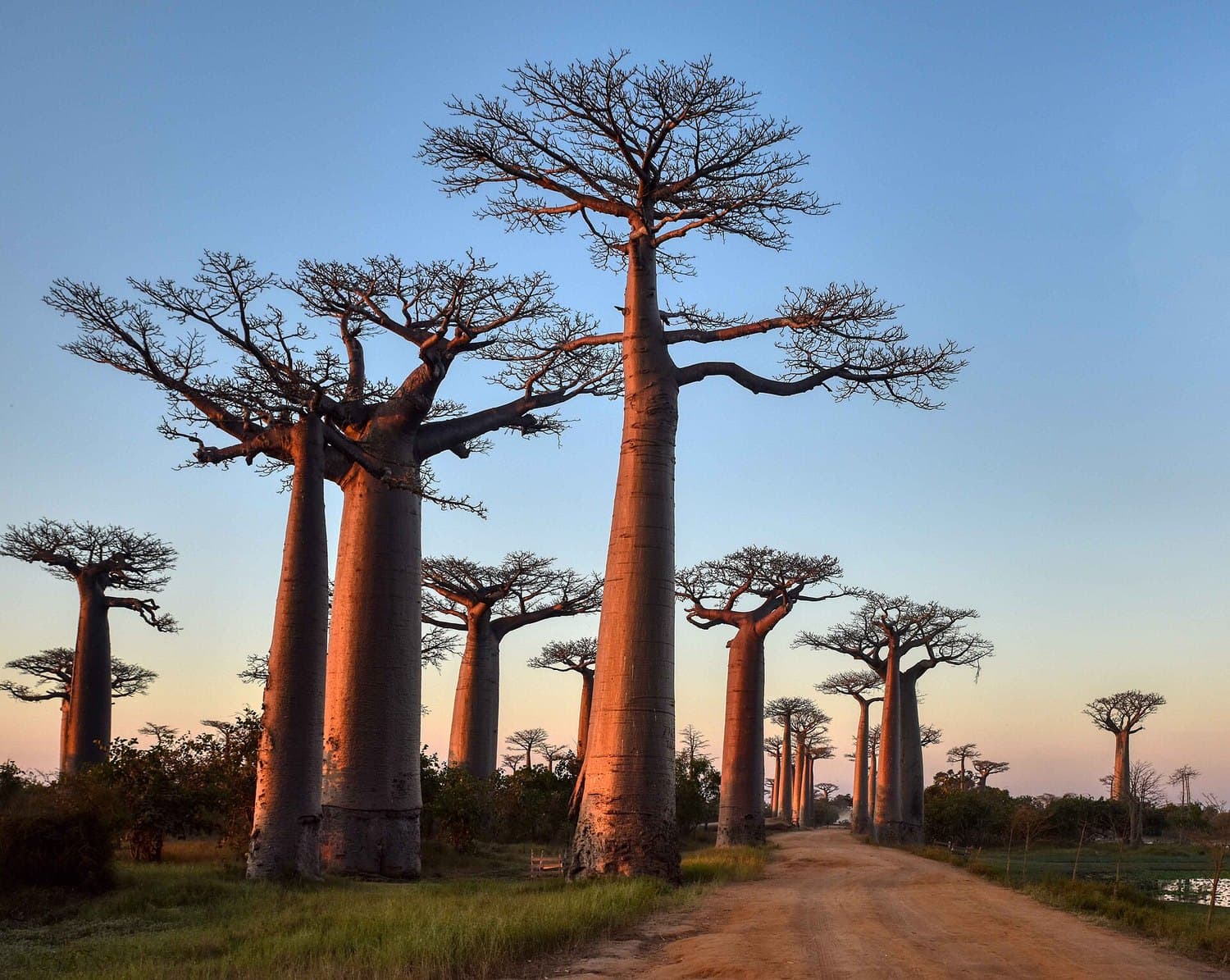
MadagascarPhoto: Rod Waddington / Wikimedia Commons (CC BY-SA 2.0)

Madagascar

Country · MG · MGA · Indian/Antananarivo

This information may change. Always check the official source.Last verified: September 2026 by

The fee depends on how long you stay, the desk takes cash only, and the UK and Malagasy governments publish different prices for the shortest stay. Bring enough euros in notes to cover the higher one.

  • Madagascar's own eVisa portal publishes a fee table by length of stay, and says in as many words that the prices of the online visa are the same as those paid on arrival:
  • The portal warns you about fraudulent sites and names as the only official one. That warning is worth reading twice, because of what follows.
  • The eVisa covers tourist travel only, is single entry, and is capped at 60 days. Anything else is an embassy application or an on-arrival visa.
  • Payment is in cash, in US dollars, euros or Malagasy ariary. That is Global Affairs Canada's wording and the FCDO lists the same three currencies. There is no card lane to fall back on.
More details

The fee, and the fact that two governments disagree about it

  • Madagascar's own eVisa portal publishes a fee table by length of stay, and says in as many words that the prices of the online visa are the same as those paid on arrival:
Visa and entry in Madagascar
StayUS dollarsEuros
1 to 15 days3530
16 to 30 days4135
31 to 60 days4740
61 to 90 days5950
  • The FCDO says something different about the shortest stay. Its Madagascar page states that you can visit for up to 15 days without a visa, paying a 10 euro administration fee on arrival.
  • Both pages were live and current on 11 September 2026. They cannot both describe the same transaction, and neither one explains the other. Carry enough euro notes to pay 30 euros, and treat 10 euros as the lucky outcome.
  • Longer stays are not disputed: a 30 or 60 day single entry tourist visa, bought at the airport or online, and extendable to a 90 day total at the immigration office once you are in the country.

The portal, and how to tell it from the fakes

  • The portal warns you about fraudulent sites and names as the only official one. That warning is worth reading twice, because of what follows.
  • serves an empty directory listing. There is no site there over HTTPS.
  • , over plain HTTP, redirects to , which is the working portal with the government's own branding on it.
  • So the address you have been told to trust looks broken and the address that works looks commercial. Reach the portal by typing the gov.mg address without the s in https and letting it redirect, rather than by searching, which is how people land on the overcharging copies the portal is warning about.

If you apply online

  • The eVisa covers tourist travel only, is single entry, and is capped at 60 days. Anything else is an embassy application or an on-arrival visa.
  • All nationalities are eligible.
  • Apply between one week and six months before departure. Outside that window the system will not take you.
  • The authorisation is issued within 72 hours of the application being validated. Print it or keep it on the phone; the border police ask for it.
  • You still queue at the eVisa counters on arrival. The online route buys you the visa, not a fast lane.

If you buy it at Ivato

  • Payment is in cash, in US dollars, euros or Malagasy ariary. That is Global Affairs Canada's wording and the FCDO lists the same three currencies. There is no card lane to fall back on.
  • Bring the return ticket. Both governments list an onward or return ticket as something you present, not something you might be asked for.
  • Two blank passport pages are checked at the desk, not just at check-in.
  • Airport visa processing times can be lengthy. Plan the onward domestic connection around a queue, not around the scheduled arrival time.

The passport

  • Valid for at least 6 months after the day you arrive, with at least 2 blank pages.
  • Get it stamped. The FCDO says so explicitly for Madagascar.
  • Overstaying can mean detention or deportation.

Children

  • A child aged 17 or under travelling without one or both parents must carry written authorisation from the absent parent or parents to leave Madagascar. This is an exit rule, so it bites at the end of the trip, when it is too late to arrange.

Vaccination and health screening at the border

  • A yellow fever certificate is required if you arrive from a country listed as a transmission risk, and a polio certificate in some circumstances.
  • Arriving from a cholera-affected country, airport authorities may ask you to take doxycycline. Pregnant travellers, children under 8 and people with a pre-existing condition should be offered an alternative. Expect to leave contact details and to be followed up after 3 to 5 days.
  • Ebola measures are in force. Anyone who has been in or transited an affected country in the last 21 days may be refused entry unless exempt; all travellers complete a health declaration form and undergo screening on arrival.

What you may not bring

  • Do not bring in food of any kind, including fruit. It is illegal.
  • You may bring in up to 400,000 Malagasy ariary.
Sources (4)

High malaria risk, hospitals that handle routine operations only, and complex surgery means being flown to Mauritius, South Africa or Reunion. The insurance has to be able to pay for that.

  • 117 from a mobile, 17 from a landline, and ask for an ambulance.
  • There are public and private hospitals in Antananarivo, but they can only handle routine operations.
  • NaTHNaC assesses Madagascar as high risk for malaria, and recommends atovaquone/proguanil, or doxycycline, or mefloquine.
  • Dengue and chikungunya are both present, spread by mosquitoes that bite in daylight, so bite avoidance is an all-day job here rather than an evening one.
  • Tap water is unsafe. Drink boiled or bottled water and avoid ice in drinks.
More details

The number

  • 117 from a mobile, 17 from a landline, and ask for an ambulance.
  • Call your insurer as soon as you are referred to a medical facility, before treatment starts.

What the hospitals can and cannot do

  • There are public and private hospitals in Antananarivo, but they can only handle routine operations.
  • For complex surgery, patients are flown to Mauritius, South Africa or Reunion. That is the sentence that sets your insurance requirement: cover for treatment, evacuation and repatriation, with accessible funds, not a policy that reimburses you in six weeks.
  • The FCDO publishes a list of medical providers in Madagascar with English-speaking staff. Find it before you need it.

Malaria, which is the main one

  • NaTHNaC assesses Madagascar as high risk for malaria, and recommends atovaquone/proguanil, or doxycycline, or mefloquine.
  • Bites happen between dusk and dawn. Cover up, use repellent, and sleep under a net.
  • A fever of 38 C or more more than a week after being in a malaria area, or any malaria-like symptom within a year of getting home, is an emergency. Say where you have been.

The rest of the list

  • Dengue and chikungunya are both present, spread by mosquitoes that bite in daylight, so bite avoidance is an all-day job here rather than an evening one.
  • Schistosomiasis is a risk: do not wade, swim or bathe in fresh water. Sea water and properly chlorinated pools are fine.
  • Rabies is present in domestic animals. Avoid contact with animals, and treat any bite, scratch or lick on broken skin as urgent.
  • Measles risk is higher than in the UK. Check your MMR is complete.
  • Hepatitis B prevalence is intermediate to high.
  • An mpox clade I outbreak is ongoing in the region and is flagged on the country's TravelHealthPro page.
  • Altitude illness is a risk in parts of the country. Antananarivo sits high, and the highland routes go higher.

Water and everyday risks

  • Tap water is unsafe. Drink boiled or bottled water and avoid ice in drinks.
  • Syphilis levels are high and STI risk is correspondingly higher than at home.
  • Check vaccine recommendations at least 8 weeks before you travel, and remember the yellow fever certificate is an entry requirement, not only medical advice, if you are arriving from a transmission-risk country.
Sources (3)

Antananarivo

Long-term averages for Antananarivo: the mean daily high, the mean overnight low and the mean monthly rainfall across 30 years of ERA5 reanalysis data (1995–2024).

DayNight
1015202530°C0500mmJanFebMarAprMayJunJulAugSepOctNovDecJanuary: Day 24.9 °C, Night 16.8 °C, Rain 310 mm. February: Day 24.8 °C, Night 16.8 °C, Rain 252 mm. March: Day 24.7 °C, Night 16.5 °C, Rain 151 mm. April: Day 24 °C, Night 15.2 °C, Rain 39 mm. May: Day 22.2 °C, Night 13.3 °C, Rain 13 mm. June: Day 20 °C, Night 11 °C, Rain 6 mm. July: Day 19.2 °C, Night 10 °C, Rain 5 mm. August: Day 20.7 °C, Night 10.3 °C, Rain 5 mm. September: Day 23.2 °C, Night 11.4 °C, Rain 6 mm. October: Day 25.7 °C, Night 13.4 °C, Rain 30 mm. November: Day 26.7 °C, Night 15.3 °C, Rain 81 mm. December: Day 26 °C, Night 16.5 °C, Rain 202 mm
Show the monthly table
Antananarivo
MonthDay (°C)Night (°C)Rain (mm)
January24.916.8310
February24.816.8252
March24.716.5151
April24.015.239
May22.213.313
June20.011.06
July19.210.05
August20.710.35
September23.211.46
October25.713.430
November26.715.381
December26.016.5202

Nosy Be

Long-term averages for Nosy Be: the mean daily high, the mean overnight low and the mean monthly rainfall across 30 years of ERA5 reanalysis data (1995–2024).

DayNight
202530°C0500mmJanFebMarAprMayJunJulAugSepOctNovDecJanuary: Day 28.3 °C, Night 24.4 °C, Rain 497 mm. February: Day 28.5 °C, Night 24.5 °C, Rain 382 mm. March: Day 28.8 °C, Night 24.8 °C, Rain 309 mm. April: Day 29 °C, Night 24.9 °C, Rain 126 mm. May: Day 28.3 °C, Night 24.2 °C, Rain 53 mm. June: Day 27 °C, Night 22.9 °C, Rain 35 mm. July: Day 26.4 °C, Night 22.2 °C, Rain 37 mm. August: Day 26.5 °C, Night 22 °C, Rain 48 mm. September: Day 27 °C, Night 22.5 °C, Rain 58 mm. October: Day 28 °C, Night 23.4 °C, Rain 85 mm. November: Day 28.6 °C, Night 24 °C, Rain 153 mm. December: Day 28.7 °C, Night 24.4 °C, Rain 275 mm
Show the monthly table
Nosy Be
MonthDay (°C)Night (°C)Rain (mm)
January28.324.4497
February28.524.5382
March28.824.8309
April29.024.9126
May28.324.253
June27.022.935
July26.422.237
August26.522.048
September27.022.558
October28.023.485
November28.624.0153
December28.724.4275

Toamasina

Long-term averages for Toamasina: the mean daily high, the mean overnight low and the mean monthly rainfall across 30 years of ERA5 reanalysis data (1995–2024).

DayNight
15202530°C0500mmJanFebMarAprMayJunJulAugSepOctNovDecJanuary: Day 28.1 °C, Night 23.6 °C, Rain 348 mm. February: Day 28.1 °C, Night 23.8 °C, Rain 309 mm. March: Day 27.6 °C, Night 23.5 °C, Rain 315 mm. April: Day 26.7 °C, Night 22.7 °C, Rain 169 mm. May: Day 25.2 °C, Night 21.3 °C, Rain 165 mm. June: Day 23.5 °C, Night 19.7 °C, Rain 147 mm. July: Day 22.6 °C, Night 18.6 °C, Rain 168 mm. August: Day 23 °C, Night 18.6 °C, Rain 118 mm. September: Day 23.8 °C, Night 19.2 °C, Rain 87 mm. October: Day 25.3 °C, Night 20.6 °C, Rain 92 mm. November: Day 26.7 °C, Night 22 °C, Rain 90 mm. December: Day 27.8 °C, Night 23.2 °C, Rain 204 mm
Show the monthly table
Toamasina
MonthDay (°C)Night (°C)Rain (mm)
January28.123.6348
February28.123.8309
March27.623.5315
April26.722.7169
May25.221.3165
June23.519.7147
July22.618.6168
August23.018.6118
September23.819.287
October25.320.692
November26.722.090
December27.823.2204
Sources (1)

Yas publishes a 30 day tourist eSIM at 60,000 ariary and sells it as a scratch voucher in its shops, one of which is inside Ivato. It is not a download you can buy from home.

  • 60,000 ariary, or 12 euros, for 30 days.
  • 5 GB of data.
  • You buy a voucher in a Yas shop, scratch it and scan the QR code. There is no remote purchase. Turning up with an eSIM slot and a card is not enough on its own.
  • ARTEC licenses four: Airtel, Blueline, Orange and Telma, now Yas.
  • Ivato lists SIM card purchase among its passenger services, alongside banks, ATMs and currency exchange.
More details

The tourist eSIM, priced by the operator

Yas Madagascar, the operator formerly trading as Telma, publishes a visitor bundle on its own site:

  • 60,000 ariary, or 12 euros, for 30 days.
  • 5 GB of data.
  • One hour of national voice, five minutes of international voice, 50 SMS.
  • The international minutes cover a published list of about 40 countries including the UK, France, the US, Canada, Australia, India and China.
  • Yas notes the euro price varies with the exchange rate, which tells you which of the two figures is the real one.

How you actually get it, which is the part that catches people

  • You buy a voucher in a Yas shop, scratch it and scan the QR code. There is no remote purchase. Turning up with an eSIM slot and a card is not enough on its own.
  • Yas Store Aeroport Ivato is on the published list of stores that sell it, along with shops in Nosy Be, Diego, Tamatave, Tulear, Fort Dauphin, Morondava, Sainte Marie and Antananarivo.
  • Check your handset is on the compatibility list before you count on this. Yas publishes one, and it is short: broadly iPhone XS and later, recent Pixel, Galaxy S20 and later, and a handful of Huawei, Oppo and Honor models.
  • Orange Madagascar sells its eSIM online through Orange Shop with a So Smart plan and immediate activation, which is the alternative if the Yas voucher route does not suit.

The operators, and who to call

  • ARTEC licenses four: Airtel, Blueline, Orange and Telma, now Yas.
  • Customer service: Airtel 121, Orange 204, Telma 800.
  • Telecoms complaints go to ARTEC on 600, but only after you have complained to the operator first. That is the regulator's own sequence.

At the airport

  • Ivato lists SIM card purchase among its passenger services, alongside banks, ATMs and currency exchange.
  • Airport wifi is free, connected by scanning the QR code on the posters in the departure area.
  • The airport call centre is +261 34 00 123 45, 08:00 to 20:00, seven days a week.
Sources (5)

European sockets, a driving licence that lasts three months, a rainy season that closes roads, and a souvenir list that needs an export permit.

  • Type and type sockets, 230 V, 50 Hz. A standard European two pin plug fits; a UK plug needs an adapter.
  • Traffic drives on the right, and you give way to vehicles coming from the left.
  • The rainy season and the cyclone season both run November to April. Seasonal flooding hampers overland travel, some roads become impassable, and services thin out.
  • precious and semi-precious stones, gold and jewels
  • Dress conservatively, including on some beaches. Avoid kissing in public and behave discreetly.
More details

Power

  • Type and type sockets, 230 V, 50 Hz. A standard European two pin plug fits; a UK plug needs an adapter.

Driving

  • Traffic drives on the right, and you give way to vehicles coming from the left.
  • You need both the correct version of the International Driving Permit and your own licence, in the car. That is the FCDO's wording, and it adds that you cannot buy an IDP outside the UK, so it has to be arranged before you fly.
  • Canada puts the limit at three months on a home licence or an IDP, after which you apply for a local licence at the Ministry of the Interior, presenting the IDP or your own licence.
  • Outside the major cities, hire a 4x4, and preferably hire a driver with it.
  • Roadblocks are routine and may involve vehicle or personal searches. Stay calm and courteous, and have the passport.

The seasons

  • The rainy season and the cyclone season both run November to April. Seasonal flooding hampers overland travel, some roads become impassable, and services thin out.
  • Check the route is passable with local authorities before setting out in that window, and be ready to change plans at short notice.

Taking things home

An export permit is required for a longer list of souvenirs than most people expect:

  • precious and semi-precious stones, gold and jewels

  • wooden sculptures, including funerary statues

  • hewed stones and rare fossils

  • vanilla, and food generally

  • protected plants and animals, including butterflies and crocodile products

  • Vanilla and spices have published personal limits: after declaring them and showing receipts you may take out up to 2 kg of vanilla and up to 1 kg of pepper or cloves.

  • Jewellery or precious metal over 250 g must be declared on departure, and hallmarked jewellery has its own 250 g ceiling.

  • If you buy anything made of animal skin or shell, ask the vendor exactly what you can tell customs. If they cannot answer, that is your answer.

Manners

  • Dress conservatively, including on some beaches. Avoid kissing in public and behave discreetly.
  • Ask before photographing people.
  • Ask locally about fady before you do anything in a village. Customs vary between regions, and a guide is the right person to ask.
Sources (5)

The ariary goes in but not out, cash runs the economy, three official sources give three different cash declaration thresholds, and some banks will not convert your ariary back.

  • You may not export ariary. That is Global Affairs Canada's flat statement.
  • Madagascar has a cash-based economy. Cash withdrawals are possible from a limited number of ATMs in Antananarivo, and thinner elsewhere.
  • Declare it, at the lowest of the three. The declaration is free, it produces a certified document, and without that document your money can be seized when you leave. There is no cost to over-declaring and a real one to guessing.
  • Buying foreign banknotes from anyone other than a bank or a licensed bureau de change is prohibited. The Treasury flyer says so directly. Street changers are not a grey area here.
More details

The ariary is one-way

  • You may not export ariary. That is Global Affairs Canada's flat statement.
  • You may bring in up to 400,000 ariary, which the FCDO publishes as a hard cap. So the currency is not impossible to obtain in advance, it is capped going in and blocked going out.
  • The practical consequence is at the end, not the start. Change what you need, in stages, and do not build up a float you will be carrying to the airport.
  • There is a shortage of foreign currency in Madagascar, and some banks will not reconvert local currency into hard currency. Assume the ariary you hold on the last day is ariary you will spend.

Cash, and what it buys

  • Madagascar has a cash-based economy. Cash withdrawals are possible from a limited number of ATMs in Antananarivo, and thinner elsewhere.
  • Some credit cards are accepted at major hotels, some restaurants and some shops. That is the ceiling, not the norm.
  • Euros are widely accepted. US dollars are sometimes accepted in Antananarivo, the major cities and tourist areas.
  • By decree, prices, contracts, invoices and settlement on Malagasy territory are in ariary (Decree 2007-276 of 11 April 2007). The airside duty-free zone is the published exception, and there it is foreign currency only.
  • Customs duty on arrival can be paid by cash, card or mobile money, which is the one counter that takes plastic reliably.

The cash declaration threshold, on which nobody agrees

Three official sources, three numbers, all live on 11 September 2026:

Money in Madagascar
SourceDeclare foreign cash at
FCDO, and the Treasury's own exchange-regulation flyer7,500 euros or more
Global Affairs Canadaover 10,000 euros
Ivato airport's own FAQ1,000 euros or more
  • Declare it, at the lowest of the three. The declaration is free, it produces a certified document, and without that document your money can be seized when you leave. There is no cost to over-declaring and a real one to guessing.
  • Do it at the customs office, Door 87, Terminal C.

Changing money legally

  • Buying foreign banknotes from anyone other than a bank or a licensed bureau de change is prohibited. The Treasury flyer says so directly. Street changers are not a grey area here.
  • A bank or bureau issues an attestation de change. Keep it.
  • On the way out, above 1,000 euros you must show customs that certificate of exchange, and above 10,000 euros the money has to move by bank transaction rather than in your bag.

What you may carry through customs

  • Duty free on arrival: 2 litres of spirits and 2 bottles of wine for over-18s, 200 cigarettes or 100 cigarillos or 50 cigars or 250 g of tobacco, 2 x 100 ml of perfume, and other new personal goods up to a total value of 1,000 euros.
  • Anything above that is declared, and duty is calculated at the desk. More than three large suitcases puts you in the yellow channel by itself.
Sources (5)

Everyday prices

Typical prices in ariary (MGA), averaged across the country by Numbeo and read on 10 September 2026. Tick Convert prices above the table to see every amount in your own currency.

Everyday prices
ItemTypical price
Inexpensive restaurant meal9,900 MGA
Dinner for two, mid-range, three courses75,000 MGA
Cappuccino6,000 MGA
Local draught beer, 0.5 l5,000 MGA
Bottled water, 0.33 l2,680 MGA
Public transport, one-way ticket600 MGA
Taxi, starting fare15,000 MGA
Petrol, 1 litre5,210 MGA
Cigarettes, pack of 20 (Marlboro)7,000 MGA
Average net monthly salary557,000 MGA

These are country-wide averages, not a price list: tourist districts, airports and islands sit well above them, and small towns below. The salary line is there for proportion - it is what people living here actually earn.

Sources (1)

Airport guides for Madagascar1

One page per airport: the routes into town, what they cost and the trap particular to that arrival.

See all 1 airports

The airport publishes four phone numbers and no fares. Nobody publishes a taxi price into Antananarivo, so agree one before the car moves, and take an airport or hotel car rather than one that finds you.

  • No fare is published for any of it, by the airport, by an operator or by a transport authority. That is a real answer rather than a gap in this guide: there is no official Ivato to Antananarivo price to check a driver against.
  • Use pre-booked taxis or hotel transport. That is the FCDO's instruction for Madagascar, not general caution.
  • Both the international and the renovated domestic terminal have a currency exchange office, and the domestic terminal now has an ATM area.
  • There is no long-stay parking package. The airport says so on its own FAQ.
  • Three terminals: international, domestic and cargo. The domestic terminal was rebuilt and reopened in 2026, doubling its capacity to 216 passengers an hour.
More details
What the airport actually publishes

Ravinala Airports, which holds the concession for Ivato and for Nosy Be, lists four ways out of the terminal on its own access page. It gives a phone number for three of them and a fare for none:

Arriving at Ivato
OptionWhat the airport publishes
Licensed taxi+261 32 40 594 53
Car hire+261 34 05 811 13
Free connection shuttle+261 32 12 345 67, for domestic to international connections only
Bus"The nearest bus stops connect the airport to the city centre", line D
  • No fare is published for any of it, by the airport, by an operator or by a transport authority. That is a real answer rather than a gap in this guide: there is no official Ivato to Antananarivo price to check a driver against.
  • So agree the fare before the car moves, which is what Global Affairs Canada advises for Madagascar generally: ask the driver to start the meter or negotiate the fare in advance, and have small notes ready.
  • The bus has no published timetable either, and both governments advise against the shared minibuses on safety grounds, so line D is a fact about the airport's geography rather than a recommendation.
Take a car that was waiting for you, not one that found you
  • Use pre-booked taxis or hotel transport. That is the FCDO's instruction for Madagascar, not general caution.
  • Do not hail a taxi on the street, do not share one with strangers, and do not let the driver pick up anyone else en route.
  • Note the driver's name and plate number.
  • Avoid the multi-passenger vans, the taxi-brousse and the taxi-be. Both governments single them out, for accidents and for robbery.
  • Keep car doors locked and windows closed, particularly in Antananarivo. Smash-and-grab thefts target cars stuck in traffic.
  • Armed robbery on main roads is frequent, particularly at night and outside major towns. An arrival that lands after dark is an arrival that should end at the first hotel, not at the far end of a road journey.
Money at the airport, and one law that will surprise you
  • Both the international and the renovated domestic terminal have a currency exchange office, and the domestic terminal now has an ATM area.
  • Businesses in the duty-free zone can only be paid in foreign currency. The airport quotes the law: Article 10 of Decree 21449/2015/MFB/SG/DGD of 25 June 2015. Ariary is not accepted airside, so do not change your last euros before the duty-free shop.
  • Currency formalities are done at the customs office, Door 87, Terminal C. If you are declaring cash, that is where you go, not the general queue.
Parking, which is published
Arriving at Ivato
DurationTariff
Up to 1 hour2,000 MGA
1 to 2 hours3,500 MGA
2 to 3 hours5,000 MGA
3 to 12 hours22,500 MGA
12 to 24 hours45,000 MGA
Over 24 hours45,000 MGA package
  • There is no long-stay parking package. The airport says so on its own FAQ.
The airport itself
  • Three terminals: international, domestic and cargo. The domestic terminal was rebuilt and reopened in 2026, doubling its capacity to 216 passengers an hour.
  • Ivato links the capital to ten destinations, including Paris, Istanbul, Dubai, Johannesburg, Addis Ababa, Nairobi, Reunion and Mauritius.
  • Baggage is handled by Madagascar Ground Handling. Claims go to the dispute area in the international terminal, or +261 34 49 222 01.
Sources (5)

No FCDO advisory against travel anywhere, but Canada rates the whole country "exercise a high degree of caution". Robbery is commonplace, the roads are the sharp end of it, and the country is under a transitional government.

  • The FCDO advises against travel to no part of Madagascar. There is no advisory zone and no "all but essential travel" line anywhere in the country.
  • Significant protests took place in Antananarivo and elsewhere in late September and early October 2025, including violence and looting.
  • Robberies and thefts are commonplace throughout Madagascar, and foreigners are targets for pickpockets and muggers.
  • Armed robberies on main roads are frequent, particularly at night and outside major towns. Where possible, travel in convoy, or let a recognised operator or your hotel arrange the transport.
  • It is an offence for civilians to wear camouflage or military-style clothing, and it can lead to detention and fines. Check what is in the bag.
More details

What the two advisories actually say

  • The FCDO advises against travel to no part of Madagascar. There is no advisory zone and no "all but essential travel" line anywhere in the country.
  • Global Affairs Canada rates the whole country "exercise a high degree of caution", because of the high crime rate and the potential for political instability. That is one step above normal precautions and two below "avoid non-essential travel".
  • Read that as a country you can go to and should not be careless in, rather than a country under warning.

The political situation

  • Significant protests took place in Antananarivo and elsewhere in late September and early October 2025, including violence and looting.
  • On 14 October 2025 the military took over and announced a two year transition with an interim President, followed by new elections. A transitional government was formally established on 17 October.
  • Canada's assessment is that the interim measures have been implemented without major unrest and conditions remain calm.
  • Politically linked rallies are still possible anywhere in the country, and roads may close in response to demonstrations. Avoid large gatherings.

Crime

  • Robberies and thefts are commonplace throughout Madagascar, and foreigners are targets for pickpockets and muggers.
  • In Antananarivo, be particularly careful on the steps up to the Rova, on the Avenue de l'Independance, at the Analakely market, on the road to Soarano station, and in 67 Hectares, Itaosy, Antaninarenina and Tsaralalana.
  • Do not walk alone in city centres or poorly lit areas after dark. Do not use your phone or show cash on the street. Be wary of over-friendly approaches and of criminals working in pairs.
  • Armed gangs commit home invasions, carjackings, robberies and kidnappings, and foreigners have been targeted in urban, rural and isolated areas.
  • There have been violent robberies and assaults in daylight on isolated beaches, including Nosy Be, Ankify port, Ambanja, the beaches north and south of Toliara, Sainte Marie, Isalo, Ihosy and Pic Saint Louis at Fort Dauphin.
  • Attacks by people presenting themselves as guides are a documented pattern. Use a national guide accredited by the Ministry of Tourism, and ask to see the badge.

The roads, which is where the risk concentrates

  • Armed robberies on main roads are frequent, particularly at night and outside major towns. Where possible, travel in convoy, or let a recognised operator or your hotel arrange the transport.
  • Named roads: attacks on convoys on the RN7 between Antananarivo and Toliara; ambushes on the RN13 between Ihosy and Fort Dauphin; highway robbery between Besalampy and Morombe including the RN35 and the RN1; and vigilance on the RN27, RN10 and RN34.
  • Fly to Fort Dauphin. That is the FCDO's specific instruction, not a suggestion.
  • Do not drive at night. Many vehicles have no lights and few roads are lit.
  • In the rainy season, December to April, many secondary roads are impassable except by 4x4 and bridges are often washed away.
  • An accident causing injury or death leads to a mandatory court case, and the losing party pays all costs. If you are involved, you must stay in Madagascar at your own expense until the case is resolved. Do not leave the scene; report to the police on 117, or drive to the nearest town and report it there if that is safer.

Laws that catch visitors out

  • It is an offence for civilians to wear camouflage or military-style clothing, and it can lead to detention and fines. Check what is in the bag.
  • Photography of military and government installations is prohibited, and photographing police or security personnel is a good way to provoke them.
  • Always carry your passport. Police make random ID checks and do not accept copies, certified or otherwise.
  • Paying for sex is illegal, punishable by a fine of 1,500 to 7,000 euros and up to 10 years in prison. The law on sexual abuse of under-18s is strictly enforced against foreign tourists, and underage sex workers may carry fake identity cards.
  • Drug offences carry severe punishments and prison conditions are harsh and life-threatening.
  • It is illegal to collect, buy or export protected animals, plants or products made from them, including rosewood items. Souvenir stalls sell things you cannot legally take home.
  • Fady, local taboos, regulate daily life in much of the country and vary from place to place, from forbidden foods to restrictions on clothing. In a village, ask your guide whether to greet the Fokontany head and the Ray aman-dreny.

LGBT+ travellers

  • Same-sex sexual activity is legal between people aged 21 and over.
  • Public attitudes are considerably less tolerant than in the UK, and Canada's advice is that 2SLGBTQI+ travellers should carefully consider the risks. Public affection may attract negative attention.

Weather and water

  • Cyclone season runs from November to April, with coastal areas most at risk. Storms cut access to remote areas and contaminate water supplies.
  • Riptides are common and several drownings occur each year. Sharks are present, particularly around Tamatave and Manakara.
  • Ferries have sunk from overcrowding and poor maintenance. Check for life jackets, do not board an overloaded boat, and check the weather locally.
  • Armed criminals have boarded and robbed boats on the Tsiribihina River. Both governments say to find another route.
Sources (3)

Every service has two numbers, one for landlines and one for mobiles, and they are not the same. From a mobile the one to remember is 117.

  • The mobile number is the landline number with a 1 in front. That is the whole rule, and it is the reason people misdial in an emergency.
  • 117 is the one to save. It reaches both ambulance and police, and it is also the number the FCDO gives for reporting a road accident.
  • Telecoms complaints: ARTEC on 600, after complaining to the operator.
  • Customs helpline: 360, free.
  • There is no Canadian government office in Madagascar. Canadians are covered from the High Commission in Pretoria, or the Emergency Watch and Response Centre in Ottawa.
More details

The numbers

Emergency numbers in Madagascar
ServiceFrom a mobileFrom a landline
Ambulance or police emergency11717
Police station, direct11919
Fire11818
  • The mobile number is the landline number with a 1 in front. That is the whole rule, and it is the reason people misdial in an emergency.
  • 117 is the one to save. It reaches both ambulance and police, and it is also the number the FCDO gives for reporting a road accident.

Other numbers worth having

  • Telecoms complaints: ARTEC on 600, after complaining to the operator.
  • Customs helpline: 360, free.
  • Ivato airport call centre: +261 34 00 123 45, 08:00 to 20:00 daily.

Consular reality

  • There is no Canadian government office in Madagascar. Canadians are covered from the High Commission in Pretoria, or the Emergency Watch and Response Centre in Ottawa.
  • The FCDO publishes UK help and services in Madagascar on its own getting-help page, along with lists of English-speaking lawyers, translators and funeral directors.
  • Save the numbers offline. A contact that lives in the cloud is not a contact when there is no data, and this is a country where a local SIM is a shop visit rather than a download.
Sources (4)