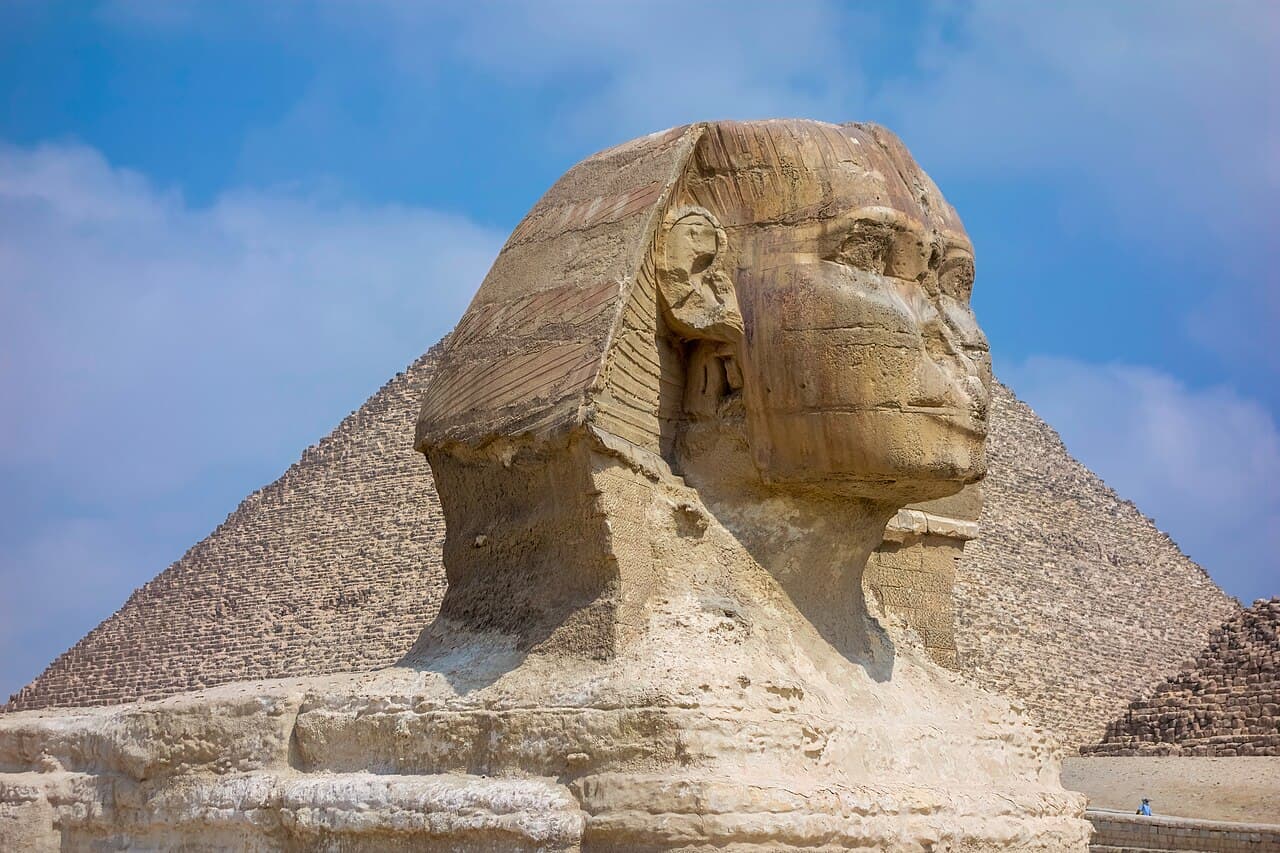
EgyptPhoto: Petar Milošević / Wikimedia Commons (CC BY-SA 4.0)

Egypt

Country · EG · EGP · Africa/Cairo

This information may change. Always check the official source.Last verified: August 2026 by

The visa on arrival rose to USD 30 on 1 March 2026, and Cairo started taking cards at USD 36 on 1 August. If you are only going to Sharm, there is a free stamp instead.

  • The visa on arrival rose to USD 30 on 1 March 2026, and Cairo added a card-payable digital visa at USD 36 on 1 August. Anything you read from 2025 is wrong.
  • visa2egypt.gov.eg is the only official e-visa site at USD 30 single entry. The commercial lookalikes charge USD 80 to USD 150 for the same document.
  • Buy the visa at the bank counter before immigration, not from anyone who offers to help you in the hall, and bring clean notes because torn ones are refused.
  • Flying to Sharm and staying in the resort area? There is a free 15-day Sinai stamp instead - but it does not cover Cairo or Luxor, so buy the full visa if you want the pyramids.
  • When in doubt, buy the e-visa before you fly. Egypt applies its visa-on-arrival list inconsistently, and an approved e-visa removes the argument at the counter.
More details

What the visa costs now

The price changed twice this year. Anything you read from 2025 is wrong.

Visa and entry in Egypt
RouteCostNotes
Visa on arrival, cashUSD 30Up from USD 25 on 1 March 2026
Digital visa at Cairo, cardUSD 36New on 1 August 2026, includes a USD 6 service fee
e-Visa, single entryUSD 30visa2egypt.gov.eg
e-Visa, multiple entryUSD 65visa2egypt.gov.eg
  • All of these give you 30 days.
  • The visa on arrival is still implemented as a USD 25 sticker plus a USD 5 surcharge sticker, which looks odd in your passport and is correct.
  • Cash counters take US dollars, euros or pounds sterling. Bring clean, undamaged notes; torn ones get refused.
  • Buy the visa at the bank counter before immigration, not from anyone who offers to help you in the hall.
  • visa2egypt.gov.eg is the only official e-visa site. The commercial lookalikes charge USD 80 to USD 150 for the same document, and they are the most common way visitors overpay.
  • Your passport must be valid for 6 months from arrival and have at least one blank page.

The free Sinai stamp

If you are flying to Sharm El-Sheikh and staying in the resort area, you may not need a visa at all.

  • A free entry permission stamp is issued on arrival for stays of up to 15 days at Sharm El-Sheikh, Dahab, Nuweiba and Taba resorts.
  • It confines you to the Sinai coastal strip. It does not cover Cairo, Luxor or even the trip to St Catherine's Monastery in most readings.
  • If you plan a day trip to the pyramids, buy the full visa. People get caught out on exactly this, having taken the free stamp and then booked an excursion.
  • The Sinai permit cannot be extended or converted.

Crossing from Israel at Taba

  • Staying in Taba only: USD 20 border tax.
  • Travelling into Sinai: USD 120 border tax.
  • Travelling beyond Sinai: USD 120 border tax plus the USD 30 visa plus roughly USD 20 for a guarantee letter.
  • ATMs at Taba are unreliable. Bring US dollars in cash before you get there.

Where your nationality lands

Visa and entry in Egypt
You holdWhat you need
USA, Canada, Australia, UK, Germany, France, Italy, Spain, Netherlands, Poland, Japan, South Korea, Russia, MalaysiaVisa on arrival, USD 30, or an e-visa
Saudi ArabiaNo visa. Visa-exempt as an Arab state
Chinae-Visa in advance. Organised tour groups have a separate exemption
Indiae-Visa in advance. A visa on arrival exists only for organised groups of 2 or more with a travel agency guarantee letter
Singapore, Taiwan, CambodiaGet it in advance. Use the e-visa where the portal accepts your nationality, otherwise an Egyptian embassy or consulate
  • Egypt publishes its visa-on-arrival list inconsistently and airline staff and airport officers do not always apply it the same way.
  • When in doubt, buy the e-visa before you fly. It costs the same USD 30, it removes the argument at the counter, and an approved e-visa is accepted everywhere the visa on arrival is.
  • Overstaying carries a fine paid at the airport, and a modest grace period is usually tolerated. Do not rely on it.
Sources (3)

Egypt confiscates satellite phones and drones, and taking anything old or anything off the reef out is a criminal matter.

  • Satellite phones and radio equipment are confiscated unless you have prior clearance from the Ministry of Telecommunications, and high-value electronics and recording equipment should be declared on arrival.
  • Drones may not be brought in. They are seized at Cairo and Hurghada with or without paperwork, and are rarely returned.
  • Antiquities may not be exported. This covers coins, fragments and anything a seller describes as ancient; the penalty is a prison sentence rather than a confiscation.
  • Coral, shells and marine life from the Red Sea are protected. Taking a piece of coral from Sharm or Dahab is an offence, and dive bags are checked.
More details
  • Satellite phones and radio equipment are confiscated unless you have prior clearance from the Ministry of Telecommunications, and high-value electronics and recording equipment should be declared on arrival.
  • Drones may not be brought in. They are seized at Cairo and Hurghada with or without paperwork, and are rarely returned.
  • Antiquities may not be exported. This covers coins, fragments and anything a seller describes as ancient; the penalty is a prison sentence rather than a confiscation.
  • Coral, shells and marine life from the Red Sea are protected. Taking a piece of coral from Sharm or Dahab is an offence, and dive bags are checked.
  • You may carry no more than 5,000 Egyptian pounds in or out, and foreign currency worth more than USD 10,000 must be declared on arrival - there is no limit on how much of it you bring, only on not declaring it.
Sources (1)

Stomach upsets are near-universal and preventable. Hotel doctors overcharge, pharmacies are cheap and good, and some of your medicines may be controlled here.

  • Some prescribed and over-the-counter medicines are controlled substances here and need advance Ministry of Health permission. Tramadol especially - people have been detained over it.
  • Carry a doctor's letter stating the condition, medicine, quantity and personal use, and keep everything in original labelled packaging.
  • Do not use the hotel doctor as a first resort - the FCDO notes they have overcharged for treatment and medicines. Pharmacies outside hotels are far cheaper and well staffed.
  • Do not drink the tap water or brush your teeth with it, and remember ice, salad and unpeeled fruit. Hot, freshly cooked food from a busy place is the safe bet.
  • Never swim, paddle or wade in the Nile, canals or irrigation channels - bilharzia is present in fresh water throughout the country. The Red Sea and hotel pools are fine.
More details

Your medicines may be illegal here

  • Some prescribed and over-the-counter medicines are controlled substances in Egypt and need advance permission from the Egyptian Ministry of Health.
  • Carry a doctor's letter stating your condition, the medicine, the quantity and that it is for personal use.
  • Keep everything in original labelled packaging.
  • Check before you fly with the Egyptian consulate if you take anything in the painkiller, sedative, stimulant or psychiatric categories.
  • Tramadol in particular is heavily controlled in Egypt and people have been detained over it.

Getting treated

  • Do not use the hotel doctor as a first resort. The FCDO notes specifically that hotel doctors have overcharged for treatment and medicines.
  • Pharmacies outside hotels supply the same medication far more cheaply, and Egyptian pharmacists are well trained and helpful. Many drugs needing a prescription at home are available over the counter.
  • Private hospitals in Cairo are good and expect payment or insurer confirmation up front.
  • Travel insurance covering treatment and medical evacuation is essential, particularly if you are diving.
  • Diving cover is usually a separate add-on and a recompression chamber evacuation is expensive. If you are diving, check the policy explicitly.

The stomach

Traveller's diarrhoea is close to universal and it is largely preventable.

  • Do not drink the tap water and do not use it to brush your teeth. Bottled water is cheap and everywhere. Check the seal.
  • Ice is the thing people forget, along with salad, unpeeled fruit and fruit juice diluted with tap water.
  • Hot, freshly cooked food from a busy place is the safe bet, including street food.
  • Carry oral rehydration salts and loperamide. The salts matter more.
  • Buffets that have been sitting out are the usual culprit at resorts, not street stalls.

The rest

  • No vaccinations are required unless arriving from a yellow fever risk country. Hepatitis A and typhoid are recommended, plus routine cover. See a travel clinic 8 weeks ahead.
  • Do not swim, paddle or wade in the Nile, canals or irrigation channels. Schistosomiasis, also called bilharzia, is present in fresh water throughout the country. The Red Sea and hotel pools are fine.
  • Rabies is present. Do not touch dogs, cats or monkeys, and treat any bite or scratch as urgent.
  • Dengue occurs and mosquito precautions during the day are sensible.
  • Sun and heat are the commonest problems. Hat, sunscreen, far more water than you think, and shade from 11:00 to 15:00.
  • Dust and air quality in Cairo aggravate asthma. Bring your inhaler.
Sources (2)

Cairo

Long-term averages for Cairo: the mean daily high, the mean overnight low and the mean monthly rainfall across 30 years of ERA5 reanalysis data (1995–2024).

DayNight
5152535°C05mmJanFebMarAprMayJunJulAugSepOctNovDecJanuary: Day 19 °C, Night 8 °C, Rain 4 mm. February: Day 21 °C, Night 9 °C, Rain 5 mm. March: Day 25 °C, Night 11 °C, Rain 4 mm. April: Day 29 °C, Night 14 °C, Rain 1 mm. May: Day 33 °C, Night 17 °C, Rain 0 mm. June: Day 36 °C, Night 20 °C, Rain 0 mm. July: Day 37 °C, Night 22 °C, Rain 0 mm. August: Day 37 °C, Night 22 °C, Rain 0 mm. September: Day 35 °C, Night 21 °C, Rain 0 mm. October: Day 31 °C, Night 18 °C, Rain 1 mm. November: Day 26 °C, Night 14 °C, Rain 2 mm. December: Day 21 °C, Night 10 °C, Rain 2 mm
Show the monthly table
Cairo
MonthDay (°C)Night (°C)Rain (mm)
January1984
February2195
March25114
April29141
May33170
June36200
July37220
August37220
September35210
October31181
November26142
December21102

Hurghada

Long-term averages for Hurghada: the mean daily high, the mean overnight low and the mean monthly rainfall across 30 years of ERA5 reanalysis data (1995–2024).

DayNight
101520253035°C02mmJanFebMarAprMayJunJulAugSepOctNovDecJanuary: Day 21 °C, Night 13 °C, Rain 1 mm. February: Day 22 °C, Night 14 °C, Rain 1 mm. March: Day 24 °C, Night 16 °C, Rain 2 mm. April: Day 27 °C, Night 19 °C, Rain 0 mm. May: Day 31 °C, Night 23 °C, Rain 0 mm. June: Day 33 °C, Night 26 °C, Rain 0 mm. July: Day 34 °C, Night 27 °C, Rain 0 mm. August: Day 35 °C, Night 28 °C, Rain 0 mm. September: Day 33 °C, Night 26 °C, Rain 0 mm. October: Day 30 °C, Night 23 °C, Rain 2 mm. November: Day 26 °C, Night 19 °C, Rain 1 mm. December: Day 22 °C, Night 15 °C, Rain 1 mm
Show the monthly table
Hurghada
MonthDay (°C)Night (°C)Rain (mm)
January21131
February22141
March24162
April27190
May31230
June33260
July34270
August35280
September33260
October30232
November26191
December22151

Luxor

Long-term averages for Luxor: the mean daily high, the mean overnight low and the mean monthly rainfall across 30 years of ERA5 reanalysis data (1995–2024).

DayNight
515253545°C01mmJanFebMarAprMayJunJulAugSepOctNovDecJanuary: Day 22 °C, Night 8 °C, Rain 1 mm. February: Day 24 °C, Night 9 °C, Rain 0 mm. March: Day 29 °C, Night 13 °C, Rain 0 mm. April: Day 34 °C, Night 17 °C, Rain 0 mm. May: Day 38 °C, Night 22 °C, Rain 0 mm. June: Day 41 °C, Night 24 °C, Rain 0 mm. July: Day 41 °C, Night 25 °C, Rain 0 mm. August: Day 41 °C, Night 25 °C, Rain 0 mm. September: Day 39 °C, Night 23 °C, Rain 0 mm. October: Day 35 °C, Night 19 °C, Rain 0 mm. November: Day 28 °C, Night 14 °C, Rain 0 mm. December: Day 23 °C, Night 10 °C, Rain 1 mm
Show the monthly table
Luxor
MonthDay (°C)Night (°C)Rain (mm)
January2281
February2490
March29130
April34170
May38220
June41240
July41250
August41250
September39230
October35190
November28140
December23101
Sources (1)

Red Sea all-inclusives are extraordinary value, Cairo is worth paying for a view of the pyramids, and summer in Upper Egypt is brutal for a reason.

  • October to April is the season everywhere. May to September in Luxor and Aswan is punishing, regularly over 40 °C, with sites visited at dawn - and hotels correspondingly cheap.
  • A pyramid view in Giza is a specific and worthwhile splurge. Zamalek and Garden City are the calmer, greener Cairo alternatives to Downtown.
  • The FCDO advises not allowing hotel staff into your room when you are alone, following reports of sexual assault predominantly at Red Sea resorts. Use the door chain and ask for ID.
  • Nile cruise boats are floating hotels and the gap between good and bad is large. Read recent reviews rather than the brochure.
  • Check the air conditioning works before you accept the room, and prefer a property with a generator - power cuts make that a different experience in summer.
More details

The seasons

  • October to April is the season everywhere, and it is genuinely pleasant.
  • May to September in Luxor and Aswan is punishing, regularly over 40 °C. Sites are visited at dawn and the middle of the day is spent indoors. Hotels are correspondingly cheap.
  • The Red Sea works year round. Summer is hot but the sea and the air conditioning make it manageable.
  • Book ahead around Christmas, New Year and Easter, when Luxor and the Red Sea fill.
  • Ramadan changes the rhythm rather than closing things, and resort hotels operate normally.

Where to stay

  • Giza, with a pyramid view, is a specific and worthwhile splurge. Waking up to them from a balcony is the trip's best moment for many people.
  • Zamalek and Garden City in Cairo are calmer, greener and better for walking than Downtown.
  • Downtown Cairo is cheap, characterful, noisy and central.
  • Luxor's east bank for the town and the temples, the west bank for quiet and the tombs.
  • Hurghada and Sharm El-Sheikh are all-inclusive resort towns and the value is remarkable. They are not Egypt in any cultural sense, and that is fine if it is what you want.
  • Dahab is the low-key alternative, backpackerish and much better for diving without the resort machinery.
  • Nile cruise boats are floating hotels, and the difference between a good and a bad one is large. Read recent reviews rather than the brochure.

Safety in your room

The FCDO notes reports of sexual assault predominantly at Red Sea resorts, including cases involving minors.

  • Do not allow hotel staff into your room when you are alone. This is the FCDO's own advice and it is specific for a reason.
  • Use the door chain, and ask for identification.
  • Supervise children in resort kids' clubs and pools rather than assuming the supervision is what it would be at home.
  • Choose established, well-reviewed properties, particularly for a family holiday.

Practical

  • Passport registration at check-in is required and is normal.
  • Power cuts happen. A property with a generator is a different experience in summer.
  • Check the air conditioning works before you accept the room, not afterwards.
  • Bottled water is usually provided and you will drink a lot of it.
Sources (1)

Local prepaid is very cheap and worth the passport errand. Expect internet restrictions on calling apps and slow speeds outside the cities.

  • Vodafone has the widest coverage of the four networks and is the usual choice. A tourist SIM with a generous bundle costs a few dollars, far less than any travel eSIM.
  • You must register with your passport, so buy from an official branded shop rather than a kiosk. Airport counters work and cost more.
  • WhatsApp, FaceTime and Skype voice calls are frequently blocked or degraded, though text and media messaging work. Install a VPN before you arrive - and install two, since some are blocked.
  • Speeds are good in Cairo, Alexandria and the Red Sea resorts and drop sharply in Upper Egypt and the desert. Power cuts affect the mobile networks too.
  • Save your hotel's name and address in Arabic script to show a taxi driver, and download offline Arabic in Google Translate for menus and signs.
More details

Buy local

  • Vodafone, Orange, Etisalat and WE are the four networks. Vodafone has the widest coverage and is the usual choice.
  • A tourist SIM with a generous data bundle costs the equivalent of a few US dollars and is far cheaper than any travel eSIM.
  • You must register with your passport. Buy from an official branded shop rather than a kiosk, so it is registered properly.
  • Airport counters work and cost more. A shop in town is cheaper if you can wait.
  • eSIM is supported by the main networks and by Saily, and is the easy option for a short trip.

Restrictions and reality

  • WhatsApp, FaceTime and Skype voice calls are frequently blocked or degraded. Text and media messaging work.
  • A VPN installed before you arrive is worth having. Some are themselves blocked, so install two.
  • Speeds are good in Cairo, Alexandria and the Red Sea resorts and drop sharply in Upper Egypt and the desert.
  • Cruise boats on the Nile have patchy coverage between Luxor and Aswan, which is part of the appeal.
  • Power cuts affect mobile networks. Egypt has had rolling load shedding in recent summers.

Practical

  • Keep the phone charged and carry a power bank. You will use the phone constantly for maps, translation and photographs.
  • Google Translate with Arabic downloaded offline is genuinely useful, especially the camera mode for menus and signs.
  • Save your hotel's name and address in Arabic script to show a taxi driver.
Sources (2)

Egyptian sockets are Type and at 220 V, so European plugs fit and British and American ones do not.

  • A Europlug fits every socket, and Schuko plugs fit the earthed ones.
  • British, American and Australian plugs need an adapter.
  • Older buildings and Nile cruise boats frequently have unearthed sockets, and boats sometimes run their own supply overnight at reduced voltage.
  • 220 V, so American 120 V-only equipment needs a converter.
  • Adapters are cheap in any hardware shop; airport and hotel shops charge several times the price.
More details

Sockets in Egypt are Type and at 220 V, 50 Hz - two round pins, the same shape as continental Europe.

  • A Europlug fits every socket, and Schuko plugs fit the earthed ones.
  • British, American and Australian plugs need an adapter.
  • Older buildings and Nile cruise boats frequently have unearthed sockets, and boats sometimes run their own supply overnight at reduced voltage.
  • 220 V, so American 120 V-only equipment needs a converter.
  • Adapters are cheap in any hardware shop; airport and hotel shops charge several times the price.
  • Sinai resorts and desert camps run on generators for part of the day, and the sockets there are the same shape with a supply that varies.
Sources (1)

Friday is the weekend, photographing the wrong building is a real offence, and small notes are the most useful thing in your pocket.

  • Do not photograph military or police installations, bridges, canals or government buildings. This is taken seriously and people have been detained for it.
  • Drones are effectively banned without a permit tourists do not get, and bringing one in risks confiscation at the airport.
  • The weekend is Friday and Saturday, when government offices and banks close, though sites and museums open normally and are busier.
  • Electricity is 220 V at 50 Hz with European two-pin plugs, and power cuts have been common in recent summers - keep a power bank charged.
  • Antiquities cannot be exported. Anything genuinely old that a shop offers you is either fake or will be confiscated at the airport.
More details

Photography rules that carry real consequences

  • Do not photograph military or police installations, bridges, canals or government buildings. This is taken seriously and people have been detained for it.
  • Drones are effectively banned without a permit that tourists do not get. Bringing one in risks confiscation at the airport.
  • Ask before photographing people, and expect to be asked for baksheesh afterwards.
  • Photography permits are charged separately at some sites, notably inside certain tombs in the Valley of the Kings. Buy the ticket rather than risk a confiscated phone.
  • Tripods usually need a permit anywhere official.

The week and the calendar

  • The weekend is Friday and Saturday. Government offices and banks close, and Friday midday prayers quieten everything for an hour or two.
  • Sites and museums open normally at weekends and are busier.
  • Ramadan falls across February and March in 2027. Do not eat, drink or smoke in public during daylight; restaurants in tourist areas stay open. Iftar at sunset is worth being invited to, and you will be.
  • Egyptian time is elastic. Confirm pickups the evening before.

Dress and conduct

  • Cover shoulders and knees away from resorts. Women will find this reduces attention markedly.
  • Mosques welcome visitors outside prayer times, shoes off, women covering their hair.
  • Coptic churches and monasteries have similar expectations.
  • Public displays of affection are frowned on.
  • Same-sex relationships are not illegal as such but are prosecuted under other laws, and dating apps have been used to entrap people. This is a real risk rather than a theoretical one.
  • Alcohol is legal for non-Muslims, sold in hotels, licensed bars, resort towns and the Drinkies chain. Public drunkenness is not tolerated.
  • Use your right hand for eating and passing things.

Everyday

  • Electricity is 220 V at 50 Hz with European two-pin plugs.
  • Power cuts have been common in recent summers. Keep a power bank charged.
  • Toilets often lack paper. Carry tissues, and small notes for attendants.
  • Arabic numerals on price tags are sometimes the Eastern Arabic forms, which look nothing like the ones you know. Learn the digits or use your phone's camera translation.
  • Site tickets are now largely digital and card-only at the big monuments, which is a recent change and a good one.
  • Antiquities cannot be exported. Anything genuinely old that a shop offers you is either fake or is going to be confiscated at the airport.
  • Egyptians are extraordinarily hospitable once you are past the commercial layer. Accepting tea and talking to people is the best part of the country.
Sources (1)

Baksheesh is a system, not a scam, and small notes are the tool you need. Egypt is cheap in pounds and it is a cash country outside the resorts.

  • Baksheesh is a small payment for a small service, not begging and not usually a scam. Someone opens a door or points at a tomb: a few pounds.
  • The tool is small notes. Get a thick stack of 5, 10 and 20 pound notes early and keep them in a separate pocket from your real money.
  • You may decline. A firm, friendly "la, shukran" repeated works and is not rude - what is a scam is a "free" gift pressed into your hand, or your camera taken to "help".
  • Egypt is genuinely cheap for food, transport and services and expensive for entry tickets to the major sites, which are priced for foreigners and have risen steeply.
  • Tip in Egyptian pounds rather than dollars, despite what you are told - changing small foreign notes is hard for the recipient. Restaurants get 10 percent on top of any service charge.
More details

The currency

  • The Egyptian pound floated in March 2024 and has traded in a range of roughly 49 to 52 to the US dollar through 2026.
  • Inflation was 14.9 percent in July 2026, which is a great deal calmer than it was, but prices still move.
  • Egypt is genuinely cheap for food, transport and services. It is not cheap for entry tickets to the major sites, which are priced for foreigners and have risen steeply.
  • Change money at banks or official exchange offices, not on the street. Street rates that look better are the setup for a switch.
  • ATMs are widespread in cities and resorts and dispense pounds. Use bank-branch machines, decline the machine's conversion, and be aware many have low withdrawal limits.

Baksheesh, explained properly

This is the thing visitors find hardest, and understanding it makes Egypt much more enjoyable.

  • Baksheesh is a small payment for a small service, and it is a normal part of an economy where many wages are very low. It is not begging and it is not usually a scam.
  • Someone opens a door, points at a tomb, watches your shoes, takes your photo: a few pounds.
  • The tool is small notes. Get a thick stack of 5, 10 and 20 pound notes early and keep them in a separate pocket from your real money.
  • You may decline. A firm, friendly "la, shukran" repeated works, and it is not rude.
  • What is a scam is different: someone who takes your camera to "help", then demands payment to return it; a guard who beckons you past a rope and then demands money; a "free" gift pressed into your hand.
  • Never hand over your passport or your phone.

Tipping

  • Restaurants: 10 percent, on top of any service charge, which usually does not reach the staff.
  • Hotel housekeeping: a small note daily.
  • Nile cruise and tour staff: there is usually a suggested tipping envelope, and it is a real part of their pay.
  • Drivers and guides: budget for it. A private guide for a day expects a meaningful tip.
  • Egyptian pounds are better than dollars for tipping, despite what you will be told, because changing small foreign notes is hard for the recipient.

Cards and cash

  • Resorts, good hotels and larger restaurants take cards. Very little else does.
  • Carry cash daily, more than you think, in small denominations.
  • Prices are quoted in pounds, dollars and euros depending on who is asking. Establish the currency before you agree.
  • Keep some US dollars in reserve for the visa, the Taba border and emergencies.
  • Bargaining is expected in bazaars and with taxis, and not in shops with marked prices. Start low, stay cheerful, and be willing to walk.
Sources (2)

Everyday prices

Typical prices in Egyptian pound (EGP), averaged across the country by Numbeo and read on 12 August 2026. Tick Convert prices above the table to see every amount in your own currency.

Everyday prices
ItemTypical price
Inexpensive restaurant meal200 EGP
Dinner for two, mid-range, three courses1,000 EGP
Cappuccino76 EGP
Local draught beer, 0.5 l78 EGP
Bottled water, 0.33 l7.15 EGP
Public transport, one-way ticket15 EGP
Taxi, starting fare20 EGP
Petrol, 1 litre22 EGP
Cigarettes, pack of 20 (Marlboro)100 EGP
Average net monthly salary7,760 EGP

These are country-wide averages, not a price list: tourist districts, airports and islands sit well above them, and small towns below. The salary line is there for proportion - it is what people living here actually earn.

Sources (1)

Airport guides for Egypt3

One page per airport: the routes into town, what they cost and the trap particular to that arrival.

See all 3 airports

Cairo airport is where the trip either starts well or badly. Book a transfer or use Uber, and ignore everyone who approaches you in the arrivals hall.

  • Cairo's arrivals hall is the most aggressive environment you will meet in Egypt. Decide what you are doing before you land and it is manageable.
  • Arrange a hotel transfer in advance for a first arrival - your driver waits with a sign and the negotiation never happens. Uber and Careem also work and quote a fixed fare.
  • Ignore anyone who approaches you offering a taxi, help with bags, or a warning that your hotel is closed. All of it is a sales approach and some of it is a scam.
  • Someone in an official-looking shirt offering to help with your visa will buy the sticker from the bank counter and charge you far more. Buy it yourself - it takes two minutes.
  • Ask your hotel what the fare should be before you leave the terminal. Knowing the number changes the conversation entirely.
More details
Cairo (CAI)

The arrivals hall is the most aggressive environment you will meet in Egypt, and it sets the tone for people's whole trip. It is manageable if you decide what you are doing before you land.

  • Arrange a hotel transfer in advance. For a first arrival this is worth every pound. Your driver waits with a sign and the negotiation never happens.
  • Uber and Careem both work at Cairo and quote a fixed fare. This is the cheapest safe option. The pickup point is signed and sometimes a short walk.
  • Ignore anyone who approaches you offering a taxi, help with your bags, a hotel, or a warning that your hotel is closed. All of it is a sales approach and some of it is a scam.
  • The white official taxis are metered. The black and white older ones are not, and you agree a price first.
  • Terminal 3 is the main international terminal. Terminals are far apart and connected by shuttle.
  • Expect USD 10 to USD 20 to central Cairo by Uber, more by taxi, and considerably more if you did not agree a price.
The classic arrivals scam
  • Someone in an official-looking shirt offers to "help" with the visa or immigration. They buy your USD 30 visa sticker from the bank counter and charge you far more.
  • Buy the visa yourself at the bank counter. It is clearly marked and takes two minutes.
  • Another version: your driver says your hotel has closed, burned down or overbooked, and takes you to one paying commission. Phone the hotel. It is open.
Hurghada, Sharm El-Sheikh and Luxor
  • Package transfers are usually included and are much the easiest option.
  • Resort taxis have set rates to the hotel zones. Agree the fare before getting in, every time.
  • Luxor is small and the airport is 10 minutes from town.
  • Ask your hotel what the fare should be before you leave the terminal, by message if necessary. Knowing the number changes the conversation.
Getting into town generally
  • Cairo has a metro which is cheap, fast and useful, with women-only carriages. It does not reach the airport usefully.
  • Traffic in Cairo is extraordinary. A 10 km journey can take an hour. Build it into every plan.
  • Crossing the road in Cairo is a skill. Walk steadily and predictably alongside a local, and do not run or stop.
Sources (2)

The sleeper train to Luxor and Aswan is the classic route, domestic flights are cheap, and Uber removes the daily haggle in Cairo.

  • The sleeper train from Cairo to Luxor and Aswan is the classic Egyptian journey - private cabin, dinner and breakfast, and you save a hotel night.
  • Domestic flights are cheap and quick, with EgyptAir serving Luxor, Aswan, Hurghada and Sharm several times a day; Go Bus and Blue Bus are the comfortable coaches.
  • Uber and Careem in Cairo remove the fare negotiation entirely, which is the single biggest quality-of-life improvement for a visitor.
  • The Cairo metro costs a few pounds and is the fastest way across the centre at rush hour. The women-only carriages are the front two.
  • Do not drive in Cairo, and the FCDO advises against driving outside main cities at night - coaches and lorries overtake blind and enforcement is limited.
More details

Between cities

  • The sleeper train from Cairo to Luxor and Aswan is the classic Egyptian journey. Private cabins, dinner and breakfast included, and you wake up in Upper Egypt having saved a hotel night.
  • Ordinary trains are much cheaper and slower, and foreigners are sometimes steered towards particular services.
  • Domestic flights are cheap and quick. EgyptAir flies Cairo to Luxor, Aswan, Hurghada and Sharm several times a day.
  • Long-distance coaches run everywhere. Go Bus and Blue Bus are the comfortable operators.
  • 12Go covers most of these, including Cairo to Luxor and Luxor to Hurghada, which is handy because Egyptian rail booking sites are awkward from abroad.
  • Nile cruises between Luxor and Aswan are transport as well as a holiday, typically 3 or 4 nights.

In Cairo

  • Uber and Careem work well and are cheap, and remove the fare negotiation entirely. This is the single biggest quality-of-life improvement for a visitor.
  • The metro costs a few pounds and is the fastest way across the centre at rush hour. Women-only carriages are marked and are the front two.
  • Street taxis need a price agreed first, and the meter in the white cabs is often "broken".
  • Microbuses are for locals and are hard to use without Arabic.

Driving

  • Do not drive in Cairo. Really.
  • Outside the cities you need an International Driving Permit, and the FCDO advises against driving outside main cities at night.
  • Road accidents are common and enforcement is limited. Coaches and lorries drive fast and overtake blind.
  • Convoy requirements have applied on some desert routes. Check locally before driving in Sinai or the Western Desert.

Apps

  • Uber and Careem for taxis.
  • Google Maps works, and offline maps matter because coverage drops.
  • Google Translate with Arabic downloaded, especially the camera mode.
  • XE or similar for currency, because the pound moves and prices are quoted in three currencies.
Sources (1)

Egyptian roads are tolled on the desert highways, Cairo traffic works by negotiation, and most visitors hire a driver.

  • Cairo traffic ignores lane markings entirely and merges by contact and horn. Almost every visitor who tries to drive it regrets the decision within an hour.
  • A car with a driver is cheap and standard for Cairo, Luxor and the Red Sea transfers.
  • The desert highways are tolled at plazas and are fast, straight and monotonous.
  • The alcohol limit is zero.
  • Night driving between cities is discouraged - unlit vehicles, animals and police checkpoints - and some routes still require a permit or convoy.
More details

Tolls on the desert highways, and a driving culture that a visitor is rarely ready for.

  • Cairo traffic ignores lane markings entirely and merges by contact and horn. Almost every visitor who tries to drive it regrets the decision within an hour.
  • A car with a driver is cheap and standard for Cairo, Luxor and the Red Sea transfers.
  • The desert highways are tolled at plazas and are fast, straight and monotonous.
  • The alcohol limit is zero.
  • Night driving between cities is discouraged - unlit vehicles, animals and police checkpoints - and some routes still require a permit or convoy.
Sources (1)

Violent crime against tourists is rare and hassle is constant. The genuine dangers are the roads, the Red Sea dive boats and the areas the FCDO tells you to avoid.

  • The standard tourist circuit is not affected by the travel warnings - Cairo, Giza, Luxor, Aswan, Abu Simbel, Hurghada, Sharm and Dahab. North Sinai and border regions are.
  • Your insurance is void in an area your government advises against, so check the regional risks page before booking anything off the usual route.
  • A firm, smiling "la, shukran" and continuing to walk answers nearly all the hassle. Do not stop, do not engage, do not explain.
  • The camel at the pyramids is the classic: a ride offered free for a photograph, then a large sum demanded to get down. Do not accept anything pressed into your hand.
  • Red Sea diving has caused multiple fatalities with safety standards varying widely - check the operator's certification, record and insurance, not its price.
More details

Where not to go

  • The FCDO advises against all travel to some parts of Egypt and against all but essential travel to others, including North Sinai and border regions.
  • Check the regional risks page before you book anything off the standard tourist route. Travel insurance is void in an area your government advises against.
  • The standard tourist circuit is not affected: Cairo, Giza, Luxor, Aswan, Abu Simbel, Hurghada, Sharm El-Sheikh and Dahab.
  • Terrorist attacks have targeted security forces, religious sites, public gatherings and places foreigners visit. Tourist sites have visible armed security, which is reassuring rather than alarming.

The hassle, and how to handle it

Egypt has more persistent commercial attention than almost anywhere. It is not danger, and it is exhausting if you do not have a strategy.

  • The camel or horse at the pyramids. A ride offered as free or cheap for a photograph, and then a large sum demanded to get down, or to be brought back.
  • The "temple is closed" line, delivered by a stranger outside a site that is open, who has a better idea.
  • The unrequested guide who attaches himself, talks for ten minutes and then bills you.
  • The papyrus, perfume and alabaster "factory" your driver detours to, on commission.
  • The gift pressed into your hand, then payment demanded. Do not accept anything.
  • The shoe shine, the photo taken on your own camera, the door opened for you. All small, all a few pounds, all fine if you have small notes.
  • A firm, smiling "la, shukran" and continuing to walk is the answer to nearly all of it. Do not stop, do not engage, do not explain.

The things that actually hurt people

  • Roads. Poor conditions, limited enforcement, fast coaches. Do not travel outside main cities at night. Serious crashes involving tourists happen regularly.
  • Red Sea diving. The FCDO records multiple fatalities on diving operations, with safety standards varying considerably and some operators lacking adequate insurance. Check the operator's certification, its safety record and its insurance, not its price. Ask to see the boat's safety equipment.
  • Watersports. Book through reputable vendors who can give assurance about safety standards.
  • Shark attacks in the Red Sea are rare and have happened. Follow local beach guidance and do not swim where fish are being fed or waste discarded.
  • Heat. In Upper Egypt in summer it is genuinely dangerous. Dawn starts, midday indoors.

Women travellers

  • Verbal harassment is common and physical harassment happens, including in crowds.
  • Dress modestly outside resorts, covering shoulders and knees. It reduces attention noticeably.
  • The FCDO advises female travellers not to allow hotel staff into the room when alone.
  • Women-only metro carriages in Cairo are marked and worth using.
  • A confident, loud, public response to harassment usually works, because bystanders intervene.
Sources (2)

122 police, 123 ambulance, 180 fire, and 126 for the tourist police, who are the ones you actually want.

  • 126, the tourist police, is the number to save. They are a dedicated force at the major sites and resorts, they speak English, and they are far more use than the general line.
  • Police are 122, ambulance 123, fire 180 - and operators on those lines may not speak English, so have your hotel call if you can. 911 and 112 do not work here.
  • Ambulance response is slow outside the cities and resorts. In many situations a taxi to a private hospital is faster.
  • Report theft to the tourist police and get the written report. No insurer pays without it, and you will not get one after you fly home.
  • If you are diving, ask the operator where the nearest recompression chamber is and how they would get you there - there are chambers at Sharm, Dahab and Hurghada, and a good operator answers immediately.
More details

The numbers

Emergency information in Egypt
WhatNumber
Police122
Ambulance123
Fire180
Tourist police126
  • 126, the tourist police, is the one to save. They are a dedicated force at the major sites and in the resort towns, they speak English, and they are far more use to a visitor than the general police line.
  • Operators on 122 and 123 may not speak English. Have someone from your hotel call if you can.
  • Ambulance response is slow outside the cities and resorts. In many situations a taxi to a private hospital is faster.
  • 911 and 112 do not work here.

Practicalities

  • Report theft to the tourist police and get the written report. No insurer pays without it and you will not get one after you fly home.
  • Photograph your passport, visa and insurance policy and keep copies separate from the originals.
  • If you lose your passport, go to the police, then your embassy in Cairo. Most consulates are in Cairo, with a few in Alexandria and Hurghada, which matters if you are on the Red Sea.
  • Save your insurer's 24-hour line offline with the international dialling code.
  • Keep US dollars in cash somewhere separate as a fallback.

Diving emergencies

  • Recompression chambers are at Sharm El-Sheikh, Dahab and Hurghada.
  • Check your insurance covers diving to the depth you will actually dive, and covers chamber treatment and evacuation. Standard travel policies frequently do not.
  • Ask your operator where the nearest chamber is and how they would get you there before you dive with them. A good operator has an immediate answer.
  • DAN membership is worth it if you are doing a diving trip.

Heat and other emergencies

  • Heatstroke is the commonest serious visitor emergency in summer, especially at Luxor and Aswan. Symptoms are confusion, headache, nausea and stopping sweating. Get into shade and cool the person immediately.
  • Sandstorms, the khamsin, occur mainly in spring and can close roads and airports for a day.
  • Flash floods in the Sinai and desert wadis follow rare heavy rain and are dangerous. Do not camp in a wadi if rain is forecast.
  • If there is unrest, stay away from demonstrations entirely. Foreigners photographing protests have been detained.
Sources (3)