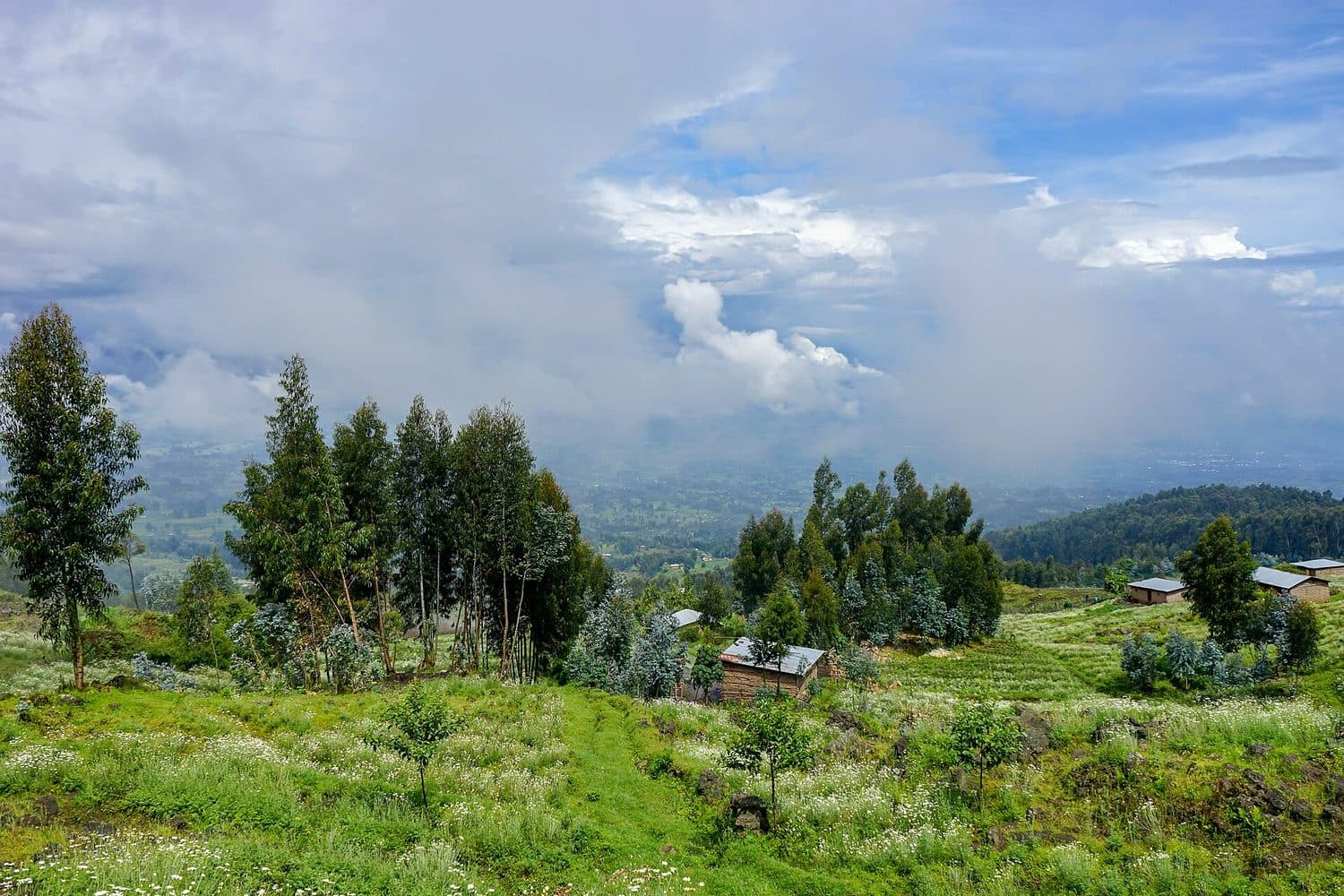
RwandaPhoto: Nina R from Africa / Wikimedia Commons (CC BY 2.0)

Rwanda

Country · RW · RWF · Africa/Kigali

This information may change. Always check the official source.Last verified: August 2026 by

Every nationality can get a visa at the desk without applying first, and a large number of them pay nothing. Plastic bags are confiscated at the same counter.

  • African Union, Commonwealth and Francophonie member countries: 30 days, free. That covers most of Europe's Francophone countries, the whole Commonwealth including the UK, Australia, Canada, India, Malaysia and Singapore, and all of Africa.
  • Valid at least 6 months after the day you arrive, with at least one blank page for stamps.
  • A certificate is required if you are arriving from a country on the transmission risk list, which includes much of central and west Africa. A long transit through one can count.
  • Rwanda bans single-use plastic bags and confiscates them on arrival. This is not a fine or a warning; the bag is taken at the airport.
More details

The visa, which is genuinely simple

The Rwanda Development Board states it in one sentence: citizens of all countries are allowed to get a visa upon arrival without prior application.

  • African Union, Commonwealth and Francophonie member countries: 30 days, free. That covers most of Europe's Francophone countries, the whole Commonwealth including the UK, Australia, Canada, India, Malaysia and Singapore, and all of Africa.
  • East African Community citizens get a pass free of charge for a six month stay.
  • Ninety days free for Angola, Benin, Central African Republic, Chad, Cote d'Ivoire, Ghana, Guinea, Haiti, Indonesia, Mauritius, Philippines, Qatar, Saint Kitts and Nevis, Sao Tome and Principe, Senegal, Seychelles, Sierra Leone and Singapore.
  • Everyone else pays, and the fee is capped: no more than USD 50 for single entry, USD 70 for multiple.
  • You can apply online first if you prefer, and pay online or on arrival. There is no affiliated agent authorised to apply on your behalf, whatever a search result tells you.

The passport

  • Valid at least 6 months after the day you arrive, with at least one blank page for stamps.

Yellow fever

  • A certificate is required if you are arriving from a country on the transmission risk list, which includes much of central and west Africa. A long transit through one can count.

The plastic bag

  • Rwanda bans single-use plastic bags and confiscates them on arrival. This is not a fine or a warning; the bag is taken at the airport.
  • Repack before you fly. Duty free bags, packing bags, bin liners inside a suitcase - all of it.
  • The airport-security resealable liquids bag is the usual exception, but do not build a plan around exceptions.

The East Africa Tourist Visa

  • USD 100 covers Kenya, Rwanda and Uganda for 90 days with multiple entries. Worth it if you are crossing more than one border; otherwise the free 30 days is better.
Sources (3)

Malaria, and where the hospitals are

Antimalarials are recommended for most travellers. Kigali's public facilities handle routine care and everything outside Kigali is limited.

  • Malaria is a risk throughout Rwanda, and antimalarial medication is recommended for most travellers.
  • Start the conversation about six weeks before you fly, because some regimes begin before departure.
  • Dengue occurs sporadically and chikungunya is present. Both bite in the daytime.
  • Public medical facilities in Kigali are adequate for routine procedures.
  • A yellow fever certificate is required from listed risk countries.
More details

Malaria

  • Malaria is a risk throughout Rwanda, and antimalarial medication is recommended for most travellers.
  • Start the conversation about six weeks before you fly, because some regimes begin before departure.
  • Symptoms up to a year after you get home still mean malaria until a doctor says otherwise. Tell them where you have been.

Other mosquito-borne illness

  • Dengue occurs sporadically and chikungunya is present. Both bite in the daytime.
  • Bite avoidance covers all three at once: repellent, covered arms at dawn and dusk, a net or screens at night.

Medical care

  • Public medical facilities in Kigali are adequate for routine procedures.
  • Access to health care is limited outside Kigali, which matters if your trip is mostly in the parks.
  • Insurance must cover medical evacuation, because a serious case leaves the country.
  • Check whether it covers motorbike taxis, which is the single most likely way to need it.

Yellow fever and hygiene

  • A yellow fever certificate is required from listed risk countries.
  • Typhoid is present at low risk, through food and water.
Sources (2)

Kigali

Long-term averages for Kigali: the mean daily high, the mean overnight low and the mean monthly rainfall across 30 years of ERA5 reanalysis data (1995–2024).

DayNight
1015202530°C0200mmJanFebMarAprMayJunJulAugSepOctNovDecJanuary: Day 25.6 °C, Night 14.7 °C, Rain 76 mm. February: Day 26.3 °C, Night 15 °C, Rain 77 mm. March: Day 25.6 °C, Night 14.9 °C, Rain 100 mm. April: Day 24.5 °C, Night 15.1 °C, Rain 128 mm. May: Day 24.4 °C, Night 15.1 °C, Rain 71 mm. June: Day 24.8 °C, Night 14.9 °C, Rain 10 mm. July: Day 25.8 °C, Night 15.1 °C, Rain 5 mm. August: Day 26.5 °C, Night 15.6 °C, Rain 25 mm. September: Day 26.4 °C, Night 15.1 °C, Rain 56 mm. October: Day 25.7 °C, Night 15 °C, Rain 108 mm. November: Day 24.8 °C, Night 14.5 °C, Rain 126 mm. December: Day 24.9 °C, Night 14.3 °C, Rain 95 mm
Show the monthly table
Kigali
MonthDay (°C)Night (°C)Rain (mm)
January25.614.776
February26.315.077
March25.614.9100
April24.515.1128
May24.415.171
June24.814.910
July25.815.15
August26.515.625
September26.415.156
October25.715.0108
November24.814.5126
December24.914.395
Sources (1)

Kigali, and the Saturday morning that closes

Kigali is compact, clean and safe by day. Two mornings a month it shuts on purpose, and one week a year the country is in mourning.

  • The airport is about 10 km from the centre, so almost anywhere in the city is a short ride.
  • Umuganda, the last Saturday of every month. Community work, 07:00 to 11:00, and most services close. Traffic is restricted. Plan no transfers or excursions in that window.
  • Genocide Memorial Day is 7 April, and it opens an official week of national mourning. Music and celebration are curtailed, many businesses close or shorten hours, and the tone of the country changes. Travelling then is possible and asks for some sensitivity.
  • Kigali is safe by regional standards and walking at night is still the risk, particularly alone. Arrange transport rather than walking back.
More details

Kigali

  • The airport is about 10 km from the centre, so almost anywhere in the city is a short ride.
  • Kiyovu, Nyarutarama and Kacyiru hold most of the hotels and guesthouses; the city centre proper is offices.
  • Kigali is spread over steep hills. A place that looks close on a map may be a climb, which is why the motos exist.

Two dates that close things

  • Umuganda, the last Saturday of every month. Community work, 07:00 to 11:00, and most services close. Traffic is restricted. Plan no transfers or excursions in that window.
  • Kigali car-free mornings, the first and third Sunday, 07:00 to 10:00. Main roads close to vehicles.

One week a year

  • Genocide Memorial Day is 7 April, and it opens an official week of national mourning. Music and celebration are curtailed, many businesses close or shorten hours, and the tone of the country changes. Travelling then is possible and asks for some sensitivity.

At night

  • Kigali is safe by regional standards and walking at night is still the risk, particularly alone. Arrange transport rather than walking back.
Sources (2)

MTN and Airtel, and cheap data

Two networks, SIMs registered against a passport, and 30 GB for about seven dollars.

  • MTN Rwanda and Airtel Rwanda are the two operators. Both cover Kigali and the main roads well.
  • Coverage is good by regional standards, which is a deliberate national policy rather than an accident.
  • MTN publishes bundles from RWF 500 for 800 MB up to RWF 10,000 for 30 GB. In the middle, RWF 3,000 buys around 4.3 GB and RWF 7,000 around 11 GB.
  • Bring your passport. SIM registration is mandatory and is done against an identity document.
  • Rwanda runs on mobile money, and MTN MoMo is close to universal. It generally needs a local number and a local registration, so it is more useful on a long stay than a short one.
More details

The networks

  • MTN Rwanda and Airtel Rwanda are the two operators. Both cover Kigali and the main roads well.
  • Coverage is good by regional standards, which is a deliberate national policy rather than an accident.

The prices

  • MTN publishes bundles from RWF 500 for 800 MB up to RWF 10,000 for 30 GB. In the middle, RWF 3,000 buys around 4.3 GB and RWF 7,000 around 11 GB.
  • Validity differs by bundle, so read which tab you are on before buying; the same price buys different amounts on the daily, weekly and monthly tabs.
  • At RWF 10,000 for 30 GB you are paying roughly seven dollars for a month of data, which makes roaming hard to justify.

Buying one

  • Bring your passport. SIM registration is mandatory and is done against an identity document.
  • Buy from an operator shop rather than a street vendor, so the registration is done properly and in your name.

Mobile money

  • Rwanda runs on mobile money, and MTN MoMo is close to universal. It generally needs a local number and a local registration, so it is more useful on a long stay than a short one.
Sources (2)

Four socket types, three languages, and no plastic bags

Sockets take C, E, F and G. English, French and Kinyarwanda are all official, and the plastic bag ban is a national point of pride.

  • 230 V, 50 Hz, sockets type , , and . The British three-pin and the European round two-pin both appear, sometimes in the same building.
  • Bring a universal adapter rather than guessing.
  • Kinyarwanda, English, French and Swahili are all official.
  • It has been in force since 2008 and it is enforced at the border. Rwanda's cleanliness is not an accident and visitors are expected to participate.
  • Umuganda, the last Saturday of the month, 07:00 to 11:00. Most services close.
More details

Power

  • 230 V, 50 Hz, sockets type , , and . The British three-pin and the European round two-pin both appear, sometimes in the same building.
  • Bring a universal adapter rather than guessing.

Language

  • Kinyarwanda, English, French and Swahili are all official.
  • English is the language of education and business since the 2008 switch, so younger people and anyone in tourism speak it well.
  • French is still widely understood by anyone over about forty.
  • "Muraho" is hello and "murakoze" is thank you.

The plastic bag ban

  • It has been in force since 2008 and it is enforced at the border. Rwanda's cleanliness is not an accident and visitors are expected to participate.
  • Bring a fabric bag for shopping.

Rhythm

  • Umuganda, the last Saturday of the month, 07:00 to 11:00. Most services close.
  • Kigali goes car-free on the first and third Sunday morning.
  • Time is UTC+2 with no daylight saving.
Sources (3)

Cash, and dollars that must be newer than 2006

A cash economy where cards work in Kigali hotels, some ATMs refuse foreign cards, and pre-2006 US banknotes are simply not accepted.

  • Most shops will not accept or exchange US dollars printed before 2006. Check the date on every note before you leave home; older bills are refused outright rather than discounted.
  • This applies to exchange bureaux as well as shops. A pre-2006 hundred is a hundred dollars you cannot spend.
  • Rwanda is a cash-based economy. Electronic payments and online banking are growing but cash is still what most transactions use.
  • ATMs are available in the large cities.
  • The Rwandan franc (RWF). Park fees and upmarket lodges are often quoted in US dollars and payable in either.
More details

The rule that catches people out

  • Most shops will not accept or exchange US dollars printed before 2006. Check the date on every note before you leave home; older bills are refused outright rather than discounted.
  • This applies to exchange bureaux as well as shops. A pre-2006 hundred is a hundred dollars you cannot spend.

Cash first

  • Rwanda is a cash-based economy. Electronic payments and online banking are growing but cash is still what most transactions use.
  • Cards work at most hotels and lodges, and most businesses, restaurants and shops in Kigali. Outside Kigali, assume cash.

ATMs

  • ATMs are available in the large cities.
  • Some will not accept foreign bank cards. The workaround is a counter withdrawal inside the bank, using your passport as identification, which does work.
  • Take out more than you think you need before leaving Kigali for a park or a lake.

The currency

  • The Rwandan franc (RWF). Park fees and upmarket lodges are often quoted in US dollars and payable in either.
Sources (1)

Everyday prices

Typical prices in Rwandan franc (RWF), averaged across the country by Numbeo and read on 28 August 2026. Tick Convert prices above the table to see every amount in your own currency.

Everyday prices
ItemTypical price
Inexpensive restaurant meal4,500 RWF
Dinner for two, mid-range, three courses37,500 RWF
Cappuccino3,410 RWF
Local draught beer, 0.5 l1,500 RWF
Bottled water, 0.33 l786 RWF
Public transport, one-way ticket500 RWF
Taxi, starting fare4,000 RWF
Petrol, 1 litre2,530 RWF
Cigarettes, pack of 20 (Marlboro)3,000 RWF
Average net monthly salary428,000 RWF

These are country-wide averages, not a price list: tourist districts, airports and islands sit well above them, and small towns below. The salary line is there for proportion - it is what people living here actually earn.

Sources (1)

Airport guides for Rwanda1

One page per airport: the routes into town, what they cost and the trap particular to that arrival.

See all 1 airports

Kigali airport to town, on a regulated meter

Taxis run on connected fare meters that RURA, Yego and the police can all see, which turns the arrival kerb into a fare rather than a negotiation.

  • A taxi meter is a licensing requirement for a taxi cab in Rwanda, under Passengers Road Transport Regulation 007/TRANS/RT/RURA/2015, article 10.
  • The meters are Intelligent Connected Fare Meters, and they report online to RURA, the regulator, to Yego, the licensed installer, and to the Rwanda National Police.
  • Kigali International is about 10 km east of the centre, in Kanombe, so this is a short run rather than an expedition.
  • Arrange transport in advance where you can. The FCDO's advice for Rwanda is to book rather than flag down, and hotels arrange airport pickups as a matter of course.
  • Kigali's buses run on a smart card called Tap and Go. There is no cash fare on the city buses.
More details
The meter is the law
  • A taxi meter is a licensing requirement for a taxi cab in Rwanda, under Passengers Road Transport Regulation 007/TRANS/RT/RURA/2015, article 10.
  • The meters are Intelligent Connected Fare Meters, and they report online to RURA, the regulator, to Yego, the licensed installer, and to the Rwanda National Police.
  • Which means the fare is computed and logged. Ask for the meter; you are asking for the thing the driver is required to have.
From the airport
  • Kigali International is about 10 km east of the centre, in Kanombe, so this is a short run rather than an expedition.
  • Arrange transport in advance where you can. The FCDO's advice for Rwanda is to book rather than flag down, and hotels arrange airport pickups as a matter of course.
  • Motorbike taxis wait outside too, and they are the fastest thing on Kigali's hills. Read the insurance section below before you take one with luggage.
Getting around town afterwards
  • Kigali's buses run on a smart card called Tap and Go. There is no cash fare on the city buses.
  • Shared minibuses are the most popular public transport in the country, and the FCDO describes them and the motorbike taxis as very vulnerable to accidents.
  • There is no rail network anywhere in Rwanda.

Motorbike taxis and your insurance

The RDB says outright that travel insurance may not cover motorbike taxis. Check your policy before, not after.

  • "Travel insurance may not cover motorbike taxis, which are also common." That is the Rwanda Development Board's own wording, on its own practical information page.
  • Most travel policies exclude riding on a motorcycle, sometimes entirely, sometimes above a certain engine size, sometimes unless you hold a motorcycle licence. Read the exclusions clause before you land, not from a hospital bed.
  • Take the helmet. Kigali motos carry a spare and it is a legal requirement.
  • The FCDO rates both minibus and motorbike taxis as very vulnerable to accidents. That is the assessment, not a caution.
  • You need a 1949 International Driving Permit and your own licence in the vehicle.
More details
The warning, from the tourist board itself
  • "Travel insurance may not cover motorbike taxis, which are also common." That is the Rwanda Development Board's own wording, on its own practical information page.
  • Most travel policies exclude riding on a motorcycle, sometimes entirely, sometimes above a certain engine size, sometimes unless you hold a motorcycle licence. Read the exclusions clause before you land, not from a hospital bed.
If you ride anyway
  • Take the helmet. Kigali motos carry a spare and it is a legal requirement.
  • The FCDO rates both minibus and motorbike taxis as very vulnerable to accidents. That is the assessment, not a caution.
  • Motos are metered too, under the same connected fare meter regime.
Driving yourself
  • You need a 1949 International Driving Permit and your own licence in the vehicle.
  • Third-party insurance is compulsory, and covers injuries even where you are not at fault.
  • If you are suspected of causing an accident your licence can be confiscated for the investigation, and a fatal accident can mean a jail sentence.
  • Main routes are well surfaced but deteriorate in the rains, February to May and September to December, when landslides are a risk. Secondary roads are unlit after dark.
Sources (4)

Crime, cameras and drones

Low crime with real opportunistic theft in Kigali, a hard line on photographing anything official, and drones that need a permit.

  • Burglary, theft, bag-snatching and mugging happen in Kigali, at relatively low levels overall.
  • Photographing government buildings is prohibited. So is photographing anywhere a sign says not to.
  • Recreational and commercial drone flying is strictly regulated. You need permission from the Rwanda Civil Aviation Authority before flying.
  • Cannabis and other illegal drugs bring long jail sentences and heavy fines, and airport scanning covers transit baggage as well as arriving bags.
  • Nyiragongo, near Goma across the DRC border, is one of the world's most active volcanoes and can affect north-western Rwanda.
More details

Crime

  • Burglary, theft, bag-snatching and mugging happen in Kigali, at relatively low levels overall.
  • Walking at night raises the risk noticeably. Arrange transport in advance, lock car doors, carry little cash and leave nothing visible in a vehicle.

Photography

  • Photographing government buildings is prohibited. So is photographing anywhere a sign says not to.
  • This is enforced. Rwanda is not a country where a shrug settles it.

Drones

  • Recreational and commercial drone flying is strictly regulated. You need permission from the Rwanda Civil Aviation Authority before flying.
  • Without it, expect a fine and confiscation, and flying in a restricted area risks imprisonment.

Drugs

  • Cannabis and other illegal drugs bring long jail sentences and heavy fines, and airport scanning covers transit baggage as well as arriving bags.

Volcanoes and the border

  • Nyiragongo, near Goma across the DRC border, is one of the world's most active volcanoes and can affect north-western Rwanda.
  • Check current advice for the DRC border area before travelling there. The situation changes.
Sources (2)

112 for police and ambulance, 111 for fire.

  • 112 covers both police and ambulance, which is the number to remember.
  • 111 is fire, and it is the odd one out. Do not assume 112 will route a fire call.
  • Outside Kigali, the nearest real hospital may be hours away. Know where your lodge would send you before you need to ask.
More details

The numbers

Emergency numbers in Rwanda
ServiceNumber
Police112
Ambulance112
Fire111

Notes

  • 112 covers both police and ambulance, which is the number to remember.
  • 111 is fire, and it is the odd one out. Do not assume 112 will route a fire call.
  • Outside Kigali, the nearest real hospital may be hours away. Know where your lodge would send you before you need to ask.
Sources (1)