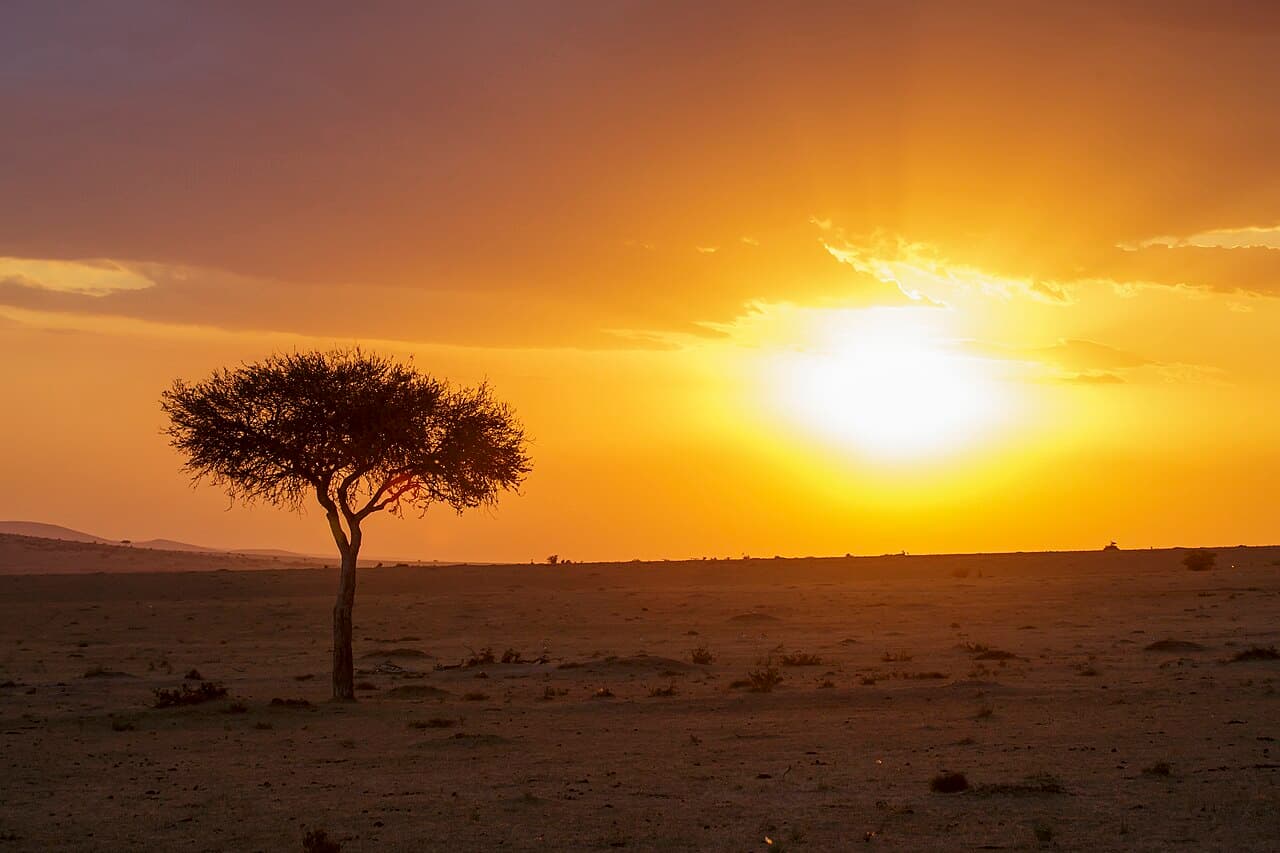
KenyaPhoto: Thomas Fuhrmann / Wikimedia Commons (CC BY-SA 4.0)

Kenya

Country · KE · KES · Africa/Nairobi

This information may change. Always check the official source.Last verified: August 2026 by

Everyone outside Africa needs an eTA before boarding: USD 30, applied for at etakenya.go.ke, allow at least two weeks. There is no visa counter at the airport and no way to fix this on arrival.

  • Kenya abolished the visa on arrival. Everyone outside Africa needs an eTA before boarding, and the airline checks it - there is no visa desk to fall back on.
  • It costs USD 30 at etakenya.go.ke, the only official site. Everything else is a reseller adding a fee.
  • Official processing is 3 to 5 working days, and the FCDO advises applying at least two weeks ahead. It grants a single entry of up to 90 days.
  • Leaving and coming back means a second eTA, so a Tanzania or Uganda side trip needs planning - or the East Africa Tourist Visa at USD 100 for three countries.
  • Passport valid 6 months with 2 blank pages, and children need their own eTA at the same price.
More details

The eTA, which is not a visa on arrival

Kenya abolished the visa on arrival. The Electronic Travel Authorisation replaced it, and the airline checks it before you board.

  • It costs USD 30, paid by card at etakenya.go.ke, which is the only official site. Everything else is a reseller adding a fee.
  • Official processing is 3 to 5 working days, most come back within 72 hours, and the FCDO advises applying at least two weeks ahead.
  • It grants a single entry and a stay of up to 90 days.
  • You need a photo of your passport, a passport-style photo, your flight details and your first night's accommodation.
  • Print it or save it offline. The airline asks for it at check-in, and immigration asks again.
  • Leaving and coming back means a second eTA, so a Tanzania or Uganda side trip needs planning.

Passport and the other paperwork

  • Passport valid at least 6 months beyond arrival, with at least 2 blank pages.
  • A yellow fever certificate is required if you are arriving from a country with transmission risk, and it is checked. Certificates are now valid for life rather than 10 years.
  • Children need their own eTA, at the same price.
  • The East Africa Tourist Visa at USD 100 covers Kenya, Uganda and Rwanda with multiple entries for 90 days. Apply through the country you land in first; it is the better buy for a three-country trip.

Who does not need one

  • All African nationals travel to Kenya visa-free since 14 July 2025, for up to 90 days, with Libya and Somalia the two exceptions.
  • East African Community citizens - Burundi, DR Congo, Rwanda, South Sudan, Tanzania, Uganda - get up to 180 days.
  • Everyone else needs the eTA, whatever their passport.

Where your nationality lands

Visa and entry in Kenya
You holdWhat you need
USA, Canada, Australia, UK, Germany, France, Italy, Spain, Netherlands, Poland, Japan, South Korea, China, India, Malaysia, Singapore, Taiwan, Russia, Saudi Arabia, CambodiaeTA before you fly, USD 30
Any African nationality except Libya and SomaliaNothing, 90 days visa-free
  • Overstaying carries a daily fine and can mean detention at the airport. Count the 90 days from the day you land.
Sources (2)

Plastic carrier bags are illegal in Kenya, including the one your duty-free came in - you surrender them at the airport.

  • Single-use plastic bags are banned. Visitors hand them over on arrival, the duty-free shops use paper, and the law behind it carries penalties severe enough that nobody tests them.
  • Ivory and wildlife trophies may not be taken out, and that includes items sold as antique or as bone. The penalties under the Wildlife Act are heavy.
  • The allowance is 200 cigarettes and a litre of spirits per adult, with a duty-free value cap on other goods.
  • Cash above the declarable threshold must be reported, in shillings or foreign currency.
  • Drones need authorisation from the civil aviation authority before they are brought in, and are otherwise confiscated.
More details
  • Single-use plastic bags are banned. Visitors hand them over on arrival, the duty-free shops use paper, and the law behind it carries penalties severe enough that nobody tests them.
  • Ivory and wildlife trophies may not be taken out, and that includes items sold as antique or as bone. The penalties under the Wildlife Act are heavy.
  • The allowance is 200 cigarettes and a litre of spirits per adult, with a duty-free value cap on other goods.
  • Cash above the declarable threshold must be reported, in shillings or foreign currency.
  • Drones need authorisation from the civil aviation authority before they are brought in, and are otherwise confiscated.
Sources (1)

Take antimalarials for the coast and the parks, get insurance that includes air evacuation, and use bottled water. Nairobi private hospitals are good; a bush camp is four hours from anywhere.

  • Most of the country is malarial - the coast, the lake region and the safari parks - though Nairobi at 1,700 m is low risk and the highlands are effectively free of it.
  • Take prophylaxis for the coast, the Mara, Tsavo and Lake Victoria, starting before you arrive, and still cover up at dusk and sleep under the net.
  • A fever within a year of coming home is malaria until proven otherwise. Tell the doctor where you have been.
  • Insurance must cover evacuation, not just treatment. AMREF Flying Doctors flies air ambulances out of Wilson and sells short-term cover - many camps include it, so ask yours.
  • Do not drink the tap water. Ice in hotels and lodges is made from treated water and is fine; a roadside stall is a gamble.
More details

Malaria

  • Most of the country is malarial, including the coast, the lake region and the safari parks.
  • Nairobi at 1,700 m is low risk and the highlands above 2,500 m are effectively free of it.
  • Take prophylaxis for the coast, the Mara, Tsavo and Lake Victoria. Malarone or doxycycline are the usual choices; start before you arrive.
  • The tablets are not a guarantee. Cover up at dusk, use repellent with DEET and sleep under the net.
  • A fever within a year of coming home is malaria until proven otherwise. Tell the doctor where you have been.

Vaccinations

  • Yellow fever is a legal entry requirement only if you are arriving from a country with transmission risk, and it is checked at immigration.
  • Hepatitis A, typhoid and tetanus are the standard recommendations.
  • Rabies is worth considering for a long trip or anywhere rural.
  • See a travel clinic 6 to 8 weeks before you go, because some courses take time.

Medical care and evacuation

  • Nairobi's private hospitals are very good: Nairobi Hospital, Aga Khan University Hospital, MP Shah.
  • Outside the cities, care is basic, and a safari camp may be hours from a clinic on a dirt road.
  • AMREF Flying Doctors flies air ambulances out of Wilson Airport and sells short-term cover to visitors. Many camps include it; ask yours.
  • Insurance must cover evacuation, not just treatment, and should name safari activities.
  • Treatment is paid up front. Carry the policy number and the assistance line.

Water, food and sun

  • Do not drink the tap water. Bottled or filtered, including for teeth.
  • Ice in hotels and lodges is made from treated water and is fine; a roadside stall is a gamble.
  • Cooked and hot is the rule for street food, and nyama choma from a busy place is safe and excellent.
  • The equatorial sun burns fast even at 20 °C in the highlands. Hat, sleeves, high-factor cream.
  • Nairobi is at altitude and a few visitors feel it for a day. Drink water and take the first afternoon slowly.
Sources (2)

Nairobi

Long-term averages for Nairobi: the mean daily high, the mean overnight low and the mean monthly rainfall across 30 years of ERA5 reanalysis data (1995–2024).

DayNight
1015202530°C0200mmJanFebMarAprMayJunJulAugSepOctNovDecJanuary: Day 26 °C, Night 14 °C, Rain 38 mm. February: Day 27 °C, Night 15 °C, Rain 37 mm. March: Day 27 °C, Night 16 °C, Rain 64 mm. April: Day 25 °C, Night 16 °C, Rain 132 mm. May: Day 23 °C, Night 15 °C, Rain 93 mm. June: Day 23 °C, Night 13 °C, Rain 36 mm. July: Day 22 °C, Night 12 °C, Rain 15 mm. August: Day 23 °C, Night 13 °C, Rain 24 mm. September: Day 25 °C, Night 13 °C, Rain 21 mm. October: Day 25 °C, Night 15 °C, Rain 54 mm. November: Day 24 °C, Night 15 °C, Rain 103 mm. December: Day 24 °C, Night 15 °C, Rain 56 mm
Show the monthly table
Nairobi
MonthDay (°C)Night (°C)Rain (mm)
January261438
February271537
March271664
April2516132
May231593
June231336
July221215
August231324
September251321
October251554
November2415103
December241556

Mombasa

Long-term averages for Mombasa: the mean daily high, the mean overnight low and the mean monthly rainfall across 30 years of ERA5 reanalysis data (1995–2024).

DayNight
20253035°C0200mmJanFebMarAprMayJunJulAugSepOctNovDecJanuary: Day 31 °C, Night 25 °C, Rain 32 mm. February: Day 31 °C, Night 25 °C, Rain 22 mm. March: Day 31 °C, Night 25 °C, Rain 68 mm. April: Day 29 °C, Night 25 °C, Rain 149 mm. May: Day 28 °C, Night 24 °C, Rain 165 mm. June: Day 27 °C, Night 23 °C, Rain 74 mm. July: Day 26 °C, Night 23 °C, Rain 58 mm. August: Day 27 °C, Night 22 °C, Rain 48 mm. September: Day 28 °C, Night 23 °C, Rain 47 mm. October: Day 29 °C, Night 23 °C, Rain 76 mm. November: Day 29 °C, Night 24 °C, Rain 94 mm. December: Day 30 °C, Night 25 °C, Rain 82 mm
Show the monthly table
Mombasa
MonthDay (°C)Night (°C)Rain (mm)
January312532
February312522
March312568
April2925149
May2824165
June272374
July262358
August272248
September282347
October292376
November292494
December302582

Maasai Mara

Long-term averages for Maasai Mara: the mean daily high, the mean overnight low and the mean monthly rainfall across 30 years of ERA5 reanalysis data (1995–2024).

DayNight
1015202530°C0200mmJanFebMarAprMayJunJulAugSepOctNovDecJanuary: Day 28 °C, Night 15 °C, Rain 81 mm. February: Day 29 °C, Night 15 °C, Rain 49 mm. March: Day 29 °C, Night 16 °C, Rain 94 mm. April: Day 27 °C, Night 15 °C, Rain 122 mm. May: Day 27 °C, Night 15 °C, Rain 64 mm. June: Day 26 °C, Night 15 °C, Rain 30 mm. July: Day 27 °C, Night 14 °C, Rain 10 mm. August: Day 27 °C, Night 15 °C, Rain 23 mm. September: Day 28 °C, Night 15 °C, Rain 31 mm. October: Day 29 °C, Night 16 °C, Rain 44 mm. November: Day 27 °C, Night 15 °C, Rain 113 mm. December: Day 27 °C, Night 15 °C, Rain 106 mm
Show the monthly table
Maasai Mara
MonthDay (°C)Night (°C)Rain (mm)
January281581
February291549
March291694
April2715122
May271564
June261530
July271410
August271523
September281531
October291644
November2715113
December2715106
Sources (1)

City hotels are ordinary and safe, and the safari lodge is the trip. Check whether park fees and conservancy fees are inside the nightly rate, because that is where the money is.

  • Ask whether the lodge rate includes park or conservancy fees. At USD 200 per person per day in the Mara from July, that is the difference between a good deal and a shock.
  • Ask whether game drives are included - some camps charge per drive and some include two a day.
  • Inside the reserve costs more and saves an hour of driving each way, and full board is the norm because there is nowhere else to eat.
  • July to October is the migration and the peak, with the highest prices and a busy Mara. Book months ahead for it.
  • Walking outside a camp at night is not allowed in unfenced areas, and an askari will escort you to your tent for good reason.
More details

The three kinds of stay

  • Nairobi hotels are business-standard and priced accordingly. Westlands and Kilimani for restaurants, the CBD for cheapness and not much else.
  • Safari camps and lodges run from KES 8,000 a night at a basic tented camp to several hundred dollars at a conservancy lodge, usually full board.
  • The coast is resorts at Diani and Watamu, boutique places in Lamu, and guesthouses everywhere between.

The question to ask before booking a safari lodge

  • Does the rate include park or conservancy fees? At USD 200 per person per day in the Mara from July, this is the difference between a good deal and a shock.
  • Does it include game drives? Some camps charge per drive and some include two a day.
  • Is it inside the reserve or outside the gate? Inside costs more and saves an hour of driving each way.
  • Full board is the norm in camps because there is nowhere else to eat.

Seasons

  • July to October is the migration and the peak. Prices are highest and the Mara is busy.
  • The long rains, roughly April and May, close some camps and cut prices hard elsewhere.
  • December and January are dry, hot and popular with families.
  • The coast is at its best from December to March; the long rains flood it.
  • Book the Mara for migration season months ahead. Everything good is taken.

Practical

  • Nairobi hotels have serious security: gates, scanners and bag checks. That is normal here rather than alarming.
  • Camps run on generators and solar, and power hours are limited. Charge at dinner.
  • Mosquito nets are standard in malaria areas and should be used, tucked in.
  • Walking outside a camp at night is not allowed in unfenced areas, and an askari will escort you to your tent for good reason.
  • Tipping is expected at lodges and is usually pooled.
Sources (2)

Buy a Safaricom SIM in the arrivals hall with your passport. It is not really about data: a Safaricom line is what gives you M-Pesa, and M-Pesa is how Kenya pays for things.

  • Buy a Safaricom SIM in the arrivals hall with your passport - registration is legally required and takes a few minutes at the counter.
  • Ask them to set up M-Pesa while you are standing there. A visitor can register with a passport, and it is much harder to arrange later.
  • M-Pesa is how the country actually pays - matatus, taxis, market stalls, park gates, tips. Card acceptance is limited to hotels, malls and restaurants.
  • Safaricom's Jambo tourist bundles are aimed at you, around KES 1,000 for 5 GB and 30 days; Airtel is cheaper for pure data and thinner off the highways.
  • Signal in the parks is present at lodges and gates and absent mid-game-drive, and everything north of Isiolo is thin.
More details

Do this at the airport

  • Safaricom and Airtel both have counters in the JKIA arrivals hall, open for the late arrivals.
  • Take your passport. Registration is legally required and is done at the counter in a few minutes.
  • Safaricom's Jambo tourist bundles are aimed at you: around KES 1,000 for 5 GB, several hundred minutes and 30 days.
  • Airtel is cheaper for pure data and thinner on coverage once you leave the highways.
  • Ask them to set up M-Pesa while you are standing there. A visitor can register with a passport, and it is much harder to arrange later.

Why M-Pesa matters more than the data

  • M-Pesa is how the country actually pays. Matatus, taxis, market stalls, park gates, tips, a soda at a petrol station.
  • You load cash onto the line at any agent - there is one on every street - and pay by phone number or till number.
  • Card acceptance is limited to hotels, malls and restaurants, and cash is increasingly awkward.
  • It works with a foreign passport and a local SIM, and this is the single most useful thing a visitor can arrange in their first hour.

Coverage

  • Safaricom's 4G covers Nairobi, Mombasa, the main roads and most of the safari areas including the Mara and Amboseli.
  • Signal in the parks is real but patchy - present at the lodges and the gates, absent in the middle of a game drive.
  • The north and northeast are thin. Assume nothing beyond Isiolo.
  • Wi-fi at safari lodges is common and slow, often satellite.

eSIM

  • Saily's Kenya plans run USD 7.99 for 1 GB over 7 days, USD 31.99 for 5 GB over 30 days and USD 47.99 for 10 GB.
  • An eSIM gives you data and not M-Pesa, which is the trade.
  • The sensible combination is an eSIM for the landing and a Safaricom SIM the same day, if you want to be online before you reach the counter.
Sources (2)

Kenyan sockets are British Type at 240 V, and a Europlug needs an adapter.

  • British plugs fit straight in. European, American and Australian ones need an adapter.
  • A Europlug has nothing to fit without one, which surprises travellers arriving from Ethiopia or Egypt.
  • 240 V is the top of the European band, harmless to any 230 V appliance; American 120 V-only equipment needs a converter.
  • Safari camps run on solar and generators, often charging only during set hours, and many provide 12 V or USB points rather than mains sockets in the tents.
  • Tanzania and Uganda use the same plug, so an East African circuit needs one adapter.
More details

Sockets in Kenya are Type at 240 V, 50 Hz - the British three-pin plug.

  • British plugs fit straight in. European, American and Australian ones need an adapter.
  • A Europlug has nothing to fit without one, which surprises travellers arriving from Ethiopia or Egypt.
  • 240 V is the top of the European band, harmless to any 230 V appliance; American 120 V-only equipment needs a converter.
  • Safari camps run on solar and generators, often charging only during set hours, and many provide 12 V or USB points rather than mains sockets in the tents.
  • Tanzania and Uganda use the same plug, so an East African circuit needs one adapter.
Sources (1)

Greetings come before business, plastic bags are illegal, and drones need a permit arranged before you fly in. Swahili opens doors that English does not.

  • Single-use plastic bags are banned, so do not pack your shoes in a carrier bag - and plastic bottles are banned inside national parks, where lodges refill yours.
  • Drones need civil aviation approval arranged before arrival plus an import permit, and are otherwise confiscated at the airport.
  • Greet before anything else - "habari" or "jambo", a handshake, a moment of small talk - before you ask a question or start a transaction.
  • The coast is Muslim, and Mombasa's Old Town, Lamu and the villages expect covered shoulders and knees away from the beach.
  • 240 V on type British three-pin sockets, with power cuts routine and a generator in anything worth staying in.
More details

Two laws that catch visitors out

  • Single-use plastic bags are banned and the penalties in the statute are enormous. Enforcement at the airport targets importers rather than tourists, but do not pack your shoes in a carrier bag, and take a cloth bag for shopping.
  • Plastic bottles and single-use plastics are banned inside national parks and reserves. Take a refillable bottle; the lodges refill it.
  • Drones need Kenya Civil Aviation Authority approval arranged before arrival, plus a temporary import permit, and Kenya Wildlife Service does not allow casual drone flying in parks. Equipment is confiscated at the airport otherwise.

Manners

  • Greet before anything else. "Habari" or "Jambo", a handshake, and a moment of small talk, before you ask a question or start a transaction.
  • "Asante" for thank you, "karibu" for you're welcome, "pole" for sorry. A little Swahili is received warmly.
  • Use the right hand for giving, receiving and eating.
  • Elders are greeted first and addressed respectfully.
  • "Pole pole" - slowly - is a genuine cultural setting, not an excuse. Schedules bend.

Dress and behaviour

  • Nairobi dresses smartly. Scruffy visitors stand out more than they expect.
  • The coast is Muslim and Mombasa's Old Town, Lamu and the villages expect covered shoulders and knees away from the beach.
  • Swimwear is for the beach and pool, not the street.
  • Public affection is not done, and for same-sex couples it carries legal risk.
  • Ask before photographing people, and expect to be asked for money at markets.

Practical

  • 240 V and type sockets, the British three-pin. Most lodges have a universal socket somewhere.
  • Power cuts are routine and everything worth staying in has a generator.
  • Kenya is UTC+3 and does not change clocks.
  • English and Swahili are both official, and English is spoken almost everywhere in tourism and business.
  • Swahili time is counted from sunrise, so "saa mbili" is 08:00. It rarely comes up but it explains a confusing conversation.
  • Bargaining is expected at markets and never at supermarkets, restaurants or fixed-price shops.
  • Do not give money to children, which entrenches begging over school; give to a project instead if you want to help.
Sources (2)

M-Pesa first, cash second, cards third. Bring US dollars printed in 2013 or later for anything priced in dollars, because older notes are refused outright.

  • M-Pesa first, cash second, cards third. Set up M-Pesa on day one and most daily friction disappears.
  • US notes printed before 2013 are refused across East Africa because of counterfeit history. Bring new, clean, large-denomination bills for anything priced in dollars.
  • ATM fees run KES 200 to KES 500 per withdrawal with limits of KES 20,000 to KES 40,000, and you should use machines inside a bank or mall in daylight.
  • Keep small notes - KES 50, 100 and 200 - for tips, matatus and market stalls.
  • Tip a safari guide KES 1,500 to KES 3,000 a day, in shillings rather than dollars, which the recipient would otherwise have to go and change.
More details

The three ways to pay

  • M-Pesa is first. Set it up on your Safaricom line on day one and most daily friction disappears.
  • Cash in shillings is second. Keep small notes: KES 50, 100 and 200 for tips, matatus and market stalls.
  • Cards are third and work in hotels, supermarkets, malls and better restaurants. Nowhere else assumes them.
  • KWS park gates take cards and mobile money and no cash at all.

Dollars, and the 2013 rule

  • Safaris, park fees, dive shops and some hotels quote in US dollars.
  • US notes printed before 2013 are refused across East Africa because of counterfeit history. Bring new, clean, large-denomination bills.
  • Small dollar bills get a worse rate than large ones at bureaux, which is a local quirk worth knowing.
  • Change dollars at a forex bureau in town, not at the airport or a hotel.

ATMs

  • Equity, KCB, Absa and Standard Chartered machines all take foreign cards.
  • Fees run KES 200 to KES 500 per withdrawal, plus your own bank's charge.
  • Withdrawal limits are usually KES 20,000 to KES 40,000 per transaction.
  • Use machines inside bank branches, malls or hotels, in daylight. Card skimming and follow-out robberies both happen.
  • Always choose to be charged in shillings when the machine offers to convert.

Tipping

  • Safari guide: KES 1,500 to KES 3,000 per day from the vehicle, more if they were exceptional.
  • Lodge staff: a tip box at reception is the usual arrangement, split among everyone.
  • Restaurants: 10%, and check whether a service charge is already on the bill.
  • Porters and drivers: KES 200 to KES 500.
  • Tipping in shillings is more useful to the recipient than dollars, which they must go and change.

Costs

  • Kenya is not a cheap country once safari is involved. Park fees and lodges are priced for an international market.
  • Everyday life is inexpensive: a plate of nyama choma and ugali, a matatu ride, a Tusker at a local bar.
  • VAT is 16% and is usually included in the price you see; hotels add a tourism levy on top.
Sources (2)

Everyday prices

Typical prices in Kenyan shilling (KES), averaged across the country by Numbeo and read on 13 August 2026. Tick Convert prices above the table to see every amount in your own currency.

Everyday prices
ItemTypical price
Inexpensive restaurant meal500 KES
Dinner for two, mid-range, three courses4,000 KES
Cappuccino320 KES
Local draught beer, 0.5 l300 KES
Bottled water, 0.33 l67 KES
Public transport, one-way ticket100 KES
Taxi, starting fare200 KES
Petrol, 1 litre193 KES
Cigarettes, pack of 20 (Marlboro)415 KES
Average net monthly salary45,600 KES

These are country-wide averages, not a price list: tourist districts, airports and islands sit well above them, and small towns below. The salary line is there for proportion - it is what people living here actually earn.

Sources (1)

Airport guides for Kenya1

One page per airport: the routes into town, what they cost and the trap particular to that arrival.

See all 1 airports

Uber or Bolt from JKIA runs KES 800 to KES 1,500 off-peak against KES 2,500 for the airport taxi. Take Mombasa Road or the Expressway; the FCDO says avoid the old Airport South Road.

  • Uber or Bolt runs KES 800 to KES 1,500 off-peak against KES 2,500 to KES 3,000 at the airport taxi rank - but it surges hard in rush hour.
  • Take Mombasa Road or the Nairobi Expressway. The FCDO specifically advises against the old Airport South Road because of carjacking.
  • The airport is 18 km from the centre and traffic decides everything - the same trip is 25 minutes or 90.
  • Almost every safari flight leaves from Wilson Airport, not JKIA, and Wilson is 20 km across the city - allow three hours between them.
  • Wilson's light aircraft enforce a 15 kg soft-bag limit, which is a rule rather than a suggestion.
More details
Jomo Kenyatta (NBO) to Nairobi
Transport from the airport in Kenya
OptionCostTimeNotes
Uber or BoltKES 800 to KES 1,500 off-peak30 to 60 minSurges hard in rush hour, to KES 3,000 and beyond
Airport taxi at the rankKES 2,500 to KES 3,000 to the CBD30 to 60 minFixed, metered by agreement, always available
Hotel transferKES 3,500 to KES 5,00030 to 60 minThe calm option on a first night
SGR link from Syokimaufrom KES 100-Only useful if you are heading straight for the Mombasa train
  • The airport is 18 km from the centre and traffic decides everything. Nairobi congestion is not a joke; the same trip is 25 minutes or 90.
  • Take Mombasa Road or the Nairobi Expressway. The FCDO specifically advises against the old Airport South Road because of carjacking.
  • The Expressway toll is KES 120 to KES 330 depending on distance, and is included in what a taxi quotes if you ask for it.
  • Ride-hailing pickup is from the designated bay, a short walk from arrivals; the driver will call.
The first hour, in order
  • Immigration wants your eTA and your passport. There is no visa desk to fall back on.
  • ATMs and forex counters are past baggage, and Barclays/Absa and Equity machines are the reliable ones.
  • The SIM counter is in the same hall. Buy the SIM and set up M-Pesa before you leave.
  • Take some cash but not much: KES 5,000 covers the taxi and the first day.
  • Fake taxi touts operate outside the doors. Use the app or the official rank, never the man who approaches you.
Wilson Airport, which is the one nobody expects
  • Almost every safari flight leaves from Wilson (WIL), not from JKIA. Mara, Amboseli, Samburu, Lamu, Diani.
  • Wilson is 20 km across the city from JKIA, an hour in traffic on a bad morning.
  • If you land at JKIA and fly to the Mara the same day, allow three hours between them, or arrange a transfer through your safari operator.
  • Wilson's baggage limit is 15 kg in soft bags on the light aircraft, which is a rule the airlines enforce.
Mombasa and the coast
  • Moi International (MBA) is 10 km from Mombasa, KES 1,500 to KES 2,500 by taxi.
  • Diani has its own airstrip (UKA) and it is much closer than Mombasa to the south coast hotels.
  • The Likoni ferry between Mombasa island and the south coast is free for foot passengers and both the FCDO and every local will tell you to be careful in the crowds.
Sources (2)

The Madaraka Express to Mombasa is comfortable and cheap and sells out. Safari parks are the real cost: the Maasai Mara is USD 200 per person per day from July to December 2026.

  • The Madaraka Express runs Nairobi to Mombasa in about 5 to 6 hours, economy around KES 1,500 and first class around KES 4,500. It sells out in holiday season.
  • Nairobi's terminus is at Syokimau, near the airport rather than in town - allow 45 minutes to reach it, and sit on the right heading to the coast.
  • Park fees dominate a Kenya budget. The Maasai Mara charges non-residents USD 100 per person per day January to June and USD 200 from July.
  • Kenya Wildlife Service parks are cashless - gates take cards and mobile money, not notes, and a party arriving with only dollars gets turned around.
  • Do not drive at night outside the cities, and treat boda boda motorbike taxis as the biggest single cause of trauma admissions - take the helmet.
More details

The Mombasa train

  • The Madaraka Express runs Nairobi to Mombasa in about 5 to 6 hours, three departures a day around 08:00, 15:00 and 22:00.
  • Economy is about KES 1,500 and first class about KES 4,500.
  • Book at metickets.krc.co.ke or at the station. It sells out in holiday season, and touts resell tickets at the door.
  • Nairobi Terminus is at Syokimau, near the airport rather than in town - allow 45 minutes to reach it.
  • It is the best value long-distance journey in the country and it crosses Tsavo, so sit on the right heading to the coast.

Safari, and what it actually costs

  • Park fees dominate a Kenya budget. The Maasai Mara National Reserve charges non-residents USD 100 per person per day from January to June 2026 and USD 200 from July to December, and children pay half.
  • The Mara Triangle, run separately, is USD 70 per adult per 24 hours, and the private conservancies around the reserve charge their own nightly conservancy fee.
  • Kenya Wildlife Service parks are cashless. Gates take cards and mobile money, not notes, and a party arriving with only dollars gets turned around.
  • A day in the Mara is a day, not 24 hours in most gates' reckoning, so a two-night stay usually means three days of fees. Ask your operator to price it in writing.
  • Do not buy a safari from a tout in Nairobi. Book with a licensed operator, and check them against the Kenya Association of Tour Operators.

Roads and buses

  • Do not drive at night outside the cities. Unlit trucks, potholes and livestock, and the FCDO says the same.
  • Matatus are the minibus network: cheap, fast, decorated and driven accordingly. Locals use them and visitors mostly should not, especially with luggage.
  • Long-distance coaches are a better bet. Modern Coast, Easy Coach and similar run the main routes with fixed seats and fixed times.
  • Boda bodas - motorbike taxis - are the fastest way across Nairobi and the biggest single cause of trauma admissions. If you take one, take the helmet.
  • Driving is on the left. An International Driving Permit is expected and a hired car with a driver costs little more than a self-drive.

Domestic flights

  • Jambojet, Safarilink and AirKenya cover the safari circuit and the coast from Wilson Airport.
  • Fares are reasonable and luggage limits are not: 15 kg in soft bags on light aircraft.
  • Book flights and park fees together through your operator if you can, because gate payment fails at the worst moment.

Apps worth having

  • Uber, Bolt and Little for rides in Nairobi and Mombasa.
  • M-Pesa for everything else.
  • Maps offline, since coverage disappears in the parks.
  • Kenya Railways' ticket site for the Mombasa train.
Sources (3)

Kenya drives on the left, the Nairobi Expressway is the one toll, and matatus define how the traffic behaves.

  • The Nairobi Expressway is tolled and saves an hour between the airport and Westlands at rush hour; everything else is free.
  • Matatus stop without warning in the left lane and overtake on the verge. Defensive driving here mostly means watching them.
  • The alcohol limit is 0.08 % and police checkpoints are frequent, particularly at night.
  • Night driving between towns is avoided by residents: unlit trucks, potholes and livestock.
  • Safari parks need a 4x4 and most visitors travel in a guide's vehicle, which also handles the park regulations and the radio network.
More details

Left-hand traffic, one tolled expressway, and minibuses that stop wherever they like.

  • The Nairobi Expressway is tolled and saves an hour between the airport and Westlands at rush hour; everything else is free.
  • Matatus stop without warning in the left lane and overtake on the verge. Defensive driving here mostly means watching them.
  • The alcohol limit is 0.08 % and police checkpoints are frequent, particularly at night.
  • Night driving between towns is avoided by residents: unlit trucks, potholes and livestock.
  • Safari parks need a 4x4 and most visitors travel in a guide's vehicle, which also handles the park regulations and the radio network.
Sources (1)

The northeast near Somalia is off limits and the tourist circuit is not. In Nairobi, take the mugging risk seriously after dark, and stay away from protests.

  • The FCDO advises against all travel to Mandera County, most of Garissa County and Lamu County apart from Lamu and Manda islands.
  • Nairobi, Mombasa, Diani, Watamu, the Maasai Mara, Amboseli, Tsavo and Naivasha carry no such restriction - but check before booking, because the boundaries move and your insurance follows them.
  • Do not walk at night in Nairobi. Take a taxi or ride-hail even for three blocks; residents do.
  • Protests are common in Nairobi and can turn violent quickly, with police using tear gas and live rounds. Avoid the CBD on days one is called.
  • Hippos and buffalo kill more people than lions, and both are around lodges at dusk. Stay in the vehicle unless the guide says otherwise.
More details

Where not to go

  • The FCDO advises against all travel to Mandera County, to parts of Wajir County within 60 km of the Somali border, to most of Garissa County, and to Lamu County apart from Lamu Island and Manda Island.
  • It advises against all but essential travel to Garissa Town, to Tana River County north of the river as far as Saka, and to a 15 km strip of the east coast between the Tana and Galana rivers.
  • Nairobi, Mombasa, Diani, Watamu, the Maasai Mara, Amboseli, Tsavo, Naivasha and Nakuru are all outside those areas and carry no such restriction.
  • Check the advice before you book, because the boundaries move and your insurance follows them.

Crime

  • Mugging and bag snatching are the common risks in Nairobi's CBD and around Eastleigh, and in Mombasa's Old Town and by the Likoni ferry.
  • Do not walk at night in Nairobi. Take a taxi or a ride-hail even for three blocks; residents do.
  • Carjacking happens, usually at junctions and gates. Keep doors locked and windows up in traffic, and hand over the car.
  • Do not display a phone in traffic or on the street, and carry a decoy amount of cash.
  • ATM skimming and follow-outs are real. Withdraw inside a bank or mall.

Terrorism and protests

  • Al Shabaab attacks have targeted hotels, malls and public places, and the threat is officially assessed as high.
  • Protests are common in Nairobi and can turn violent quickly, with police using tear gas and live rounds. The demonstrations that began in June 2024 have recurred on their anniversaries.
  • Avoid demonstrations entirely and avoid the CBD on days one is called.
  • Follow local news and your embassy's alerts, since roads close with no notice.

Roads and wildlife

  • Road accidents are the single biggest cause of injury to visitors. Night driving, matatus and boda bodas concentrate the risk.
  • Wear the helmet on a boda boda or do not get on it.
  • Wild animals are wild. Stay in the vehicle unless the guide says otherwise, do not stand up through the roof at close range, and never walk in an unfenced camp at night.
  • Hippos and buffalo kill more people than lions. Both are around lodges at dusk.

Practical

  • Carry a photocopy of your passport and eTA, not the originals.
  • Police checks happen on the roads and are routine; be polite and produce documents.
  • Same-sex relationships are criminalised in Kenya and public affection carries real legal and social risk. This is a matter of law, not of local mood.
  • Do not photograph police, soldiers, airports or government buildings.
Sources (2)

999 and 112 both reach the emergency services, and neither is fast. On safari, the camp and your evacuation cover are the real emergency service.

  • 999 and 112 both reach the emergency services, and neither is fast - response times vary enormously.
  • Private ambulance services are what people actually call in Nairobi, and hotels have their numbers.
  • On safari, your camp radios its operator and your evacuation cover does the rest. There is no ambulance coming to the Mara.
  • Give your camp your insurer's number on arrival, not when something happens.
  • For theft, insist on an abstract - the written police report insurers require - and note it may carry a small fee.
More details

The numbers

Emergency information in Kenya
ServiceNumber
Police, ambulance, fire999 or 112
Police, alternative911
St John Ambulance0721 225 285
Kenya Red Cross emergency1199
  • 999 and 112 both work and reach the same operators. Response times vary enormously.
  • Private ambulance services are what people actually call in Nairobi, and hotels have their numbers.
  • On safari, your camp radios its operator and your evacuation cover does the rest. There is no ambulance coming to the Mara.
  • Give your camp your insurer's number on arrival, not when something happens.

If something goes wrong

  • Theft: report it at the nearest police station and insist on an abstract, the written report insurers require. It may carry a small fee.
  • A lost passport means the police abstract first, then your embassy in Nairobi.
  • In a road accident, do not move the vehicles and call the police; crowds gather quickly and leaving the scene is worse.
  • If you are robbed, hand it over. Nothing you are carrying is worth a fight.

Worth saving now

  • Your insurer's 24-hour assistance line and policy number.
  • AMREF Flying Doctors' control centre, if you have their cover.
  • Your embassy in Nairobi, most of which are in Gigiri or Upper Hill.
  • Your safari operator's out-of-hours number, which is the one that answers.
  • Kenya's country code is +254, and mobile numbers start 07 or 01.
Sources (3)