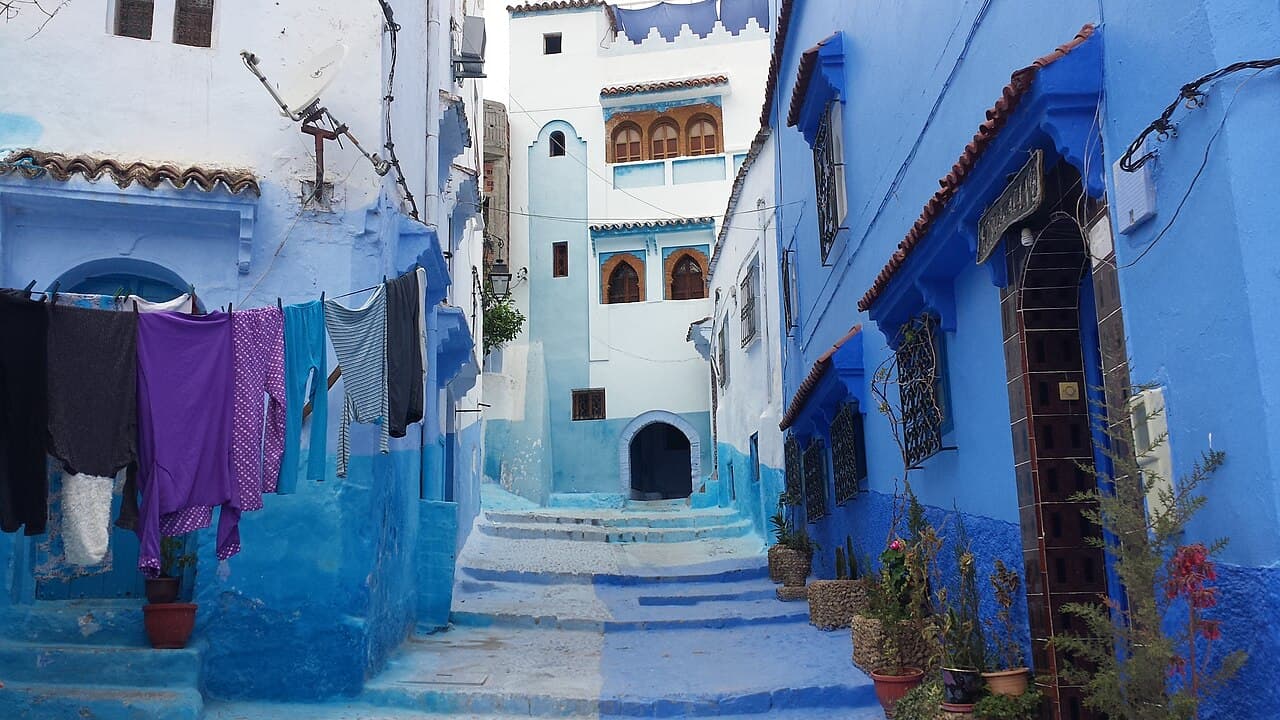
MoroccoPhoto: Allenfleming / Wikimedia Commons (CC BY-SA 4.0)

Morocco

Country · MA · MAD · Africa/Casablanca

This information may change. Always check the official source.Last verified: August 2026 by

90 days visa free for most Western and many Asian passports. The thing that actually gets confiscated at the border is a drone, and the rule is absolute.

  • 90 days visa free for the EU, UK, USA, Canada, Australia, Japan and around 70 nationalities in total: a stamp on arrival, no fee, no form beforehand.
  • Your passport must be valid 3 months beyond arrival, and the 90 days count per entry rather than as a rolling window.
  • India, Cambodia and Taiwan need a visa before travel. The e-visa costs roughly MAD 770, must be applied for at least 96 hours ahead and gives one entry of up to 30 days.
  • Drones are banned outright, sub-250 g models included. X-ray scanners find them, customs takes them, and there is no tourist permit.
  • You may carry no more than 2,000 dirhams in or out, and foreign cash worth about USD 10,000 must be declared in both directions.
More details

Most visitors need no visa

  • 90 days, visa free, for tourism. That covers the EU and Schengen states, the UK, the USA, Canada, Australia, New Zealand, Japan, South Korea, China, Russia, Malaysia, Singapore and the Gulf states, among about 70 nationalities in total.
  • You get a stamp on arrival and there is no fee and no form to fill in beforehand.
  • Your passport must expire at least 3 months after you arrive.
  • There is no 90 day rolling window here. It is 90 days per entry, and leaving and returning starts a new one, though repeatedly doing so invites questions.
  • Overstaying means a fine and a hold-up at the airport on the way out, dealt with by the police rather than the airline.

Where your nationality lands

Visa and entry in Morocco
You holdWhat you need
USA, Canada, Australia, UK, Germany, France, Italy, Spain, Netherlands, Poland, Japan, South Korea, Malaysia, Singapore, China, Russia, Saudi ArabiaNo visa. 90 days
India, CambodiaElectronic visa (AEVM) before travel
TaiwanConsular visa in advance
  • The e-visa is applied for online before departure, at least 96 hours ahead, and gives a single entry of up to 30 days.
  • It costs roughly MAD 770 for standard processing, more for express, and is valid 180 days from issue.
  • A conditional e-visa route exists for some nationalities who hold a valid Schengen, UK, US, Canadian, Australian, Japanese, New Zealand or UAE visa or residence permit. Check whether it applies to you before paying for a consular appointment.
  • Start at acces-maroc.ma, the government's own eligibility checker, which tells you which route you are on and sends you to the official application.
  • Only apply through the official government portal. The search results are full of agencies charging several times the real fee.

Leave the drone at home

This is the single most common expensive mistake at Moroccan airports.

  • Drones are banned for recreational use and have been since 2015. All of them, including sub-250 g models.
  • X-ray scanners find them and customs takes them.
  • Declared on arrival, it is held in storage for a fee and returned when you leave. Undeclared, you face a fine and may lose it entirely.
  • There is no tourist permit. Import licences exist and are effectively never granted to visitors.
  • Do not pack one "just in case". It will be found.

Other border rules

  • You may bring in or take out no more than 2,000 dirhams. The dirham is a controlled currency.
  • Foreign cash worth 100,000 dirhams or more, about USD 10,000, must be declared in both directions.
  • Satellite phones and professional radio equipment need authorisation.
  • Anything that looks like professional filming kit can attract questions, so a large camera rig is worth being ready to explain.
  • Israel stamps are not a problem. Morocco and Israel have had normalised relations since 2020.
Sources (3)

The dirham is a closed currency you cannot take home, and drones are confiscated on arrival whatever paperwork you have.

  • The dirham is non-convertible. It cannot be exchanged abroad, so change back what you have before you leave - and there is a limit on how much you may carry out.
  • Foreign currency worth 100,000 dirhams or more must be declared on entry and on exit, roughly GBP 8,000.
  • Drones are taken at the border. Customs at Casablanca and Marrakech confiscate them from tourists as a matter of routine, and recovering one is slow enough that people give up.
  • The allowance is 200 cigarettes and a litre of spirits per adult. Alcohol is sold to non-Muslims in supermarkets, though not near mosques or on religious holidays.
More details
  • The dirham is non-convertible. It cannot be exchanged abroad, so change back what you have before you leave - and there is a limit on how much you may carry out.
  • Foreign currency worth 100,000 dirhams or more must be declared on entry and on exit, roughly GBP 8,000.
  • Drones are taken at the border. Customs at Casablanca and Marrakech confiscate them from tourists as a matter of routine, and recovering one is slow enough that people give up.
  • The allowance is 200 cigarettes and a litre of spirits per adult. Alcohol is sold to non-Muslims in supermarkets, though not near mosques or on religious holidays.
  • Cannabis is illegal to export. It is grown openly in the Rif, and the ferries to Spain and the Ceuta and Melilla crossings are searched for it - those crossings are EU external frontiers, so the EU allowance applies there too.
  • Defacing or passing fraudulent banknotes carries a prison sentence, which is worth knowing before you scribble on a note.
Sources (1)

No vaccinations required, no malaria, and a good private system in the cities. Do not drink the tap water, and take travel insurance seriously because there is no reciprocal health agreement.

  • No vaccinations are required and there is no malaria, though hepatitis A and typhoid are commonly recommended for a trip involving street food.
  • There is no reciprocal healthcare agreement - no EHIC, no GHIC. You pay, so take insurance that covers repatriation from the Atlas or the desert.
  • Private clinics in Casablanca, Rabat, Marrakech and Tangier are good and expect payment up front. Public hospitals are cheap and stretched, and facilities outside the cities are basic.
  • Do not drink the tap water. Bottled water is cheap everywhere, and the busy stalls in Jemaa el-Fna are fine - turnover is the safety mechanism, so pick the queue.
  • Marrakech and the south reach 45 °C in July and August, the desert is cold at night, and Toubkal at 4,167 m makes altitude sickness a real risk on the trek.
More details

Before you go

  • No vaccinations are required to enter Morocco.
  • Routine ones should be up to date, and hepatitis A and typhoid are commonly recommended for a trip involving street food.
  • There is no malaria in Morocco.
  • Rabies exists. Street dogs and cats are everywhere, and any bite or scratch needs immediate medical attention.
  • There is no reciprocal healthcare agreement with anywhere. No EHIC, no GHIC. You pay.
  • Get insurance that covers repatriation. A serious problem in the Atlas or the desert means a long journey to a hospital.

Getting treated

  • Private clinics in Casablanca, Rabat, Marrakech and Tangier are good and staffed by French-trained doctors.
  • They expect payment up front, often in cash or by card before treatment. Keep receipts for your insurer.
  • Public hospitals are free or cheap and stretched. Fine for an emergency, not what you want for anything complicated.
  • Outside the cities, medical facilities are basic. In the mountains and the desert, evacuation is the plan.
  • Pharmacies ("pharmacie") are well stocked and pharmacists are qualified to advise. Many medicines that need a prescription elsewhere are sold over the counter.
  • A duty pharmacy rota covers nights and holidays, posted on the door.

Water and food

  • Do not drink the tap water. It is chlorinated and locals drink it, but it will upset a visiting stomach.
  • Bottled water is cheap and everywhere. Sidi Ali and Oulmès are the common brands.
  • Avoid ice in small places and unpeeled salads for the first few days.
  • Street food in Jemaa el-Fna is fine at the busy stalls. Turnover is the safety mechanism: pick the queue.
  • Fresh orange juice is a Moroccan institution and safe at the marked stalls. Watch it being squeezed.
  • Travellers' diarrhoea is the most likely thing to happen to you. Rehydration salts from any pharmacy, and rest.

Heat and altitude

  • Marrakech and the south reach 45 °C in July and August. Plan the day around a long afternoon indoors, as everyone local does.
  • The desert is cold at night, even after a 40 °C day.
  • Toubkal is 4,167 m and altitude sickness on the trek is common. Ascend slowly and turn back if it worsens.
  • Sun in the mountains and the desert is severe. Cover up rather than rely on sunscreen alone.
Sources (2)

Marrakech

Long-term averages for Marrakech: the mean daily high, the mean overnight low and the mean monthly rainfall across 30 years of ERA5 reanalysis data (1995–2024).

DayNight
010203040°C050mmJanFebMarAprMayJunJulAugSepOctNovDecJanuary: Day 18 °C, Night 4 °C, Rain 34 mm. February: Day 20 °C, Night 5 °C, Rain 32 mm. March: Day 23 °C, Night 7 °C, Rain 37 mm. April: Day 25 °C, Night 10 °C, Rain 37 mm. May: Day 28 °C, Night 13 °C, Rain 17 mm. June: Day 32 °C, Night 16 °C, Rain 6 mm. July: Day 37 °C, Night 19 °C, Rain 3 mm. August: Day 36 °C, Night 19 °C, Rain 6 mm. September: Day 31 °C, Night 17 °C, Rain 11 mm. October: Day 28 °C, Night 13 °C, Rain 22 mm. November: Day 22 °C, Night 8 °C, Rain 34 mm. December: Day 19 °C, Night 5 °C, Rain 30 mm
Show the monthly table
Marrakech
MonthDay (°C)Night (°C)Rain (mm)
January18434
February20532
March23737
April251037
May281317
June32166
July37193
August36196
September311711
October281322
November22834
December19530

Casablanca

Long-term averages for Casablanca: the mean daily high, the mean overnight low and the mean monthly rainfall across 30 years of ERA5 reanalysis data (1995–2024).

DayNight
51015202530°C0100mmJanFebMarAprMayJunJulAugSepOctNovDecJanuary: Day 18 °C, Night 9 °C, Rain 47 mm. February: Day 18 °C, Night 10 °C, Rain 39 mm. March: Day 21 °C, Night 11 °C, Rain 38 mm. April: Day 22 °C, Night 13 °C, Rain 30 mm. May: Day 24 °C, Night 15 °C, Rain 16 mm. June: Day 27 °C, Night 18 °C, Rain 4 mm. July: Day 29 °C, Night 19 °C, Rain 1 mm. August: Day 29 °C, Night 20 °C, Rain 1 mm. September: Day 28 °C, Night 19 °C, Rain 10 mm. October: Day 26 °C, Night 17 °C, Rain 33 mm. November: Day 21 °C, Night 13 °C, Rain 51 mm. December: Day 19 °C, Night 10 °C, Rain 49 mm
Show the monthly table
Casablanca
MonthDay (°C)Night (°C)Rain (mm)
January18947
February181039
March211138
April221330
May241516
June27184
July29191
August29201
September281910
October261733
November211351
December191049

Agadir

Long-term averages for Agadir: the mean daily high, the mean overnight low and the mean monthly rainfall across 30 years of ERA5 reanalysis data (1995–2024).

DayNight
101520253035°C0100mmJanFebMarAprMayJunJulAugSepOctNovDecJanuary: Day 20 °C, Night 11 °C, Rain 36 mm. February: Day 22 °C, Night 12 °C, Rain 45 mm. March: Day 23 °C, Night 13 °C, Rain 41 mm. April: Day 24 °C, Night 15 °C, Rain 19 mm. May: Day 27 °C, Night 16 °C, Rain 7 mm. June: Day 29 °C, Night 18 °C, Rain 1 mm. July: Day 32 °C, Night 21 °C, Rain 0 mm. August: Day 32 °C, Night 21 °C, Rain 1 mm. September: Day 29 °C, Night 20 °C, Rain 5 mm. October: Day 27 °C, Night 18 °C, Rain 28 mm. November: Day 24 °C, Night 15 °C, Rain 44 mm. December: Day 21 °C, Night 12 °C, Rain 55 mm
Show the monthly table
Agadir
MonthDay (°C)Night (°C)Rain (mm)
January201136
February221245
March231341
April241519
May27167
June29181
July32210
August32211
September29205
October271828
November241544
December211255
Sources (1)

Stay in a riad in the medina at least once. Just understand that no vehicle can reach the door, and arrange the last 200 metres before you arrive.

  • A riad is a courtyard house turned guesthouse, and in Marrakech and Fez it is the reason to visit. No car can reach the door: medina lanes are too narrow and the taxi stops at a gate.
  • Arrange a meet at the gate for your first night. Without one, someone will offer to guide you in and want MAD 100 to MAD 200 at the door.
  • Save the riad's phone number and a photo of the entrance. Medina addresses are not navigable, and a porter with a cart for your suitcase is a fair MAD 20 to MAD 50.
  • Your passport is taken at check-in and your details registered with the authorities - every property is required to do it.
  • Riad rooms can be cold in winter and air conditioning is essential from June to September, when Marrakech reaches 45 °C.
More details

Riads and the last 200 metres

  • A riad is a traditional house built around a courtyard, converted to a small guesthouse. In Marrakech and Fez they are the reason to visit.
  • No car can reach one. Medina lanes are too narrow, and your taxi stops at a gate.
  • Arrange a meet-in-advance. Every riad will send someone to the nearest square or gate if you tell them your arrival time. Do this for your first night, without exception.
  • If you do not, someone will offer to guide you and will want MAD 100 to MAD 200 at the door.
  • Save the riad's phone number and a photo of the entrance. Addresses in a medina are not navigable and the signage is minimal.
  • A porter with a cart for your suitcase is a normal, fair service and costs MAD 20 to MAD 50. Agree it first.

Other options

  • Hotels in the ville nouvelle are conventional, drivable and duller. Gueliz in Marrakech, the Hivernage district, the Agdal in Rabat.
  • Beach resorts at Agadir and Essaouira are all-inclusive in style and completely different in feel from the interior.
  • Desert camps at Merzouga and Zagora range from a mattress under canvas to a luxury tent with plumbing. Book through a reputable operator rather than in the street.
  • Mountain gîtes in the High Atlas are simple, warm and often the best food you will eat.

Practical notes

  • Your passport is taken at check-in and your details registered with the authorities. That is required of every property.
  • Riad rooms can be cold in winter. The Atlas gets snow and traditional houses are built for summer, not January.
  • Air conditioning is essential in Marrakech from June to September, when 45 °C happens.
  • Ramadan changes hotel service, with restaurants closed during daylight, though hotels catering to tourists keep serving.
  • Unmarried couples: Moroccan law restricts unmarried Moroccan couples from sharing a room. It does not apply to foreign visitors, and hotels do not ask.
Sources (2)

A local SIM is cheap, about MAD 50 to MAD 100 for plenty of data, and worth having because your EU roaming allowance does not reach Morocco.

  • EU roaming stops at the Mediterranean. Morocco is charged at international rates, so check your operator's price or keep data off until you have a local SIM.
  • MAD 50 to MAD 100 buys a tourist package with 10 GB to 30 GB and a few weeks of validity from Maroc Telecom (IAM), Orange or Inwi.
  • Bring your passport: SIMs are registered and the shop scans it. All three networks have desks in arrivals at Casablanca, Marrakech and Agadir.
  • eSIM works on all three networks and through Saily, which avoids the registration paperwork entirely.
  • 4G is solid in cities and on main roads, but the High Atlas and the desert have real gaps - download offline maps of Fez and Marrakech before you go.
More details

Morocco is not in EU roaming

  • Your "roam like at home" allowance stops at the Mediterranean. Morocco is not in the EU and roaming here is charged at international rates.
  • Check your operator's Morocco rate before you land, or turn data off until you have a local SIM.
  • This catches Spanish and French visitors constantly, because Tangier is 14 km from Europe and the phone behaves as if it is much further away.

Buying a SIM

  • Maroc Telecom (IAM), Orange and Inwi are the three networks. Maroc Telecom has the best rural and desert coverage.
  • MAD 50 to MAD 100 buys a tourist package with 10 GB to 30 GB and a few weeks of validity.
  • Bring your passport. SIMs are registered and the shop will scan it.
  • All three have desks in the arrivals halls at Casablanca, Marrakech and Agadir, open for arriving flights.
  • Buy from an official shop or the airport desk, not from a stall in the medina, where an already-registered SIM can be sold to you.
  • eSIM is supported by all three networks and by Saily, which avoids the paperwork entirely.

Coverage

  • 4G is good in cities, along the coast and on the main roads. 5G is arriving in Casablanca, Rabat and Marrakech.
  • The High Atlas and the desert have real gaps. On the Merzouga and Zagora routes you will lose signal for long stretches.
  • Riads in the medina often have thick walls and weak signal but usually good wifi.
  • Download offline maps of the medinas. Fez and Marrakech are exactly where a map matters and exactly where the signal drops.
Sources (2)

Moroccan sockets are Type and at 220 V, the French pattern, and older medina buildings are often unearthed.

  • A Europlug fits everywhere, and a French plug fits the earthed sockets.
  • A bare Schuko plug may not enter an earthed socket because of the pin in the middle; the hybrid European plug does.
  • British, American and Australian plugs need an adapter.
  • Riads in the old medinas are frequently wired with unearthed two-pin sockets, whatever the room looks like.
  • 220 V behaves the same as 230 V for anything built for Europe; American 120 V-only appliances need a converter.
More details

Sockets in Morocco are Type and at 220 V, 50 Hz - the French standard, a legacy of the protectorate wiring.

  • A Europlug fits everywhere, and a French plug fits the earthed sockets.
  • A bare Schuko plug may not enter an earthed socket because of the pin in the middle; the hybrid European plug does.
  • British, American and Australian plugs need an adapter.
  • Riads in the old medinas are frequently wired with unearthed two-pin sockets, whatever the room looks like.
  • 220 V behaves the same as 230 V for anything built for Europe; American 120 V-only appliances need a converter.
Sources (1)

French gets you further than English, Friday afternoon is quiet, and dressing modestly changes how the whole trip feels for the better.

  • French will get you further than English almost everywhere, including shops, banks and taxis. Spanish is widely spoken in the north around Tangier and Tetouan.
  • "Salam" for hello, "shukran" for thank you, "la shukran" for no thank you - that last one is the most useful phrase in the country.
  • Modest dress makes the trip easier, shoulders and knees covered in the medina. No headscarf is expected, and most mosques are closed to non-Muslims.
  • Friday is the main prayer day and many shops and offices shut for a couple of hours around midday, though the souks work every day.
  • Plugs are type and at 220 V, and Morocco stays on UTC+1 all year except during Ramadan, when the clocks go back an hour and printed timetables stop matching your phone.
More details

Language

  • Arabic and Amazigh are official. Moroccan Arabic (Darija) is the street language.
  • French is the working second language and will get you further than English almost everywhere, including in shops, banks and with taxi drivers.
  • Spanish is widely spoken in the north, around Tangier and Tetouan.
  • English is common in tourist businesses in Marrakech and Fez and rare beyond them.
  • "Salam" for hello, "shukran" for thank you, "la shukran" for no thank you. That last one is the most useful phrase in the country.

Dress and behaviour

  • Modest dress makes the trip easier, particularly for women. Shoulders and knees covered in the medina.
  • Nobody requires a headscarf and visitors do not wear one.
  • Beach and pool wear is for beaches and pools, not for the medina.
  • Public affection is best kept private.
  • Most mosques are closed to non-Muslims. The Hassan II in Casablanca and the Tin Mal are the notable exceptions.
  • The right hand is used for eating and greeting. Bread is torn and shared.

The rhythm of the week

  • Friday is the main prayer day. Many shops and offices shut for a couple of hours around midday, and Friday couscous is a family tradition.
  • The weekend is Saturday and Sunday for offices, but souks work every day.
  • Ramadan changes everything. It fell in February and March in 2026 and moves 11 days earlier each year, so it begins in early February 2027.
  • During Ramadan, do not eat, drink or smoke in the street in daylight. Restaurants catering to tourists stay open, often screened. The evening meal (iftar) is a wonderful thing to be invited to.
  • Business hours shorten in Ramadan and everything slows in the afternoon.

Practicalities

  • Plugs are type and , 220 V, the same round two-pin as continental Europe.
  • Morocco stays on UTC+1 all year, except that it moves back an hour for Ramadan. That means your phone can be right and the printed timetable wrong, or the reverse, in Ramadan weeks.
  • Public toilets are scarce and often need a coin. Use cafes and museums.
  • Hammams are a genuine local institution. Public ones are cheap and communal, hotel ones are private and gentler. Bring flip flops.
  • Haggling is not required in shops with marked prices, including supermarkets and pharmacies.
  • Take small change everywhere. The whole cash economy runs on notes under MAD 100.
  • Friday to Sunday in high season, Marrakech is very busy. Book restaurants and desert trips before you arrive.
Sources (2)

The dirham is a closed currency: you cannot buy it before you arrive and you cannot take more than 2,000 of them home. Plan the last day around spending or changing back what is left.

  • The dirham is a closed currency: you cannot buy it before you travel and may carry no more than 2,000 dirhams, about EUR 185, in or out.
  • Change money on arrival and keep the receipts - you may be asked for them to change dirhams back at the airport, and they are worthless once you are home.
  • ATM fees run MAD 20 to MAD 50 per withdrawal, most often MAD 35. Withdraw larger amounts less often and always decline conversion into your home currency.
  • Morocco runs on cash. Souks, petit taxis, street food, hammams and small riads take nothing else, and MAD 20, 50 and 100 notes are your working money.
  • Tipping is expected and small: MAD 5 to MAD 10 in a cafe, 10 percent in a restaurant, MAD 20 to MAD 50 a day for a driver or guide.
More details

A closed currency

  • You cannot buy dirhams before you travel, at least not legitimately or at a sane rate.
  • You may bring in or take out a maximum of 2,000 dirhams, about EUR 185. Above that is a customs offence.
  • Change money on arrival, at the airport bank counter, a bank in town or a licensed bureau. Rates are regulated and broadly similar.
  • Keep your exchange receipts. To change dirhams back into euros at the airport you may be asked to show them.
  • Spend down before your last day, or change back at the airport bank before security. Dirhams are worthless once you are home.
  • Foreign cash worth MAD 100,000 or more, roughly USD 10,000, must be declared on the way in and out.

ATMs

  • ATMs are everywhere in cities and towns, in banks, at petrol stations and at airports.
  • Expect a machine fee of MAD 20 to MAD 50 per withdrawal, most commonly MAD 35. Free withdrawals for foreign cards effectively ended in early 2026.
  • Withdraw larger amounts less often to blunt the fee.
  • Always decline conversion into your home currency. Choose dirhams.
  • Bank machines inside a branch are safer than street ones, and if a machine swallows your card outside opening hours you will not see it again quickly.

Cash rules everything

  • Morocco is a cash country. Souks, petit taxis, street food, hammams, small riads, tips and rural anything are cash only.
  • Cards work in hotels, supermarkets, chain restaurants and larger shops in the cities.
  • Carry small notes and coins. Nobody in a souk has change for a 200 dirham note, or admits to it.
  • MAD 20, 50 and 100 notes are your working money.

Tipping and haggling

  • Tipping is expected and small. MAD 5 to MAD 10 for a cafe, 10 percent in a restaurant if no service charge, MAD 20 to MAD 50 a day for a driver or guide.
  • Round up in taxis.
  • Haggling is the norm in souks and not in shops with price tags. Start well below, stay friendly, and be willing to walk.
  • Decide what the thing is worth to you rather than what fraction of the asking price you reached. The opening number was invented.
  • If you are not going to buy, do not start negotiating. Agreeing a price and then walking away is genuinely rude here.

Prices to calibrate against

  • Mint tea in a cafe: MAD 10 to MAD 20.
  • A tagine in an ordinary restaurant: MAD 60 to MAD 120.
  • A night in a decent riad: MAD 600 to MAD 1,200.
  • A petit taxi across town: MAD 20 to MAD 40.
Sources (2)

Everyday prices

Typical prices in Moroccan dirham (MAD), averaged across the country by Numbeo and read on 12 August 2026. Tick Convert prices above the table to see every amount in your own currency.

Everyday prices
ItemTypical price
Inexpensive restaurant meal40 MAD
Dinner for two, mid-range, three courses250 MAD
Cappuccino16 MAD
Local draught beer, 0.5 l40 MAD
Bottled water, 0.33 l3.69 MAD
Public transport, one-way ticket5.00 MAD
Taxi, starting fare7.00 MAD
Petrol, 1 litre14 MAD
Cigarettes, pack of 20 (Marlboro)40 MAD
Average net monthly salary4,450 MAD

These are country-wide averages, not a price list: tourist districts, airports and islands sit well above them, and small towns below. The salary line is there for proportion - it is what people living here actually earn.

Sources (1)

Airport guides for Morocco2

One page per airport: the routes into town, what they cost and the trap particular to that arrival.

See all 2 airports

Casablanca has a train under the terminal for MAD 50. Marrakech has taxi drivers who will not use the meter, and knowing the real fare before you walk out is the whole game.

  • Casablanca has a railway station under the terminal. MAD 50 in second class to Casa Voyageurs takes about 30 minutes, MAD 60 to Casa Port, and the same line reaches Rabat in about 90 minutes.
  • A regulated grand taxi into central Casablanca is MAD 250 to MAD 300, so the train is the better value on that route.
  • Marrakech: the regulated airport taxi to the medina or Gueliz is MAD 100 to MAD 150. Drivers routinely open at MAD 300, so agree the price or insist on the meter before the doors close.
  • Bus 19 runs from Marrakech airport to Jemaa el-Fna for about MAD 30 in 20 minutes; Careem and inDrive also work in Marrakech and Casablanca.
  • Agadir Al Massira is 25 km out - bus 37 costs about MAD 30, taxis MAD 200 to MAD 250.
More details
Casablanca: take the train
  • A railway station sits under the terminal at Mohammed V, with direct trains through the day.
  • MAD 50 in second class to Casa Voyageurs, about 30 minutes, or MAD 60 to Casa Port.
  • The same line runs to Rabat in about 90 minutes, so if Rabat is your destination you never need a taxi at all.
  • A regulated grand taxi into central Casablanca is MAD 250 to MAD 300.
  • The train is the single best value airport transfer in the country. Take it.
Marrakech: know the fare first
  • Menara airport is 6 km from the medina, a 15 minute drive.
  • The regulated airport taxi fare to the medina or Gueliz is around MAD 100 to MAD 150, and roughly half that between 06:00 and 20:00 versus the night rate. Drivers routinely open at MAD 300 or more.
  • Agree the price before you get in, or insist on the meter. Petit taxi drivers in Marrakech very often refuse the meter with tourists.
  • Bus 19 runs from the airport to Jemaa el-Fna for about MAD 30 and takes 20 minutes.
  • Careem and inDrive operate in Marrakech and Casablanca and settle the price question in advance. Uber left Morocco years ago.
  • Your riad will send a driver for a fixed price if you ask when booking, which for a first arrival in a medina you cannot drive into is genuinely worth it.
Understanding taxis in Morocco
  • Petit taxis are small, city-only, colour-coded by city, red in Casablanca, beige in Marrakech, and are metered by law. Short trips are MAD 15 to MAD 30.
  • Grands taxis are old Mercedes running fixed routes between towns, shared six to a car, paid per seat. You can buy all the seats if you want it to yourself.
  • A petit taxi may legally carry three passengers. With four people you need two taxis or a grand taxi.
  • Always ask for the meter ("compteur, s'il vous plaît") or agree the price out loud before the doors close.
The others
  • Agadir Al Massira is 25 km out; bus 37 costs about MAD 30, taxis MAD 200 to MAD 250.
  • Fez and Tangier both have cheap airport buses and regulated taxi fares posted at the rank.
  • Tangier is on the Al Boraq high-speed line, so it connects onward to Rabat and Casablanca fast.
Sources (3)

The trains are genuinely good and Africa's only high-speed line runs here. For everywhere the train does not reach, CTM and Supratours are the buses to book.

  • ONCF trains are comfortable and punctual. Al Boraq runs Tangier to Casablanca via Rabat at up to 320 km/h in a little over 2 hours, Africa's only high-speed line.
  • Casablanca to Marrakech takes about 3 hours, to Fez about 4, to Rabat about 1, from around MAD 100 in second class.
  • First class is reserved seating and second class often is not, which in August is the difference between sitting and standing for about 30 percent more.
  • CTM and Supratours are the two reliable national bus operators. Book ahead for Chefchaouen, Merzouga and Essaouira, where they sell out.
  • Never drive into a medina, expect frequent police checkpoints on rural roads, and budget about MAD 80 in tolls for Casablanca to Marrakech.
More details

Trains

  • ONCF runs the network and it is comfortable and punctual, which surprises first-time visitors.
  • Al Boraq is the high-speed line, Tangier to Casablanca via Rabat at up to 320 km/h, in a little over 2 hours. It is Africa's only high-speed rail service.
  • Ordinary Al Atlas trains cover the rest. Casablanca to Marrakech about 3 hours, Casablanca to Fez about 4, Casablanca to Rabat about 1.
  • Second class costs from about MAD 100 on the main routes, first class perhaps 30 percent more and worth it in summer for the reserved seat and the air conditioning.
  • First class is reserved seating, second class is not on many services, so in August first class is the difference between sitting and standing.
  • The line south of Casablanca to Marrakech is being extended for high speed, part of the build-up to the 2030 World Cup, so expect construction and occasional timetable changes.

Buses

  • CTM and Supratours are the two reliable national operators. Modern coaches, fixed seats, luggage checked into the hold for a few dirhams.
  • Book CTM or Supratours online or at the station, especially for Chefchaouen, Merzouga and Essaouira, where they sell out.
  • Supratours connects to train tickets, so Marrakech to Essaouira is bookable as one journey.
  • Avoid the unbranded local buses for long distances unless you have time and patience to spare.
  • 12Go sells Moroccan buses and trains in one place, which helps for Marrakech to Essaouira, Casablanca to Marrakech and the Chefchaouen run.

Grands taxis and driving

  • Grands taxis fill the gaps, running fixed routes when six passengers have gathered. Cheap, fast and cramped.
  • Driving yourself is fine on the motorways and challenging in cities. Moroccan urban traffic has its own conventions.
  • The motorways are tolled and in good condition. Casablanca to Marrakech is about MAD 80 in tolls.
  • Never drive into a medina. The lanes are metres wide and you will not get out.
  • Police checkpoints are frequent on rural roads. Slow down, be polite, have your documents.
  • Speed cameras are everywhere on the main roads and fines are collected on the spot.

In town

  • Medinas are walked, not driven. Distances are short and the map is useless without offline data.
  • Casablanca and Rabat have trams, cheap and easy, with tickets from machines at the stops.
  • Carriages (calèches) in Marrakech have posted official rates. Ask to see them.
Sources (2)

Moroccan motorways are tolled and good, the mountain roads are slow, and the police speed traps are relentless.

  • The motorway network from Tangier to Agadir is tolled at plazas taking cash and cards, and it is the fastest way between the cities by a wide margin.
  • Radar traps are everywhere on the national roads, often just after a village sign. The fine is paid on the spot and a receipt should always be requested.
  • The Atlas passes are slow. Marrakesh to Merzouga is nine hours, not the five the distance suggests, and the Tizi n'Tichka is a queue behind lorries.
  • Medinas are closed to cars. Park outside the walls in Fez, Marrakesh and Chefchaouen; a guarded car park with a gardien is the norm.
  • Drink-driving is treated as a serious offence and alcohol is restricted outside licensed premises.
More details

A modern tolled motorway spine, mountain roads that take twice as long as they look, and constant radar.

  • The motorway network from Tangier to Agadir is tolled at plazas taking cash and cards, and it is the fastest way between the cities by a wide margin.
  • Radar traps are everywhere on the national roads, often just after a village sign. The fine is paid on the spot and a receipt should always be requested.
  • The Atlas passes are slow. Marrakesh to Merzouga is nine hours, not the five the distance suggests, and the Tizi n'Tichka is a queue behind lorries.
  • Medinas are closed to cars. Park outside the walls in Fez, Marrakesh and Chefchaouen; a guarded car park with a gardien is the norm.
  • Drink-driving is treated as a serious offence and alcohol is restricted outside licensed premises.
Sources (1)

Violent crime against tourists is rare and Morocco is safer than its reputation. What you will meet instead is a well-practised economy of commission, and four or five moves cover almost all of it.

  • Almost every scam here is a commission arrangement. "That way is closed", "the square is shut today" and "a Berber market only today" are all false: keep walking and say "la, shukran".
  • Unofficial guides attach themselves and bill you MAD 100 to MAD 200 at the end. Decline clearly at the start; official guides carry a badge and are booked through your riad.
  • Henna, snake charmers, monkeys and water sellers are never free. A hand taken for henna ends in a MAD 200 to MAD 500 demand, so keep your hands and your camera down until you have agreed a price.
  • Cannabis is a criminal offence even though it is openly offered in Chefchaouen, alcohol is sold only in licensed places, and police, military sites and royal palaces are not to be photographed.
  • Violent crime against tourists is uncommon and the Brigade Touristique operates in every main city. Road traffic is the real physical risk, especially at night on rural roads.
More details

The medina playbook

Almost every "scam" in Morocco is a commission arrangement, and the answers are short.

  • "That way is closed", "the square is shut today", "there is a Berber market only today". All false. Keep walking, say "la, shukran" (no, thank you).
  • Unofficial guides attach themselves and then bill you. Someone who walks with you uninvited will want MAD 100 to MAD 200 at the end. Decline clearly at the start, not politely at the end.
  • Official guides carry a badge and are booked through your riad or the tourist office. They are good value and worth hiring for a first morning in Fez.
  • Anyone who leads you to a shop is on commission, which you pay in the price.
  • Henna: a woman takes your hand and starts painting, then asks MAD 200 to MAD 500. Keep your hands to yourself in Jemaa el-Fna.
  • Photographs of snake charmers, monkeys and water sellers are not free. Agree a price first, MAD 20 or so, or do not raise the camera.
  • Tanneries in Fez: a "free" viewing terrace ends with heavy pressure to buy leather. Go with a guide you chose.

Taxis and money

  • Insist on the meter or fix the price before the door closes. This is the most frequent daily annoyance in Morocco.
  • Check your change. Note swapping happens, particularly with 200 dirham notes.
  • Never change money on the street.
  • Agree the price of a carriage ride, a camel, a hammam or a cart porter before it starts.

The law

  • Drugs are illegal. Cannabis is grown in the Rif and openly offered in Chefchaouen, and buying it is a criminal offence with real prison sentences.
  • Homosexual acts are illegal under Moroccan law. Prosecutions of visitors are rare, but discretion is genuinely necessary.
  • Sex outside marriage is technically illegal. It does not affect foreign couples in hotels.
  • Alcohol is legal but restricted. It is sold in licensed hotels, bars and some supermarkets, not in the medina, and drinking in the street is an offence.
  • Do not photograph police, military sites or royal palaces.
  • Criticising the monarchy is a criminal matter. Not a topic for a cafe conversation.

Ordinary safety

  • Violent crime against tourists is uncommon and the Brigade Touristique, a dedicated tourist police force, operates in all the main cities, including a station beside Jemaa el-Fna.
  • Bag snatching from mopeds happens in Casablanca and Marrakech. Carry your bag on the wall side.
  • Solo women receive persistent verbal attention, more so in the medinas. It is tiring rather than dangerous. Sunglasses, purpose in your walk, and no engagement work best.
  • Road traffic is the real physical risk. Moroccan road deaths are high and night driving on rural roads is genuinely dangerous.
  • The Atlas earthquake of September 2023 damaged villages south of Marrakech. Marrakech itself is fine and reconstruction is well advanced, but some mountain roads are still affected.
Sources (2)

The number you need depends on whether you are in a town or the countryside: 19 for city police, 177 for the gendarmerie everywhere else.

  • 19 is the police in cities and towns, 177 the Gendarmerie Royale in rural areas and on highways. That split is the thing to remember.
  • 15 is ambulance and fire, and 112 works from any mobile and routes you, which is the safe choice when you are not sure exactly where you are.
  • The Brigade Touristique is the tourist police, with a station beside Jemaa el-Fna in Marrakech and equivalents in Fez, Casablanca, Agadir and Tangier.
  • For theft, insist on a written police report. Insurers require it and you cannot get one afterwards; a lost passport means your embassy in Rabat, police report first.
  • In the mountains or the desert, evacuation takes hours. Tell your riad or your guide where you are going and when you expect to be back.
More details

The numbers

Emergency information in Morocco
NumberService
19Police, in cities and towns
177Gendarmerie Royale, rural areas and highways
15Ambulance and fire
112Works from a mobile and routes you
Brigade TouristiqueTourist police, in every major city
  • The split between 19 and 177 is the thing to remember. City police do not cover the countryside and the gendarmerie does.
  • 112 works from any mobile and is the safe choice if you are unsure where you are.
  • The Brigade Touristique has a station beside Jemaa el-Fna in Marrakech and equivalents in Fez, Casablanca, Agadir and Tangier. They deal with visitors in French, English and Arabic.

If something goes wrong

  • Theft: go to the police and insist on a written report. Insurers require it and you will not get one afterwards.
  • A dispute with a shop, guide or driver: the Brigade Touristique is the right place, and their involvement usually settles it on the spot.
  • Lost passport: your embassy is in Rabat, with consulates in Casablanca, Marrakech, Agadir and Tangier for many countries. You need the police report first.
  • Card lost or stolen: freeze it in the app, then call your bank. Getting cash sent to Morocco is slow.
  • Medical emergency: go private if you can. A city clinic will treat you fast and bill you, and your insurer reimburses.
  • In the mountains or desert, evacuation takes hours. Tell your riad or your guide where you are going and when you expect to be back.

Consular reality

  • Morocco is friendly and well policed for visitors, and most trips need none of this.
  • Keep a photo of your passport in your phone and a paper copy separately.
  • Note your insurer's 24 hour number before you fly, not from a hospital corridor.
  • Register with your embassy's travel service if you are going deep into the Atlas or the Sahara.
Sources (4)