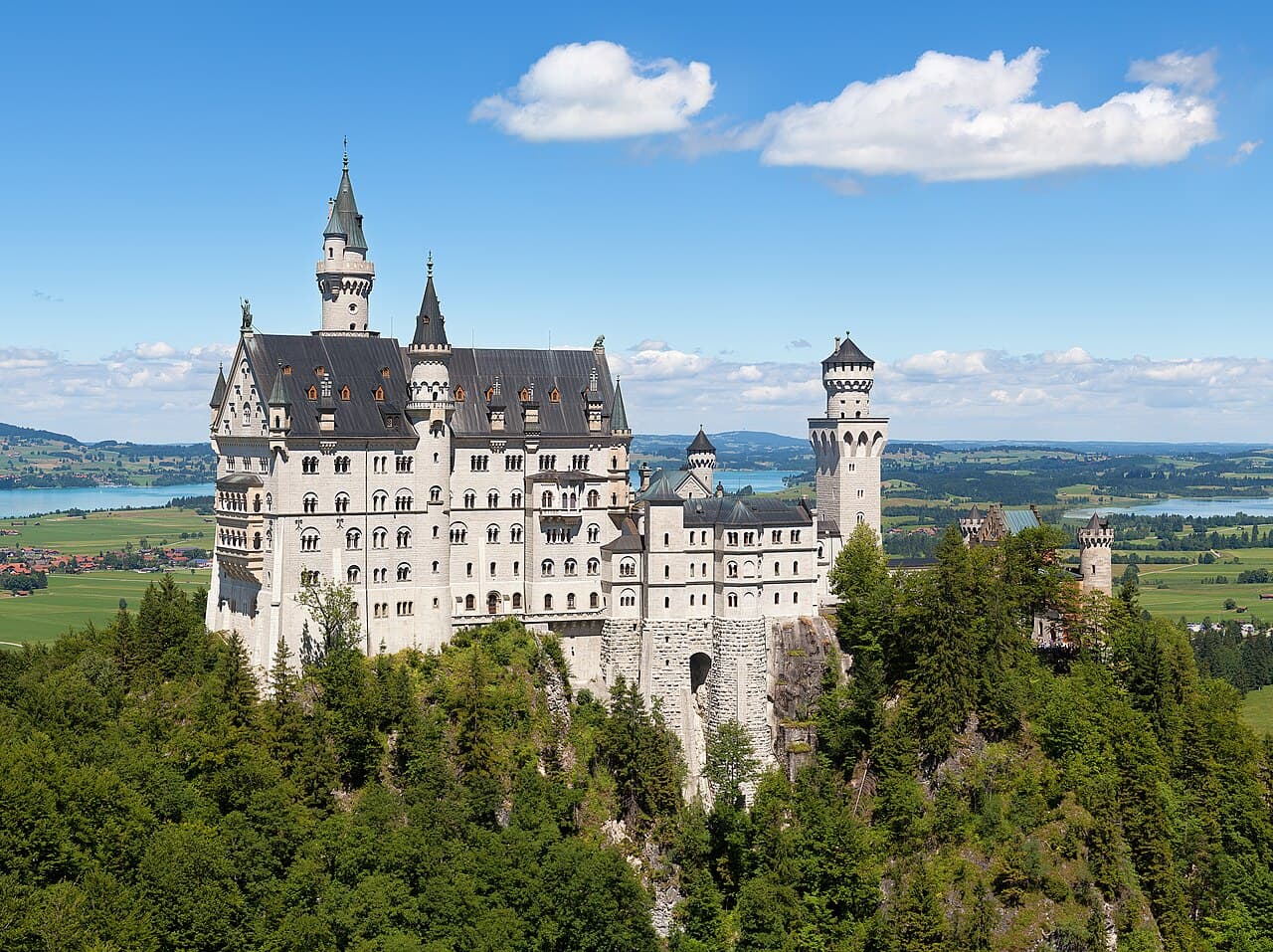
GermanyPhoto: Thomas Wolf, www.foto-tw.de / Wikimedia Commons (CC BY-SA 3.0 de)

Germany

Country · DE · EUR · Europe/Berlin

This information may change. Always check the official source.Last verified: August 2026 by

Schengen 90/180 on a passport issued within the last 10 years. Since 10 April 2026 the Bundespolizei registers non-EU arrivals biometrically in EES instead of stamping. Carrying EUR 10,000 or more in cash must be declared in writing.

  • 90 days in any 180 across the whole Schengen area, so time already spent in Austria or Italy eats into your German allowance.
  • Passport issued within the last 10 years and valid 3 months beyond departure, though airlines often apply a 6-month rule at check-in.
  • EES biometrics replaced the stamp on 10 April 2026 - face and fingerprints at your first crossing, overstays computed automatically. Expect longer non-EU queues at Frankfurt and Munich.
  • Cash of EUR 10,000 or more must be declared in writing at the red customs channel arriving from outside the EU, and the fine for not declaring reaches EUR 1,000,000.
  • Overstaying is a criminal offence here, not an administrative slip: prosecution, a fine, removal at your own cost and a Schengen-wide ban of 1 to 5 years.
More details

How your entry route is decided

Germany is a full Schengen member and the Bundespolizei enforces the Schengen rules, not German ones.

  1. EU / EEA / Swiss citizens have freedom of movement. A valid national identity card is enough - no visa, no proof of funds, no registration.
  2. Visa-exempt third-country nationals (the USA, United Kingdom, Canada, Australia, Japan, South Korea, Singapore, Malaysia, Taiwan and others) get 90 days in any 180-day period for tourism or business. Those days are counted across the whole Schengen area, so time already spent in Austria or Italy eats into your German allowance.
  3. Everyone else needs a Schengen type visa from a German mission before departure. Germany issues no visa on arrival and no e-visa for tourism. The fee is EUR 90 for adults and EUR 45 for children aged 6 to 12.

Passport rule: issued within the last 10 years, valid at least 3 months beyond the day you leave Schengen. Airlines often apply a 6-month rule at check-in.

What the officer can ask for

Visa-exempt non-EU travellers should be ready to show:

  • A return or onward ticket - flight, rail or coach.
  • Proof of accommodation: a hotel booking, a rental confirmation, or a formal invitation (Verpflichtungserklaerung) issued by your host.
  • Evidence of funds, assessed at roughly EUR 45 to EUR 50 per day of the planned stay.
  • Travel health insurance covering at least EUR 30,000 including repatriation. It is mandatory for visa holders and routinely asked of others.

Formalities that apply to everyone

  • EES biometrics replaced the stamp. Since 10 April 2026 the EU Entry/Exit System is fully operational at German borders: face and fingerprints are captured at your first crossing, and overstays are computed automatically. Expect longer queues at the non-EU desks at Frankfurt and Munich on busy mornings.
  • ETIAS is not live. The fee is set at EUR 20 with under-18s and over-70s exempt, but as of August 2026 no launch date has been announced and applications are not open. Any website selling ETIAS today is fraudulent.
  • Cash of EUR 10,000 or more in notes, bearer instruments or physical gold must be declared in writing on form 040001 at the red customs channel when arriving from outside the EU. Arriving from another EU state, you must declare it verbally if asked. The fine for not declaring reaches EUR 1,000,000.
  • No health or arrival form of any kind is required.

Overstaying is a criminal offence under section 95 of the Residence Act, not an administrative slip: prosecution, a fine, removal at your own cost, and a Schengen-wide entry ban of 1 to 5 years logged in the Schengen Information System.

Sources (4)

Germany applies the EU allowance, and the Swiss border is where travellers most often meet it.

  • Between EU countries there is no duty-free limit. Goods bought tax-paid in another member state travel with you; customs may only ask what a very large quantity is for, against indicative figures of 800 cigarettes and 10 litres of spirits.
  • Arriving from outside the EU the allowance is one set of numbers: 200 cigarettes, 1 litre of spirits over 22 % (or 2 litres of fortified or sparkling wine), 4 litres of still wine and 16 litres of beer.
  • Other goods are capped by value - EUR 430 arriving by air or sea, EUR 300 by land - and the allowance cannot be pooled between travellers for a single item.
More details
  • Between EU countries there is no duty-free limit. Goods bought tax-paid in another member state travel with you; customs may only ask what a very large quantity is for, against indicative figures of 800 cigarettes and 10 litres of spirits.
  • Arriving from outside the EU the allowance is one set of numbers: 200 cigarettes, 1 litre of spirits over 22 % (or 2 litres of fortified or sparkling wine), 4 litres of still wine and 16 litres of beer.
  • Other goods are capped by value - EUR 430 arriving by air or sea, EUR 300 by land - and the allowance cannot be pooled between travellers for a single item.
  • Cash of EUR 10,000 or more must be declared, counting notes, coins, cheques and prepaid cards together. The money is seized for not declaring it, not for carrying it.
  • Switzerland is not in the EU. The crossings around Basel and Konstanz are customs borders, and the German limits apply the moment you cross back.
Sources (1)

Tap water is excellent and no vaccinations are required, but you cannot buy ibuprofen in a supermarket - only in an Apotheke, closed on Sundays. Non-EU visitors pay their own hospital bills in full.

  • Painkillers are pharmacy-only. Ibuprofen, paracetamol and aspirin cannot be bought in supermarkets, kiosks or petrol stations - only in an Apotheke, which closes on Sundays.
  • Every closed pharmacy posts the nearest open one in its window for the rotating night and Sunday emergency service, with a surcharge of about EUR 2.50.
  • Emergency rooms treat you regardless of nationality, and non-EU visitors are personally liable for the whole bill afterwards. German providers do not bill foreign schemes such as US Medicare.
  • 116 117 reaches the on-call doctor service for things that are urgent but not emergencies, when practices are closed.
  • Ticks are the one real local risk. Bavaria and Baden-Wuerttemberg are designated encephalitis zones from April to October - consider the vaccination if you plan forest walks.
More details

Tap water is safe everywhere and monitored more tightly than the bottled kind under the Trinkwasserverordnung. Ask for Leitungswasser if you want it in a restaurant, though many will still bring a bottle.

  • No vaccinations are required. Keep routine ones (tetanus, diphtheria, polio, measles) current.
  • Ticks are the one real local risk. Bavaria and Baden-Wuerttemberg are designated tick-borne encephalitis (FSME) zones between April and October. If you plan forest walks, consider the FSME vaccination and tuck long trousers into socks. Lyme disease is present in the same areas.
  • No malaria, no dengue.

Pharmacies work differently here

  • Painkillers are pharmacy-only. Ibuprofen, paracetamol and aspirin cannot be bought in supermarkets, kiosks or petrol stations - only in a licensed Apotheke, marked by a large red A. Bring your own supply.
  • Hours: roughly 08:30 to 18:30 or 20:00, Monday to Saturday, closed Sunday.
  • Nights and Sundays: pharmacies run a rotating emergency service (Notdienst). Every closed pharmacy posts the nearest open one in its window. A surcharge of about EUR 2.50 applies.

Hospitals and money

  • Emergency rooms (Notaufnahme) treat acute emergencies regardless of nationality or ability to pay upfront, but non-EU visitors are personally liable for the whole bill afterwards. German providers do not bill foreign schemes such as US Medicare.
  • Travel health insurance of at least EUR 30,000 including repatriation is legally mandatory for Schengen visa holders and strongly advisable for everyone else.
  • EU and EEA visitors: carry the EHIC, which covers necessary state treatment.
  • 116 117 reaches the on-call doctor service for things that are urgent but not emergencies, when practices are closed.

Bringing your own medication

  • Up to a 3-month supply of personal prescription medicine is allowed.
  • Controlled medicines - strong opioids, codeine, methylphenidate, medical cannabis - need a doctor's certificate, validated under Article 75 of the Schengen Agreement for Schengen residents or an equivalent official attestation otherwise.
  • CBD above 0.2% THC and unauthorised performance-enhancing substances are prohibited imports.
Sources (2)

Berlin

Long-term averages for Berlin: the mean daily high, the mean overnight low and the mean monthly rainfall across 30 years of ERA5 reanalysis data (1995–2024).

DayNight
-50510152025°C0100mmJanFebMarAprMayJunJulAugSepOctNovDecJanuary: Day 3 °C, Night -2 °C, Rain 50 mm. February: Day 5 °C, Night -1 °C, Rain 42 mm. March: Day 9 °C, Night 1 °C, Rain 45 mm. April: Day 14 °C, Night 4 °C, Rain 36 mm. May: Day 19 °C, Night 9 °C, Rain 56 mm. June: Day 22 °C, Night 13 °C, Rain 60 mm. July: Day 24 °C, Night 15 °C, Rain 79 mm. August: Day 24 °C, Night 15 °C, Rain 56 mm. September: Day 20 °C, Night 11 °C, Rain 47 mm. October: Day 14 °C, Night 7 °C, Rain 49 mm. November: Day 8 °C, Night 3 °C, Rain 44 mm. December: Day 4 °C, Night 0 °C, Rain 47 mm
Show the monthly table
Berlin
MonthDay (°C)Night (°C)Rain (mm)
January3-250
February5-142
March9145
April14436
May19956
June221360
July241579
August241556
September201147
October14749
November8344
December4047

Munich

Long-term averages for Munich: the mean daily high, the mean overnight low and the mean monthly rainfall across 30 years of ERA5 reanalysis data (1995–2024).

DayNight
-50510152025°C0200mmJanFebMarAprMayJunJulAugSepOctNovDecJanuary: Day 3 °C, Night -4 °C, Rain 65 mm. February: Day 6 °C, Night -3 °C, Rain 57 mm. March: Day 9 °C, Night 0 °C, Rain 69 mm. April: Day 14 °C, Night 3 °C, Rain 66 mm. May: Day 18 °C, Night 8 °C, Rain 116 mm. June: Day 21 °C, Night 12 °C, Rain 111 mm. July: Day 23 °C, Night 14 °C, Rain 107 mm. August: Day 23 °C, Night 14 °C, Rain 110 mm. September: Day 18 °C, Night 10 °C, Rain 87 mm. October: Day 14 °C, Night 6 °C, Rain 68 mm. November: Day 8 °C, Night 1 °C, Rain 65 mm. December: Day 4 °C, Night -2 °C, Rain 68 mm
Show the monthly table
Munich
MonthDay (°C)Night (°C)Rain (mm)
January3-465
February6-357
March9069
April14366
May188116
June2112111
July2314107
August2314110
September181087
October14668
November8165
December4-268

Hamburg

Long-term averages for Hamburg: the mean daily high, the mean overnight low and the mean monthly rainfall across 30 years of ERA5 reanalysis data (1995–2024).

DayNight
0510152025°C0100mmJanFebMarAprMayJunJulAugSepOctNovDecJanuary: Day 4 °C, Night 0 °C, Rain 64 mm. February: Day 5 °C, Night 0 °C, Rain 59 mm. March: Day 8 °C, Night 1 °C, Rain 53 mm. April: Day 13 °C, Night 4 °C, Rain 49 mm. May: Day 18 °C, Night 8 °C, Rain 67 mm. June: Day 21 °C, Night 12 °C, Rain 68 mm. July: Day 22 °C, Night 14 °C, Rain 88 mm. August: Day 23 °C, Night 14 °C, Rain 76 mm. September: Day 19 °C, Night 11 °C, Rain 58 mm. October: Day 14 °C, Night 8 °C, Rain 62 mm. November: Day 8 °C, Night 4 °C, Rain 56 mm. December: Day 5 °C, Night 1 °C, Rain 63 mm
Show the monthly table
Hamburg
MonthDay (°C)Night (°C)Rain (mm)
January4064
February5059
March8153
April13449
May18867
June211268
July221488
August231476
September191158
October14862
November8456
December5163
Sources (1)

EUR 75 to EUR 160 for a mid-range double, more during trade fairs and Oktoberfest. By law you must hand over a physical passport or ID card at check-in - a photo of it is not legally sufficient.

  • Bring the physical passport to check-in. German law obliges hosts to inspect the original document - a photo or scan on your phone is not sufficient and a desk may refuse you.
  • A mid-range double is EUR 75 to EUR 160, a hostel dorm bed EUR 25 to EUR 55.
  • Trade fairs wreck the market. During a Messe in Frankfurt, Duesseldorf, Munich or Cologne, and during Oktoberfest, rates double or triple and availability collapses.
  • Tourist taxes are charged on top - Berlin 5% of the net room rate, Frankfurt EUR 2.00 a person a night, Hamburg on a sliding scale.
  • In Berlin, Mitte puts you in walking distance of everything, Prenzlauer Berg is quieter, Charlottenburg smarter. In Frankfurt, do not book blind in the Bahnhofsviertel just because it is cheap.
More details

Bring the physical passport to check-in. Section 29 of the Federal Registration Act obliges every commercial host to record foreign guests on a Meldeschein and inspect the original document. A photo or a scan on your phone is not legally sufficient and a reception desk may refuse you.

Accommodation in Germany
TypePrice per night
Hostel dormitory bedEUR 25 to 55
Private budget roomEUR 50 to 80
Mid-range 3-star doubleEUR 75 to 160
4-star and aboveEUR 180 to 450 and up
  • Trade fairs wreck the market. During a Messe in Frankfurt, Duesseldorf, Munich, Cologne or Hanover, and during Oktoberfest from late September to early October, rates double or triple and availability collapses. Check the fair calendar before fixing dates.
  • Booking platforms: Booking.com and Airbnb dominate; HRS.de is the German platform worth checking for independent hotels.
  • Tourist taxes are charged on top: Berlin 5% of the net room rate, Frankfurt EUR 2.00 per person per night, Hamburg EUR 0.50 to EUR 4.00 per person per night on a sliding scale. Business travellers can often be exempted with an employer letter.

Where to stay for a first visit

  • Berlin: Mitte for walking distance to the Brandenburger Tor, Museum Island and the Reichstag; Prenzlauer Berg for quiet 19th-century streets and cafes; Charlottenburg for the calmer, smarter west around Kurfuerstendamm.
  • Munich: Altstadt-Lehel beside Marienplatz and the museums; Maxvorstadt for galleries and student life; Haidhausen east of the Isar for a residential feel and old taverns.
  • Frankfurt: Innenstadt and Altstadt around the Roemerberg for the centre; Sachsenhausen across the Main for apple wine taverns; Westend for a quiet, elegant base near the Palmengarten. Avoid booking blind in the Bahnhofsviertel just because it is cheap and next to the station.
Sources (2)

A German prepaid SIM will not work until you have proved your identity in person or on a video call - this is the law, not a formality. For a short trip an international eSIM from about EUR 10 skips the whole process.

  • A German prepaid SIM will not activate until you have proved your identity - in person at a carrier store, at a Deutsche Post branch, or by video call where an agent inspects your passport. This is the law, not a formality.
  • An international eSIM bypasses all of it. Saily is USD 12.99 for 5 GB over 30 days, installed by QR code before departure - the correct answer for almost any trip under two weeks.
  • EU and EEA visitors need nothing - roam-like-at-home means your domestic bundle works at domestic prices.
  • Deutsche Telekom has the best coverage and rural reach; Aldi Talk, Lidl Connect, congstar and Fraenk resell the same networks more cheaply.
  • Carrier stores are the only places that can verify you on the spot. Supermarket and airport starter kits still leave you to complete the video check yourself.
More details

Buy an eSIM before you fly, or budget an hour for a video identity check.

  • Section 111 of the Telecommunications Act (TKG) requires every prepaid SIM to be registered to a verified identity before it will activate. You cannot buy a SIM at a kiosk, put it in and use it. Verification is done one of three ways: in person at a carrier store, by PostIdent at a Deutsche Post branch, or by VideoIdent, a live video call where an agent inspects your passport.
  • An international eSIM bypasses all of it. Saily sells a profile you install by QR code before departure and that works on landing: USD 12.99 for 5 GB or USD 19.99 for 10 GB over 30 days. For a trip under two weeks this is the correct answer for almost everyone.
  • EU and EEA visitors need nothing. Roam-like-at-home means your domestic bundle works at domestic prices.

The networks

  • Deutsche Telekom has the best overall coverage and rural reach, and the highest speeds. Its MagentaMobil Prepaid with 5 GB for 30 days is EUR 19.99.
  • Vodafone Germany is a close second on the main corridors and in cities. CallYa Allnet with 5 GB for 30 days is EUR 14.99.
  • Telefonica (O2) is the cheapest and strong in cities, weaker in the countryside.
  • MVNOs resell the same networks more cheaply: Aldi Talk (on O2, 5 GB for 30 days at EUR 14.99, sold in ALDI stores), Lidl Connect (on Vodafone), congstar and Fraenk (both on Telekom).

Where to buy

  • Carrier stores - Telekom Shop, Vodafone Shop, O2 Shop - are the only places that can verify you on the spot.
  • Supermarkets (REWE, ALDI, Lidl), airport newsagents such as Relay, and petrol stations sell starter kits, but you still have to complete VideoIdent yourself afterwards.
  • A local prepaid eSIM is awkward for visitors. Telekom prepaid eSIMs are generally not available without a German address or tax ID. Vodafone, congstar and Fraenk do support them, but still require the video check.

A German prepaid SIM does roam across the EU at no surcharge, which is worth something if Germany is one stop of several.

Sources (3)

German sockets are Schuko Type at 230 V, the round recessed outlet with earth clips on the rim used across most of Europe.

  • The plug goes in either way round. Schuko is unpolarised, which is a genuine difference from British and American wiring rather than a detail.
  • A Europlug fits, and so does a French plug in practice. The hybrid CEE 7/7 plug that most European appliances now carry works in both German and French sockets.
  • British, American and Australian plugs need an adapter. Cheap two-pin adapters do not carry earth through; for anything with a metal case, buy one with the earth clips.
  • 230 V matches most of the world outside the Americas and Japan. American 120 V appliances need a converter, not just an adapter.
  • Sockets in old apartment buildings are still Schuko but sometimes wired without an earth behind the wall, which is invisible from the front.
More details

Sockets in Germany are Type at 230 V, 50 Hz - the Schuko, a round recessed socket with earth clips gripping the rim instead of an earth hole.

  • The plug goes in either way round. Schuko is unpolarised, which is a genuine difference from British and American wiring rather than a detail.
  • A Europlug fits, and so does a French plug in practice. The hybrid CEE 7/7 plug that most European appliances now carry works in both German and French sockets.
  • British, American and Australian plugs need an adapter. Cheap two-pin adapters do not carry earth through; for anything with a metal case, buy one with the earth clips.
  • 230 V matches most of the world outside the Americas and Japan. American 120 V appliances need a converter, not just an adapter.
  • Sockets in old apartment buildings are still Schuko but sometimes wired without an earth behind the wall, which is invisible from the front.
Sources (1)

Everything closes on Sunday - shops, supermarkets, pharmacies - with stations and airports the only exception. Type and sockets at 230V, and English is common but thins out fast outside tourist settings.

  • Sunday is closed - retail, supermarkets and pharmacies all day, countrywide. The legal exceptions are shops inside main stations, airports and motorway services.
  • Plan Saturday accordingly: supermarkets run 07:00 or 08:00 to 20:00 Monday to Saturday, later in Berlin.
  • Sockets are type and at 230V, 50Hz, so UK, US and Australian plugs need an adapter.
  • Corpus Christi and All Saints' Day close business only in Catholic states such as Bavaria and North Rhine-Westphalia, which catches people travelling between regions.
  • Quiet hours apply in residential buildings, generally 22:00 to 06:00 and all day Sunday, and neighbours do complain.
More details

Sunday is closed. Plan Saturday accordingly.

  • The Shop Closing Act keeps retail, supermarkets and pharmacies shut all day Sunday across the country. The legal exceptions are shops inside main stations (Hauptbahnhof), airports and motorway services - which is why the station supermarket is packed on a Sunday afternoon.
  • Normal hours: supermarkets 07:00 or 08:00 to 20:00 Monday to Saturday, up to 22:00 in Berlin. Department stores 10:00 to 20:00.
  • Power: Type and sockets, 230V, 50Hz. UK, US and Australian plugs need an adapter.
  • Time: CET (UTC+1) in winter, CEST (UTC+2) from the last Sunday in March to the last Sunday in October.
  • Tap water is safe everywhere and free.
  • Language: English is widely spoken by younger people, hotel and airport staff and in tourist venues, and much less so in bakeries, small towns, government offices and among older people. Guten Tag and bitte go a long way.

Public holidays that close everything

New Year's Day, Good Friday and Easter Monday, 1 May, Ascension Day and Whit Monday, 3 October (Day of German Unity), and 25 and 26 December. Transport runs a Sunday timetable. Corpus Christi and All Saints' Day (1 November) close business only in Catholic states such as Bavaria and North Rhine-Westphalia, which catches people travelling between regions.

Small things that matter

  • Pfand: bottles and cans carry a EUR 0.25 deposit, refunded by machines in supermarkets.
  • Recycling is taken seriously and bins are separated by colour in every building.
  • Quiet hours (Ruhezeit) apply in residential buildings, generally 22:00 to 06:00 and all day Sunday. Neighbours do complain.
  • Public toilets usually cost EUR 0.50 to EUR 1.00, often coin-only.
  • Cash for the bakery. It bears repeating.
Sources (2)

Germany is far more cash-dependent than its neighbours: bakeries, Spaetis and street food often refuse cards. Withdraw at Sparkasse, Deutsche Bank or Commerzbank machines and never at a Euronet.

  • Carry cash - really. Bakeries, butchers, Berlin Spaetis, beer gardens, doener stands, flea markets and public toilets are still frequently cash-only.
  • Girocard is the local debit network, and some small merchants take it while refusing Visa and Mastercard. American Express is widely refused outside big hotels.
  • Use bank ATMs - Sparkasse, Deutsche Bank, Commerzbank, Postbank - and avoid Euronet and Cashzone machines, which charge EUR 4 to EUR 7.99 per withdrawal.
  • Always decline dynamic currency conversion, which costs 8% to 15% over the interbank rate.
  • Tip 5% to 10% by saying the total, not by leaving coins - state the amount you want to pay before the server taps the card. Leaving money on the table is not how it is done here.
More details

Money and paying for things

Germany uses the euro (EUR).

  • Carry cash. Really. Card acceptance is now normal in supermarkets, hotels and department stores, but bakeries, butchers, Berlin Spaetis, beer gardens, doener and currywurst stands, flea markets, public toilets and short taxi rides are still frequently cash-only. EUR 50 in your pocket removes most friction.
  • Girocard is the local debit network and some small merchants take it while refusing Visa and Mastercard. American Express is widely refused outside big hotels and chains.
  • Use bank ATMs: Sparkasse, Deutsche Bank, Commerzbank, Volksbank Raiffeisenbank and Postbank do not add their own surcharge to a foreign withdrawal.
  • Avoid Euronet, Cashzone and Your Cash. These independent machines cluster near landmarks and nightlife and charge EUR 4 to EUR 7.99 per withdrawal on top of pushing a bad conversion.
  • Always decline dynamic currency conversion. Being billed in your home currency at an ATM or terminal costs 8% to 15% over the interbank rate. Choose "continue in EUR" every time.
  • Do not change cash at airport or station Wechselstube counters such as Reisebank; spreads run 10% to 20% off market. An ATM withdrawal is always better.

Tipping

  • 5% to 10% in a sit-down restaurant is normal, no more.
  • Say the total, do not leave coins. When the server takes payment you state the amount you want to pay including the tip - "25 Euro, bitte" for a EUR 23.50 bill - before they tap the card. Leaving money on the table afterwards is not how it is done here.
  • Cafes and street food: round up or drop change in the jar.

What things cost

Money and payments in Germany
ItemTypical price
Espresso or cappuccinoEUR 2.80 to 4.50
Doener or currywurst with chipsEUR 6.00 to 9.50
Main course, mid-range restaurantEUR 14.00 to 25.00
Bottled water, 1 litre, supermarketEUR 0.45 to 1.20
Single urban transit ticketEUR 3.30 to 4.40
TaxiEUR 4.50 to 5.50 base plus EUR 2.00 to 2.80 per km

Pfand: most bottles and cans carry a deposit of EUR 0.25 added at the till and refunded by a machine in any supermarket. Do not throw them away - and if you leave one beside a bin rather than in it, you are following local custom rather than littering.

Sources (2)

Everyday prices

Typical prices in euro (EUR), averaged across the country by Numbeo and read on 12 August 2026. Tick Convert prices above the table to see every amount in your own currency.

Everyday prices
ItemTypical price
Inexpensive restaurant meal15 EUR
Dinner for two, mid-range, three courses66 EUR
Cappuccino3.61 EUR
Local draught beer, 0.5 l4.50 EUR
Bottled water, 0.33 l2.68 EUR
Public transport, one-way ticket3.30 EUR
Taxi, starting fare4.80 EUR
Petrol, 1 litre1.82 EUR
Cigarettes, pack of 20 (Marlboro)8.70 EUR
Average net monthly salary2,900 EUR

These are country-wide averages, not a price list: tourist districts, airports and islands sit well above them, and small towns below. The salary line is there for proportion - it is what people living here actually earn.

Sources (1)

Airport guides for Germany22

One page per airport: the routes into town, what they cost and the trap particular to that arrival.

See all 22 airports

Every major German airport has a train under it. Frankfurt to the centre is 12 minutes for EUR 6.90, Berlin 23 minutes for EUR 4.40, Munich 40 minutes for about EUR 14. Taxis cost five to ten times as much for no time saved.

  • Take the train - in Germany it is genuinely always the right answer. Frankfurt is 12 minutes for EUR 6.90, Berlin 23 minutes for EUR 4.40, Hamburg 25 minutes for EUR 3.80.
  • Frankfurt has no station under Terminal 2: take the free SkyLine people mover to Terminal 1 first. Long-distance ICE trains leave from the separate Fernbahnhof.
  • Munich needs an MVV zone M-5 ticket at EUR 13.60 to EUR 14.80. A city single is not valid from the airport, which is the most common ticketing mistake here.
  • Berlin's station is directly under Terminal 1 and BER sits in fare zone C, so you need an ABC ticket at EUR 4.40 - validated in the platform machine before boarding.
  • Nobody legitimate offers you a ride inside a German terminal. Licensed taxis wait at marked ranks outside.
More details

Take the train. In Germany it is genuinely always the right answer.

Transport from the airport in Germany
AirportLineTime to centreSingle fare
Frankfurt (FRA)S-Bahn S8 / S912 to 15 minEUR 6.90
Munich (MUC)S-Bahn S1 / S840 to 45 minEUR 13.60 to 14.80
Berlin (BER)FEX / RE2023 minEUR 4.40
Hamburg (HAM)S-Bahn S125 minEUR 3.80
Duesseldorf (DUS)SkyTrain plus regional train12 to 15 minEUR 3.30
Frankfurt Airport (FRA)
  • S-Bahn S8 and S9 run 24 hours from the Regionalbahnhof under Terminal 1, level 0, tracks 1 to 3, every 15 minutes to Frankfurt Hauptbahnhof, Hauptwache and Konstablerwache. EUR 6.90 single, EUR 13.50 for a day ticket.
  • Arriving at Terminal 2? Take the free SkyLine people mover to Terminal 1 first - there is no station under T2.
  • Long-distance ICE and IC trains leave from the Fernbahnhof, tracks 4 to 7, linked to Terminal 1 by a covered bridge. Direct to Cologne, Munich, Stuttgart and Hamburg without going into the city at all.
  • Taxi to the centre is 20 to 30 minutes and EUR 40 to EUR 55 on the meter. Uber and FreeNow pick up from designated car parks.
Munich Airport (MUC)
  • S1 and S8 alternate every 10 minutes from the station in the Munich Airport Center, between Terminals 1 and 2. S8 runs all night (every 20 to 40 minutes); S1 runs 03:00 to 24:00. About 40 to 45 minutes to Muenchen Hauptbahnhof.
  • You need an MVV zone M-5 ticket at EUR 13.60 to EUR 14.80. A city single ticket is not valid from the airport - this is the most common ticketing mistake here.
  • Lufthansa Express Bus every 20 minutes to the Hauptbahnhof, 45 minutes, EUR 11.50 single or EUR 18.50 return, open to passengers of any airline.
  • Taxi is 40 to 50 minutes and EUR 85 to EUR 95.
Berlin Brandenburg (BER)
  • The station is directly under Terminal 1, level U2. The Airport Express (FEX) and RE20 reach Berlin Hauptbahnhof in 23 minutes, up to five times an hour, via Suedkreuz and Potsdamer Platz.
  • S-Bahn S9 and S45 are slower, 40 to 50 minutes, every 20 minutes.
  • BER sits in VBB fare zone C, so you need an ABC ticket: EUR 4.40, valid 2 hours on every mode. A 24-hour ABC ticket is EUR 11.40. Validate it in the platform machine before boarding - an unvalidated ticket counts as no ticket.
  • Express buses X7 and X71 run every 5 to 10 minutes from stops A6 to A7 outside Terminal 1 to U Rudow on the U7.
  • Taxi to central Berlin is EUR 55 to EUR 70, 40 to 50 minutes.
Hamburg and Duesseldorf
  • Hamburg: the S1 leaves from under the terminals every 10 minutes, 25 minutes to the Hauptbahnhof, EUR 3.80. Taxi EUR 35 to EUR 45.
  • Duesseldorf: the SkyTrain monorail links the terminals to the main station in 5 minutes; RE1, RE5 and RE6 then reach the Hauptbahnhof in 10 to 12 minutes for EUR 3.30. Taxi EUR 28 to EUR 35.

Nobody legitimate offers you a ride inside a German terminal. Licensed taxis wait at marked ranks outside; anyone approaching you in the hall is unlicensed.

Sources (3)

Getting around the city, and which apps to install

One ticket covers train, S-Bahn, U-Bahn, tram and bus inside each regional network. The Deutschlandticket at EUR 63 a month covers all of them nationwide, but only as a subscription you must cancel by the 10th.

  • One local ticket covers regional train, S-Bahn, U-Bahn, tram and bus inside that region's network, at EUR 3.30 to EUR 4.40 for a single urban journey.
  • The Deutschlandticket is EUR 63 a month for unlimited local and regional transport nationwide - but not on ICE, IC, EC or FlixTrain.
  • The Deutschlandticket catch is that it is a rolling subscription. Cancel on or before the 10th of the month or you are charged for the next one.
  • Validate paper tickets in the platform stamping machine. Inspectors are frequent and plain-clothed, and "I bought it" is no defence if it is not stamped.
  • Watch the cycle lanes - red brick strips beside the pavement, with fast cyclists who have right of way. Stepping into one is the commonest way a visitor gets hurt in a German city.
More details

Buy one ticket and it covers everything local - regional train, S-Bahn, U-Bahn, tram and bus - inside that region's network.

  • Regional transit authorities (Verkehrsverbuende) set the fares: VBB in Berlin, MVV in Munich, RMV in Frankfurt, HVV in Hamburg, VRR in Duesseldorf. A single urban ticket runs EUR 3.30 to EUR 4.40.
  • The Deutschlandticket costs EUR 63 per month and covers unlimited travel on all local and regional transport nationwide, second class, including Hamburg's harbour ferries. It is not valid on ICE, IC, EC or FlixTrain.
  • The Deutschlandticket catch: it is sold only as a rolling monthly subscription. Cancel on or before the 10th of the month or you are charged for the next one. For a stay of a week or more that crosses a month boundary, do the arithmetic before subscribing.
  • Validate paper tickets in the platform stamping machine. Inspectors are frequent and plain-clothed, and "I bought it" is not a defence if it is not stamped.
  • Ride-hailing: Uber, Bolt and FreeNow all operate. Under the Passenger Transportation Act they can only dispatch licensed private hire cars with professional drivers, or route you to a real taxi - so prices sit close to taxi fares rather than below them.
  • Long distance: Deutsche Bahn Sparpreis fares booked ahead are far cheaper than walk-up Flexpreis. FlixBus and FlixTrain undercut DB on the main routes.
  • Watch the cycle lanes. Red brick strips beside the pavement are bike lanes, cyclists move fast on them and they have right of way. Stepping into one is the most common way a visitor gets hurt in a German city.

Apps and platforms

DB Navigator for anything on rails, FreeNow for a real taxi, and the local transit app for the city you are actually in.

  • DB Navigator is the single most useful app in the country - timetables, live platform changes, delays and tickets for every regional and long-distance train.
  • FreeNow books official metered taxis in every large city; Uber here dispatches licensed private hire at close to taxi prices.
  • Each city has its own transit app: BVG Fahrinfo in Berlin, MVGO in Munich, RMVgo in Frankfurt, HVV Switch in Hamburg.
  • Citymapper gives better live routing than Google Maps in Berlin, Munich and Frankfurt.
  • Lieferando is the dominant food delivery service.
More details
Sources (3)

German motorways are free and partly unrestricted, but city centres need an emissions sticker and the emergency corridor rule is absolute.

  • The Umweltplakette is required for city low-emission zones in Berlin, Munich, Cologne, Stuttgart and dozens more. It is a windscreen sticker bought once; a hire car normally has one.
  • The Rettungsgasse is the law. When traffic stops on a motorway, the left lane moves left and every other lane moves right to leave a corridor down the middle - before the sirens, not when you hear them. Failing to form it is a fine and a licence penalty.
  • The unrestricted sections have an advisory 130 km/h. Exceeding it is legal and increases your liability in any accident; the fast lane at 200 km/h is not a myth and closes faster than a visitor expects.
  • The alcohol limit is 0.5 g/l, and zero for drivers under 21 or with less than two years' experience.
More details

Free motorways, an advisory rather than a limit on parts of the Autobahn, and two rules that catch every visitor.

  • The Umweltplakette is required for city low-emission zones in Berlin, Munich, Cologne, Stuttgart and dozens more. It is a windscreen sticker bought once; a hire car normally has one.
  • The Rettungsgasse is the law. When traffic stops on a motorway, the left lane moves left and every other lane moves right to leave a corridor down the middle - before the sirens, not when you hear them. Failing to form it is a fine and a licence penalty.
  • The unrestricted sections have an advisory 130 km/h. Exceeding it is legal and increases your liability in any accident; the fast lane at 200 km/h is not a myth and closes faster than a visitor expects.
  • The alcohol limit is 0.5 g/l, and zero for drivers under 21 or with less than two years' experience.
  • Winter tyres are required by conditions, not by date - snow, ice or slush means the alpine symbol on the tyre, whatever the month.
Sources (1)

Violent crime is rare; pickpocketing at Hauptbahnhof stations and on tourist squares is not. Cannabis is legal to possess but not to buy, and jaywalking is an actual fine.

  • Germany is very safe and the risk is your pockets, not your person, concentrated in main stations and on tourist squares like Alexanderplatz and Marienplatz.
  • The clipboard petition is the classic - someone asks you to sign for a charity, the board blocks your view, an accomplice works your bag. Keep walking and say nothing.
  • Jaywalking is illegal, a EUR 5 to EUR 10 fine, and draws genuine public disapproval especially in front of children.
  • Cannabis is legal to possess but not to buy. Adults may hold 25 g in public, but there is no legal shop and commercial sale to tourists remains illegal.
  • Do not overtake on the right on the Autobahn. It is illegal, and on unrestricted sections the car in the left lane may be doing 200 km/h.
More details

Germany is very safe. The risk is your pockets, not your person.

  • Pickpocketing concentrates in central stations (Hauptbahnhof), on U-Bahn lines and on the tourist squares - Alexanderplatz in Berlin, Marienplatz in Munich, the Cologne cathedral forecourt.
  • The clipboard petition is the classic: someone asks you to sign for a deaf-mute charity, the board blocks your view, an accomplice works your bag. Keep walking and say nothing.
  • Distraction theft on trains: one person drops coins or asks directions, another lifts the bag from the seat opposite. Keep luggage where you can touch it.
  • Shell game (Huetchenspiel) on Alexanderplatz and other squares. Everyone winning is part of the crew. You cannot win.
  • Unlicensed drivers in airport halls offering a "fixed price" that is not fixed.

Areas to be alert at night

  • Frankfurt: the Bahnhofsviertel directly in front of the main station - Taunusstrasse, Moselstrasse, Kaiserstrasse. Open drug use is visible; violence against tourists is rare, but it is not where you want to wander at 03:00.
  • Berlin: around Kottbusser Tor, Goerlitzer Park, Leopoldplatz and parts of Neukoelln after midnight.
  • Hamburg: the side streets off the Reeperbahn in St. Pauli late at night.

Laws visitors break

  • Jaywalking is illegal. Crossing on a red pedestrian light is a EUR 5 to EUR 10 fine and draws genuine public disapproval, especially in front of children.
  • Cannabis is legal to possess, not to buy. Since 1 April 2024 adults may hold 25 g in public and 50 g at home, but there is no legal shop and commercial sale to tourists remains illegal. Public smoking is banned within 100 metres of schools, playgrounds and sports grounds, and in pedestrian zones between 07:00 and 20:00. Every other drug remains a serious criminal matter.
  • Do not overtake on the right on the Autobahn. It is illegal, and on unrestricted sections the car in the left lane may be doing 200 km/h.

Solo and female travellers: Germany is safe, stations have emergency call pillars on platforms, and night transport is well used. LGBTQ+ travellers have full legal protection and same-sex marriage since 2017, with large communities in Berlin, Cologne, Hamburg and Munich.

Sources (2)

112 for fire and ambulance, 110 for police, 116 117 for an out-of-hours doctor. There is no tourist police in Germany - ordinary police handle everything.

  • 112 is fire and ambulance, 110 is police - both free from any phone, including one with no SIM, and dispatchers speak English.
  • 116 117 is the on-call medical service for urgent problems that are not emergencies, when doctors' practices are closed. Free nationwide.
  • There is no tourist police in Germany. State and federal police handle everything, with federal officers stationed at airports and main stations.
  • A lost passport means a written loss report from any police station, which you will need for hotels, domestic travel and the consulate.
  • Then contact your embassy in Berlin for an emergency travel document - several countries also keep consulates in Frankfurt, Munich, Hamburg and Duesseldorf.
More details

Emergency numbers

  • 112 - fire brigade (Feuerwehr) and ambulance (Rettungsdienst). Free from any phone, including one with no SIM.
  • 110 - police (Polizei), for crime, accidents and urgent security threats.
  • 116 117 - the on-call medical service for urgent problems that are not emergencies, when doctors' practices are closed. Free nationwide.

There is no tourist police in Germany. State police (Landespolizei) and federal police (Bundespolizei, stationed at airports and main stations) handle everything. Dispatchers on 112 and 110 speak English.

If your passport is lost or stolen

  1. Report it at any Polizeirevier or the Bundespolizei desk in an airport or main station, and ask for the written loss report (Verlustanzeige). You will need that paper for hotels, domestic travel and the consulate.
  2. Contact your embassy for an emergency travel document.

Embassies in Berlin

  • United States - Pariser Platz 2, 10117 Berlin - +49 30 8305 0 (consulates in Frankfurt, Munich, Hamburg, Duesseldorf)
  • United Kingdom - Wilhelmstrasse 70 to 71, 10117 Berlin - +49 30 20160 0 (consulates in Munich, Duesseldorf)
  • Canada - Leipziger Platz 17, 10117 Berlin - +49 30 20312 0
  • Australia - Wallstrasse 76 to 79, 10179 Berlin - +49 30 880088 0

EU and EEA citizens are covered by the EHIC for necessary state medical care. Schengen visa holders must carry insurance with at least EUR 30,000 of cover.

Sources (3)