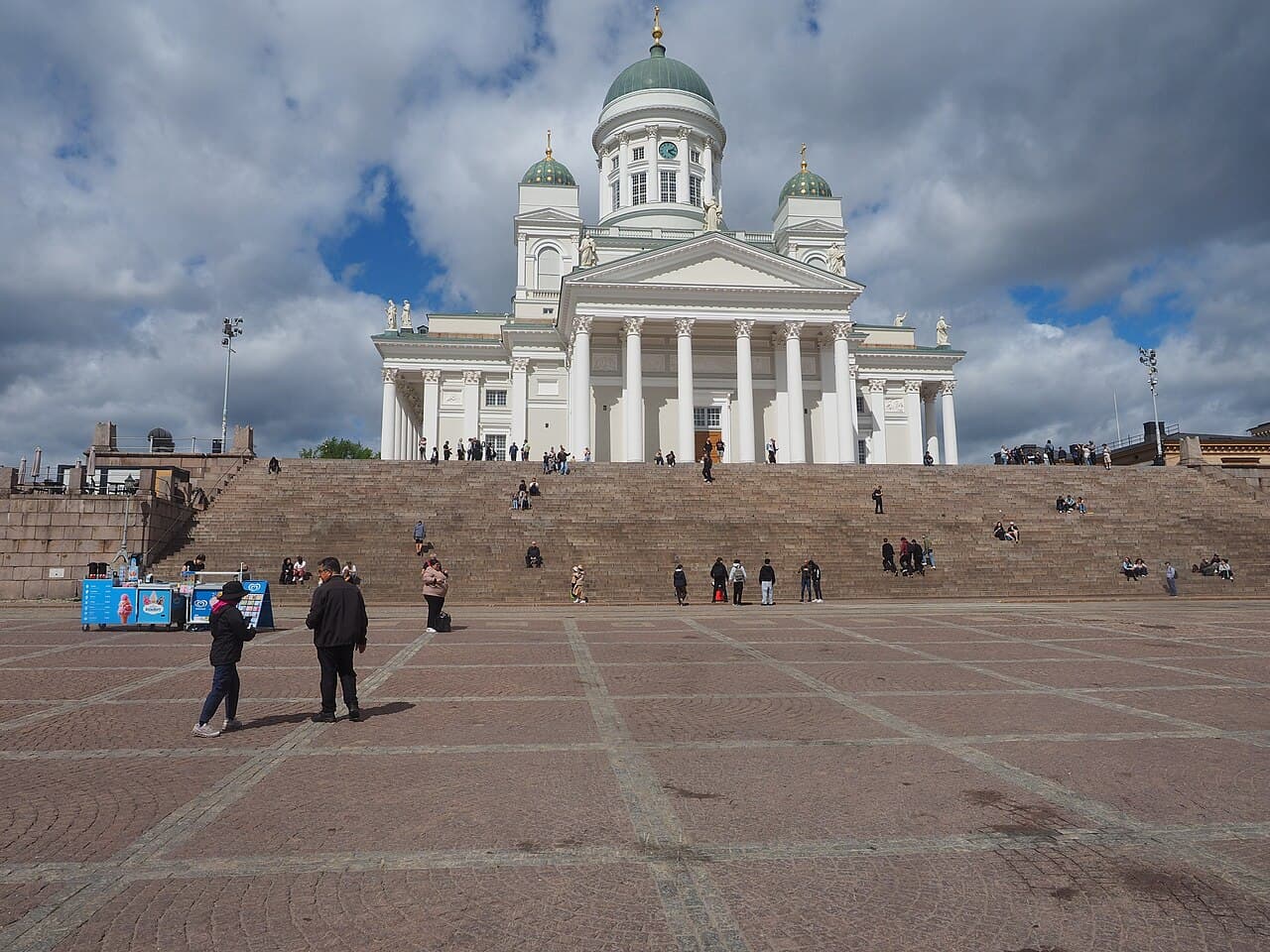
FinlandPhoto: JIP / Wikimedia Commons (CC BY-SA 4.0)

Finland

Country · FI · EUR · Europe/Helsinki

This information may change. Always check the official source.Last verified: August 2026 by

Schengen: 90 days in any 180, now counted by the EES biometric system rather than by passport stamps. ETIAS has still not launched and has no date, so nobody can sell you one.

  • 90 days in any rolling 180, shared across the whole Schengen area rather than counted per country - a week in Estonia last month is a week off your Finnish total.
  • Since 10 April 2026 the EES records your face and fingerprints instead of stamping the passport, and does the arithmetic for you. There is no fee, and children of 11 and under give a photo only.
  • Your passport must have been issued within the last 10 years on the day you arrive, and be valid 3 months beyond departure. A renewal before October 2018 can quietly break the first rule.
  • ETIAS has not launched and has no date. It will cost EUR 20 when it does, so any site selling you one today is selling you nothing.
  • Cash of EUR 10,000 or more must be declared, on the way out as well as in, and meat or dairy from outside the EU is taken off you at the border.
More details

The rule, and how it is now counted

Finland is in the Schengen area, so the allowance is 90 days in any rolling 180, shared across the whole area rather than counted per country. A week in Estonia last month is a week off your Finnish total.

  • The 180 days is a rolling window, not a calendar period. Every day you spend inside Schengen counts against the previous 180 days, so the balance moves under you.
  • Since 10 April 2026 the EES records your face and fingerprints instead of stamping your passport, and it does the arithmetic for you. There is no fee.
  • Children aged 11 and under give a photo only, no fingerprints.
  • Your EES record lasts 3 years, so the second trip is faster than the first. The first one is slower than it used to be, and border queues at Helsinki-Vantaa in summer reflect that.
  • Long-term residents of a Schengen country are exempt from EES registration.

Two passport traps

Both catch British and other non-EU travellers regularly, and both are checked at the gate rather than at the border.

  • Your passport must have been issued within the last 10 years on the day you arrive. A passport renewed before October 2018 can carry extra months from the old one and quietly break this rule.
  • It must be valid for at least 3 months after you plan to leave the Schengen area.

ETIAS

  • It has not launched. There is no application form, no fee to pay and no date.
  • When it does start it will cost EUR 20, with under-18s and over-70s exempt.
  • Any site selling you one today is selling you nothing. This is the commonest Europe travel scam of the moment, and the sites rank well in search results.

What you may be asked for

  • Proof of accommodation, a return ticket and enough money for the stay. Rarely requested, occasionally decisive.
  • Cash of EUR 10,000 or more must be declared, including on the way out. Undeclared cash can be seized.
  • Do not bring meat or dairy from outside the EU. Powdered baby milk and medically necessary foods are the exceptions.

Working

  • Visitor status does not allow work. Remote work for an employer at home is tolerated in practice; taking on Finnish clients or a Finnish job is not.
  • EU, EEA and Swiss citizens travel and work under freedom of movement, need only an identity card, and are outside all of the above.
Sources (3)

Finland applies the EU allowance, and the Russian border is closed to ordinary crossings.

  • Between EU countries there is no duty-free limit. Goods bought tax-paid in another member state travel with you; customs may only ask what a very large quantity is for, against indicative figures of 800 cigarettes and 10 litres of spirits.
  • Arriving from outside the EU the allowance is one set of numbers: 200 cigarettes, 1 litre of spirits over 22 % (or 2 litres of fortified or sparkling wine), 4 litres of still wine and 16 litres of beer.
  • Other goods are capped by value - EUR 430 arriving by air or sea, EUR 300 by land - and the allowance cannot be pooled between travellers for a single item.
More details
  • Between EU countries there is no duty-free limit. Goods bought tax-paid in another member state travel with you; customs may only ask what a very large quantity is for, against indicative figures of 800 cigarettes and 10 litres of spirits.
  • Arriving from outside the EU the allowance is one set of numbers: 200 cigarettes, 1 litre of spirits over 22 % (or 2 litres of fortified or sparkling wine), 4 litres of still wine and 16 litres of beer.
  • Other goods are capped by value - EUR 430 arriving by air or sea, EUR 300 by land - and the allowance cannot be pooled between travellers for a single item.
  • Cash of EUR 10,000 or more must be declared, counting notes, coins, cheques and prepaid cards together. The money is seized for not declaring it, not for carrying it.
  • The land border with Russia has been closed to passenger traffic since 2023, which removes the busiest non-EU customs route the country had.
  • The Tallinn ferry is an internal EU route, so no duty-free allowance applies to it.
Sources (1)

EHIC or GHIC gets you public care at the Finnish patient fee. Insurance is still needed, because the public system is not the fast one.

  • An EHIC or UK GHIC gets you public care at the fee a Finnish resident pays, typically tens of euros - but it covers no private clinic, no repatriation and no wilderness rescue.
  • Call 116117 first for anything that is not an emergency. It is the national medical helpline, answered in English, and it tells you where to go and whether to go at all.
  • Terveystalo and Mehilainen are the private chains where you can walk in, be seen the same day and pay a few hundred euros. Insured, that is usually the right answer.
  • A pharmacy is an apteekki, marked with a green cross, and the pharmacist will tell you plainly whether you need a doctor. Supermarkets sell little beyond basic painkillers.
  • The tap water is among the cleanest in the world, the winter dark is a real physiological effect rather than a poetic one, and sauna with alcohol is what puts people in hospital.
More details

What your card covers

  • An EHIC or a UK GHIC entitles you to public healthcare at the same fee a Finnish resident pays. That fee is real but small - typically tens of euros for a health centre visit or an emergency department attendance.
  • It does not cover private clinics, repatriation, mountain or wilderness rescue, or a cancelled trip. Take travel insurance as well.
  • Non-EU visitors without a card pay the full cost, which is high but nothing like the American scale.

How to actually be seen

  • Call 116117 first for anything that is not an emergency. It is the national medical helpline, answered in English, and it tells you where to go and whether to go at all.
  • Turning up at an emergency department without calling is discouraged and, in the Helsinki region, may mean a long wait behind people who did.
  • Terveystalo and Mehilainen are the big private chains. You can walk in, be seen the same day, and pay a few hundred euros. If you are insured, this is usually the right answer for a non-emergency.
  • Health centre opening hours are office hours. Evenings and weekends route through 116117 to a duty clinic.

Pharmacies

  • A pharmacy is an apteekki, marked with a green cross, and is a proper first stop for minor problems.
  • Pharmacists are qualified to advise and will tell you plainly whether you need a doctor.
  • Very little is sold outside pharmacies. Supermarkets carry basic painkillers and not much else.
  • Bring your own prescription medicine with the prescription. Finnish pharmacies cannot fill a foreign prescription except within EU cross-border rules.

Things worth knowing

  • The tap water is excellent and among the cleanest in the world. Buying bottled water here is money set on fire.
  • The winter dark is a real physiological effect, not a poetic one. In December Helsinki gets under 6 hours of light and Rovaniemi none at all. Get outside while it is light.
  • Mosquitoes in Lapland in July are a genuine ordeal rather than a nuisance. Bring repellent with DEET and a head net if you are hiking.
  • Sauna and alcohol together is the combination that puts people in hospital. Drink water, not beer, between rounds.
Sources (3)

Helsinki

Long-term averages for Helsinki: the mean daily high, the mean overnight low and the mean monthly rainfall across 30 years of ERA5 reanalysis data (1995–2024).

DayNight
-1001020°C0100mmJanFebMarAprMayJunJulAugSepOctNovDecJanuary: Day -2 °C, Night -6 °C, Rain 53 mm. February: Day -2 °C, Night -7 °C, Rain 48 mm. March: Day 1 °C, Night -5 °C, Rain 37 mm. April: Day 7 °C, Night 0 °C, Rain 37 mm. May: Day 13 °C, Night 6 °C, Rain 48 mm. June: Day 18 °C, Night 11 °C, Rain 69 mm. July: Day 21 °C, Night 14 °C, Rain 78 mm. August: Day 20 °C, Night 14 °C, Rain 78 mm. September: Day 15 °C, Night 10 °C, Rain 59 mm. October: Day 9 °C, Night 5 °C, Rain 67 mm. November: Day 4 °C, Night 1 °C, Rain 65 mm. December: Day 0 °C, Night -3 °C, Rain 59 mm
Show the monthly table
Helsinki
MonthDay (°C)Night (°C)Rain (mm)
January-2-653
February-2-748
March1-537
April7037
May13648
June181169
July211478
August201478
September151059
October9567
November4165
December0-359

Rovaniemi

Long-term averages for Rovaniemi: the mean daily high, the mean overnight low and the mean monthly rainfall across 30 years of ERA5 reanalysis data (1995–2024).

DayNight
-15-5515°C0100mmJanFebMarAprMayJunJulAugSepOctNovDecJanuary: Day -7 °C, Night -13 °C, Rain 37 mm. February: Day -7 °C, Night -12 °C, Rain 33 mm. March: Day -2 °C, Night -9 °C, Rain 31 mm. April: Day 4 °C, Night -4 °C, Rain 37 mm. May: Day 10 °C, Night 2 °C, Rain 50 mm. June: Day 17 °C, Night 9 °C, Rain 67 mm. July: Day 19 °C, Night 12 °C, Rain 85 mm. August: Day 17 °C, Night 10 °C, Rain 73 mm. September: Day 11 °C, Night 6 °C, Rain 58 mm. October: Day 4 °C, Night 0 °C, Rain 57 mm. November: Day -2 °C, Night -6 °C, Rain 47 mm. December: Day -5 °C, Night -11 °C, Rain 41 mm
Show the monthly table
Rovaniemi
MonthDay (°C)Night (°C)Rain (mm)
January-7-1337
February-7-1233
March-2-931
April4-437
May10250
June17967
July191285
August171073
September11658
October4057
November-2-647
December-5-1141

Turku

Long-term averages for Turku: the mean daily high, the mean overnight low and the mean monthly rainfall across 30 years of ERA5 reanalysis data (1995–2024).

DayNight
-1001020°C0100mmJanFebMarAprMayJunJulAugSepOctNovDecJanuary: Day -2 °C, Night -6 °C, Rain 51 mm. February: Day -2 °C, Night -7 °C, Rain 43 mm. March: Day 2 °C, Night -5 °C, Rain 36 mm. April: Day 8 °C, Night 0 °C, Rain 34 mm. May: Day 15 °C, Night 5 °C, Rain 44 mm. June: Day 19 °C, Night 10 °C, Rain 69 mm. July: Day 22 °C, Night 14 °C, Rain 93 mm. August: Day 20 °C, Night 13 °C, Rain 90 mm. September: Day 15 °C, Night 9 °C, Rain 58 mm. October: Day 9 °C, Night 4 °C, Rain 66 mm. November: Day 4 °C, Night 0 °C, Rain 58 mm. December: Day 0 °C, Night -4 °C, Rain 57 mm
Show the monthly table
Turku
MonthDay (°C)Night (°C)Rain (mm)
January-2-651
February-2-743
March2-536
April8034
May15544
June191069
July221493
August201390
September15958
October9466
November4058
December0-457
Sources (1)

Summer in the lakes and Christmas in Lapland are the two things that sell out a year ahead. Everything else can be booked the week before.

  • Lapland between early December and mid-January sells out a year in advance, at two or three times the rate of the rest of the year.
  • The northern lights season runs from late August to April, and February and March are cheaper, darker and statistically better than December.
  • July is the lake season, when Finns take their own holiday and the cottages go. Book by spring or take what is left.
  • A mokki is a lakeside cabin - sometimes with a sauna, sometimes without running water, always with a rowing boat - and let Saturday to Saturday in summer.
  • The everyman right lets you camp a night on uncultivated land and walk almost anywhere without asking, and the open wilderness huts in the national parks are free.
More details

What to book early, and what not to

  • Lapland between early December and mid-January sells out a year in advance, at prices two or three times the rest of the year. If you want Rovaniemi at Christmas, book it the previous Christmas.
  • The northern lights season is long - late August to April - and February and March are cheaper, darker and statistically better than December.
  • July is the lake season, when Finns take their own holiday and cottages go. Book by spring.
  • Helsinki outside those windows is easy, and often cheaper at weekends than midweek, because the city runs on business travel.

The cottage, which is what Finland is actually for

  • A mokki is a lakeside cabin, sometimes with a sauna, sometimes without running water, always with a rowing boat.
  • Book through Nettimokki, Lomarengas or the owner directly. Weekly lets from Saturday to Saturday are the norm in summer.
  • Check what "sauna" includes and how far the nearest shop is. Some cabins are 40 km from a supermarket.

Hotels, hostels and the rest

  • Chain hotels are functional and reliable - Scandic, Sokos, Omena - and Omena has no reception at all, only a door code sent by email.
  • Breakfast is normally included and is a real meal, which changes the daily budget more than you would expect.
  • Hostels are clean and expensive by hostel standards.
  • A private room in a hostel often beats a hotel on price for two people.

Camping and the everyman right

  • Jokamiehenoikeus, the everyman right, lets you camp for a night on uncultivated land, pick berries and mushrooms, and walk almost anywhere, without asking permission.
  • It does not extend to yards, fields in cultivation, or lighting a fire. Open fires need the landowner's consent and are banned outright during a wildfire warning.
  • Open wilderness huts in the national parks are free, unlocked and first-come. The etiquette is to leave firewood for the next person.
Sources (3)

The one country where the travel eSIM is usually the worse deal: unlimited prepaid data costs about a euro a day, with no registration and no paperwork.

  • Finland has some of the cheapest mobile data in the European Union, which inverts the usual advice: buy a local SIM here, not a travel eSIM.
  • DNA's Rajaton Prepaid is the benchmark - unlimited calls, texts and data in Finland and across the EU and EEA at roughly EUR 0.99 to EUR 1.29 per day, charged only on days you use it.
  • There is no registration. No passport, no form, no waiting, which is why an R-kioski or a supermarket checkout can sell you one in a minute.
  • Coverage thins in Lapland, the lake district and the archipelago. A cabin an hour from Rovaniemi with one bar of 4G is normal rather than a fault.
  • Winter matters more than distance. A phone at minus 20 loses charge in minutes and can shut down outright, so carry it inside your coat and take a power bank.
More details

Buy local, not a travel eSIM

Finland has some of the cheapest mobile data in the European Union, which inverts the advice that works almost everywhere else. A travel eSIM is sold by the gigabyte; a Finnish prepaid SIM sells you unlimited data for about the price of a coffee per week. If you are here for more than a few days, the local card wins on value even though the eSIM wins on convenience.

  • DNA's Rajaton Prepaid is the benchmark: unlimited calls, texts and data in Finland and across the EU and EEA, at roughly EUR 0.99 to EUR 1.29 per day, charged only on days you use it.
  • Telia sells unlimited 4G for about EUR 9.90 for 7 days or EUR 19.99 for 31 days.
  • Elisa's prepaid packages run to about EUR 29.99 a month and are the dearest of the three, with the best rural reach in parts of the north.
  • There is no registration. No passport, no form, no waiting. You buy the SIM and it works.

Where to buy one

  • R-kioski is the answer for most arrivals. The green kiosks are everywhere, including at the airport and Helsinki Central Station, and they sell all three networks.
  • Supermarkets - Prisma, K-Citymarket, S-market - sell them at the checkout.
  • Operator shops in any shopping centre will set the phone up for you if the menus defeat you.
  • The airport has one before you reach the train, so you do not have to arrive online.

Coverage and the bit that catches people out

  • Coverage along the inhabited south and the main roads is excellent, and 5G reaches every city.
  • It thins out in Lapland, in the lake district and on the archipelago. A cabin an hour from Rovaniemi may have one bar of 4G and nothing else, and that is normal rather than a fault.
  • Winter matters more than distance. A phone at minus 20 loses charge in minutes and can shut down outright, so carry it inside your coat and take a power bank on any day out.
  • Download offline maps before driving north. The distances between petrol stations are large and the signal is not continuous.
  • EU roaming applies, so a SIM from any EU country works here at home rates and a Finnish SIM works across the EU - which makes the local SIM good value even if Finland is one stop of several.
Sources (3)

Finnish sockets are Type Schuko at 230 V, with shaver-only outlets in bathrooms.

  • A Europlug fits every socket in the country.
  • British, American and Australian plugs need an adapter.
  • Bathrooms have shaver supply units rather than ordinary sockets, rated for very little current.
  • Sweden, Estonia and Russia all match, so a ferry trip across the Gulf of Finland changes nothing.
  • 230 V, so only American 120 V-only equipment needs a converter.
More details

Sockets in Finland are Type and at 230 V, 50 Hz - the Schuko outlet used across most of continental Europe.

  • A Europlug fits every socket in the country.
  • British, American and Australian plugs need an adapter.
  • Bathrooms have shaver supply units rather than ordinary sockets, rated for very little current.
  • Sweden, Estonia and Russia all match, so a ferry trip across the Gulf of Finland changes nothing.
  • 230 V, so only American 120 V-only equipment needs a converter.
  • The earth is a pair of clips on the rim, not a third hole, so a two-pin travel adapter fits perfectly and earths nothing.
Sources (1)

Sauna is not optional and is not a spa. Strong drink is sold only by the state monopoly. Silence is not awkwardness. Shoes come off indoors.

  • You go into a single-sex sauna naked, having washed properly first, and you sit on a towel. Swimwear is for mixed public saunas and hotel pools.
  • Ordinary shops sell fermented drinks up to 8.0 percent since the law changed on 10 June 2024. Anything stronger comes only from Alko, the state monopoly.
  • Alko closes at 21:00 on weekdays and 18:00 on Saturdays and mostly shuts on Sundays, and no shop sells alcohol after 21:00. Friday after work is the classic mistake.
  • Silence is comfortable here. A lull in conversation is not a problem to be solved, small talk with strangers is not expected, and shoes come off at the door of any home.
  • Queue by ticket - pharmacies, post offices and public offices all have a numbered machine and no visible queue to join - and plugs are the European type at 230 V.
More details

Sauna

There are more saunas than cars in Finland. Being invited to one is ordinary hospitality, and declining is odd rather than rude.

  • You go in naked in a single-sex sauna, including a public one. Swimwear is for mixed public saunas and hotel pools.
  • You wash before you go in, properly, with soap.
  • Sit on a towel or a small paper mat. Every sauna provides them.
  • Throwing water on the stones is loyly, and you ask before you do it. Someone on the top bench is getting far more heat than you are.
  • It is not a competition and there is no minimum time. Go out when you want to, cool off, go back in.
  • The lake, the sea or the snow afterwards is the point. So is being quiet in there.

Alcohol

  • Ordinary shops sell fermented drinks up to 8.0 percent - beer, cider, most long drinks - since the law changed on 10 June 2024. Distilled drinks are capped at 5.5 percent in shops.
  • Anything stronger is sold only by Alko, the state monopoly, which has its own shops and its own hours.
  • Alko closes early, at 21:00 on weekdays and 18:00 on Saturdays, and most branches are shut on Sundays. Friday evening after work is the classic mistake.
  • Shops stop selling alcohol at 21:00 every day, and start at 09:00.
  • The buying age is 18 for beer and wine, 20 for spirits. Identification is asked for routinely.

Manners

  • Silence is comfortable here. A lull in conversation is not a problem to be solved, and small talk with strangers is not expected.
  • Personal space is generous. The bus stop queue standing two metres apart is not avoiding you.
  • Shoes come off at the door of any home, without being asked.
  • Punctuality is taken seriously. Being 10 minutes late to a private arrangement requires a message.
  • Queue by ticket. Pharmacies, post offices, shops and public offices all have a numbered ticket machine, and there is no visible queue to join.

Practical odds and ends

  • Plugs are the European two-pin type at 230 V, 50 Hz.
  • Tap water is drinkable everywhere, including in Lapland.
  • Recycling deposits are on almost every bottle and can, from EUR 0.10 to EUR 0.40, refunded by machines at supermarket entrances.
  • Sunday closing is real outside the cities, and midsummer weekend closes almost everything in the country.
  • English is spoken to a very high standard by nearly everyone under 60. Learning kiitos, thank you, is still worth doing.
Sources (3)

Cards work everywhere, cash barely exists, VAT is already in the price and tipping is not a thing. The euro means no exchange games.

  • Finland is one of the least cash-dependent countries in the world. Contactless works for everything, and some cafes, museums and buses no longer take notes at all.
  • Carry EUR 20 to EUR 50 in notes for the exceptions: a market stall, a rural bus, a summer kiosk, a sauna entry box.
  • Always choose to be billed in euros where a terminal offers your home currency. The rate it applies is the terminal owner's, not your bank's.
  • The Otto network is the shared ATM system, generally free for a card issued in the EEA and honest enough to warn you on screen when a charge applies.
  • You do not tip in Finland - not in restaurants, not in taxis, not in bars. VAT is already in every advertised price and no service charge is added.
More details

Cards, and only cards

Finland is one of the least cash-dependent countries in the world. You can spend a fortnight here and never open your wallet.

  • Contactless works for everything, from a EUR 2 tram ticket to a hotel bill. Apple Pay and Google Pay are universal.
  • Some places no longer take cash at all, including many cafes, museums and buses. This is not rudeness; the sign on the door means it.
  • Carry EUR 20 to EUR 50 in notes for the exceptions: a market stall, a rural bus, a summer kiosk, a sauna entry box.
  • Always choose to be billed in euros if a terminal offers you your home currency. The rate it applies is the terminal owner's, not your bank's.

Cash and ATMs

  • The Otto network is the country's shared ATM system, in supermarkets, stations and shopping centres.
  • Otto machines are generally free for a card issued in the EEA, and warn you on screen if a charge applies.
  • Avoid standalone machines in tourist streets and airports with their own tariff.
  • There is no reason to bring euros from home at a bureau rate. An ATM here is cheaper.

Prices and tax

  • VAT is included in every advertised price. The price on the shelf is what you pay.
  • The price on the menu is the price on the bill. No service charge is added.

Tipping

  • You do not tip in Finland. Not in restaurants, not in taxis, not in bars.
  • Rounding up a restaurant bill is the most anyone does, and even that is optional and uncommon.
  • Nobody is offended either way. Service staff are properly paid and a tip is a small courtesy rather than part of their wage.

The one thing that will surprise you

  • Finland is expensive, and alcohol especially so. See the Costs section for what things actually run to; the difference between eating in restaurants and eating from a supermarket is larger here than almost anywhere in Europe.
Sources (3)

Everyday prices

Typical prices in euro (EUR), averaged across the country by Numbeo and read on 18 August 2026. Tick Convert prices above the table to see every amount in your own currency.

Everyday prices
ItemTypical price
Inexpensive restaurant meal15 EUR
Dinner for two, mid-range, three courses80 EUR
Cappuccino4.40 EUR
Local draught beer, 0.5 l7.50 EUR
Bottled water, 0.33 l2.06 EUR
Public transport, one-way ticket3.20 EUR
Taxi, starting fare8.00 EUR
Petrol, 1 litre1.93 EUR
Cigarettes, pack of 20 (Marlboro)12 EUR
Average net monthly salary2,650 EUR

These are country-wide averages, not a price list: tourist districts, airports and islands sit well above them, and small towns below. The salary line is there for proportion - it is what people living here actually earn.

Sources (1)

Airport guides for Finland4

One page per airport: the routes into town, what they cost and the trap particular to that arrival.

See all 4 airports

A train runs from under the terminal to the city centre in about 30 minutes for EUR 4.80. The taxi rank is deregulated, so agree the fare before you get in.

  • The I and P commuter trains run from a station directly beneath the terminal to Helsinki Central Station in about 30 minutes, every 10 to 20 minutes through the day.
  • The fare is an ABC single at EUR 4.80 in the HSL app or on an HSL card, a little more if you simply tap a contactless card, and it is valid 90 minutes including any connection.
  • Finland deregulated taxi fares in 2018, so the airport rank may charge whatever it likes, entirely legally. Read the price list on the window before you get in.
  • A reasonable fare to central Helsinki is EUR 45 to EUR 60. Ask for a fixed price and agree it before the bags go in, or book through an app and see the fare first.
  • The train stops around half past midnight and starts again about 05:00, with night bus 600N covering the gap on the same ticket.
More details
The train, which is the answer for almost everyone

Helsinki Airport has a railway station directly beneath the terminal, and the I and P commuter trains run a loop into the city.

  • About 30 minutes to Helsinki Central Station, every 10 to 20 minutes through the day.
  • The fare is an ABC single: EUR 4.80 bought in the HSL app or on an HSL card, and a little more if you simply tap a contactless bank card on the reader.
  • The ticket is valid 90 minutes and covers any connection onto a tram, bus or metro within that time.
  • I and P are the same loop in opposite directions, so either one gets you to the centre. The difference is only which way round you go and how long it takes.
  • The airport is in zone C, which is why an ABC ticket is needed rather than the cheaper AB.
Buses
  • Bus 600 runs the same route to Central Station on the same ABC ticket, taking a little longer. It is useful when engineering work closes the railway.
  • Long-distance coaches leave from outside terminal 2 for Tampere, Turku, Lahti and Porvoo, so you can skip Helsinki entirely.
The taxi rank, and why it needs a warning

Finland deregulated taxi fares in 2018. Anyone can set their own tariff, the price must be displayed, and there is no cap. Helsinki-Vantaa is where this bites hardest.

  • Look at the price list on the window before you get in. A reasonable airport fare to central Helsinki is around EUR 45 to EUR 60; some cars at the rank will quote far more, entirely legally.
  • Ask for a fixed price to your address and accept it verbally before loading the bags. Most legitimate operators offer one.
  • Book by app instead - Taksi Helsinki, Yango, Bolt and Uber all work here - and you see the fare before the car comes.
  • A fare that seems astonishing is not a scam you can report. It is a legal price you agreed to, which is exactly why it is worth checking.
Getting to town at night
  • The train runs until roughly half past midnight and starts again around 05:00.
  • Night bus 600N covers the gap to Central Station, on the same ABC fare.
  • Do not plan on walking anywhere in February. The airport is 20 km out and the December to March pavements are ice.
Sources (5)

Tap a bank card on any Helsinki tram or bus, book VR trains early for the cheap fares, and treat the overnight train to Lapland as transport rather than a treat.

  • Tap a contactless bank card on any Helsinki tram, bus, metro or ferry - nothing to buy and nothing to install, for a little more than the EUR 4.80 ABC fare in the HSL app.
  • VR advance fares are released about 3 months out and are dramatically cheaper than walk-up prices; Helsinki to Tampere or Turku can be a few euros booked early.
  • The night train to Lapland runs to Rovaniemi and Kemijarvi with sleeping cabins and car transport, and it books out for Christmas months ahead.
  • Ticket inspections are frequent and the penalty is large. Inspectors are plain-clothed, polite, and entirely unmoved by a tourist's explanation.
  • Winter tyres are compulsory from November to March and hire cars come fitted. Elk at dusk, and reindeer that stand in the road and do not move, are the real hazard.
More details

Helsinki

  • Tap a contactless bank card on the reader as you board a tram, bus, metro or ferry. There is no card to buy and no app to install; the tap costs a little more than the EUR 4.80 ABC fare in the app, which is a fair price for not thinking about it.
  • The HSL app is cheaper and lets you buy day tickets, which pay for themselves from about three journeys.
  • Trams are the city's real network. Lines 2 and 4 pass most of what a first-time visitor wants to see, and the ferry to Suomenlinna runs on an ordinary HSL ticket.
  • Ticket inspections are frequent and the penalty is large. Inspectors are polite, plain-clothed and entirely unmoved by a tourist's explanation.

Trains

  • VR is the national operator and the trains are fast, punctual and comfortable.
  • Advance fares are released about 3 months out and are dramatically cheaper than walk-up prices. Helsinki to Tampere or Turku can be a few euros booked early.
  • The night train to Lapland runs from Helsinki to Rovaniemi and Kemijarvi, with sleeping cabins and car transport. It is the civilised way north and it books out for Christmas months ahead.
  • Buy in the VR Matkalla app. Seat reservations are compulsory on long-distance trains.

Buses, and where the train does not go

  • Matkahuolto covers the country's coach network, including the towns with no railway.
  • Onnibus undercuts the train on the main corridors, sometimes to a euro or two, with the discomfort that implies.
  • Rural bus services are thin. Outside the main lines, one or two departures a day is normal and Sunday may have none.

Driving, ferries and flights

  • A car is genuinely useful in the lake district and Lapland and unnecessary in Helsinki.
  • Winter tyres are compulsory from November to March, and hire cars come fitted; do not accept one that is not.
  • Elk and reindeer on the road are the real hazard, especially at dusk. In Lapland reindeer stand in the road and do not move.
  • Ferries to Tallinn take about 2 hours and to Stockholm overnight. Both are cheap, both are a normal part of a Helsinki trip.
  • Domestic flights make sense to Lapland and almost nowhere else.
Sources (4)

Finnish roads are free, speeding fines are calculated from income, and the elk are a real hazard rather than a joke.

  • Speeding fines are day fines proportional to income, which has produced individual penalties in the tens of thousands of euros. The number on the sign is the number to drive.
  • Elk and reindeer collisions are the classic Finnish accident, worst at dawn and dusk in autumn. Reindeer in Lapland walk on the road and do not move.
  • Winter tyres are compulsory from November to March when conditions require, and studded tyres are permitted between November and Easter.
  • The alcohol limit is 0.5 g/l and enforcement includes routine roadside testing.
  • Dipped headlights are compulsory day and night, all year.
More details

Free roads, income-based speeding fines, and wildlife large enough to come through the windscreen.

  • Speeding fines are day fines proportional to income, which has produced individual penalties in the tens of thousands of euros. The number on the sign is the number to drive.
  • Elk and reindeer collisions are the classic Finnish accident, worst at dawn and dusk in autumn. Reindeer in Lapland walk on the road and do not move.
  • Winter tyres are compulsory from November to March when conditions require, and studded tyres are permitted between November and Easter.
  • The alcohol limit is 0.5 g/l and enforcement includes routine roadside testing.
  • Dipped headlights are compulsory day and night, all year.
Sources (1)

Crime is not the thing to plan around. Ice, cold, thin lake ice and ticks are, and all four hurt people who assumed a rich country was a safe environment.

  • Finland is among the safest countries in the world for a visitor. What you plan around here is ice, not crime.
  • Pavement ice between November and April injures more visitors than anything else. Buy studded shoe grips, about EUR 15 in any supermarket, and walk like a penguin.
  • Minus 20 is an ordinary January day in the south and minus 30 happens in Lapland, where frostbite takes minutes in any wind. Cotton is the mistake.
  • Lake and sea ice kills people every winter, locals included. Do not walk onto ice that has not been marked as an official route.
  • Ticks carry encephalitis in the archipelago, on Aland and along the south coast, so ask a travel clinic about the vaccine if you plan weeks outdoors there.
More details

Crime

  • Finland is among the safest countries in the world for a visitor, and violent crime against tourists is rare enough not to plan around.
  • Pickpocketing exists in the Helsinki summer crowds - the market square, the ferry terminals, Central Station - and nowhere else in any volume.
  • There is no taxi scam culture, but there is legal overcharging at the airport rank. See the airport section.
  • Drunk people on Friday and Saturday nights are the most common source of unpleasantness in city centres, and they are noisy rather than dangerous.

Ice, which is the real hazard

  • Pavement ice between November and April injures more visitors than anything else. Finnish pavements are gritted late and thawed pavements refreeze overnight into sheets.
  • Buy studded shoe grips. They cost about EUR 15 in any supermarket or R-kioski, slip over your shoes, and are what everyone here is wearing.
  • Falling ice and snow from roofs is a genuine hazard in cities during a thaw. The taped-off strips of pavement are taped off for a reason.
  • Walk like a penguin. Short steps, feet flat, weight forward. It looks ridiculous and it works.

Cold

  • Minus 20 is an ordinary January day in the south and minus 30 happens in Lapland.
  • Frostbite takes minutes at those temperatures with wind, on ears, nose and fingertips.
  • Cotton is the mistake. Layers, wool, a windproof outer, a hat that covers the ears, and gloves rather than fingerless anything.
  • Check the Finnish Meteorological Institute rather than a phone weather widget; it issues real warnings for cold and wind chill.

Water and the lakes

  • Lake and sea ice kills people every winter, including locals. Do not walk onto ice that has not been marked as an official route.
  • Drowning is Finland's characteristic summer accident, and alcohol is involved in most cases.
  • Ice swimming is wonderful and is done with a ladder, a hole cut for the purpose and someone else present, not improvised.

Wildlife and ticks

  • Ticks carry tick-borne encephalitis in the archipelago, on Aland and along parts of the south coast. If you plan weeks outdoors there, ask a travel clinic about the vaccine before you leave.
  • Check yourself after walking in long grass and remove ticks with a proper tick tool.
  • Bears and wolves exist and you will not see one. Elk on the road are the animal that will actually affect you.
Sources (3)

One number, 112, for everything, and a free app that sends your exact location with the call. In the wilderness that app is the difference.

  • 112 is the only emergency number you need, for police, ambulance, fire and sea rescue. Free, answered in English, and working from a locked phone with no SIM.
  • Install the 112 Suomi app before you need it. Calling through it sends your precise coordinates to the operator, which matters where the nearest road sign is 20 km away.
  • 116117 is the medical helpline for anything not life-threatening, free and around the clock; the poison information centre is 0295 419 800.
  • Report a theft to the police and keep the reference number. No insurer will pay without it, and a lost passport means your embassy in Helsinki.
  • Tell someone your route and expected return before any hike. Coverage is not continuous in the north, so a power bank and an offline map are safety equipment.
More details

112

  • 112 is the only emergency number you need, for police, ambulance, fire and sea rescue.
  • It is free, it works from a locked phone with no SIM, and it is answered in English.
  • Install the 112 Suomi app before you need it. Calling through the app sends your precise coordinates to the operator automatically, which matters enormously in a country where the nearest road sign may be 20 km away.
  • Say where you are first, then what has happened. In the wilderness, give the nearest place name and any trail marker.

The numbers that are not 112

  • 116117 is the medical helpline for anything that is not an emergency: illness, an injury that is not life-threatening, a question about whether to go in at all. Free, 24 hours, answered in English.
  • 0295 419 800 is the poison information centre.
  • Police non-emergency matters - a stolen bag, a lost passport - go through poliisi.fi or a police station. The report reference is what an insurer will ask for.

If something is stolen or lost

  • Report it to the police and keep the reference number. No insurer will pay without it.
  • A lost passport means contacting your embassy in Helsinki; most are in the city centre.
  • Lost property in Helsinki goes to the Loytotavaratoimisto, and HSL and VR both run their own.

Outdoors

  • Tell someone your route and your expected return before any hike, in any season.
  • Mobile coverage is not continuous in the north. A power bank and an offline map are safety equipment rather than convenience.
  • Wilderness huts are marked on the Nationalparks.fi maps and are the shelter to aim for if weather closes in.
  • The sea and lake rescue service is also reached on 112.
Sources (3)