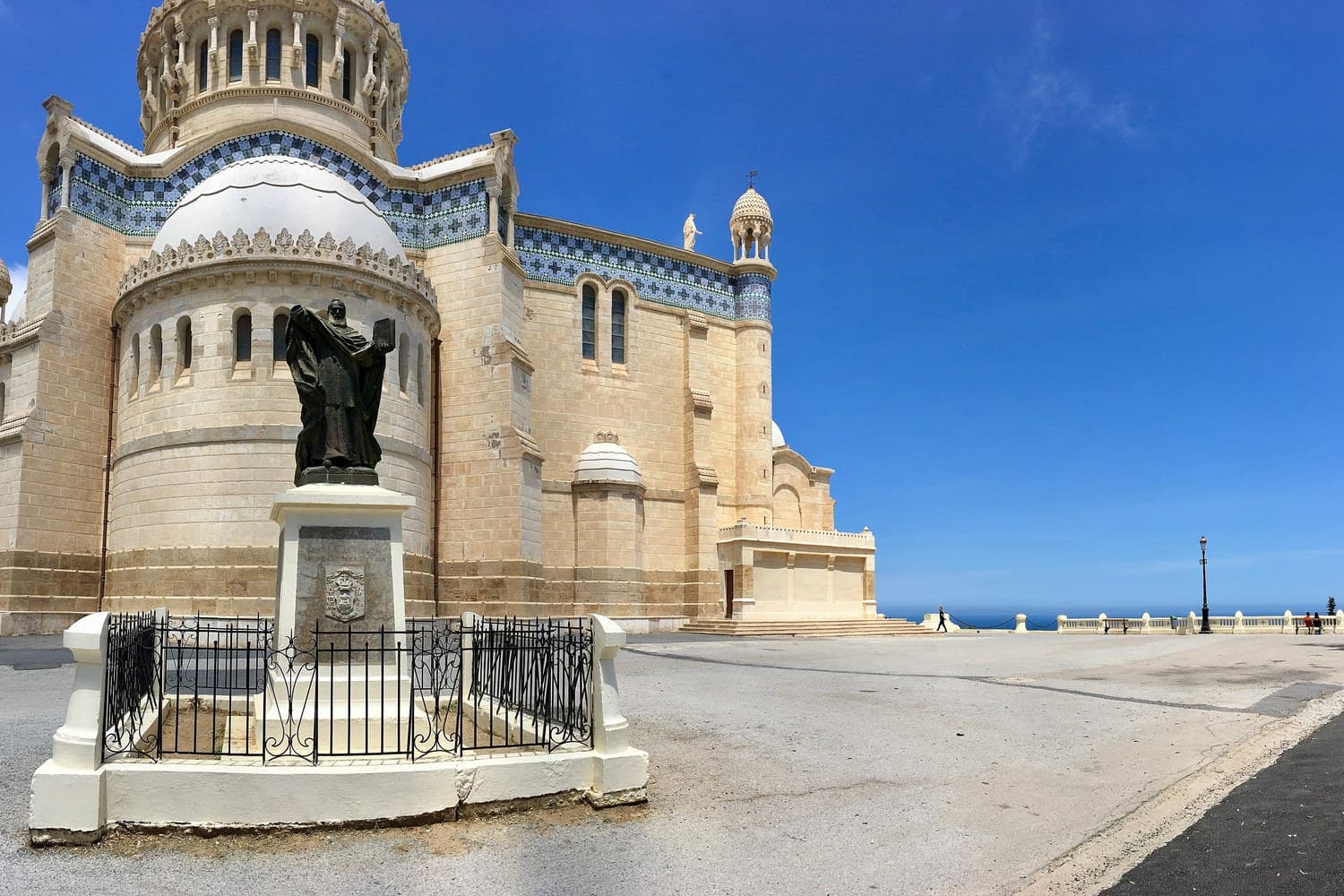
AlgeriaPhoto: Dacoslett / Wikimedia Commons (CC BY-SA 4.0)

Algeria

Country · DZ · DZD · Africa/Algiers

This information may change. Always check the official source.Last verified: September 2026 by

A consulate visa held before you fly. The visa-on-arrival route is real but narrow, and overstaying means detention at the airport rather than a fine.

  • You must have a visa to visit Algeria, applied for through the Algerian Consulate before you travel.
  • If you overstay, Algerian immigration police are likely to detain you at the airport on departure.
  • Declare cash on entry and on exit if you are carrying more than 5,000 euros or the equivalent in another currency.
  • Smuggling antiquities carries a prison sentence.
  • An Algerian national, including a dual national, who enters on an Algerian passport must leave on an Algerian passport.
More details

The visa

  • You must have a visa to visit Algeria, applied for through the Algerian Consulate before you travel.
  • There is a visa-on-arrival route, and it is narrow. It may be available at some airports if the majority of your travel is in the south of the country and you hold a confirmed reservation with an approved local travel agency. The consulate holds the list of approved agencies. Treat this as a route for an organised desert trip, not a fallback.
  • The passport must be valid at least 6 months after the day you arrive.
  • Check the visa's validity dates before you fly. Not just that you have one.

Overstaying is not a fine

  • If you overstay, Algerian immigration police are likely to detain you at the airport on departure.
  • You may face criminal prosecution and up to 3 months in prison.
  • To extend a stay, apply at the town hall, the wilaya, nearest to you before the visa runs out.

Money at the border, in both directions

  • Declare cash on entry and on exit if you are carrying more than 5,000 euros or the equivalent in another currency.
  • Failing to declare, or declaring falsely, is an offence that can lead to criminal prosecution. Note this applies leaving as well as arriving, which catches people who changed money inside the country.
  • Only travellers with residency status may bring Algerian banknotes in or out, and only up to 10,000 dinars. A visitor should not be carrying dinars across the border at all.

Souvenirs

  • Smuggling antiquities carries a prison sentence.
  • Get proof of authenticity for anything that looks old or antique. Without it the authorities may detain you on departure and confiscate the item.

Dual nationals and children

  • An Algerian national, including a dual national, who enters on an Algerian passport must leave on an Algerian passport.
  • A child is anyone under 19 years and one day, and a child with one Algerian parent is considered an Algerian citizen.
  • A parent travelling with an Algerian or British-Algerian dual national child must prove the parental link with a Livret de famille, original or certified copy.
  • If you cannot get a valid Algerian passport for such a child, you cannot take them out of Algeria without the father's written consent or a court order. This is the single most serious family-law trap on this page.

Vaccination

  • A yellow fever certificate is required only if you are arriving from a country listed as a transmission risk.

If the passport goes missing

  • The authorities will ask for a police report when you leave if your passport was lost or stolen during the stay, so report it locally as well as to the embassy.
Sources (1)

Private clinics are better than government hospitals, and the language of the consultation will be Arabic or French rather than English.

  • Facilities at private clinics are usually better than at government hospitals.
  • Insurance must cover treatment, evacuation and repatriation, with accessible funds.
  • English is not widely spoken, and the FCDO warns of communication difficulties if you speak neither Arabic nor French.
  • Altitude sickness is a risk in parts of Algeria. That is unexpected in a country most people picture as desert, and it applies in the mountains of the interior and the Hoggar.
  • Check vaccine recommendations at least 8 weeks ahead.
More details

Where to be treated

  • Facilities at private clinics are usually better than at government hospitals.
  • Insurance must cover treatment, evacuation and repatriation, with accessible funds.
  • Call the insurer as soon as you are referred to a facility.

Language is a practical health issue here

  • English is not widely spoken, and the FCDO warns of communication difficulties if you speak neither Arabic nor French.
  • Write down your conditions, allergies and medications in French before you travel. A card in a wallet is worth more than a translation app with no signal.

The named risk

  • Altitude sickness is a risk in parts of Algeria. That is unexpected in a country most people picture as desert, and it applies in the mountains of the interior and the Hoggar.

Before you go

  • Check vaccine recommendations at least 8 weeks ahead.
  • A yellow fever certificate is an entry requirement only if you arrive from a transmission-risk country.
Sources (1)

Algiers

Long-term averages for Algiers: the mean daily high, the mean overnight low and the mean monthly rainfall across 30 years of ERA5 reanalysis data (1995–2024).

DayNight
5101520253035°C0100mmJanFebMarAprMayJunJulAugSepOctNovDecJanuary: Day 15.6 °C, Night 7.7 °C, Rain 78 mm. February: Day 16.1 °C, Night 7.7 °C, Rain 67 mm. March: Day 18.3 °C, Night 9.2 °C, Rain 63 mm. April: Day 20.4 °C, Night 11.1 °C, Rain 59 mm. May: Day 23.6 °C, Night 14.1 °C, Rain 45 mm. June: Day 28 °C, Night 17.6 °C, Rain 8 mm. July: Day 31.4 °C, Night 20.6 °C, Rain 1 mm. August: Day 31.9 °C, Night 21.5 °C, Rain 7 mm. September: Day 28.7 °C, Night 19.4 °C, Rain 26 mm. October: Day 25.5 °C, Night 16.1 °C, Rain 49 mm. November: Day 19.8 °C, Night 12 °C, Rain 93 mm. December: Day 16.7 °C, Night 9 °C, Rain 76 mm
Show the monthly table
Algiers
MonthDay (°C)Night (°C)Rain (mm)
January15.67.778
February16.17.767
March18.39.263
April20.411.159
May23.614.145
June28.017.68
July31.420.61
August31.921.57
September28.719.426
October25.516.149
November19.812.093
December16.79.076

Oran

Long-term averages for Oran: the mean daily high, the mean overnight low and the mean monthly rainfall across 30 years of ERA5 reanalysis data (1995–2024).

DayNight
5101520253035°C0100mmJanFebMarAprMayJunJulAugSepOctNovDecJanuary: Day 15.6 °C, Night 8.2 °C, Rain 47 mm. February: Day 16.4 °C, Night 8.7 °C, Rain 36 mm. March: Day 18.4 °C, Night 10.3 °C, Rain 38 mm. April: Day 20.4 °C, Night 12.3 °C, Rain 35 mm. May: Day 23.3 °C, Night 15.1 °C, Rain 23 mm. June: Day 27.2 °C, Night 18.6 °C, Rain 4 mm. July: Day 30.3 °C, Night 21.3 °C, Rain 0 mm. August: Day 30.9 °C, Night 22.2 °C, Rain 4 mm. September: Day 27.8 °C, Night 20 °C, Rain 16 mm. October: Day 24.7 °C, Night 16.5 °C, Rain 29 mm. November: Day 19.5 °C, Night 12.3 °C, Rain 59 mm. December: Day 16.7 °C, Night 9.5 °C, Rain 44 mm
Show the monthly table
Oran
MonthDay (°C)Night (°C)Rain (mm)
January15.68.247
February16.48.736
March18.410.338
April20.412.335
May23.315.123
June27.218.64
July30.321.30
August30.922.24
September27.820.016
October24.716.529
November19.512.359
December16.79.544

Constantine

Long-term averages for Constantine: the mean daily high, the mean overnight low and the mean monthly rainfall across 30 years of ERA5 reanalysis data (1995–2024).

DayNight
0102030°C0100mmJanFebMarAprMayJunJulAugSepOctNovDecJanuary: Day 12.6 °C, Night 2.5 °C, Rain 50 mm. February: Day 13.6 °C, Night 2.8 °C, Rain 45 mm. March: Day 16.6 °C, Night 4.8 °C, Rain 52 mm. April: Day 19.9 °C, Night 7.4 °C, Rain 52 mm. May: Day 24.4 °C, Night 11 °C, Rain 50 mm. June: Day 30.3 °C, Night 15.3 °C, Rain 19 mm. July: Day 34.6 °C, Night 18.4 °C, Rain 7 mm. August: Day 33.9 °C, Night 18.6 °C, Rain 18 mm. September: Day 28.8 °C, Night 15.9 °C, Rain 29 mm. October: Day 24.3 °C, Night 12.1 °C, Rain 36 mm. November: Day 17.5 °C, Night 7.3 °C, Rain 47 mm. December: Day 13.6 °C, Night 3.9 °C, Rain 48 mm
Show the monthly table
Constantine
MonthDay (°C)Night (°C)Rain (mm)
January12.62.550
February13.62.845
March16.64.852
April19.97.452
May24.411.050
June30.315.319
July34.618.47
August33.918.618
September28.815.929
October24.312.136
November17.57.347
December13.63.948
Sources (1)

Coverage is patchy or absent in the south and remote areas, and online maps are not reliable there either. Download what you need before you leave the north.

  • Mobile coverage can be patchy or unavailable in more remote areas, particularly in the south. That is the FCDO's assessment.
  • Download offline maps and your itinerary while you still have a connection. Do not rely on being able to look something up.
  • Free wifi is available at the international flights terminal, which covers calling a hotel or a taxi firm on arrival before you have any local service.
  • Drones, binoculars, telescopes and certain types of photographic equipment are illegal to bring into Algeria without authorisation. If you are packing gear for the desert, check with Algerian customs before you travel rather than at the X-ray machine.
More details

Coverage is not the problem in the cities

  • Mobile coverage can be patchy or unavailable in more remote areas, particularly in the south. That is the FCDO's assessment.
  • Some online maps may not be accurate in remote areas. Both of those matter far more here than the price of data, because the south is where visitors go on organised desert trips.

What to do before you go south

  • Download offline maps and your itinerary while you still have a connection. Do not rely on being able to look something up.
  • Agree check-in points with whoever is expecting you. A silent phone in southern Algeria is normal rather than a signal.
  • Tell your hotel or guide your plans, which is also the FCDO's advice for the Casbah in Algiers.

At the airport

  • Free wifi is available at the international flights terminal, which covers calling a hotel or a taxi firm on arrival before you have any local service.

One thing not to bring

  • Drones, binoculars, telescopes and certain types of photographic equipment are illegal to bring into Algeria without authorisation. If you are packing gear for the desert, check with Algerian customs before you travel rather than at the X-ray machine.
Sources (2)

European sockets, Arabic and French rather than English, and a security presence that is meant to be reassuring.

  • Type and sockets at 230 V and 50 Hz, the standard European round-pin fittings. A UK plug needs an adapter; most of continental Europe does not.
  • English is not widely spoken. Arabic is the official language and French is widely used in business, signage and medicine.
  • The authorities devote considerable resources to the safety of foreign visitors, and the FCDO notes there is a clear security presence which can feel intrusive. It is not a sign that something is wrong.
  • Ask your hotel to call a taxi rather than hailing one, and arrange the return trip, because taxis thin out after dark.
  • Demonstrations are subject to restrictions. Avoid political gatherings and follow instructions from the security authorities.
More details

Power

  • Type and sockets at 230 V and 50 Hz, the standard European round-pin fittings. A UK plug needs an adapter; most of continental Europe does not.

Language

  • English is not widely spoken. Arabic is the official language and French is widely used in business, signage and medicine.
  • A few words of French will do more work here than in most of North Africa.

The security presence

  • The authorities devote considerable resources to the safety of foreign visitors, and the FCDO notes there is a clear security presence which can feel intrusive. It is not a sign that something is wrong.

Getting about

  • Ask your hotel to call a taxi rather than hailing one, and arrange the return trip, because taxis thin out after dark.
  • Rail travel is generally safe, though standards are lower than in the UK and there is petty crime on trains.
  • Use a good local guide for the Casbah in Algiers, and make sure your hotel knows your plans.

Protests

  • Demonstrations are subject to restrictions. Avoid political gatherings and follow instructions from the security authorities.
Sources (3)

Declare over 5,000 euros in both directions, carry no dinars across the border, and expect to need cash.

  • More than 5,000 euros, or the equivalent, must be declared at your point of entry and again at your point of exit.
  • Only travellers with residency status may bring Algerian banknotes in or out, and even then only up to 10,000 dinars.
  • Do not carry large amounts of money or obvious valuables. The FCDO lists pickpocketing, robbery and petty theft as risks in the larger cities.
  • The airport's own tariffs are a useful yardstick: 100 DA for half an hour of parking, 2,000 DA for a full day, 1,000 DA for overstaying the free ten minutes at the drop-off.
  • English is not widely spoken. Arabic or French will get further, and that includes conversations about payment, receipts and disputes.
More details

The declaration threshold works both ways

  • More than 5,000 euros, or the equivalent, must be declared at your point of entry and again at your point of exit.
  • A missing or false declaration is an offence that can lead to criminal prosecution. The exit half is the one people forget.

Do not carry dinars across the border

  • Only travellers with residency status may bring Algerian banknotes in or out, and even then only up to 10,000 dinars.
  • For a visitor that means: change what you need inside the country, and spend it before you leave.

Everyday

  • Do not carry large amounts of money or obvious valuables. The FCDO lists pickpocketing, robbery and petty theft as risks in the larger cities.
  • Avoid areas you do not know, especially after dark in the suburbs.

A sense of scale

  • The airport's own tariffs are a useful yardstick: 100 DA for half an hour of parking, 2,000 DA for a full day, 1,000 DA for overstaying the free ten minutes at the drop-off.

Cards and language

  • English is not widely spoken. Arabic or French will get further, and that includes conversations about payment, receipts and disputes.
Sources (3)

Bus, train and 24-hour taxis, no metro yet, and a drop-off zone that charges 1,000 dinars the moment you pass ten minutes.

  • ETUSA buses serve the airport seven days a week, on the Audin, Place des Martyrs and Kharrouba lines. That is the cheap way in.
  • Ask your hotel to phone a reputable firm rather than taking whatever is at the kerb.
  • There is no gentle middle. Eleven minutes costs a thousand dinars.
  • Losing the ticket costs 2,000 DA in either car park.
  • Arrive 3 hours before departure. That is the airport's own instruction, not a cautious estimate.
More details
Getting into the city
  • ETUSA buses serve the airport seven days a week, on the Audin, Place des Martyrs and Kharrouba lines. That is the cheap way in.
  • There is a train, the Houari Boumediene Airport to Agha line, also seven days a week. Agha is a central Algiers station, which makes this the most useful option for a city arrival.
  • Taxis run 24 hours a day, seven days a week, to all Algerian cities.
  • There is no metro station yet. The airport says its metro station "will be finalised soon", so do not plan around one.
The taxi rules the FCDO gives
  • Ask your hotel to phone a reputable firm rather than taking whatever is at the kerb.
  • Do not allow unknown passengers to join you.
  • Arrange the return journey with the same driver, because taxis are not widely available, particularly after dark.
  • Do not accept lifts from people you do not know.
The drop-off tariff is the trap

The dépose-minute for the International Terminal is on the viaduct and is for stopping, not parking. The published tariff:

Arriving at Algiers Houari Boumediene
TimeCharge
First 10 minutesFree
10 to 15 minutes1,000 DA
Beyond 15 minutes1,000 DA plus 500 DA for each additional 5 minutes started
  • There is no gentle middle. Eleven minutes costs a thousand dinars.
  • If somebody is meeting you and the flight is late, tell them to use a car park rather than circle the viaduct.
Parking, if you are leaving a car

International Terminal, P1 to P5 (4,500 spaces in total across the sub-car parks, with disabled bays):

Arriving at Algiers Houari Boumediene
DurationCharge
First half hourFree
30 minutes to 1 hour100 DA
1 to 3 hours200 DA
Beyond 3 hours200 DA + 100 DA per extra hour
24 hours2,000 DA
Beyond 24 hours2,000 DA + 2,000 DA per extra day

P6 is the long-stay car park and is much cheaper for a full day: free for the first half hour, 100 DA up to 4 hours, 200 DA up to 8 hours, 500 DA from 8 to 24 hours.

  • Losing the ticket costs 2,000 DA in either car park.
  • Choose the car park by your departure terminal: parking 1 for the Domestic and Omra terminal, parking 2 for the Hadj and charter terminal, parking 4 for the International terminal.
  • Note where you left the car, and do not leave valuables in it. Trolleys are available in the parking area.
In the terminal
  • Arrive 3 hours before departure. That is the airport's own instruction, not a cautious estimate.
  • Free wifi is provided at the international flights terminal, which is enough to call a hotel or a taxi firm before you go outside.
Sources (2)

The FCDO advises against all travel within 30 km of most of Algeria's land borders. Away from those strips, the risks are terrorism, roads and a short list of laws that surprise people.

  • Libya, Mauritania, Mali and Niger
  • Terrorists are likely to try to carry out attacks in Algeria. Attacks have often focused on the Algerian state but could be indiscriminate and target foreign nationals, and there is a lone-actor risk.
  • The land border between Algeria and Morocco is closed. Do not attempt to cross it.
  • The authorities do not always inform the British Embassy when a British national is arrested. If you are detained, insist on your right to contact the embassy, and expect it to take time for consular staff to get permission to visit.
  • It is illegal to be under the influence of alcohol in a public place. Most restaurants do not serve alcohol.
More details

The travel advisory, stated plainly

The FCDO advises against all travel to within 30 km of Algeria's borders with:

  • Libya, Mauritania, Mali and Niger
  • Tunisia, in the provinces of Illizi and Ouargla and in the Chaambi mountains area

The FCDO advises against all but essential travel to within 30 km of the rest of the Algeria to Tunisia border.

  • Travelling against that advice can invalidate travel insurance.
  • Algiers, Oran and Constantine carry no such advisory, which is why this page is written for arrivals there.

Terrorism and kidnap

  • Terrorists are likely to try to carry out attacks in Algeria. Attacks have often focused on the Algerian state but could be indiscriminate and target foreign nationals, and there is a lone-actor risk.
  • The threat is higher along the southern border, where the kidnap risk is concentrated, along the Libyan and Tunisian borders, in rural and mountainous areas in the north and between Tunisia and Algiers, and in the Sahara.
  • AQIM and Daesh-affiliated groups operate across the region and are likely to consider Western nationals legitimate targets.
  • British nationals are seen as legitimate kidnap targets, tourists included, and the FCDO warns that the reason for your presence is unlikely to protect you. The British government does not make substantive concessions to hostage takers, and paying a ransom is itself illegal under the Terrorism Act 2000.
  • The authorities do run effective counter-terrorism operations, and there is a visible security presence around foreign visitors that the FCDO acknowledges can feel intrusive. That presence is the reason the cities are as safe as they are.

The closed border

  • The land border between Algeria and Morocco is closed. Do not attempt to cross it.

If you are detained

  • The authorities do not always inform the British Embassy when a British national is arrested. If you are detained, insist on your right to contact the embassy, and expect it to take time for consular staff to get permission to visit.

Laws that catch visitors out

  • It is illegal to be under the influence of alcohol in a public place. Most restaurants do not serve alcohol.
  • Drones, binoculars, telescopes and certain photographic equipment cannot be brought in without authorisation.
  • There is zero tolerance for drug offences. Penalties for trafficking, smuggling, use and possession are severe and can extend to the death penalty depending on severity.
  • Sexual acts between people of the same sex are illegal.
  • British men of Algerian origin may be liable for national service even after living abroad. Check with the Algerian consulate before travelling.

Ramadan

  • Do not eat, drink, smoke or chew gum in public during daylight hours, including in a car. No loud music, no dancing, no swearing in public.
  • Check opening hours, expect hotels serving food in fasting hours to screen you from other guests, and allow for tiredness in the late afternoon.

Documents and checkpoints

  • You do not have to carry the passport at all times, but take it on longer journeys, and you must have it for a domestic flight.
  • Keep copies of the photo page and the visa or entry stamp somewhere separate.
  • At military or police checkpoints, approach slowly, do not cross boundaries without permission, and be ready to show photo ID.

Driving

  • Algeria has a very high road accident rate and driving can be erratic, with little lane discipline and confusion over right of way, especially at roundabouts. Take care crossing on foot even at a signal.
  • Roads carry sand drifts, large potholes that appear after heavy rain, and large speed bumps. Slow down for sand.
  • Roads and vehicles may be unlit at night outside towns.
  • A UK photocard licence works for up to 3 months, and the authorities may ask for an international driving permit as well. Buy the IDP before you leave the UK, because you cannot get one abroad.
  • Check petrol station availability before a long journey in a remote area.

Natural hazards

  • Wildfires happen most summers and can flare without warning in extreme weather.
  • Parts of the country flood severely, with deaths, submerged houses and cars swept away.
  • Earthquakes are a risk in the north, including Algiers. The May 2003 earthquake near Algiers killed over 2,200 people; smaller ones happen regularly.
Sources (2)

Five numbers across three services, and none of them is 112.

  • Save all five. Algeria publishes two numbers each for ambulance and police, and there is no single emergency number covering everything.
  • Expect the call to be in Arabic or French. Have the address of where you are written down, ideally in French.
  • Call your insurer as soon as you are referred to a clinic, since private facilities are the ones you will want and they will want to know who is paying.
  • If you are detained, insist on contacting the British Embassy. The authorities do not always inform them.
  • Save your embassy's number offline. Coverage in the south is patchy and a cloud contact list is not a saved contact.
More details

The numbers

Emergency numbers in Algeria
ServiceNumber
Ambulance16 or 1021
Fire14
Police17 or 1548

Before you need them

  • Save all five. Algeria publishes two numbers each for ambulance and police, and there is no single emergency number covering everything.
  • Expect the call to be in Arabic or French. Have the address of where you are written down, ideally in French.
  • Call your insurer as soon as you are referred to a clinic, since private facilities are the ones you will want and they will want to know who is paying.
  • If you are detained, insist on contacting the British Embassy. The authorities do not always inform them.
  • Save your embassy's number offline. Coverage in the south is patchy and a cloud contact list is not a saved contact.
Sources (2)