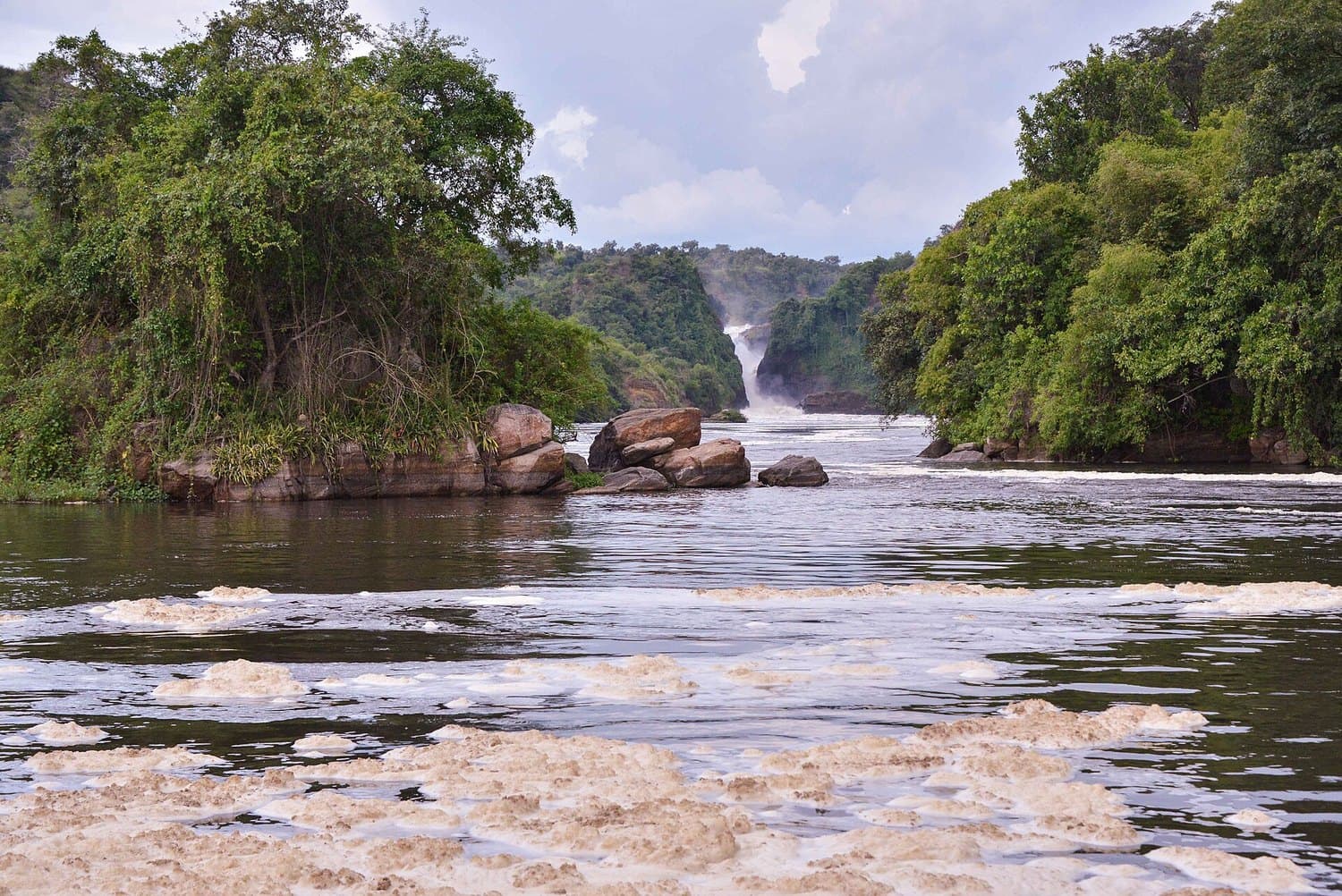
UgandaPhoto: Rod Waddington / Wikimedia Commons (CC BY-SA 2.0)

Uganda

Country · UG · UGX · Africa/Kampala

This information may change. Always check the official source.Last verified: September 2026 by

Apply online before you fly. What arrives by email is an approval letter, not a visa: the sticker is printed at the border, and the yellow fever certificate is checked alongside it.

  • You must apply at the Uganda e-immigration portal before you fly. The FCDO and Global Affairs Canada both state it as compulsory, and Canada lists the electronic visa as required even for transit.
  • The approval letter establishes that you are eligible. Immigration says in as many words that the final approval happens at the point of entry, where the visa sticker is printed and pasted into your passport.
  • Passport bio-data page with at least 6 months' validity, a recent passport photograph, a travel itinerary or booking, and a hotel booking or the address where you are staying.
  • 100 US dollars, 90 days, multiple entries across Uganda, Kenya and Rwanda. Those three countries only.
More details

The visa is bought online, before you travel

  • You must apply at the Uganda e-immigration portal before you fly. The FCDO and Global Affairs Canada both state it as compulsory, and Canada lists the electronic visa as required even for transit.
  • The single-entry tourist visa costs 50 US dollars and is granted for up to 3 months.
  • Payment is by Visa or Mastercard only, with a 3 per cent surcharge added to every online payment. The fee is not refundable, even if you cancel.
  • Uganda's own FAQ will not say that visa on arrival is finished. Asked "Is Uganda still issuing visas on arrival?", it replies only that applicants are strongly encouraged to apply online to avoid inconvenience. Two foreign ministries say the online visa is mandatory. Do not fly on the strength of an evasive answer.

What you get is an approval letter, and it is not the visa

  • The approval letter establishes that you are eligible. Immigration says in as many words that the final approval happens at the point of entry, where the visa sticker is printed and pasted into your passport.
  • The barcode on the letter is what the officer scans. Immigration calls printing it recommended rather than mandatory; the FCDO says print it. Print it.
  • The approval lapses 90 days after it is granted. Travel inside three months of approval or apply again.
  • Biometrics are captured at the border, so allow for the queue on arrival.

The documents the application actually wants

  • Passport bio-data page with at least 6 months' validity, a recent passport photograph, a travel itinerary or booking, and a hotel booking or the address where you are staying.
  • Everything you upload has to be in English.

The East Africa Tourist Visa, and its trap

  • 100 US dollars, 90 days, multiple entries across Uganda, Kenya and Rwanda. Those three countries only.
  • The country that issues it must be your first entry point. Buy the Ugandan one and land in Nairobi first and you have bought the wrong visa.
  • It is not extendable or renewable, inside the country or on leaving the bloc, and it prohibits employment, volunteering included.
  • A yellow fever certificate and a return ticket are on its own list of required documents.

Staying longer

  • The stay granted at entry can be extended by 60 days, in 2 intervals, online or in person at immigration headquarters or a regional office. That is the tourist visa; the East Africa visa cannot be extended at all.

Who needs no visa

  • Uganda publishes a list of visa-exempt nationalities. Among the passports this site covers, Malaysia and Singapore are on it; Ireland, Hong Kong SAR, the UAE, Kenya, Rwanda, Tanzania and most Commonwealth African and Caribbean states are too.
Sources (5)

The yellow fever certificate is an entry document, required of everyone from age one and only valid 10 days after the jab. Malaria risk is high, and serious cases here mean an air ambulance.

  • A yellow fever certificate is required to enter Uganda. The FCDO states it flatly, the airport states that a certificate is required of all arriving passengers, and Global Affairs Canada records the requirement as applying to travellers from all countries, not just those coming from a risk area. Uganda's own East Africa visa application asks for it too.
  • Uganda is a high-risk malaria country and TravelHealthPro recommends antimalarials for travellers: atovaquone with proguanil, doxycycline or mefloquine.
  • WHO declared the Uganda Ebola outbreak over on 27 August 2026. The outbreak in neighbouring DRC continues, the risk of transmission into Uganda remains, and Uganda is still running precautions on that border.
More details

Yellow fever: the certificate is the border document

  • A yellow fever certificate is required to enter Uganda. The FCDO states it flatly, the airport states that a certificate is required of all arriving passengers, and Global Affairs Canada records the requirement as applying to travellers from all countries, not just those coming from a risk area. Uganda's own East Africa visa application asks for it too.
  • The requirement starts at age 1, under the International Health Regulations.
  • Since 11 July 2016 the certificate is valid for life, and a booster cannot be demanded of you however old the certificate is.
  • The certificate is only valid from 10 days after the vaccination. That is WHO's rule and it is the reason this cannot be left to the airport: immunity takes 10 to 14 days to develop.
  • Entebbe's Airport Medical Centre does vaccinate, at 40 US dollars or 120,000 shillings. Useful to know, and not a plan.
  • Carry the paper certificate. The FCDO says the physical document has to be with you to show at immigration if asked.

Malaria is the risk you will actually meet

  • Uganda is a high-risk malaria country and TravelHealthPro recommends antimalarials for travellers: atovaquone with proguanil, doxycycline or mefloquine.
  • Start the conversation at least 8 weeks before you fly, along with the rest of the vaccine list.
  • A fever of 38°C or more, more than a week after arriving in a malaria area, is a medical emergency, and so is any malaria-like symptom within a year of coming home.

Ebola, and where it stands

  • WHO declared the Uganda Ebola outbreak over on 27 August 2026. The outbreak in neighbouring DRC continues, the risk of transmission into Uganda remains, and Uganda is still running precautions on that border.
  • Other countries have not all caught up. Canada kept 21 day quarantine measures for travellers who have been in Uganda until 28 September 2026, weeks after the outbreak was declared over. Check what your own country does to arrivals from Uganda before you book the flight home.

Healthcare, and the insurance question

  • Medical facilities are limited, especially outside Kampala, and many popular tourist areas have poor facilities. Help at the scene of an accident is likely to be limited.
  • A serious illness or accident may mean an air ambulance. Insurance has to cover treatment, evacuation and repatriation, with accessible funds, not reimbursement months later.
  • Call your insurer as soon as you are referred to a facility, before treatment starts.
  • Altitude sickness is a risk in parts of the country, and there is a high HIV prevalence: UNAIDS puts it at about 1,400,000 adults.

Food and water

  • Use boiled or bottled water only, and avoid ice. Avoid food from unlicensed vendors.
  • Avoid contact with fresh water in lakes and rivers, where schistosomiasis is present.
Sources (6)

Kampala

Long-term averages for Kampala: the mean daily high, the mean overnight low and the mean monthly rainfall across 30 years of ERA5 reanalysis data (1995–2024).

DayNight
15202530°C0250mmJanFebMarAprMayJunJulAugSepOctNovDecJanuary: Day 25.8 °C, Night 18.3 °C, Rain 94 mm. February: Day 26.4 °C, Night 18.9 °C, Rain 92 mm. March: Day 25.6 °C, Night 19.1 °C, Rain 149 mm. April: Day 24.4 °C, Night 18.9 °C, Rain 212 mm. May: Day 24.2 °C, Night 18.4 °C, Rain 166 mm. June: Day 24.1 °C, Night 17.8 °C, Rain 106 mm. July: Day 24.2 °C, Night 17.4 °C, Rain 76 mm. August: Day 24.6 °C, Night 17.5 °C, Rain 108 mm. September: Day 25 °C, Night 17.9 °C, Rain 118 mm. October: Day 24.9 °C, Night 18.3 °C, Rain 148 mm. November: Day 24.5 °C, Night 18.1 °C, Rain 182 mm. December: Day 24.8 °C, Night 18 °C, Rain 127 mm
Show the monthly table
Kampala
MonthDay (°C)Night (°C)Rain (mm)
January25.818.394
February26.418.992
March25.619.1149
April24.418.9212
May24.218.4166
June24.117.8106
July24.217.476
August24.617.5108
September25.017.9118
October24.918.3148
November24.518.1182
December24.818.0127

Gulu

Long-term averages for Gulu: the mean daily high, the mean overnight low and the mean monthly rainfall across 30 years of ERA5 reanalysis data (1995–2024).

DayNight
1520253035°C0200mmJanFebMarAprMayJunJulAugSepOctNovDecJanuary: Day 31.7 °C, Night 20.3 °C, Rain 14 mm. February: Day 33 °C, Night 21.3 °C, Rain 17 mm. March: Day 31.8 °C, Night 20.8 °C, Rain 90 mm. April: Day 28.8 °C, Night 19.7 °C, Rain 182 mm. May: Day 27.5 °C, Night 19.1 °C, Rain 165 mm. June: Day 27 °C, Night 18.4 °C, Rain 117 mm. July: Day 26.6 °C, Night 17.9 °C, Rain 143 mm. August: Day 26.8 °C, Night 17.9 °C, Rain 181 mm. September: Day 27.6 °C, Night 18.3 °C, Rain 158 mm. October: Day 28 °C, Night 18.7 °C, Rain 179 mm. November: Day 28.4 °C, Night 18.7 °C, Rain 114 mm. December: Day 30.1 °C, Night 19.2 °C, Rain 29 mm
Show the monthly table
Gulu
MonthDay (°C)Night (°C)Rain (mm)
January31.720.314
February33.021.317
March31.820.890
April28.819.7182
May27.519.1165
June27.018.4117
July26.617.9143
August26.817.9181
September27.618.3158
October28.018.7179
November28.418.7114
December30.119.229

Mbarara

Long-term averages for Mbarara: the mean daily high, the mean overnight low and the mean monthly rainfall across 30 years of ERA5 reanalysis data (1995–2024).

DayNight
15202530°C0200mmJanFebMarAprMayJunJulAugSepOctNovDecJanuary: Day 26.7 °C, Night 16.2 °C, Rain 35 mm. February: Day 27.8 °C, Night 16.8 °C, Rain 38 mm. March: Day 27 °C, Night 16.7 °C, Rain 68 mm. April: Day 25.7 °C, Night 16.2 °C, Rain 84 mm. May: Day 25.6 °C, Night 16 °C, Rain 59 mm. June: Day 26.4 °C, Night 15.8 °C, Rain 20 mm. July: Day 27 °C, Night 15.8 °C, Rain 13 mm. August: Day 26.6 °C, Night 15.9 °C, Rain 48 mm. September: Day 26.3 °C, Night 15.6 °C, Rain 73 mm. October: Day 25.7 °C, Night 15.7 °C, Rain 96 mm. November: Day 24.9 °C, Night 15.6 °C, Rain 106 mm. December: Day 25.5 °C, Night 15.6 °C, Rain 65 mm
Show the monthly table
Mbarara
MonthDay (°C)Night (°C)Rain (mm)
January26.716.235
February27.816.838
March27.016.768
April25.716.284
May25.616.059
June26.415.820
July27.015.813
August26.615.948
September26.315.673
October25.715.796
November24.915.6106
December25.515.665
Sources (1)

MTN gives foreign visitors a free tourist SIM at the airport service centre, registered against passport and visa. It switches itself off the day the visa expires.

  • MTN's Tourist SIM costs nothing and is issued at the MTN service centre at the airport on arrival, and through selected tour partners.
  • The tourist SIM is valid for exactly as long as your visa and is deactivated automatically when the visa expires. Extend the visa and the SIM has to catch up; overstay and your phone stops before immigration does.
  • Tourist combo bundles start at 30,000 shillings for 10 GB and 150 minutes over 30 days, rising through 85,000 for 30 GB and 450 minutes to 220,000 for 85 GB. Buy on *160*20#, check the balance on *131#.
  • Free wifi from Liquid Telecom and Airtel covers the arrivals hall and the meeters and greeters area as well as departures, which is enough to tell a driver you have landed.
More details

The tourist SIM is free, and it is at the airport

  • MTN's Tourist SIM costs nothing and is issued at the MTN service centre at the airport on arrival, and through selected tour partners.
  • Bring the passport and the visa. An agent registers the card against both documents. That is the registration rule for any foreigner buying any SIM here, so a card handed to you by someone else is registered to them, not you.
  • An ordinary MTN SIM costs 2,000 shillings and is sold at any of 167 service centres, on a passport for a foreigner. Cards are only activated after verification, so buying one in the street is not a shortcut.

It expires with your visa

  • The tourist SIM is valid for exactly as long as your visa and is deactivated automatically when the visa expires. Extend the visa and the SIM has to catch up; overstay and your phone stops before immigration does.
  • Usage is restricted to inside Uganda. It is not a card to carry into Kenya or Rwanda on an East Africa visa.

Bundles and money

  • Tourist combo bundles start at 30,000 shillings for 10 GB and 150 minutes over 30 days, rising through 85,000 for 30 GB and 450 minutes to 220,000 for 85 GB. Buy on *160*20#, check the balance on *131#.
  • Mobile money is activated on *165#, and topped up in cash at any MTN mobile money agent. In a country where cards are accepted mainly by hotels and airlines, that wallet is the practical way to pay for small things.

At the airport itself

  • Free wifi from Liquid Telecom and Airtel covers the arrivals hall and the meeters and greeters area as well as departures, which is enough to tell a driver you have landed.
Sources (3)

The last Saturday of every month is a mandatory national cleaning morning that shuts businesses and stops non-essential movement. The sockets are British.

  • Between 07:00 and 10:00 on the final Saturday of each month, national cleaning day is mandatory and nationwide. All businesses must close and all non-essential movement of people and vehicles is prohibited, enforced by the police.
  • Type sockets, the British three pin, at 240 V and 50 Hz. A UK plug goes straight in; most of Europe needs an adapter.
  • Entebbe sits on the equator on a peninsula in Lake Victoria, 3,782 feet up, which is why the coast-level heat you might expect never arrives: the airport's own figures are a range of about 17°C to 27°C in January and 16°C to 25°C in July.
  • Uber and Bolt operate in Kampala. Both foreign ministries advise against matatus and boda-bodas, which is most of what moves around you.
More details

The last Saturday of the month is not a normal morning

  • Between 07:00 and 10:00 on the final Saturday of each month, national cleaning day is mandatory and nationwide. All businesses must close and all non-essential movement of people and vehicles is prohibited, enforced by the police.
  • Tourists and international travellers are exempt, along with medical staff, security, journalists, patients travelling to a health facility and cross-border traffic. Anyone travelling under an exemption may have to identify themselves and explain their circumstances.
  • The FCDO says plainly that it is unclear how widely the restrictions are enforced, including for hotel and airport access. If your flight or transfer falls in that window, ask your hotel or operator the week before rather than on the morning.

Power

  • Type sockets, the British three pin, at 240 V and 50 Hz. A UK plug goes straight in; most of Europe needs an adapter.

The climate you land in

  • Entebbe sits on the equator on a peninsula in Lake Victoria, 3,782 feet up, which is why the coast-level heat you might expect never arrives: the airport's own figures are a range of about 17°C to 27°C in January and 16°C to 25°C in July.
  • Rainy seasons run roughly March to May and again in the autumn, bringing localised flooding and landslides. The two governments describe the second season slightly differently, October to November for the FCDO and September to November for Canada, so treat the whole autumn as wet.

Getting about

  • Uber and Bolt operate in Kampala. Both foreign ministries advise against matatus and boda-bodas, which is most of what moves around you.
  • Uganda is in an earthquake zone, and minor tremors can still do damage.

Manners and dress

  • Dress conservatively outside the cities and respect religious and social traditions.
  • Ask before photographing anyone, and remember the ban on photographing dams, airports, government buildings and uniformed personnel.
Sources (4)

Cash country. Change money at the airport bureaux, keep the receipt for hard currency, and declare anything over 30 million shillings on the yellow Form D at the red channel.

  • Credit cards are accepted only by major hotels, airlines and some car hire firms, on Global Affairs Canada's reading. Everything else is cash or mobile money.
  • Cash or bearer instruments worth 1,500 currency points or more must be declared: that is 30,000,000 shillings, roughly 9,000 US dollars. It applies on the way in and on the way out.
  • Red channel if you have anything to declare, green if you do not.
  • The visa fee is in US dollars and paid online by card, with a 3 per cent surcharge, so it is not a reason to carry cash. The yellow fever vaccination at the airport is 40 dollars or 120,000 shillings if you need it, which is.
More details

Cards are the exception, not the rule

  • Credit cards are accepted only by major hotels, airlines and some car hire firms, on Global Affairs Canada's reading. Everything else is cash or mobile money.
  • Forex bureaux and ATMs at Entebbe arrivals run 24 hours, and the banks and bureaux there handle most convertible currencies. Change enough at the airport to get to town and through the first day.
  • Keep the receipt. The airport's own advice is that hard currency bought from money dealers should be accompanied by an official receipt.
  • Mobile money is the local everyday payment method. A tourist SIM activates a wallet on *165# and any agent will load shillings into it.

The cash you have to declare

  • Cash or bearer instruments worth 1,500 currency points or more must be declared: that is 30,000,000 shillings, roughly 9,000 US dollars. It applies on the way in and on the way out.
  • Arriving passengers fill in Form D, the yellow one, hand it to a customs officer with a copy of the passport, and go through the red channel.
  • No tax is charged on declared money. The declaration takes 15 to 20 minutes and goes to the Financial Intelligence Authority afterwards. The penalty for getting this wrong is out of proportion to the paperwork: up to 3 years' imprisonment or a fine of up to 10,000 dollars.

Customs, briefly

  • Red channel if you have anything to declare, green if you do not.
  • A visitor on a stay of up to three months may bring in non-consumable goods for personal use, provided they leave with them.
  • Duty free is 1 litre of spirits or 2 litres of wine, 250 ml of perfume and 500 ml of toilet water, and 250 g of tobacco products in total.

Paying for things at the border

  • The visa fee is in US dollars and paid online by card, with a 3 per cent surcharge, so it is not a reason to carry cash. The yellow fever vaccination at the airport is 40 dollars or 120,000 shillings if you need it, which is.
Sources (5)

Everyday prices

Typical prices in Ugandan shilling (UGX), averaged across the country by Numbeo and read on 10 September 2026. Tick Convert prices above the table to see every amount in your own currency.

Everyday prices
ItemTypical price
Inexpensive restaurant meal10,000 UGX
Dinner for two, mid-range, three courses100,000 UGX
Cappuccino9,510 UGX
Local draught beer, 0.5 l4,000 UGX
Bottled water, 0.33 l1,030 UGX
Public transport, one-way ticket3,000 UGX
Taxi, starting fare2,000 UGX
Petrol, 1 litre5,350 UGX
Cigarettes, pack of 20 (Marlboro)10,000 UGX
Average net monthly salary695,000 UGX

These are country-wide averages, not a price list: tourist districts, airports and islands sit well above them, and small towns below. The salary line is there for proportion - it is what people living here actually earn.

Sources (1)

Airport guides for Uganda1

One page per airport: the routes into town, what they cost and the trap particular to that arrival.

See all 1 airports

Entebbe is 40 km from Kampala and no one may come inside the terminal to meet you. The airport publishes its taxi price; the road to Kampala is the one road the FCDO does not warn you off after dark.

  • Only passengers with tickets are allowed into the terminal building at Entebbe. Anyone collecting you waits outside. Agree the meeting point before you land rather than after, because the arrivals hall is not it.
  • Entebbe International Airport is 40 km south-west of Kampala, on a 42 km all-weather road, part of it dual carriageway, at an 80 km/h limit. The airport puts the drive at about 40 minutes, and warns that morning and evening traffic is heavy. The Entebbe Express Highway is the faster of the two routes.
More details
Nobody can meet you inside
  • Only passengers with tickets are allowed into the terminal building at Entebbe. Anyone collecting you waits outside. Agree the meeting point before you land rather than after, because the arrivals hall is not it.
  • Everyone entering the terminal, passengers and staff alike, goes through a security check.
The distance, and the road
  • Entebbe International Airport is 40 km south-west of Kampala, on a 42 km all-weather road, part of it dual carriageway, at an 80 km/h limit. The airport puts the drive at about 40 minutes, and warns that morning and evening traffic is heavy. The Entebbe Express Highway is the faster of the two routes.
  • This is the one road the FCDO exempts from its own after-dark rule. It advises avoiding travel outside the main towns after dark except on the roads between Kampala and Entebbe International Airport. A night landing is normal here; a night drive into the country is not.
What the ride costs
  • The airport's published taxi price to Kampala is 40 US dollars or 100,000 shillings. Note that those two numbers no longer convert into one another at any recent rate, so treat the page as a guide to the order of magnitude and agree the fare before you get in.
  • Airport taxis carry a yellow band and the words AIRPORT TAXI in black, each with an identification number, and they park at the arrivals (ground) level. Note the number before you set off. Anything to another destination is negotiated.
  • Uber and Bolt both operate in Kampala, including airport pick-ups, and Uber lets you reserve a car up to 30 days ahead. Global Affairs Canada confirms ride-sharing is available. That is the version of "agree the fare first" that does it for you.
  • Commuter minibuses run to Entebbe town (Kitoro), 4 km, for about 2,000 shillings, and on from Entebbe to Kampala for about 5,000 shillings per passenger including hand luggage, taking about an hour. Pay in shillings. Note that both the FCDO and Global Affairs Canada advise against matatus altogether on safety grounds, so this is the cheap option rather than the recommended one.
Do not take a boda-boda from the airport
  • The FCDO advises against boda-bodas, the motorbike taxis, outright, and records that foreign nationals using them have been mugged, some violently. Global Affairs Canada says the same of boda-bodas and tuk-tuks. With luggage, on an unfamiliar 40 km road, it is not the arrival to improvise.
Landside, around the clock
  • Forex bureaux and bank ATMs in arrivals are open 24 hours, which matters for a flight that lands at three in the morning.
  • The Airport Medical Centre is open 24 hours at the northern end of arrivals, landside, and there is a health desk inside the arrivals hall.
  • Entebbe General Referral Hospital is a five minute drive from the airport.
Sources (6)

The FCDO advises against travel to no part of Uganda; Canada advises against non-essential travel to all of it. The laws that catch visitors are about clothing, cameras, cigarettes and who you sleep with.

  • The FCDO advises against travel to no part of Uganda. Its advice was current at 10 September 2026.
  • Terrorists are very likely to try to carry out attacks in Uganda, the FCDO says, including in Kampala and in national parks, and attacks could be indiscriminate.
  • Western Uganda, near the DRC border. The Allied Democratic Forces, linked to Daesh, may target foreign nationals, especially around the Bwera crossing; Ugandan troops operate on both sides of the border and crossings can close at short notice.
More details

The two advisories do not agree, and you should read both

  • The FCDO advises against travel to no part of Uganda. Its advice was current at 10 September 2026.
  • Global Affairs Canada advises against non-essential travel to the whole country, citing the regional impact of Ebola, the terrorist threat and high crime, and against all travel within 50 km of the South Sudan border.
  • They also read crime differently: Canada calls it "a high level of crime throughout Uganda", with violent crime frequent and tourists targeted, where the FCDO writes more narrowly about criminals targeting people who show signs of wealth. Where two governments disagree, plan on the more cautious one and check both before you book.

Terrorism

  • Terrorists are very likely to try to carry out attacks in Uganda, the FCDO says, including in Kampala and in national parks, and attacks could be indiscriminate.
  • Recent significant attacks it lists include December 2023 at Kyabandara and Nyabitusi in Kamwenge district, October 2023 when 2 tourists and their driver were killed in Queen Elizabeth National Park, and June 2023 when 42 people were killed at a school in Mpondwe.
  • Avoid large gatherings of any kind. Prefer hotels and venues with bag searches and visible security.

Where the FCDO gives regional advice

  • Western Uganda, near the DRC border. The Allied Democratic Forces, linked to Daesh, may target foreign nationals, especially around the Bwera crossing; Ugandan troops operate on both sides of the border and crossings can close at short notice.
  • South-west Uganda. M23 controls the Bunagana and Kitagoma-Buszana crossings on the DRC side in Kisoro district. Security personnel routinely accompany gorilla-tracking groups in Mgahinga and Bwindi, which is normal here, not a sign of a crisis. Do not take a gorilla tour that crosses into DRC.
  • North-east, the Karamoja sub-region. Armed cattle raiding, robberies and security operations across Kaabong, Kotido, Abim, Moroto and Nakapiripirit.
  • Kampala itself is treated as a busy capital, with two security operations in June 2025 noted on the page.

Politics

  • Presidential and parliamentary elections were held on 15 January 2026, with the inauguration on 12 May 2026. Rallies and protests can happen anywhere without warning, police have used tear gas, rubber bullets and live ammunition, and internet and social media have been disrupted.
  • Red and yellow are strongly associated with political parties. The FCDO suggests not wearing them around political events.

Laws that catch visitors

  • Camouflage and military-style clothing are illegal for anyone, children included. That covers marks, badges, symbols and accessories associated with the Ugandan military, and red berets. The maximum sentence on conviction is life imprisonment. Check what is in the bag before you pack it.
  • Electronic cigarettes and shisha are illegal, with fines and prison sentences. Smoking is banned in public places, workplaces, transport and outdoors within 50 metres of a public building.
  • Photographing military, official or diplomatic sites is forbidden, and that expressly includes Owen Falls Dam at the source of the Nile near Jinja, plus airports, ports and uniformed personnel. Ask before photographing people.
  • Giving money, food or clothing to children living on the streets in Kampala is illegal and punishable by a fine and possibly prison.
  • Drug penalties are severe: up to 20 years for possession, life for trafficking.
  • Always carry a copy of your passport photo page. Officials may stop you and ask for identification, and police checkpoints are common, particularly heading west.
  • A drone needs a permit from the Uganda Civil Aviation Authority to be imported or flown.

LGBT+ travellers

  • Same-sex sexual activity is illegal. The Anti-Homosexuality Act 2023 carries life imprisonment for same-sex sexual activity and up to the death penalty for what it calls aggravated homosexuality, though the death penalty has not been carried out on civilians in Uganda since 1999.
  • Promoting or supporting homosexuality carries up to 20 years, and is drafted widely enough to cover publishing, broadcasting or funding.
  • The FCDO records that anti-LGBT+ rhetoric from public figures and media incites hostility, and that LGBT+ people or those perceived to be face harassment, blackmail and violence. Canada reports arbitrary arrests and searches by security forces. Read both governments' advice for LGBT+ travellers before deciding to travel.

Crime, practically

  • Do not carry large amounts of cash, use indoor ATMs, and arrange transport when withdrawing money. Do not wear expensive jewellery or watches, and do not walk after dark.
  • Thieves work stopped traffic: keep doors locked and windows shut in town, and nothing visible in a parked car.
  • Drink spiking is a documented risk on public transport and in bars, and the FCDO also warns about methanol in adulterated spirits, which cannot be tasted or smelled.

On the road

  • Traffic drives on the left. A UK licence is valid for up to 3 months; beyond that you need a Ugandan licence or a 1949 international driving permit, which cannot be bought outside the UK.
  • Accidents are common on the Jinja to Kampala and Kampala to Masaka roads, at night vehicles drive without lights and livestock wander onto the carriageway, and speeding is enforced with fines or imprisonment.
  • Long-distance and overnight buses have had serious accidents and robberies, including on international services to Nairobi, Kigali and Dar es Salaam.
  • Ferry accidents on Lake Victoria and Lake Albert have killed many, usually through overloading. Do not board a boat that looks overloaded, and find the life jackets.
Sources (4)

One number, 999, reaches all three services. Save the airport medical centre and your insurer alongside it.

  • 999 is the single emergency number for all three services in Uganda.
  • Medical help at the scene of an accident is likely to be limited, particularly outside Kampala. Getting to a hospital may matter more than waiting for one to come to you.
  • Call your insurer as soon as you are referred to a facility. Uganda is a country where a serious case can mean an air ambulance, and that call is what starts it.
  • Save your embassy's number offline, and keep a photocopy or photograph of your passport page separate from the passport itself. Officials can ask for identification at any time.
More details

The number

Emergency numbers in Uganda
ServiceNumber
Ambulance, fire and police999
FCDO in London, 24 hours020 7008 5000

What to expect from it

  • 999 is the single emergency number for all three services in Uganda.
  • Medical help at the scene of an accident is likely to be limited, particularly outside Kampala. Getting to a hospital may matter more than waiting for one to come to you.
  • Entebbe's Airport Medical Centre runs 24 hours and can be reached on +256 752 222 8855. Entebbe General Referral Hospital is five minutes away by road, and is the main hospital for the municipality.

Before you need any of it

  • Call your insurer as soon as you are referred to a facility. Uganda is a country where a serious case can mean an air ambulance, and that call is what starts it.
  • Save your embassy's number offline, and keep a photocopy or photograph of your passport page separate from the passport itself. Officials can ask for identification at any time.
Sources (3)