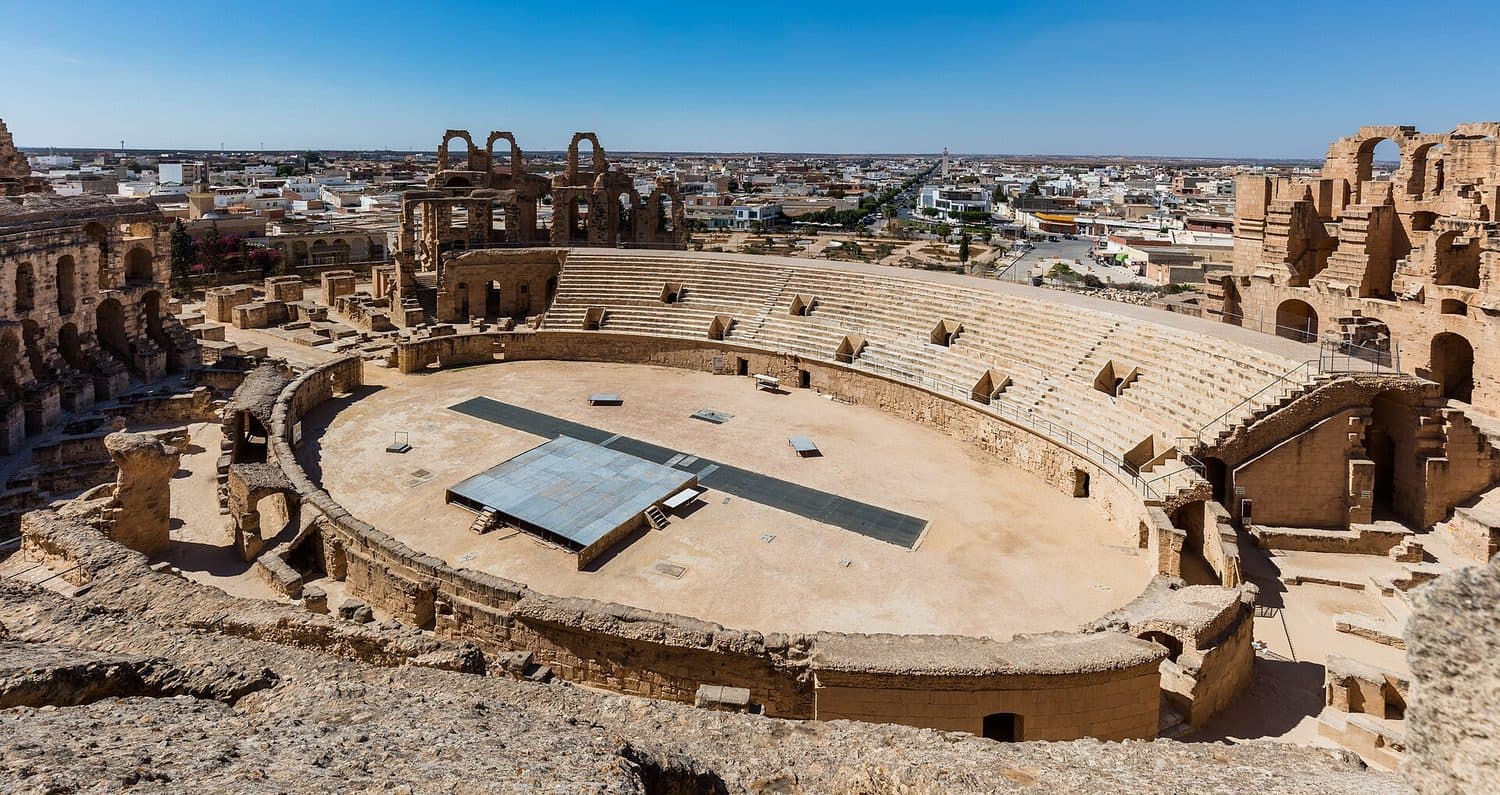
TunisiaPhoto: Diego Delso / Wikimedia Commons (CC BY-SA 4.0)

Tunisia

Country · TN · TND · Africa/Tunis

This information may change. Always check the official source.Last verified: August 2026 by

Ninety days without a visa and a passport that need only outlast the trip, but a torn passport is a problem on the way out and cash has three separate limits.

  • No visa for a tourist visit of up to 90 days.
  • Your passport needs to be valid for the duration of your stay, and no longer. Tunisia is one of the few countries that does not want six months.
  • A damaged or torn passport is a problem leaving, not arriving. The FCDO warns specifically that people who enter Tunisia on a damaged passport run into difficulty when they try to leave. If yours is coming apart, replace it before you fly.
  • 20,000 TND equivalent or more must be declared on arrival, on departure and in transit. Failing to declare can mean confiscation.
  • Above 5,000 TND equivalent, declare to airport customs on arrival, or the excess is confiscated when you leave. This one costs money quietly, months later.
More details

The stay

  • No visa for a tourist visit of up to 90 days.
  • Your passport needs to be valid for the duration of your stay, and no longer. Tunisia is one of the few countries that does not want six months.
  • Border officers may ask for contact details, an onward or return ticket and an accommodation booking, and have refused entry when they were not produced.
  • Overstaying carries a fine, payable on departure.

The passport itself

  • A damaged or torn passport is a problem leaving, not arriving. The FCDO warns specifically that people who enter Tunisia on a damaged passport run into difficulty when they try to leave. If yours is coming apart, replace it before you fly.

Cash at the border, three numbers

All three are stated in dinars, and all three are about foreign currency you are carrying.

  • 20,000 TND equivalent or more must be declared on arrival, on departure and in transit. Failing to declare can mean confiscation.
  • Above 5,000 TND equivalent, declare to airport customs on arrival, or the excess is confiscated when you leave. This one costs money quietly, months later.
  • You cannot leave with 30,000 TND equivalent or more, even if you declared it coming in.
  • These rules are for non-residents, and the customs authority publishes them in French and Arabic only.
Sources (2)

Private clinics, paid on the spot

Care that a visitor uses is private and is paid immediately, which makes insurance and an accessible balance the whole plan.

  • The care a visitor uses is private. Doctors' fees, medication and treatment in private clinics are paid on the spot, and the costs can be high.
  • Some clinics will accept your insurer directly if they can get a payment guarantee from the company first. That call takes time you may not have.
  • Insurance must include medical evacuation and hospital stays, not just treatment.
  • Typhoid is present but low risk for most travellers, and travels in food and water.
  • Check routine vaccinations are current at least 8 weeks before travelling.
More details

How it works

  • The care a visitor uses is private. Doctors' fees, medication and treatment in private clinics are paid on the spot, and the costs can be high.
  • Some clinics will accept your insurer directly if they can get a payment guarantee from the company first. That call takes time you may not have.
  • So carry accessible funds as well as a policy. A card that works and a policy number are the two things to have on your phone.

Cover

  • Insurance must include medical evacuation and hospital stays, not just treatment.
  • Check that it covers what you are actually doing, which in Tunisia often means desert excursions, quad bikes and diving.

Everyday risks

  • Typhoid is present but low risk for most travellers, and travels in food and water.
  • Biting insects and ticks are the routine nuisance, particularly in spring and in the north.
  • Heat is the underrated one. Between June and September inland and southern temperatures pass 40 C, and sand and dust storms are frequent.

Before you go

  • Check routine vaccinations are current at least 8 weeks before travelling.
Sources (2)

Tunis

Long-term averages for Tunis: the mean daily high, the mean overnight low and the mean monthly rainfall across 30 years of ERA5 reanalysis data (1995–2024).

DayNight
5101520253035°C050mmJanFebMarAprMayJunJulAugSepOctNovDecJanuary: Day 15.5 °C, Night 8.3 °C, Rain 44 mm. February: Day 16 °C, Night 8.1 °C, Rain 45 mm. March: Day 18.3 °C, Night 9.6 °C, Rain 47 mm. April: Day 21.2 °C, Night 11.9 °C, Rain 43 mm. May: Day 25.3 °C, Night 15.1 °C, Rain 29 mm. June: Day 30.2 °C, Night 18.9 °C, Rain 13 mm. July: Day 33.4 °C, Night 21.7 °C, Rain 1 mm. August: Day 33.4 °C, Night 22.3 °C, Rain 10 mm. September: Day 29.4 °C, Night 20.5 °C, Rain 40 mm. October: Day 25.5 °C, Night 17.3 °C, Rain 48 mm. November: Day 20.4 °C, Night 13 °C, Rain 46 mm. December: Day 16.7 °C, Night 9.7 °C, Rain 48 mm
Show the monthly table
Tunis
MonthDay (°C)Night (°C)Rain (mm)
January15.58.344
February16.08.145
March18.39.647
April21.211.943
May25.315.129
June30.218.913
July33.421.71
August33.422.310
September29.420.540
October25.517.348
November20.413.046
December16.79.748

Sousse

Long-term averages for Sousse: the mean daily high, the mean overnight low and the mean monthly rainfall across 30 years of ERA5 reanalysis data (1995–2024).

DayNight
5101520253035°C050mmJanFebMarAprMayJunJulAugSepOctNovDecJanuary: Day 16.8 °C, Night 7.6 °C, Rain 27 mm. February: Day 17.6 °C, Night 7.8 °C, Rain 22 mm. March: Day 20.2 °C, Night 9.5 °C, Rain 42 mm. April: Day 23 °C, Night 12 °C, Rain 27 mm. May: Day 27.1 °C, Night 15.3 °C, Rain 19 mm. June: Day 31.6 °C, Night 19.1 °C, Rain 7 mm. July: Day 34.9 °C, Night 21.9 °C, Rain 1 mm. August: Day 34.7 °C, Night 22.6 °C, Rain 11 mm. September: Day 30.6 °C, Night 20.7 °C, Rain 44 mm. October: Day 26.5 °C, Night 17.3 °C, Rain 43 mm. November: Day 21.6 °C, Night 12.6 °C, Rain 26 mm. December: Day 17.8 °C, Night 9 °C, Rain 27 mm
Show the monthly table
Sousse
MonthDay (°C)Night (°C)Rain (mm)
January16.87.627
February17.67.822
March20.29.542
April23.012.027
May27.115.319
June31.619.17
July34.921.91
August34.722.611
September30.620.744
October26.517.343
November21.612.626
December17.89.027

Djerba

Long-term averages for Djerba: the mean daily high, the mean overnight low and the mean monthly rainfall across 30 years of ERA5 reanalysis data (1995–2024).

DayNight
101520253035°C025mmJanFebMarAprMayJunJulAugSepOctNovDecJanuary: Day 16.4 °C, Night 10 °C, Rain 16 mm. February: Day 17.5 °C, Night 10.2 °C, Rain 14 mm. March: Day 20.3 °C, Night 12.2 °C, Rain 14 mm. April: Day 23 °C, Night 14.8 °C, Rain 13 mm. May: Day 26.4 °C, Night 18 °C, Rain 6 mm. June: Day 30.2 °C, Night 21.3 °C, Rain 1 mm. July: Day 32.9 °C, Night 23.9 °C, Rain 0 mm. August: Day 33.2 °C, Night 25 °C, Rain 2 mm. September: Day 30.6 °C, Night 23.9 °C, Rain 16 mm. October: Day 27 °C, Night 20.4 °C, Rain 21 mm. November: Day 21.9 °C, Night 15.6 °C, Rain 19 mm. December: Day 17.6 °C, Night 11.7 °C, Rain 20 mm
Show the monthly table
Djerba
MonthDay (°C)Night (°C)Rain (mm)
January16.410.016
February17.510.214
March20.312.214
April23.014.813
May26.418.06
June30.221.31
July32.923.90
August33.225.02
September30.623.916
October27.020.421
November21.915.619
December17.611.720
Sources (1)

Tunis, and the tax on top

The per-night tourist tax is per person, is not in the rate you booked, and is collected in dinars at the desk.

  • 8 TND per person per night at 3-star hotels, 12 TND at 4 and 5-star, up to a maximum of ten nights.
  • It is separate from the room rate on every booking channel, and it is normally cash.
  • Tunis Carthage is close to the city, so an airport-area hotel is not a category here the way it is elsewhere.
  • The medina is where you came to stay and not where you want to arrive at midnight. Its streets are not addressed in a way a driver can find in the dark.
  • Confirm whether the property takes cards. Small guesthouses often do not, and you cannot arrive with dinars.
More details

The tax, again, because it is charged at check-in

  • 8 TND per person per night at 3-star hotels, 12 TND at 4 and 5-star, up to a maximum of ten nights.
  • It is separate from the room rate on every booking channel, and it is normally cash.

Where the arrival lands you

  • Tunis Carthage is close to the city, so an airport-area hotel is not a category here the way it is elsewhere.
  • The medina is where you came to stay and not where you want to arrive at midnight. Its streets are not addressed in a way a driver can find in the dark.
  • Lac 1 and Lac 2, on the way in from the airport, are where the business hotels are, and a reasonable place to lose one night.
  • Sidi Bou Said and La Marsa are on the TGM line from Tunis Marine, which the airport bus connects to.

Booking practicalities

  • Confirm whether the property takes cards. Small guesthouses often do not, and you cannot arrive with dinars.
  • Dress modestly outside resorts, particularly during Ramadan, and at religious sites everywhere.
Sources (2)

SIM cards and the passport that has to be physical

Three operators, a SIM that must be registered against your passport in person, and an Ooredoo tourist pack you reserve before you fly and collect at Tunis or Djerba airport.

  • Ooredoo, Orange Tunisie and Tunisie Telecom are the three networks. All three sell prepaid.
  • Coverage on the coast and in the tourist belt is good. The interior and the south thin out, as they do everywhere in North Africa.
  • A Tunisian SIM is registered to a named holder against identity documents. That is a legal requirement, not a shop policy, and it is why a SIM cannot simply be handed over.
  • Ooredoo's Holiday SIM is pre-ordered online, and you choose the collection shop in advance: Tunis airport or Djerba airport.
  • Reserve before you fly if you are landing at Tunis or Djerba, and buy at the counter otherwise.
More details

The operators

  • Ooredoo, Orange Tunisie and Tunisie Telecom are the three networks. All three sell prepaid.
  • Coverage on the coast and in the tourist belt is good. The interior and the south thin out, as they do everywhere in North Africa.

Registration is in person, with the passport itself

  • A Tunisian SIM is registered to a named holder against identity documents. That is a legal requirement, not a shop policy, and it is why a SIM cannot simply be handed over.
  • Ooredoo's Holiday SIM is pre-ordered online, and you choose the collection shop in advance: Tunis airport or Djerba airport.
  • After the confirmation email you send back a copy of your passport by email, and on arrival you present the passport itself at that shop for identification and to sign the contract.
  • Which means the reservation does not save you the queue. It saves you the paperwork at the counter.

The practical answer

  • Reserve before you fly if you are landing at Tunis or Djerba, and buy at the counter otherwise.
  • A roaming eSIM covers the gap between landing and finding a shop, which matters most on a late arrival when the shops are shut.
Sources (1)

Power, language and the shape of the week

European sockets, French as the working second language, and a week whose quiet day is Friday.

  • 230 V, 50 Hz, sockets type and - the same round two-pin as France, so a European plug fits.
  • UK and US plugs need an adapter.
  • Arabic is the official language and Tunisian Arabic is what is spoken.
  • Friday is the day the rhythm changes: the midday prayer empties offices for a while, and supermarkets stop selling alcohol.
  • The north has hot dry summers and rainy winters; the south is semi-arid.
More details

Power

  • 230 V, 50 Hz, sockets type and - the same round two-pin as France, so a European plug fits.
  • UK and US plugs need an adapter.

Language

  • Arabic is the official language and Tunisian Arabic is what is spoken.
  • French is the working second language, on signs, menus and in offices, far more than English.
  • English is common in the tourist belt and rare outside it. A little French goes further here than it does in most of North Africa.

The week

  • Friday is the day the rhythm changes: the midday prayer empties offices for a while, and supermarkets stop selling alcohol.
  • Ramadan reshapes the day, with restaurants shut in daylight outside resorts and everything happening after sunset.
  • Public holidays follow both the Gregorian and Islamic calendars, so dates move year to year.

Climate

  • The north has hot dry summers and rainy winters; the south is semi-arid.
  • October to May is the northern rainy season. In the south it barely rains at all.
  • Severe multi-year droughts happen and can put water supplies under pressure.
Sources (2)

The dinar does not leave the country

Importing and exporting dinars is prohibited outright, so you change money after you land and you change back before you fly. Anything left over is stuck.

  • It is prohibited to import or export Tunisian dinars. Not limited - prohibited, in both directions.
  • So you cannot buy dinars at home, and the exchange desk at your own airport does not stock them for a reason.
  • Change in stages rather than all at once. The airport bank on arrival is for the first day, not the trip.
  • ATMs are widely available in tourist areas and in every major centre.
  • A hotel tax is charged per person per night: 8 TND at 3-star hotels and 12 TND at 4 and 5-star hotels, capped at ten nights.
More details

The closed currency

  • It is prohibited to import or export Tunisian dinars. Not limited - prohibited, in both directions.
  • So you cannot buy dinars at home, and the exchange desk at your own airport does not stock them for a reason.
  • And you cannot take the leftovers home. There is no keeping a note as a souvenir and no changing them back next year.

What that means for how much you change

  • Change in stages rather than all at once. The airport bank on arrival is for the first day, not the trip.
  • Keep your exchange receipts. Converting dinars back on departure is the official route and receipts are what the counter asks for.
  • Do the last conversion landside, before you clear security, and leave time for it.
  • Spend the coins. They will not convert.

Cards and ATMs

  • ATMs are widely available in tourist areas and in every major centre.
  • Cards are accepted in urban and tourist businesses, and much less so outside them.
  • Cash still runs the country for taxis, cafes, markets and the medina. Assume cash unless you can see a terminal.

The tax nobody quotes you

  • A hotel tax is charged per person per night: 8 TND at 3-star hotels and 12 TND at 4 and 5-star hotels, capped at ten nights.
  • It is not in the room rate and it is collected at the property, in dinars, which you may not have brought with you.
Sources (2)

Everyday prices

Typical prices in Tunisian dinar (TND), averaged across the country by Numbeo and read on 28 August 2026. Tick Convert prices above the table to see every amount in your own currency.

Everyday prices
ItemTypical price
Inexpensive restaurant meal12 TND
Dinner for two, mid-range, three courses60 TND
Cappuccino2.84 TND
Local draught beer, 0.5 l5.00 TND
Bottled water, 0.33 l0.91 TND
Public transport, one-way ticket1.00 TND
Taxi, starting fare0.90 TND
Petrol, 1 litre2.53 TND
Cigarettes, pack of 20 (Marlboro)11 TND
Average net monthly salary957 TND

These are country-wide averages, not a price list: tourist districts, airports and islands sit well above them, and small towns below. The salary line is there for proportion - it is what people living here actually earn.

Sources (1)

Airport guides for Tunisia3

One page per airport: the routes into town, what they cost and the trap particular to that arrival.

See all 3 airports

Tunis Carthage to Tunis Marine, hourly

TRANSTU runs one bus an hour between the airport and Tunis Marine, and calls it a trial. First bus out of the airport at 06:00, last at 21:00.

  • TRANSTU opened a bus line between Tunis Marine station and Tunis Carthage airport on 29 April 2024, and it is the public transport link to the airport.
  • It runs every 60 minutes in both directions, which TRANSTU describes as a trial service (a titre d'essai).
  • An hourly bus is not an airport shuttle. If your flight lands at 22:30, or is an hour late, the bus is not an option and you have not planned a fallback.
  • Agree the fare or insist on the meter before the bags go in. This is the standard advice for Tunis and it is standard for a reason.
  • OACA runs seven international airports: Tunis Carthage, Djerba Zarzis, Sfax Thyna, Tozeur Nefta, Tabarka Ain Draham, Gafsa Ksar and Gabes Matmata.
More details
The bus
  • TRANSTU opened a bus line between Tunis Marine station and Tunis Carthage airport on 29 April 2024, and it is the public transport link to the airport.
  • It runs every 60 minutes in both directions, which TRANSTU describes as a trial service (a titre d'essai).
  • From Tunis Marine: first at 05:30, last at 20:30.
  • From the airport: first at 06:00, last at 21:00.
  • The route goes by way of Perle du Lac and Avenue Yasser Arafat, calling at the freight terminal and the pilgrims' terminal on the way.
  • Tunis Marine is the TGM terminus, which puts you at the bottom of Avenue Habib Bourguiba and on the light rail out to Carthage, Sidi Bou Said and La Marsa.
What hourly actually means
  • An hourly bus is not an airport shuttle. If your flight lands at 22:30, or is an hour late, the bus is not an option and you have not planned a fallback.
  • Landing outside 06:00 to 21:00 means a taxi, so agree that before you fly rather than at the kerb.
Taxis
  • Agree the fare or insist on the meter before the bags go in. This is the standard advice for Tunis and it is standard for a reason.
  • The FCDO's warning about distraction thefts applies at the kerb, where you are tired, carrying everything and being talked to by several people.
  • Have small notes. A driver with no change is a negotiation you will lose.
The other airports
  • OACA runs seven international airports: Tunis Carthage, Djerba Zarzis, Sfax Thyna, Tozeur Nefta, Tabarka Ain Draham, Gafsa Ksar and Gabes Matmata.
  • Monastir Habib Bourguiba has been run under concession since 1 January 2008, and Enfidha Hammamet under the same concession. Those two are where most package charters land, not Tunis.
Sources (3)

Louages, trains and driving

The shared louage is the real intercity network. Driving is the risk: unmarked speed bumps, unlit roads and livestock after dark.

  • Road surfaces are reasonable, but large potholes open up after rain.
  • Speed bumps appear in towns without warning or markings. They are the single most common way a hire car is damaged here.
  • The louage is a shared long-distance taxi and it is how the country actually moves between towns. They leave when full rather than to a timetable, from their own stations.
  • SNCFT runs the rail network, useful along the coast between Tunis, Sousse and Sfax. It is slow and cheap.
  • Strikes in transport and public services happen, and can hit rail, sea, air and city transport at short notice. Build slack around a departure day.
More details

On the road

  • Road surfaces are reasonable, but large potholes open up after rain.
  • Speed bumps appear in towns without warning or markings. They are the single most common way a hire car is damaged here.
  • Do not drive at night outside towns. Unlit roads and livestock on the carriageway are the reason.
  • Driving standards are poor, with right of way and traffic signals treated as advice.
  • The drink-drive limit is stricter than England's and the penalties are severe.
  • Carry an International Driving Permit alongside your own licence.

Louages

  • The louage is a shared long-distance taxi and it is how the country actually moves between towns. They leave when full rather than to a timetable, from their own stations.
  • Fares are fixed and posted, so this is not a negotiation.

Trains

  • SNCFT runs the rail network, useful along the coast between Tunis, Sousse and Sfax. It is slow and cheap.

Strikes

  • Strikes in transport and public services happen, and can hit rail, sea, air and city transport at short notice. Build slack around a departure day.
Sources (2)

Terrorism, theft and the laws people break

A real terrorism threat with named regions to avoid, distraction thefts, and a set of laws that catch visitors: photography, alcohol on Fridays, drugs, and same-sex relations.

  • There is a threat of terrorism, countrywide. Attacks have targeted resorts and tourist attractions as well as government and military sites.
  • On 9 May 2023 a shooting took place near the Ghriba synagogue on Djerba, during the annual pilgrimage and despite an increased security presence.
  • Theft is the main risk, often set up with a confidence trick as a distraction.
  • Demonstrations and strikes happen, mostly in downtown Tunis, and can turn violent or block traffic.
  • Photographing government buildings and military sites is prohibited.
More details

Terrorism

  • There is a threat of terrorism, countrywide. Attacks have targeted resorts and tourist attractions as well as government and military sites.
  • On 9 May 2023 a shooting took place near the Ghriba synagogue on Djerba, during the annual pilgrimage and despite an increased security presence.
  • Governments advise against all travel to several areas: within 20 km of the Algerian border, within 30 km of the Libyan border, the governorate of Kasserine including the Chaambi, Mghila, Sammama and Selloum mountain ranges, and the closed military zone south of Remada.
  • The coastal tourist strip is not one of those areas, which is the distinction the advisories are actually drawing.

Crime

  • Theft is the main risk, often set up with a confidence trick as a distraction.
  • Reports of sexual harassment and assault rise in summer, in busy areas at night and in parks and on beaches during the day.

Demonstrations

  • Demonstrations and strikes happen, mostly in downtown Tunis, and can turn violent or block traffic.

Laws that catch visitors

  • Photographing government buildings and military sites is prohibited.
  • Supermarkets do not sell alcohol on Fridays, and sales are restricted during Ramadan outside resorts.
  • Same-sex sexual activity is illegal, and prosecutions happen.
  • Drug offences carry long prison sentences.
  • Taking antiquities out of the country needs advance government permission.
  • In daytime during Ramadan, eating, drinking, smoking or chewing gum in public causes offence, resorts excepted.
Sources (2)

190 ambulance, 198 fire and road accidents, 197 police in towns, 193 National Guard in the countryside.

  • 197 and 193 divide the country between them. The police cover towns and cities; the National Guard covers the countryside and small villages. On a desert road or between towns, 193 is the number that answers.
  • 198 covers road accidents as well as fire, which is the one to reach for after a crash.
  • 112 is not the general emergency number here. Learn the four.
More details

The numbers

Emergency numbers in Tunisia
ServiceNumber
Ambulance190
Fire and road accidents198
Police, in towns and cities197
National Guard, rural areas and small villages193

The one that is easy to get wrong

  • 197 and 193 divide the country between them. The police cover towns and cities; the National Guard covers the countryside and small villages. On a desert road or between towns, 193 is the number that answers.
  • 198 covers road accidents as well as fire, which is the one to reach for after a crash.
  • 112 is not the general emergency number here. Learn the four.
Sources (1)