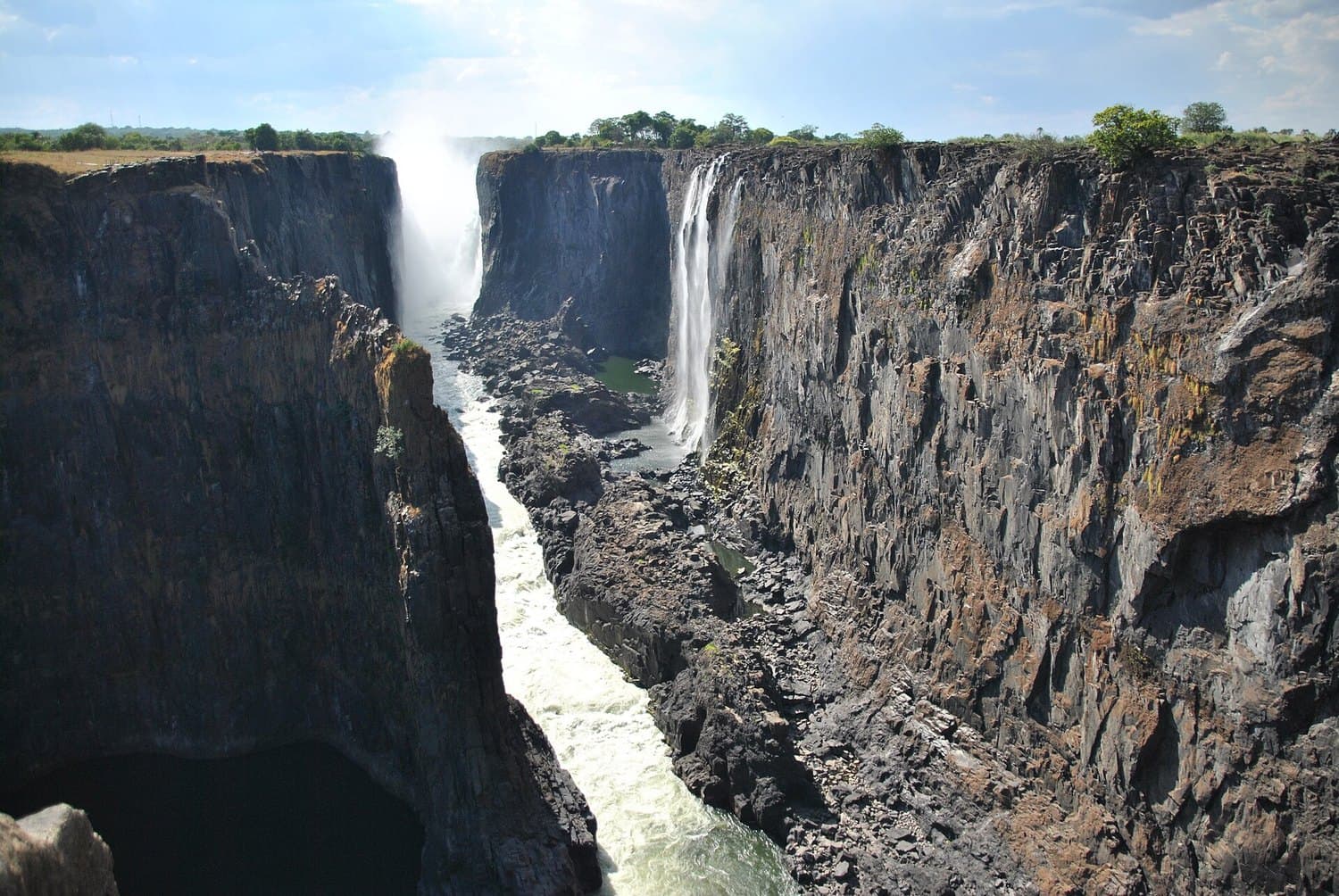
ZambiaPhoto: diego_cue / Wikimedia Commons (CC BY-SA 3.0)

Zambia

Country · ZM · ZMW · Africa/Lusaka

This information may change. Always check the official source.Last verified: September 2026 by

Visa and entry in Zambia

Zambia publishes three nationality lists, not one rule. The third needs written clearance from the Director General before you board, and the stamp you get may be shorter than the stay you are entitled to.

  • No visa at all. The United Kingdom, Ireland, the United States, Canada, Australia, China, Japan, South Korea, Singapore, Malaysia, Saudi Arabia and most of the European Union are on this list. You still have to satisfy the conditions below.
  • Six months' validity from the day you arrive. The FCDO and Immigration agree.
  • The two governments describe the tourist limit differently. The FCDO says 90 days in any 12 month period. Canada says 90 days per calendar year. Take the stricter reading if your trip straddles a new year.
  • Arriving by air, you must hold a valid return or onward ticket. This is Immigration's own wording, not an airline policy.
More details

Find your list before you book

The Department of Immigration publishes three lists, and which one you are on decides everything.

  • No visa at all. The United Kingdom, Ireland, the United States, Canada, Australia, China, Japan, South Korea, Singapore, Malaysia, Saudi Arabia and most of the European Union are on this list. You still have to satisfy the conditions below.
  • Visa on arrival, at a mission, or online. Russia, Brazil, Mexico, Thailand, Ghana and most of South America. Nothing has to be arranged in advance, though buying online first is what the airline wants to see.
  • Advance clearance before you travel. India, Pakistan, Bangladesh, Nigeria, Egypt, the Philippines, Vietnam, Cambodia and Macau are on this one. The application goes through the eServices portal, it is cleared by the Director General of Immigration, and you must have the letter of approval before you fly. There is no counter at the airport that fixes this.

Guides that copy Wikipedia's visa table file India and Cambodia as ordinary e-visa countries. The Department's own list says otherwise, and the Department runs the border.

The passport

  • Six months' validity from the day you arrive. The FCDO and Immigration agree.
  • Blank pages: carry three. The Department of Immigration says at least 3 full blank pages and Global Affairs Canada says 3. The FCDO says 2. Where they disagree, the border is run by the department that says three.
  • Get the stamp, and read it.

How long you actually get

  • The two governments describe the tourist limit differently. The FCDO says 90 days in any 12 month period. Canada says 90 days per calendar year. Take the stricter reading if your trip straddles a new year.
  • Business, student and volunteer visits are capped at 30 days, not 90.
  • Canada's advice adds the practical warning: officials may stamp only 30 days even where you are entitled to 90. Check the number written in your passport before you leave the desk, because that number, not the entitlement, is what you overstay.
  • Extensions go through an immigration office or the eServices platform. Overstaying can mean a fine, arrest, imprisonment or deportation.

Two conditions people forget

  • Arriving by air, you must hold a valid return or onward ticket. This is Immigration's own wording, not an airline policy.
  • Arriving by land or water, you must show enough funds for your stay and your departure.

On the way out

  • International departures carry a charge equivalent to 25 US dollars, and domestic departures a 3 US dollar security charge. Both are normally inside the ticket price. If they are not, you pay in cash, in kwacha.

Yellow fever

  • A yellow fever certificate is required if you are arriving from a country listed as a transmission risk. Zambia itself is low risk for the traveller; this is about where you have been.

The health form

  • The airport operator's homepage carries a Ministry of Health "Zambia Traveller Health Bio Data" form and asks arriving passengers to fill it in. Neither the FCDO nor Global Affairs Canada lists a compulsory arrival form, so treat it as a request rather than a document you can be turned back for. It is quicker to complete before you land than in the hall.

The KAZA UniVisa, and when it is worth 50 dollars

It is really a Zimbabwe visa bought on the Zambian side, it dies if you leave the two countries, and seven of the twenty passports this site covers cannot have it.

  • 50 US dollars, valid up to 30 days, and it buys unlimited travel between Zambia and Zimbabwe plus day trips into Botswana through Kazungula.
  • It is valid only while you remain within Zambia and Zimbabwe. That is the Department of Immigration's own wording. Leave the pair for anywhere other than a Botswana day trip through Kazungula and the univisa is spent, not paused.
  • Zambia lets most Western passports in for nothing. Zimbabwe does not. The FCDO's Zimbabwe page is explicit: you must have a visa, and most visitors get it on arrival for 30 days, single or double entry at different prices.
More details

What it is

  • 50 US dollars, valid up to 30 days, and it buys unlimited travel between Zambia and Zimbabwe plus day trips into Botswana through Kazungula.
  • In Zambia it is issued at four places only: Kenneth Kaunda International Airport in Lusaka, Harry Mwaanga Nkumbula International Airport in Livingstone, the Victoria Falls land border and the Kazungula land border. You can also apply online in advance, but only if you are arriving at one of those four.

The condition the travel pages leave out

  • It is valid only while you remain within Zambia and Zimbabwe. That is the Department of Immigration's own wording. Leave the pair for anywhere other than a Botswana day trip through Kazungula and the univisa is spent, not paused.
  • It is 30 days in any given 12 month period, so it is not a thing you buy twice in a season.

Why a visa-free traveller would buy one anyway

  • Zambia lets most Western passports in for nothing. Zimbabwe does not. The FCDO's Zimbabwe page is explicit: you must have a visa, and most visitors get it on arrival for 30 days, single or double entry at different prices.
  • So the sum is about the Zimbabwe side. One crossing to see the Falls from the other bank and come back is already two entries. If you plan to cross more than once, the univisa is unlimited and a single entry Zimbabwe visa is not.
  • If you will not cross at all, do not buy it. A visa-free arrival in Zambia costs nothing.

Who cannot have it

The eligibility list is long but not universal. China, India, Singapore, Malaysia, Saudi Arabia, Ireland and Cambodia are not on it. Britain, the United States, Canada, Australia, Japan, South Korea, Russia and most of the EU are.

The other fees, as published

The KAZA UniVisa, and when it is worth 50 dollars
VisaFee (USD)
Day tripper10
Transit25
Single entry50
KAZA UniVisa50
Double entry80
Multiple entry80
  • The day tripper visa at 10 dollars is the cheap answer to one afternoon in Zambia, which is the crossing people make from the Zimbabwean side to see the Falls from this bank. It is easy to miss because the univisa gets all the attention. It does not help in the other direction: entering Zimbabwe needs a Zimbabwean visa.
  • Card payment adds a small administration fee, 50 cents on a 50 dollar visa.
Sources (9)

Hospitals want a cash deposit or proof of insurance before treatment, and cash only outside the big cities. Common UK and Canadian medicines are controlled substances here and need a permit applied for two weeks ahead.

  • Public and private facilities usually require a cash deposit, a payment guarantee or confirmation of medical insurance up front. Outside the major cities, only a cash deposit is accepted.
  • Certain prescription and over-the-counter drugs that are ordinary at home are on Zambia's list of controlled substances. Global Affairs Canada records travellers being charged with drug trafficking and imprisoned over them.
  • Check vaccine recommendations at least 8 weeks ahead. Malaria is a risk across the country and antimalarials are recommended for most travellers.
  • In February 2025 mining waste containing heavy metals was released into the Chambishi stream and the Mwambashi and Kafue rivers in Copperbelt Province.
More details

Payment comes before treatment

  • Public and private facilities usually require a cash deposit, a payment guarantee or confirmation of medical insurance up front. Outside the major cities, only a cash deposit is accepted.
  • Care is good in some private facilities in Lusaka and very limited or unavailable in rural areas. Medical supplies can be short. The FCDO's summary is that standards throughout Zambia are lower than in the UK and rural facilities are basic with limited emergency services.
  • Air evacuation abroad may be necessary. Insurance has to cover evacuation and hospital stays with accessible funds, not a reimbursement six weeks later.
  • Carry basic medical supplies. This is the country where a small kit earns its space.

The medicines rule is stricter than you think

  • Certain prescription and over-the-counter drugs that are ordinary at home are on Zambia's list of controlled substances. Global Affairs Canada records travellers being charged with drug trafficking and imprisoned over them.
  • If yours is on the list you need an import permit from the Zambia Medicines Regulatory Authority, applied for at least two weeks before you travel, through its e-service portal. ZAMRA is the body that issues import authorisations and works with the border agencies.
  • Keep medication in its original container with a copy of the prescription, showing both the generic and the trade name, in hand luggage.

Before you go

  • Check vaccine recommendations at least 8 weeks ahead. Malaria is a risk across the country and antimalarials are recommended for most travellers.
  • Yellow fever, dengue, cholera and mpox are all listed by the FCDO as risks here. Rabies is common, carried by dogs and bats, and post-exposure treatment may not be available locally.
  • Schistosomiasis is in the fresh water. Do not swim or wade in lakes, rivers and ponds, which is the same advice the crocodiles imply.
  • Adult HIV prevalence is about 11 per cent, against 0.2 per cent in the UK.

The Kafue contamination

  • In February 2025 mining waste containing heavy metals was released into the Chambishi stream and the Mwambashi and Kafue rivers in Copperbelt Province.
  • Do not bathe in those waters, do not drink untreated local water there and do not eat fish from the area. Boiling does not remove heavy metals. Seek medical attention if you feel unwell.
Sources (3)

Lusaka

Long-term averages for Lusaka: the mean daily high, the mean overnight low and the mean monthly rainfall across 30 years of ERA5 reanalysis data (1995–2024).

DayNight
101520253035°C0250mmJanFebMarAprMayJunJulAugSepOctNovDecJanuary: Day 25.1 °C, Night 18 °C, Rain 244 mm. February: Day 25.2 °C, Night 17.9 °C, Rain 174 mm. March: Day 25.2 °C, Night 17.5 °C, Rain 118 mm. April: Day 24.7 °C, Night 15.8 °C, Rain 25 mm. May: Day 23.9 °C, Night 13.7 °C, Rain 3 mm. June: Day 22.2 °C, Night 11.8 °C, Rain 1 mm. July: Day 21.9 °C, Night 11.2 °C, Rain 1 mm. August: Day 25.3 °C, Night 13.6 °C, Rain 0 mm. September: Day 28.9 °C, Night 16.9 °C, Rain 2 mm. October: Day 30.8 °C, Night 19.3 °C, Rain 13 mm. November: Day 29.2 °C, Night 19.5 °C, Rain 94 mm. December: Day 26.4 °C, Night 18.4 °C, Rain 211 mm
Show the monthly table
Lusaka
MonthDay (°C)Night (°C)Rain (mm)
January25.118.0244
February25.217.9174
March25.217.5118
April24.715.825
May23.913.73
June22.211.81
July21.911.21
August25.313.60
September28.916.92
October30.819.313
November29.219.594
December26.418.4211

Livingstone

Long-term averages for Livingstone: the mean daily high, the mean overnight low and the mean monthly rainfall across 30 years of ERA5 reanalysis data (1995–2024).

DayNight
101520253035°C0250mmJanFebMarAprMayJunJulAugSepOctNovDecJanuary: Day 28.3 °C, Night 19.8 °C, Rain 210 mm. February: Day 28.1 °C, Night 19.5 °C, Rain 151 mm. March: Day 28.3 °C, Night 18.9 °C, Rain 91 mm. April: Day 27.9 °C, Night 16.7 °C, Rain 22 mm. May: Day 26.7 °C, Night 13.7 °C, Rain 2 mm. June: Day 24.6 °C, Night 11.2 °C, Rain 1 mm. July: Day 24.4 °C, Night 10.4 °C, Rain 0 mm. August: Day 28.4 °C, Night 13.1 °C, Rain 0 mm. September: Day 32.5 °C, Night 17.1 °C, Rain 2 mm. October: Day 34.6 °C, Night 20.3 °C, Rain 8 mm. November: Day 32.7 °C, Night 21 °C, Rain 80 mm. December: Day 29.5 °C, Night 20.1 °C, Rain 176 mm
Show the monthly table
Livingstone
MonthDay (°C)Night (°C)Rain (mm)
January28.319.8210
February28.119.5151
March28.318.991
April27.916.722
May26.713.72
June24.611.21
July24.410.40
August28.413.10
September32.517.12
October34.620.38
November32.721.080
December29.520.1176

Ndola

Long-term averages for Ndola: the mean daily high, the mean overnight low and the mean monthly rainfall across 30 years of ERA5 reanalysis data (1995–2024).

DayNight
101520253035°C0500mmJanFebMarAprMayJunJulAugSepOctNovDecJanuary: Day 24.9 °C, Night 17.3 °C, Rain 280 mm. February: Day 25.2 °C, Night 17.2 °C, Rain 219 mm. March: Day 25.4 °C, Night 16.9 °C, Rain 159 mm. April: Day 25.6 °C, Night 15.5 °C, Rain 32 mm. May: Day 25.6 °C, Night 13.5 °C, Rain 3 mm. June: Day 24.3 °C, Night 11.6 °C, Rain 0 mm. July: Day 24.2 °C, Night 11.1 °C, Rain 0 mm. August: Day 27.1 °C, Night 13.5 °C, Rain 0 mm. September: Day 30.3 °C, Night 16.6 °C, Rain 1 mm. October: Day 31.5 °C, Night 18.8 °C, Rain 12 mm. November: Day 29.2 °C, Night 18.6 °C, Rain 106 mm. December: Day 25.9 °C, Night 17.6 °C, Rain 253 mm
Show the monthly table
Ndola
MonthDay (°C)Night (°C)Rain (mm)
January24.917.3280
February25.217.2219
March25.416.9159
April25.615.532
May25.613.53
June24.311.60
July24.211.10
August27.113.50
September30.316.61
October31.518.812
November29.218.6106
December25.917.6253
Sources (1)

MTN publishes no self-service route at all. Registration and eSIM both need you standing in a shop for a live facial capture, and the accepted foreign ID is a passport with a visa or permit attached.

  • MTN Zambia states it plainly: there is no self eSIM payment process, no self-registration and no self-SIM swap. The existing SIM registration process is used instead.
  • Both SIM registration and eSIM swap require you to be physically present for a live facial capture. Nobody can do it for you and no portal will do it remotely.
  • Registration happens at an MTN store or an authorised SIM registration point, in person.
  • Zambia runs on hydropower and the drought has meant prolonged, scheduled outages affecting telecommunications, banks and ATMs as well as lighting. Carry a charged power bank from the airport, not from the second day.
More details

The eSIM you were going to buy from home does not exist here

  • MTN Zambia states it plainly: there is no self eSIM payment process, no self-registration and no self-SIM swap. The existing SIM registration process is used instead.
  • Both SIM registration and eSIM swap require you to be physically present for a live facial capture. Nobody can do it for you and no portal will do it remotely.
  • Prepaid customers must visit a store, and MTN's eSIM route assumes an existing contract. Activation takes 2 to 5 minutes and needs wifi, because your physical SIM is disconnected from the network during the swap.
  • The practical consequence: plan a shop visit on the arrival day, or land with international roaming already working.

What to bring to the counter

  • Registration happens at an MTN store or an authorised SIM registration point, in person.
  • The identification MTN lists for a non-Zambian is a foreign passport with a valid visa or permit attached, or a refugee or asylum certificate. That wording is worth reading twice if you are arriving visa-free, because the published list assumes a visa or a permit is in the passport. Take the physical passport and the entry stamp, and expect the entry stamp to be what is scanned.

Assume the power will go off

  • Zambia runs on hydropower and the drought has meant prolonged, scheduled outages affecting telecommunications, banks and ATMs as well as lighting. Carry a charged power bank from the airport, not from the second day.
Sources (3)

The power and the water go off on a schedule, the traffic is on the left, a hire car legally needs two metal triangles, and the sockets are British.

  • Drought has cut hydropower output, and Zambia depends on it. The result is prolonged, nationwide load shedding and water rationing, with fines for breaching water restrictions.
  • Traffic drives on the left.
  • Rains run roughly December to April, and the FCDO gives November to April. Sudden floods wash away bridges and roads, and rural roads can become impassable.
  • Type , the British three pin, at 230 V and 50 Hz. A UK plug goes straight in.
  • Dress conservatively, avoid kissing in public and behave discreetly.
More details

Power and water are rationed

  • Drought has cut hydropower output, and Zambia depends on it. The result is prolonged, nationwide load shedding and water rationing, with fines for breaching water restrictions.
  • Outages take out public lighting and traffic lights, telecommunications, security systems, shops, hotels, banks and ATMs. Plan the first day around that rather than being surprised by it: torch, power bank, cash in hand, and a hotel that says what its generator covers.

Driving

  • Traffic drives on the left.
  • Turning left at a red light is prohibited, which is the trap for anyone used to a permitted turn on red.
  • A vehicle must carry two metallic emergency triangles, white reflector stickers at the front and red at the back. Heavy fines follow if it does not, so check the hire car before you drive it away.
  • A UK photocard or Canadian licence is valid for 90 days. Longer than that needs an International Driving Permit or a Zambian licence. Hire firms often demand an IDP, a year's experience and a higher minimum age anyway.
  • Penalties for drink driving are severe, and the Road Traffic and Safety Agency prosecutes through a fast-track court.

The seasons decide the roads

  • Rains run roughly December to April, and the FCDO gives November to April. Sudden floods wash away bridges and roads, and rural roads can become impassable.
  • The dry season, May to October, has become more severe, which is the drought that took the power with it.

Power sockets

  • Type , the British three pin, at 230 V and 50 Hz. A UK plug goes straight in.

Manners and documents

  • Dress conservatively, avoid kissing in public and behave discreetly.
  • Carry identification or a certified copy at all times. A certified copy can be obtained from an immigration office or a police station.
  • Demonstrations happen in Lusaka and other urban areas, especially around elections, can turn violent and can block transport. Leave if a crowd forms, and never cross a protester roadblock.
Sources (3)

Since 26 December 2025 domestic transactions must settle in kwacha, with an exemption for registered tourism services taking payment from non-resident tourists. So a lodge may take dollars where a shop may not.

  • The Bank of Zambia's Currency Directives, 2025 took effect on 26 December 2025 and require domestic transactions to be settled in kwacha. A contract may still be denominated in a foreign currency, but the payment is made in kwacha at the market rate.
  • There is an exemption that covers tourists: non-resident payments for registered tourism services. In practice a lodge, tour operator or duty-free shop licensed for it may still take your dollars, and an ordinary shop or a private driver may not.
  • Bring US dollars, pounds or South African rand to change. Those are the three Global Affairs Canada names as accepted at any exchange bureau.
  • The airport taxi into town starts at 250 kwacha, printed by the operator as 25 US dollars.
More details

The kwacha rule, in force since 26 December 2025

  • The Bank of Zambia's Currency Directives, 2025 took effect on 26 December 2025 and require domestic transactions to be settled in kwacha. A contract may still be denominated in a foreign currency, but the payment is made in kwacha at the market rate.
  • There is an exemption that covers tourists: non-resident payments for registered tourism services. In practice a lodge, tour operator or duty-free shop licensed for it may still take your dollars, and an ordinary shop or a private driver may not.
  • Penalties reported for an individual breach run to 2,500 penalty units or two years' imprisonment. This is not a rule that only concerns businesses in the abstract; it is why a hotel that used to price in dollars may now hand you a kwacha figure.
  • A caveat on sourcing, stated because this page will not pretend otherwise: the Bank of Zambia's own PDF of the directives is not reachable. Its website now answers every document URL with the site shell, and the archived copies are image scans. The facts above are carried independently by IFLR1000 and by Zambia Monitor, which is the second-best position and worth knowing when you argue with a till.

What to carry

  • Bring US dollars, pounds or South African rand to change. Those are the three Global Affairs Canada names as accepted at any exchange bureau.
  • Cards work in larger supermarkets, restaurants and hotels in the big cities. ATMs are in main cities. Outside them, carry kwacha in cash, and assume a rural stop has neither a card machine nor a cash point.
  • Power cuts take the ATMs and card terminals with them. Draw cash when the power is on rather than when you need it.
  • Canada also flags card and ATM fraud: use machines inside a bank or a business, cover the keypad, and check statements.

Prices you will meet in the first hour

  • The airport taxi into town starts at 250 kwacha, printed by the operator as 25 US dollars.
  • The departure charge is 25 US dollars for international flights and 3 for domestic, normally inside the ticket, and payable in cash in kwacha if it is not.
  • Visa fees are published in US dollars: 10 for a day tripper, 50 for the KAZA UniVisa, 50 for a single entry.
Sources (5)

Everyday prices

Typical prices in kwacha (ZMW), averaged across the country by Numbeo and read on 10 September 2026. Tick Convert prices above the table to see every amount in your own currency.

Everyday prices
ItemTypical price
Inexpensive restaurant meal135 ZMW
Dinner for two, mid-range, three courses600 ZMW
Cappuccino61 ZMW
Local draught beer, 0.5 l25 ZMW
Bottled water, 0.33 l8.95 ZMW
Public transport, one-way ticket20 ZMW
Taxi, starting fare50 ZMW
Petrol, 1 litre28 ZMW
Cigarettes, pack of 20 (Marlboro)55 ZMW
Average net monthly salary8,280 ZMW

These are country-wide averages, not a price list: tourist districts, airports and islands sit well above them, and small towns below. The salary line is there for proportion - it is what people living here actually earn.

Sources (1)

Airport guides for Zambia1

One page per airport: the routes into town, what they cost and the trap particular to that arrival.

See all 1 airports

Lusaka is 27 km out and has ride-hailing. Livingstone is 5 km out and has none. The airport operator publishes one taxi price for both, in two currencies.

  • Kenneth Kaunda International, Lusaka, is 27 kilometres from the main business district. That is a real journey, at night on roads Canada rates as a major safety problem.
  • The rank is immediately outside the terminal, and airport taxis carry an orange band. That band is the identification, so a car without it is not the airport taxi.
  • Yango publishes rider pages for Lusaka, Ndola, Kitwe and Solwezi. There is no Livingstone page.
  • Livingstone is the cheap one: 10 kwacha for an hour, 60 kwacha for 8 to 24 hours, 200 kwacha if the ticket is lost.
  • The operator asks for 2 hours before an international flight and 1 hour before a domestic one. Domestic departures also pay a 3 US dollar security charge in kwacha if it is not in the ticket.
More details
The two arrivals are not alike
  • Kenneth Kaunda International, Lusaka, is 27 kilometres from the main business district. That is a real journey, at night on roads Canada rates as a major safety problem.
  • Harry Mwaanga Nkumbula International, Livingstone, is 5 kilometres from town and 15 kilometres from Victoria Falls. A short hop either way.
  • The operator's own transport page claims all its airports are "less than 5 kilometres from city centres". That is true of Livingstone and wrong about Lusaka by a factor of five. Its own Lusaka page has the right number.
The published taxi price
  • The rank is immediately outside the terminal, and airport taxis carry an orange band. That band is the identification, so a car without it is not the airport taxi.
  • The fare to the city centre starts from 250 kwacha, which the operator also prints as 25 US dollars. It is a starting price, not a meter reading, so agree the number before the boot is opened.
  • Taxis run 24 hours at all the international airports, which matters because an evening arrival has no other published option.
  • Canada's advice for Zambian taxis: use a licensed taxi from an official rank or arranged by the hotel, check the driver's ID against the car, do not let the driver pick anyone else up, and have small notes ready.
Ride-hailing exists in Lusaka and stops before Livingstone
  • Yango publishes rider pages for Lusaka, Ndola, Kitwe and Solwezi. There is no Livingstone page.
  • So the arrival plan that works at Kenneth Kaunda does not transfer to the Falls. In Livingstone, the rank taxi and the lodge transfer are the plan.
Parking, if someone is meeting you
  • Livingstone is the cheap one: 10 kwacha for an hour, 60 kwacha for 8 to 24 hours, 200 kwacha if the ticket is lost.
  • The terminal 1 drop-off tariff has a cliff in it. The first 10 minutes are free, an hour costs 20 kwacha and two hours 30, and then two to three hours costs 130 kwacha, four times the two hour price. A delayed arrival is exactly how a meeter falls off that step. Short-term parking is gentler: 15 kwacha for an hour, 120 for 12 to 24 hours.
  • A lost ticket costs the applicable tariff plus a 70 kwacha penalty, the drive-through lane 200 kwacha, and unclamping 500. All tariffs include VAT and the car parks run 24 hours.
  • One caution on the source: the operator's transport page heads that two-terminal table "Parking at HMNIA" while Livingstone's own page carries the single simpler tariff above. Read the sign at the barrier rather than the website.
Leaving
  • The operator asks for 2 hours before an international flight and 1 hour before a domestic one. Domestic departures also pay a 3 US dollar security charge in kwacha if it is not in the ticket.
Sources (6)

No FCDO advisory against travel anywhere in Zambia. The real constraints are after dark, within 20 km of three borders, and in a criminal code that treats photographs, pornography and same-sex relationships as offences.

  • The FCDO advises against travel to no part of Zambia. Its advice was still current at 10 September 2026 and was last updated on 1 June 2026.
  • Canada advises a high degree of caution within 20 km of the borders with Angola, the Democratic Republic of the Congo and Mozambique. Zambia was declared landmine-free in 2009, but mines and unexploded ordnance may remain. Stay on main roads and paved surfaces, avoid ditches, shoulders and unmarked trails, and cross only at official crossings.
  • Daylight travel in the larger cities and the major game parks is generally safe. After dark is a different question, and both governments say so.
More details

What the advisories actually say

  • The FCDO advises against travel to no part of Zambia. Its advice was still current at 10 September 2026 and was last updated on 1 June 2026.
  • Global Affairs Canada rates the country "take normal security precautions", with one regional exception below.
  • That makes Zambia unusual in its neighbourhood, and it is the reason this page is a normal arrival guide rather than an advisory page.

The one regional warning

  • Canada advises a high degree of caution within 20 km of the borders with Angola, the Democratic Republic of the Congo and Mozambique. Zambia was declared landmine-free in 2009, but mines and unexploded ordnance may remain. Stay on main roads and paved surfaces, avoid ditches, shoulders and unmarked trails, and cross only at official crossings.
  • The FCDO's single regional warning is the DRC border, which is not demarcated in rural areas: you can walk into the DRC illegally without meaning to. Legitimate crossings there are generally safe.
  • Cross-border crime from the DRC has pushed crime up on the Zambian side.

Crime

  • Daylight travel in the larger cities and the major game parks is generally safe. After dark is a different question, and both governments say so.
  • Pre-arrange transport rather than walking at night. Keep windows closed and doors locked, ignore anyone flagging you down, and watch for carjackers at locked gateways at night or where an object has been put in the road.
  • Violent crime, including armed robbery and carjacking, is concentrated in Lusaka and the Copperbelt, and the risk is higher after dark.
  • Drink spiking happens in Lusaka bars, restaurants and nightclubs. Do not leave a drink unattended or accept one from a new acquaintance.
  • Carry a copy of the passport photo page and the entry stamp, and keep the original somewhere safe. Local authorities may ask for identification at any time.

Laws that catch visitors out

  • Photographing sensitive sites is an arrestable offence. Army barracks and government buildings are named by the FCDO; Canada adds airports, ports, military sites and people in uniform. If in doubt, do not take the picture.
  • Possession of pornographic material is illegal, and offenders may be jailed or deported.
  • Drug possession, including cannabis, is illegal and trafficking penalties are severe.
  • Drones need authorisation from the Zambian Civil Aviation Authority.
  • Buying, selling or trafficking protected wildlife or its parts brings prosecution, a fine or a prison sentence. That includes souvenirs.
  • Importing or exporting gemstones, precious metals and base minerals needs a Ministry of Mines permit, which is enforced.

LGBT+ travellers

  • Same-sex sexual activity is illegal in Zambia. The two governments describe the maximum differently: the FCDO says anyone convicted can get a long prison sentence, Canada says up to life imprisonment. Read that range as the range.
  • Canada also records discrimination, harassment and violence, advises against public displays of affection, and says LGBT+ travellers should carefully consider the risks of travelling to Zambia.

On the road and in the bush

  • Fatal crashes are common, particularly on the Great East Road, the Great North Road and Kafue Road, and pedestrians are often involved. Canada says there are no ambulances to assist in the event of a road accident, and that police and emergency help is limited or unavailable in rural areas.
  • Driving outside the main towns after dark is dangerous: abandoned vehicles, pedestrians, stray animals and cars with no lights.
  • Minibuses are overcrowded, poorly maintained and badly driven. Intercity buses run by reputable companies are the safer option.
  • Police checkpoints are common. Only national police may set one up. If asked to pay an on-the-spot fine, ask for the written fine to pay later, or offer to go to the nearest police station.
  • Wild animals, including venomous snakes, kill people, and the FCDO says so in those words. Do not swim in lakes and rivers.
  • Adventure sports around Victoria Falls have caused serious accidents and deaths, and the standard of medical care varies. Check what your insurance covers before you book the gorge swing.
Sources (4)

The two governments publish different ambulance numbers, and Canada says there is no centralised emergency number at all outside Lusaka. Save both, and save your lodge.

  • Police 991 and fire 993 are agreed. The ambulance number is not: the FCDO publishes 992, Canada publishes 991 or 995 for Lusaka. Save all three of 991, 992 and 995. This page gives the range rather than picking a winner, because there is no basis for picking one.
  • Canada states that there is no centralised number to reach emergency services outside Lusaka. Its advice for everywhere else is to research and carry the contact details of the local police and the nearest medical facility.
  • Call your insurer the moment you are referred, because the facility will want a cash deposit, a payment guarantee or proof of insurance before it starts, and cash only outside the major cities.
More details

The numbers, and the disagreement

Emergency numbers in Zambia
ServiceUK FCDOGlobal Affairs Canada (Lusaka)
Police991991
Ambulance992991 or 995
Fire993993
  • Police 991 and fire 993 are agreed. The ambulance number is not: the FCDO publishes 992, Canada publishes 991 or 995 for Lusaka. Save all three of 991, 992 and 995. This page gives the range rather than picking a winner, because there is no basis for picking one.

The thing that matters more than the number

  • Canada states that there is no centralised number to reach emergency services outside Lusaka. Its advice for everywhere else is to research and carry the contact details of the local police and the nearest medical facility.
  • So the number to have saved is your lodge's or your operator's. Before you leave Lusaka, write down the nearest hospital and a local number that answers.
  • Global Affairs Canada states flatly that there are no ambulances to assist in the event of a road accident, and that police and emergency services help is limited or unavailable in rural areas. That changes what "call an ambulance" means here.

Money before treatment

  • Call your insurer the moment you are referred, because the facility will want a cash deposit, a payment guarantee or proof of insurance before it starts, and cash only outside the major cities.
  • Save the insurer's number and your policy number offline. A contact in the cloud is not saved during a power cut.
Sources (2)